Artwork
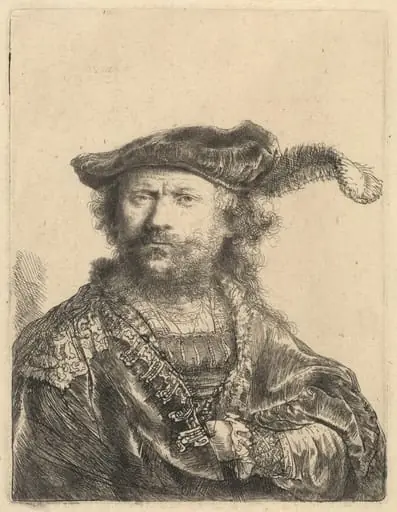
Self-Portrait in a Flat Cap and Embroidered Dress
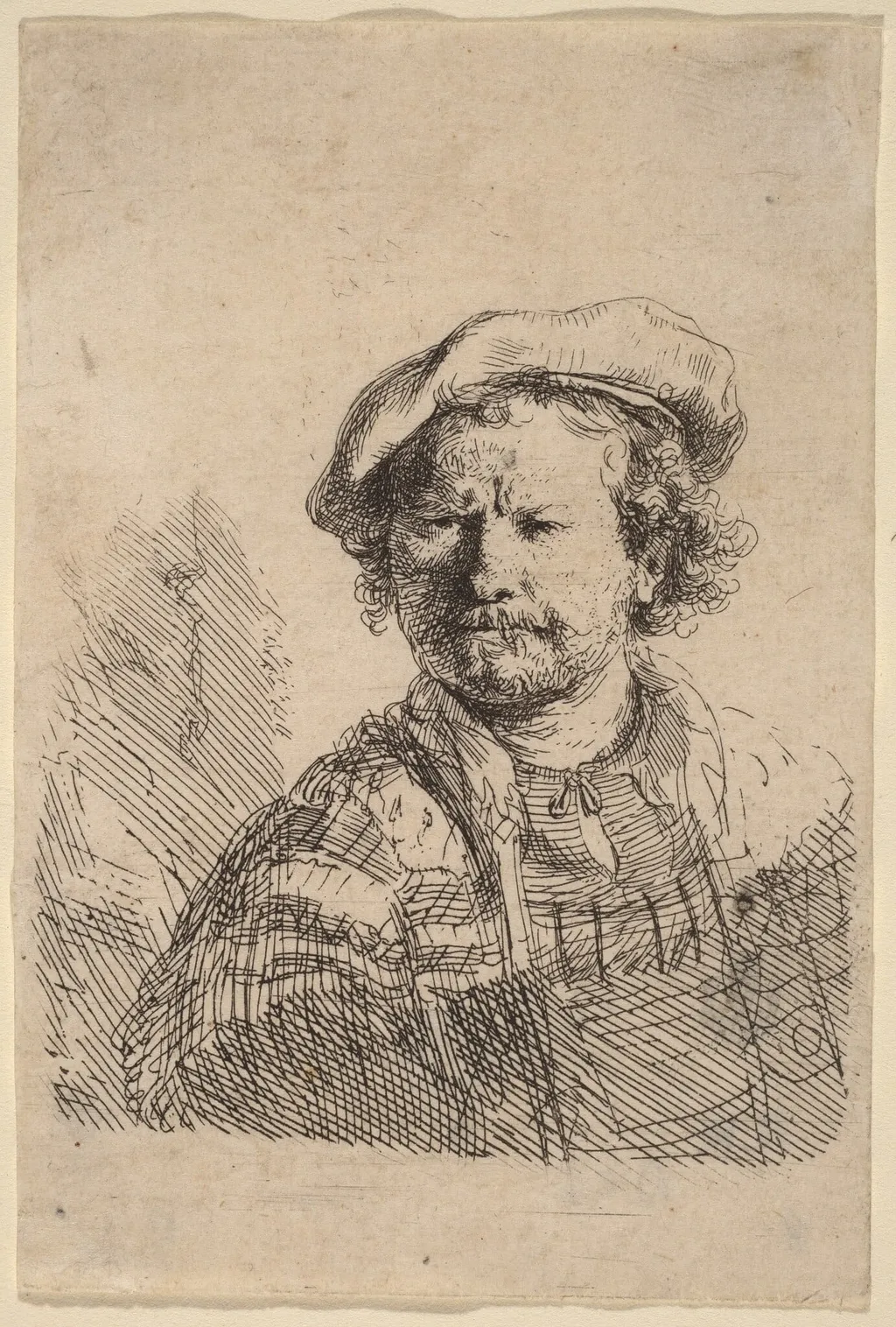
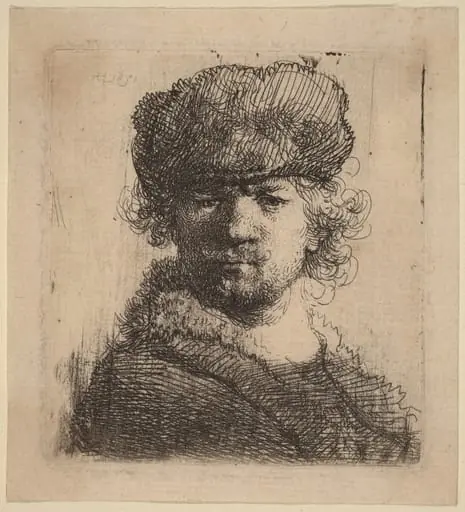
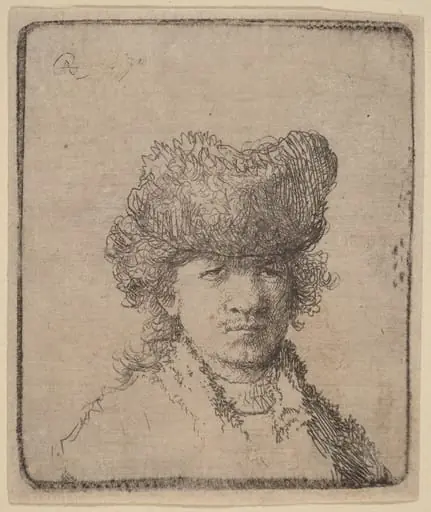
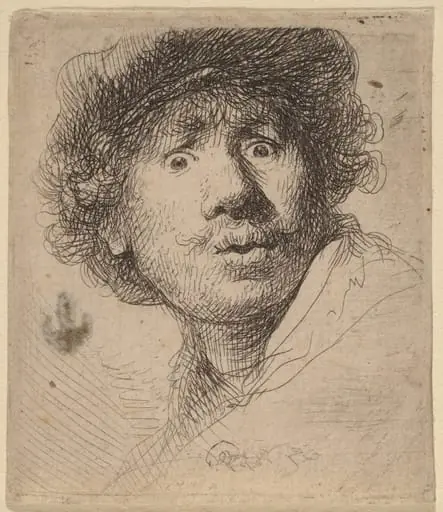
Self-Portrait in a Flat Cap and Embroidered Dress is an ink print by the Baroque artist Rembrandt. It dates from 1642 and is held in the collection of the National Gallery of Art.
About this work
Overview
Rembrandt van Rijn produced this self‑portrait as an etching around 1642. The work presents the artist in a flat cap and an embroidered dress, rendered in a single‑plate print that demonstrates his mature approach to the medium.
Subject & Meaning
The image depicts the artist himself, his expression solemn and his hair tightly curled. The attire—a modest cap paired with a dress tied at the neck—suggests a blend of masculine and feminine dress, reflecting the artist’s interest in exploring identity and costume.
Technique & Style
Created by incising lines into a copper plate with a needle, the etching displays loose, scratchy strokes that give the surface a grainy texture. The quick, almost sketch‑like marks convey immediacy, while the varying line depth produces subtle tonal gradations.
History & Provenance
The plate was likely cut and printed in Rembrandt’s workshop in Amsterdam during the early 1640s. Surviving impressions have passed through several European collections, most recently appearing in a 20th‑century private sale before entering a museum collection.
Context
At this stage of his career Rembrandt was experimenting with self‑portraiture as a means of personal and artistic investigation. The work aligns with his broader print output, which often employed dramatic chiaroscuro and intimate, unguarded poses.
Artist & collection
Artist
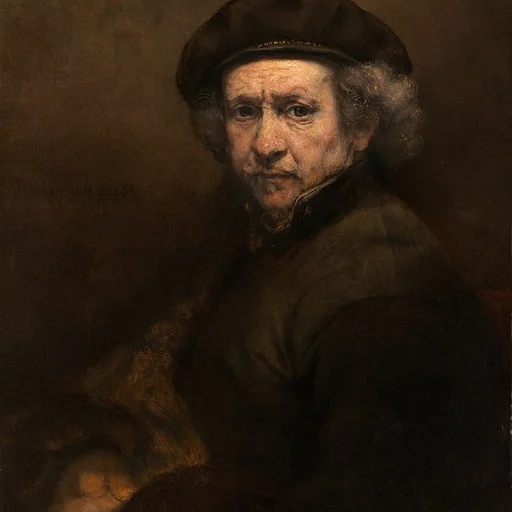
Rembrandt Harmenszoon van Rijn (15 July 1606 – 4 October 1669), known mononymously as Rembrandt, was a Dutch Golden Age painter, printmaker, and draughtsman.