Artwork
Self-Portrait in a Cap and Scarf with the Face Dark
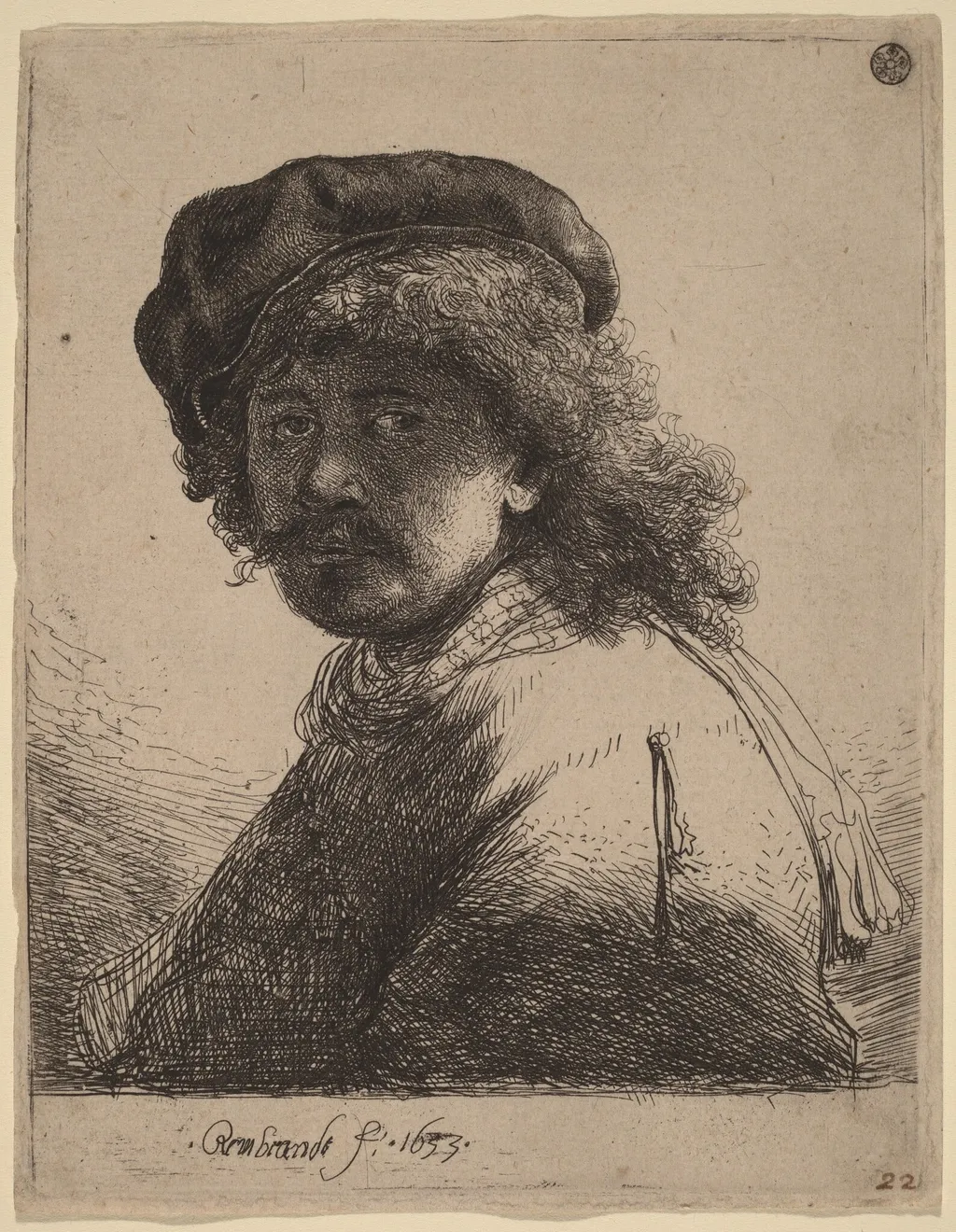
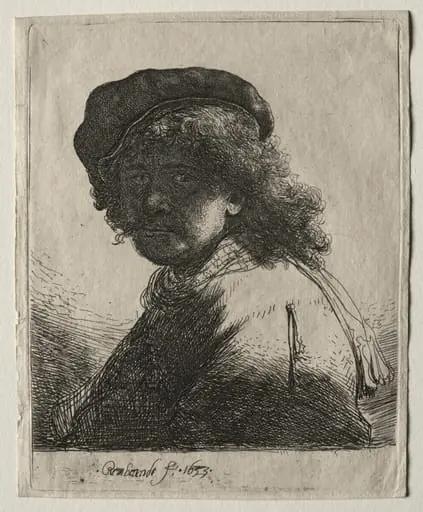
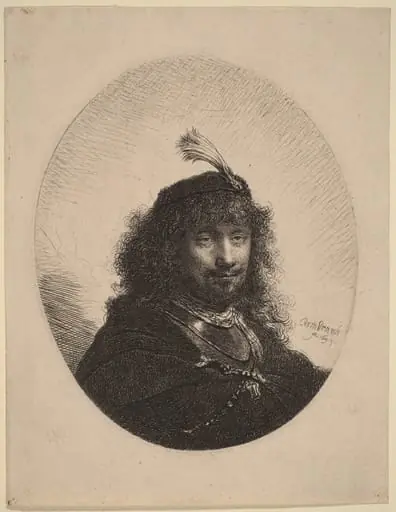
Self-Portrait in a Cap and Scarf with the Face Dark is an ink print by the Baroque artist Rembrandt. It dates from 1633 and is held in the collection of the National Gallery of Art.
About this work
The face is turned slightly away, but you can see their eyes and the curve of their cheek.
This is a black-and-white sketch of a person wearing a dark cap and a loose scarf. The face is turned slightly away, but you can see their eyes and the curve of their cheek. The lines are rough and textured, almost like scratches on paper.
The artist signed it in the corner with the year 1633. The way the lines are layered makes the cap and scarf look almost three-dimensional.
Next, look up etching to see how artists like this made prints.
Overview
Created in 1633, this etching by Rembrandt van Rijn presents a modest, introspective self-portrait rendered in black ink on laid paper. The image captures the artist wearing a dark cap and a loosely draped scarf, his face turned partially away from the viewer. The composition is intimate, emphasizing texture over detail, and bears his signature and the date in the lower corner, affirming its authorship and timing.
Subject & Meaning
Rather than presenting an idealized image, Rembrandt depicts himself in everyday attire, suggesting a private moment of reflection. The turned head and subdued gaze convey quiet contemplation, not performance. The absence of ornament or context focuses attention on the artist’s presence, inviting the viewer to consider identity and self-perception through the lens of ordinary life.
Technique & Style
Using etching, Rembrandt incised lines into a metal plate, then inked and pressed it onto paper. He employed varied line weights and dense hatching to model form, giving the cap and scarf a tactile, almost sculptural presence. The rough, layered strokes suggest spontaneity and directness, avoiding polished finish in favor of expressive immediacy and tonal depth.
History & Provenance
This print was made during Rembrandt’s early years in Amsterdam, a period when he was actively exploring self-representation in print. It was likely produced for personal use or limited circulation among collectors and peers. Its survival in multiple institutional collections indicates early recognition of its significance within his graphic oeuvre.
Context
In the early 1630s, Rembrandt was refining his approach to etching, moving beyond mere reproduction toward expressive experimentation. Artists of the time increasingly used self-portraits to assert professional identity; this work reflects that trend while resisting grandeur, aligning instead with the Dutch emphasis on authenticity and quiet observation.
Legacy
The etching exemplifies Rembrandt’s influence on the artistic potential of printmaking. Its emphasis on psychological presence over formal perfection inspired later generations of printmakers to treat the medium as a vehicle for personal expression rather than mere replication. It remains a key reference in studies of self-representation in early modern art.
Own this work as a print
Artist & collection
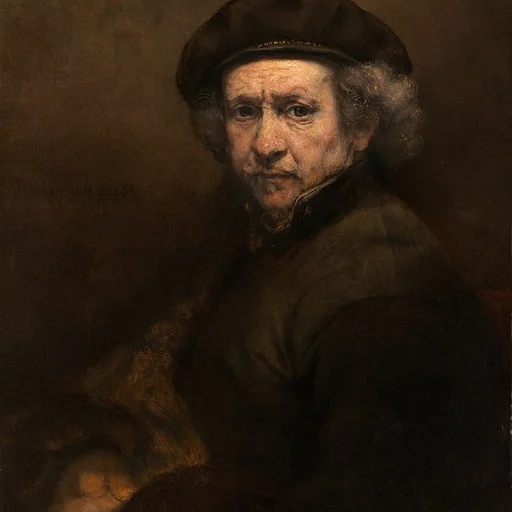
Artist
Rembrandt Harmenszoon van Rijn (15 July 1606 – 4 October 1669), known mononymously as Rembrandt, was a Dutch Golden Age painter, printmaker, and draughtsman.

 Self-Portrait in a Cap and Scarf with the Face Dark: Bust
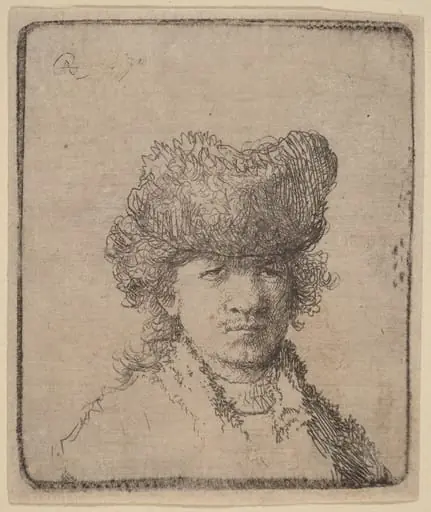 Self-Portrait in a Fur Cap
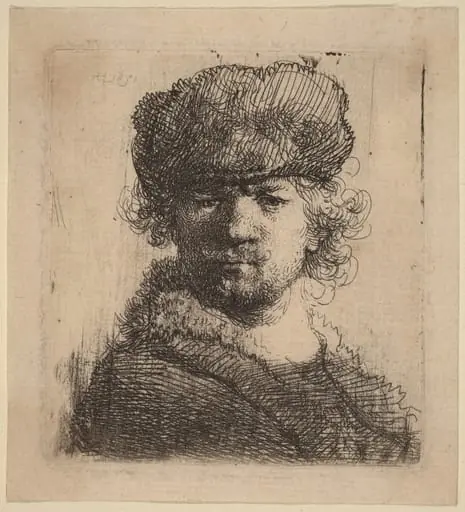 Self-Portrait in a Heavy Fur Cap
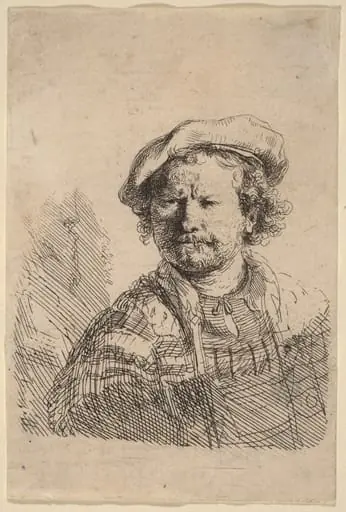 Self-Portrait in a Flat Cap and Embroidered Dress
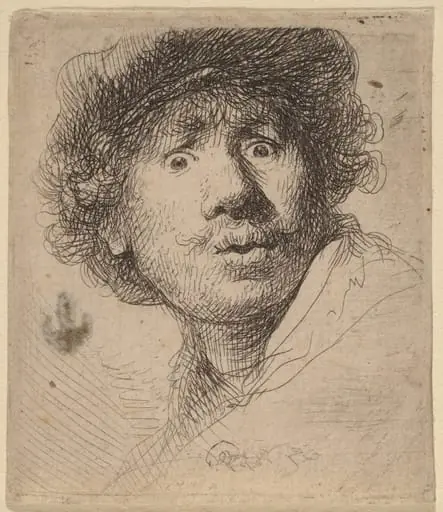 Self-Portrait in a Cap, Open-Mouthed
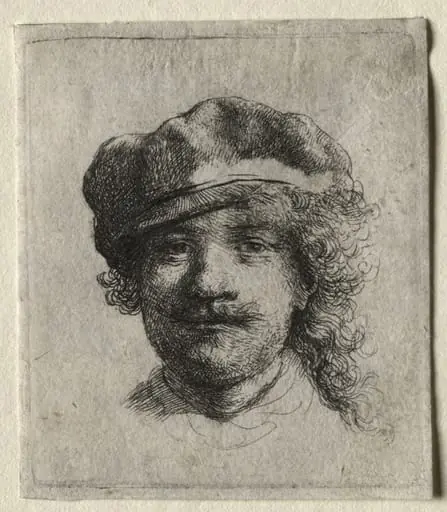 Self-Portrait Wearing a Soft Cap: Full Face, Head Only
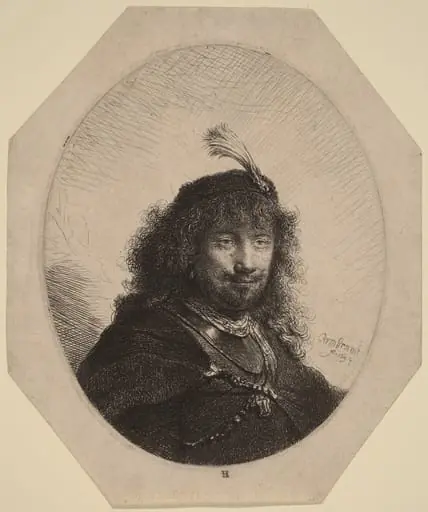 Self-Portrait (?) with Plumed Cap and Lowered Sabre
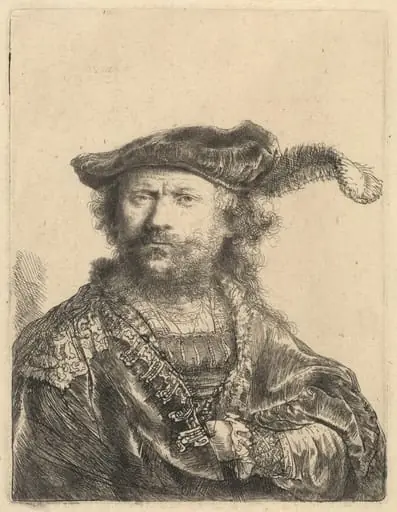 Self-Portrait in a Velvet Cap with Plume
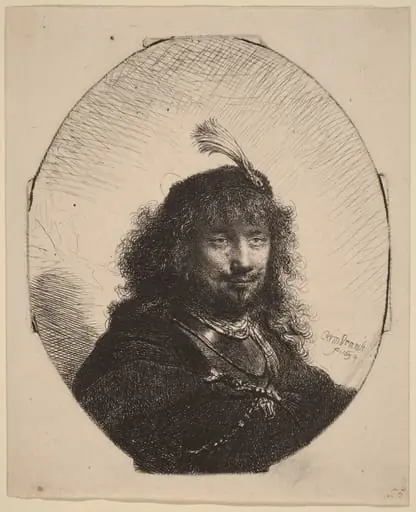 Self-Portrait (?) with Plumed Cap and Lowered Sabre
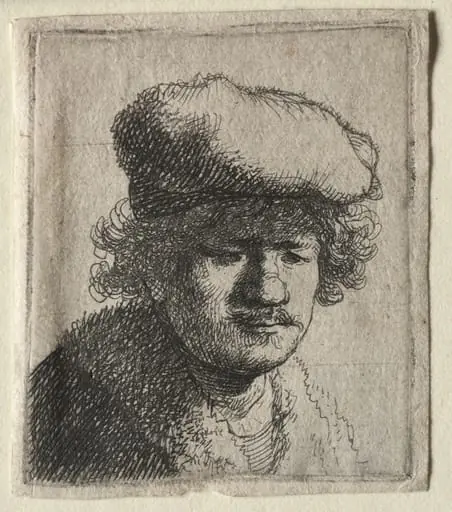 Self-Portrait with Cap Pulled Forward
 Self-Portrait (?) with Plumed Cap and Lowered Sabre