Artwork
Man in an Arbor
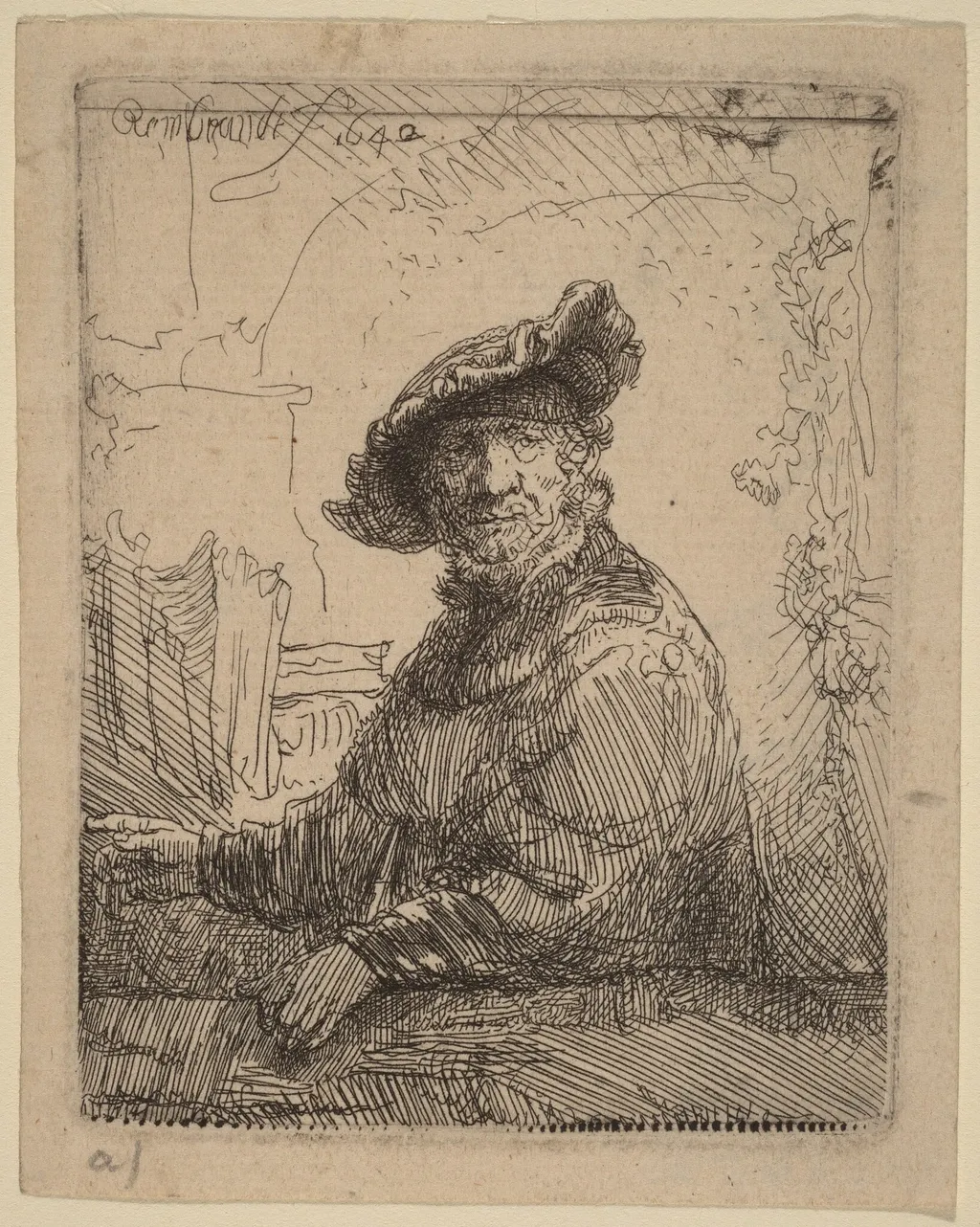
Man in an Arbor is an ink print by the Baroque artist Rembrandt. It dates from 1642 and is held in the collection of the National Gallery of Art.
About this work
Overview
Created in 1642, Man in an Arbor is an etching by the Dutch artist Rembrandt van Rijn. Executed on a metal plate and printed on paper, the work depicts a solitary figure seated beneath a leafy canopy, rendered in the characteristic tonal richness of Rembrandt’s printmaking.
Subject & Meaning
The composition centers on a man reclined in a chair, his wide-brimmed hat pulled low over his eyes, suggesting introspection or concealment. The sparse setting, with loosely suggested trees in the background, focuses attention on the figure’s posture and the play of light across his clothing.
Technique & Style
Rembrandt employed the etching process, incising lines into a copper plate and using acid to deepen them. Thick, cross‑hatching defines the fabric, while broader, gestural strokes suggest foliage. The paper’s grainy texture and unfinished edges reveal the artist’s working stage, emphasizing the layering of shadows without reliance on paint.
History & Provenance
The print originates from Rembrandt’s mature period, when he frequently explored intimate, everyday subjects through print media. While specific ownership records are limited, the work is catalogued among his 1640s prints and has appeared in several scholarly inventories of his oeuvre.
Context
In the early 1640s Rembrandt was expanding his print practice, using etching to experiment with atmospheric effects and psychological depth. Man in an Arbor reflects this interest, aligning with contemporary Dutch tendencies toward genre scenes that capture private moments.
Artist & collection
Artist
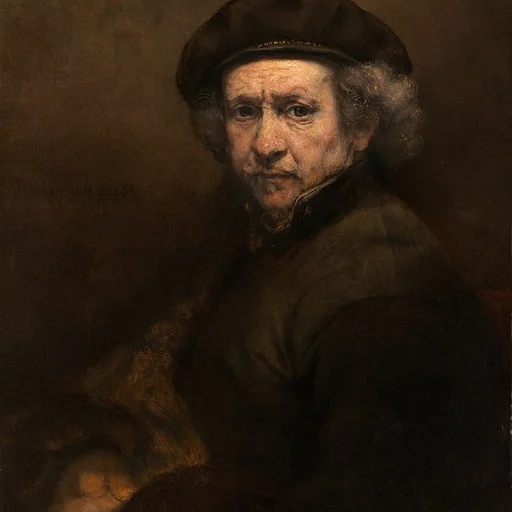
Rembrandt Harmenszoon van Rijn (15 July 1606 – 4 October 1669), known mononymously as Rembrandt, was a Dutch Golden Age painter, printmaker, and draughtsman.

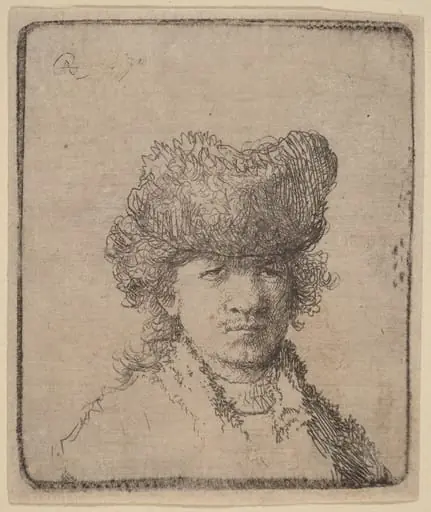 Self-Portrait in a Fur Cap
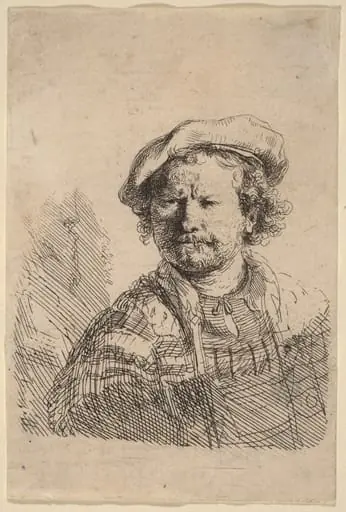 Self-Portrait in a Flat Cap and Embroidered Dress
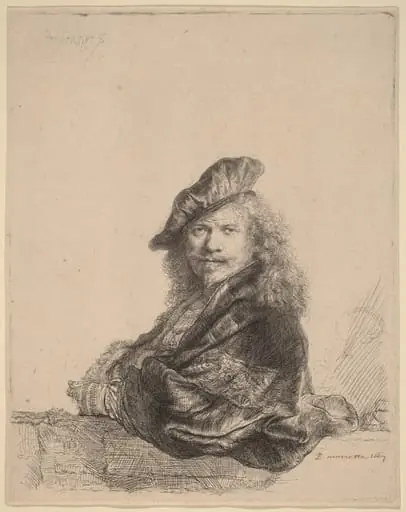 Self-Portrait Leaning on a Stone Sill
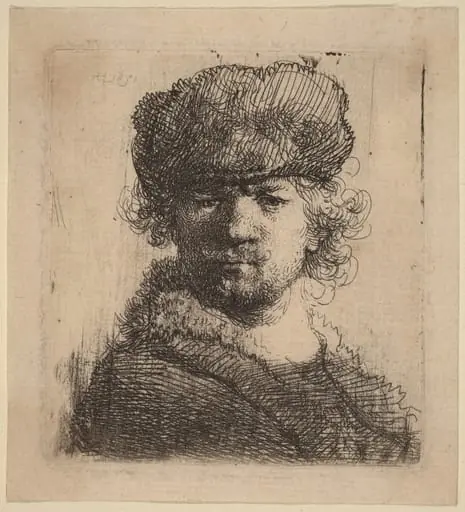 Self-Portrait in a Heavy Fur Cap
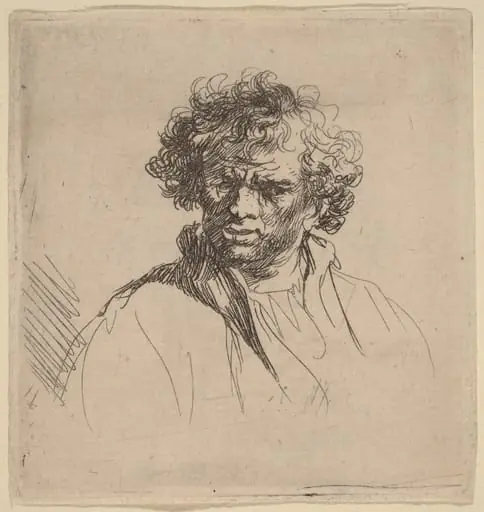 Curly-Headed Man with a Wry Mouth
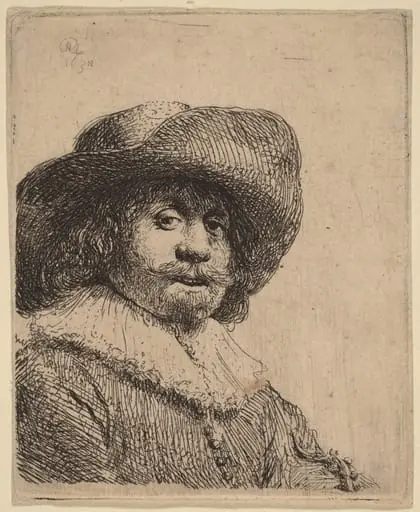 Man in a Broad-Brimmed Hat
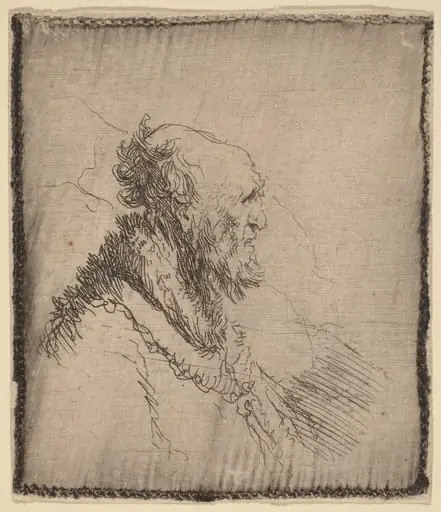 Bald Old Man with a Short Beard in Profile
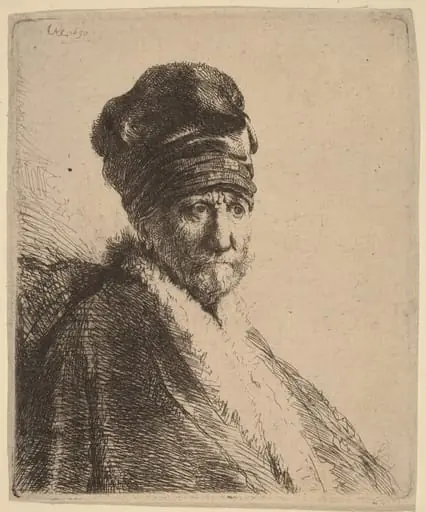 Bust of a Man Wearing a High Cap, Three-Quarters Right (The Artist's Father?)
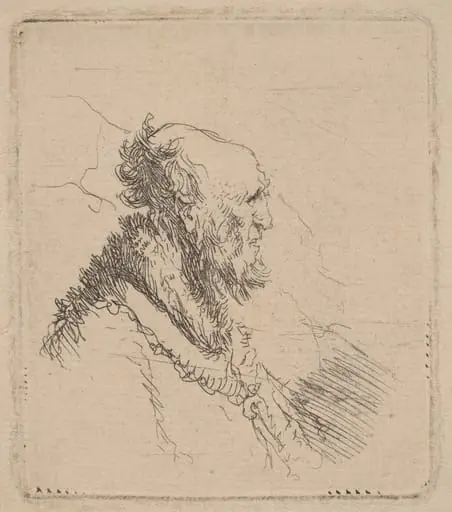 Bald Old Man with a Short Beard in Profile
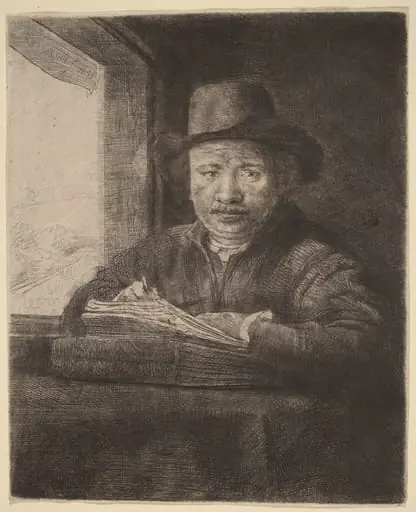 Self-Portrait Etching at a Window
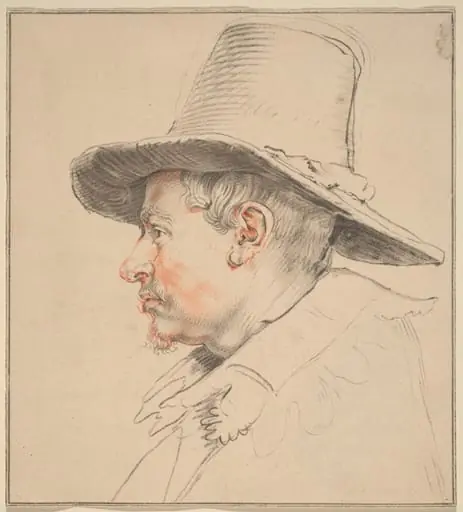 Salomon de Bray (formerly Jan van Goyen)
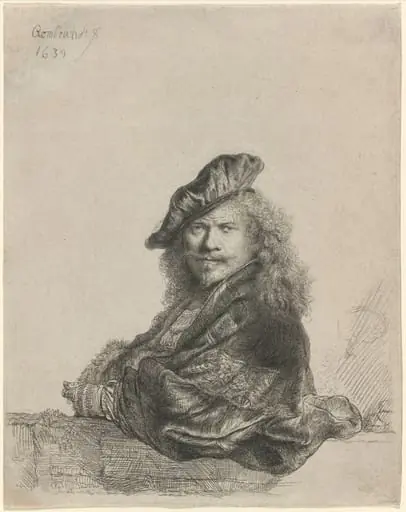 Self-Portrait Leaning on a Stone Sill