Artwork
The Omval
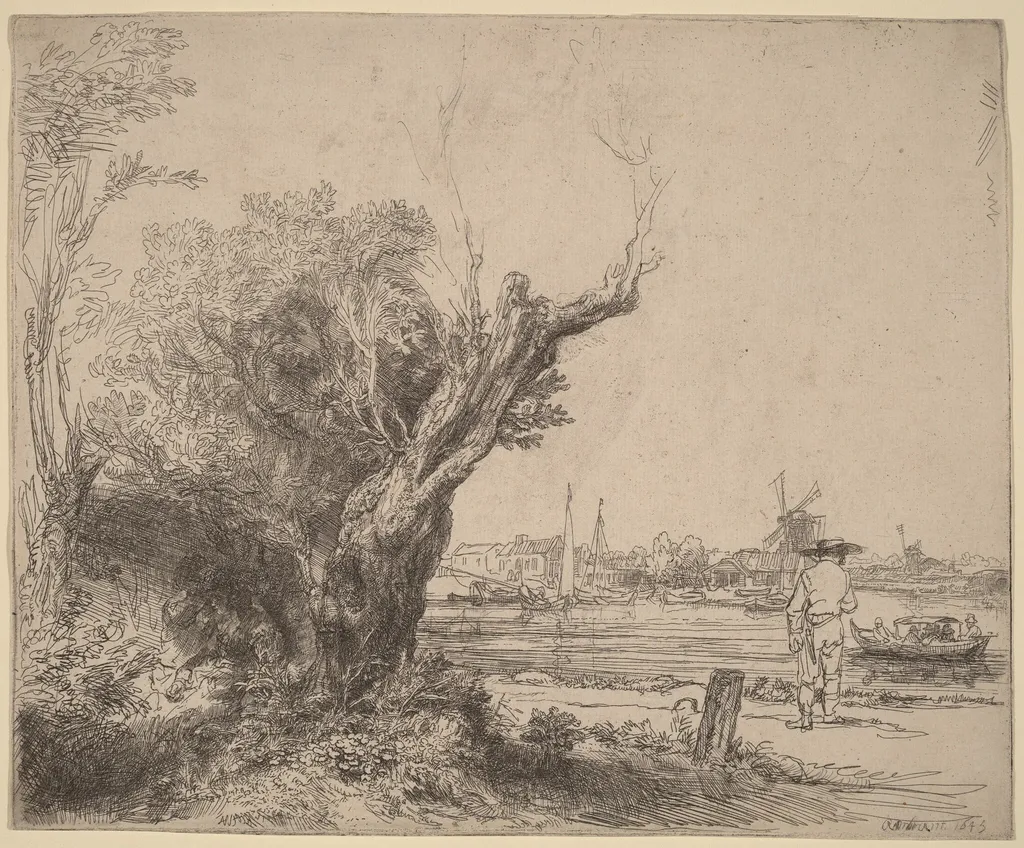
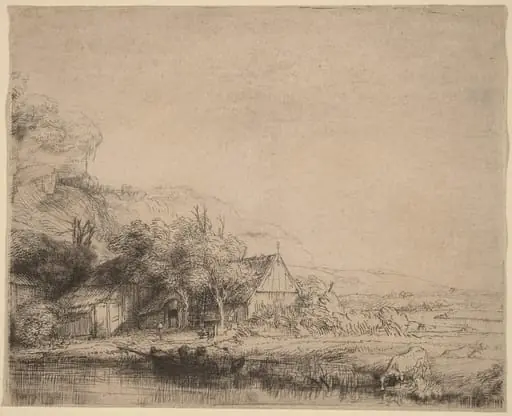
The Omval is an ink print by the Baroque artist Rembrandt. It dates from 1645 and is held in the collection of the National Gallery of Art.
About this work
Overview
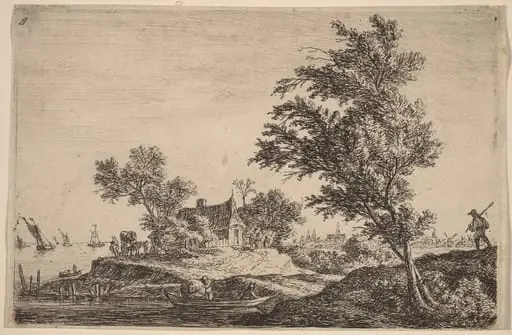
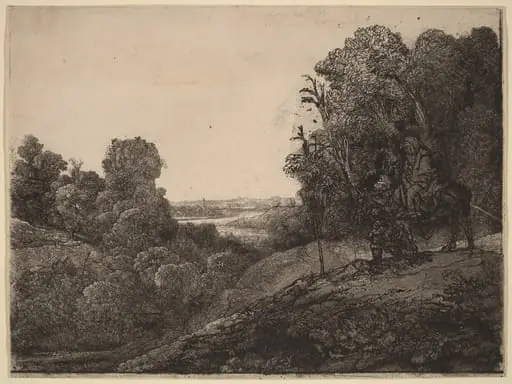
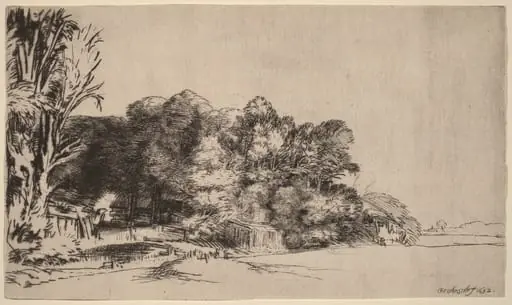
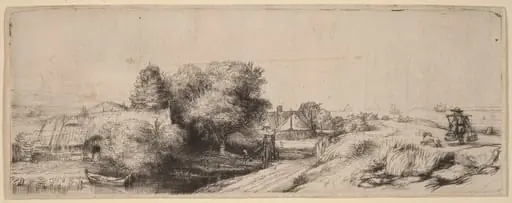
Created in 1645, this print by Rembrandt van Rijn combines etching with drypoint techniques. The work presents a tranquil riverside landscape, centered on a prominent tree whose branches reach upward, while a river winding through the scene carries several boats past modest buildings.
Subject & Meaning
The composition captures a peaceful everyday setting, emphasizing the harmony between natural elements and human activity. The solitary tree may serve as a focal point, guiding the viewer’s eye toward the river’s flow and the modest architecture that lines its banks, suggesting a quiet, lived-in environment.
Technique & Style
Rembrandt employed fine, intersecting lines characteristic of etching, complemented by the richer, velvety strokes of drypoint to render texture and depth. Subtle variations in light and shadow create a three‑dimensional effect, aligning the piece with the Baroque interest in dramatic chiaroscuro and detailed realism.
History & Provenance
The print originates from Rembrandt’s mid‑career period, a time when he produced numerous landscape studies. While specific ownership records are limited, the work is documented among his 1640s prints and has been referenced in catalogues of his oeuvre.
Artist & collection
Artist
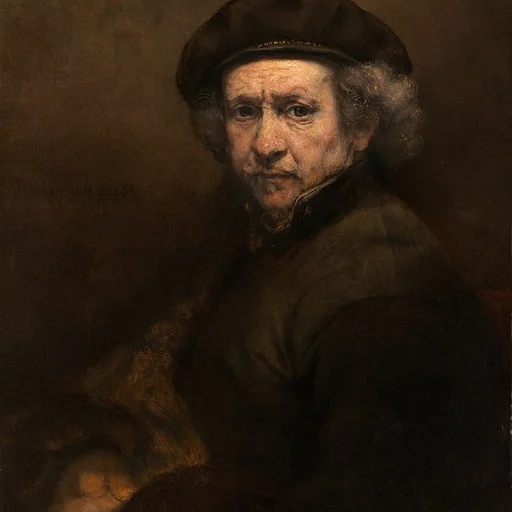
Rembrandt Harmenszoon van Rijn (15 July 1606 – 4 October 1669), known mononymously as Rembrandt, was a Dutch Golden Age painter, printmaker, and draughtsman.