Artwork
Traveler Passing Two Large Trees
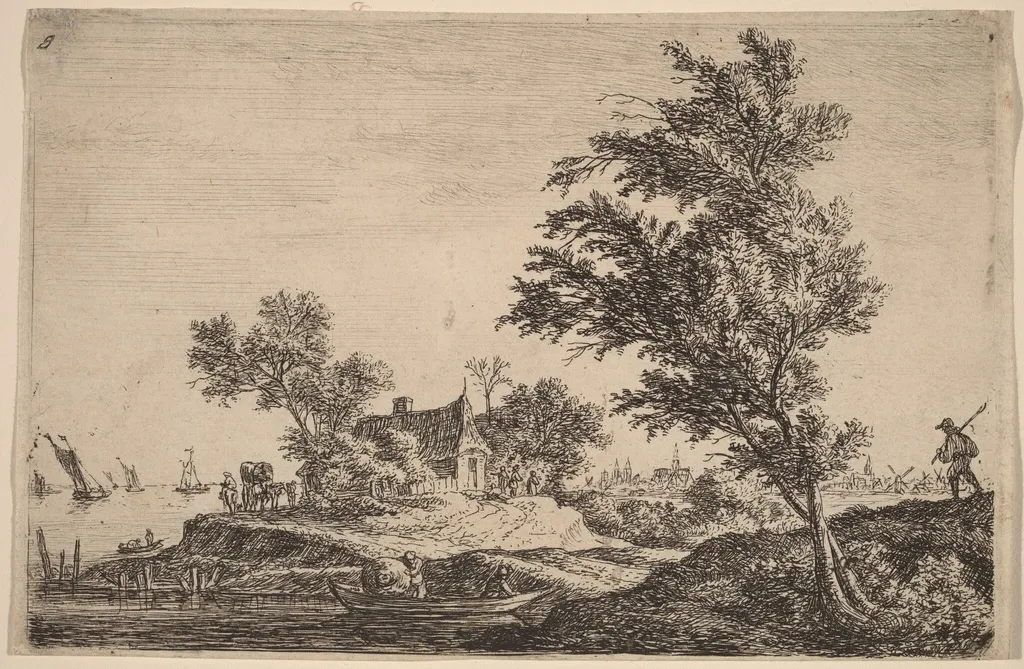
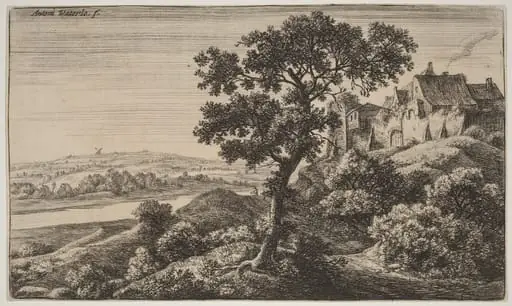
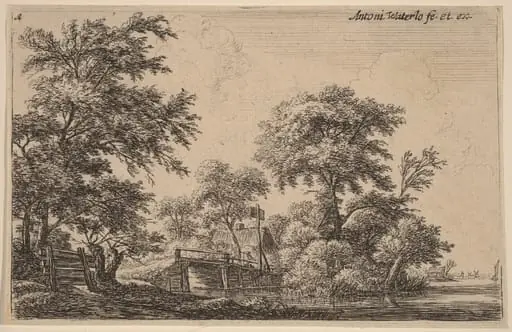
Traveler Passing Two Large Trees is an ink print by the Baroque artist Antonie Waterloo. It dates from 1650 and is held in the collection of the National Gallery of Art.
About this work
Overview
Traveler Passing Two Large Trees is a black-and-white etching created by Anthonie Waterloo in 1650, depicting a serene riverside village scene.
Subject & Meaning
The etching portrays a solitary traveler walking along a dirt path, flanked by two prominent trees, amidst a quiet village with small houses, nearby boats, and a distant horizon populated by trees and ships, evoking a sense of depth and tranquility.
Technique & Style
Waterloo employed fine lines to convey texture, notably in the rough bark of the trees, characteristic of monochrome etching techniques prevalent before the advent of color printing.
History & Provenance
Created in 1650, the etching exemplifies traditional metal plate engraving practices of its time, with the artist carving the image into a plate to produce the print.
Context
This work reflects the 17th-century European interest in capturing everyday, idyllic landscapes, often featuring water elements and common life scenes.
Legacy
While specific legacy details of 'Traveler Passing Two Large Trees' are not highlighted, it contributes to the broader understanding and appreciation of 17th-century etching techniques and landscape themes in art history.
Artist & collection

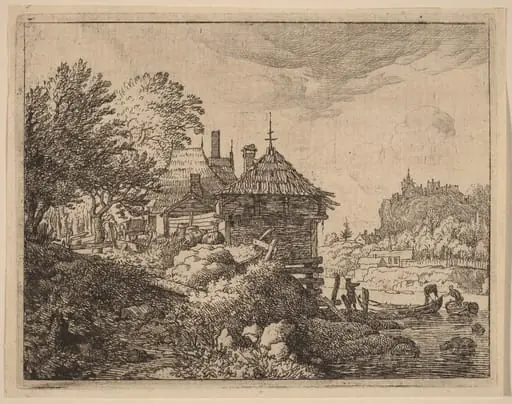 Two Boats Approaching a Hut
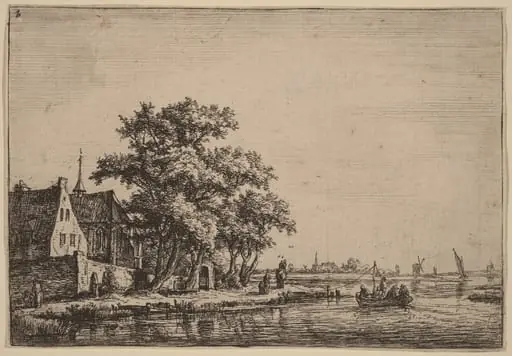 Churchyard at the Waterside
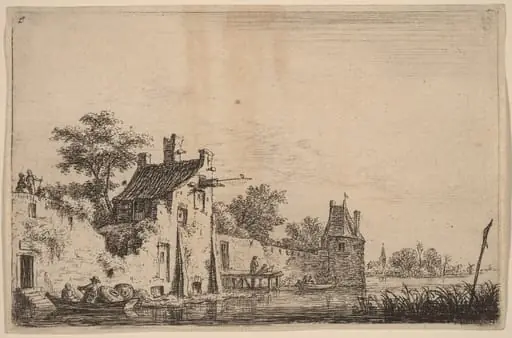 Departure of Two Fishermen
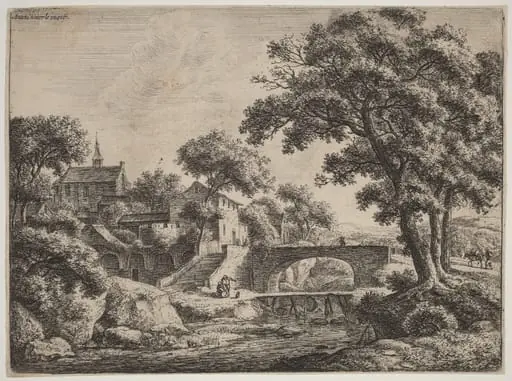 A Wooden and a Stone Bridge
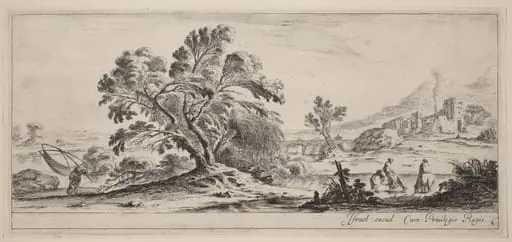 Landscape with Fisherman Carrying his Net
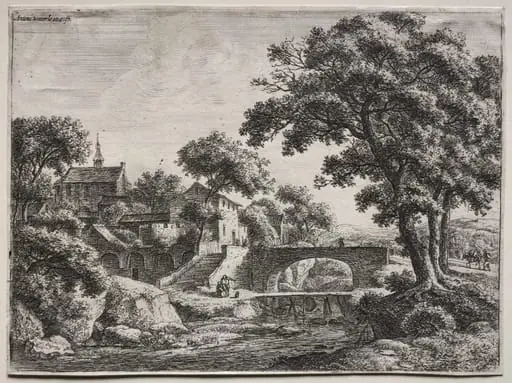 Twelve landscapes (H.95-106): The Two Bridges
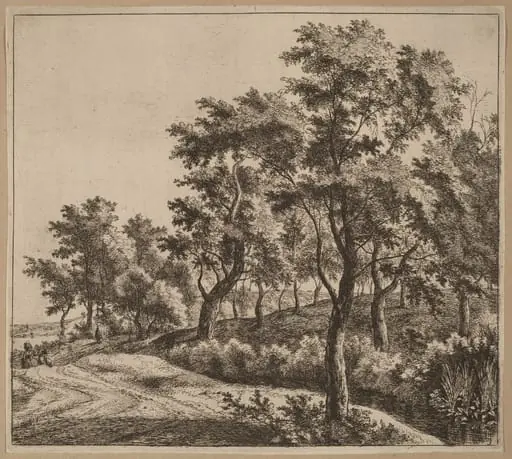 Landscape with a Stream
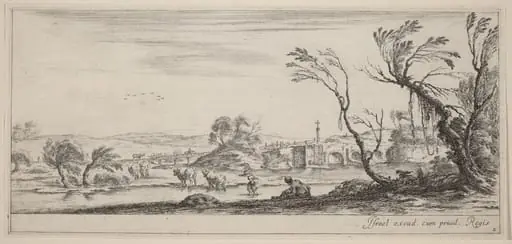 Landscape with Peasant Preparing to Cross a Stream
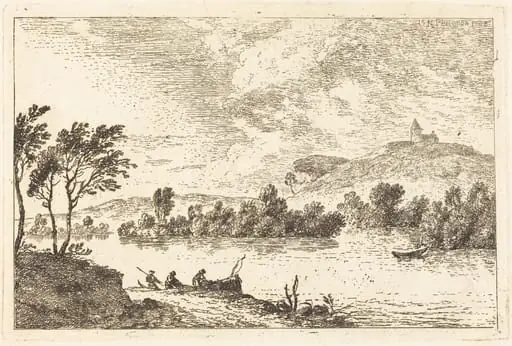 River Landscape with Figures and a Boat at Water's Edge
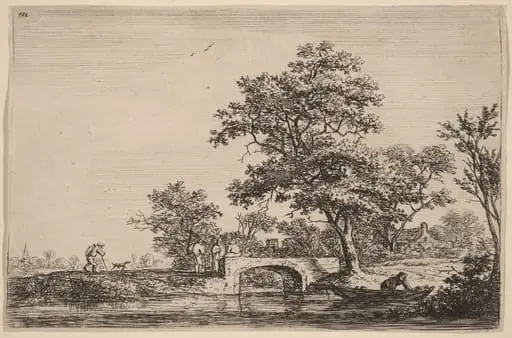 Four Men on a Stone Bridge