Artwork
The Presentation in the Temple with the Angel: Small Plate
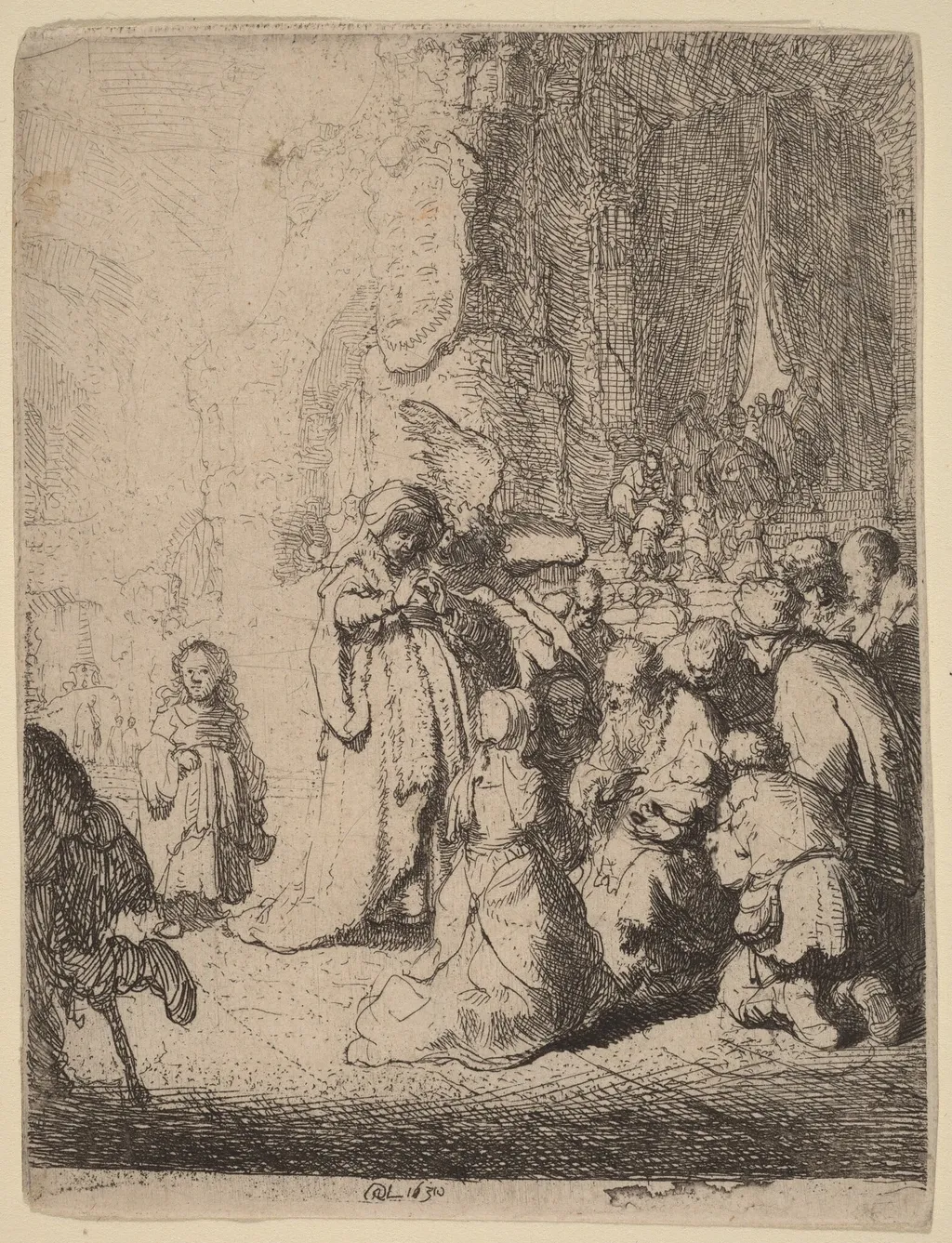
The Presentation in the Temple with the Angel: Small Plate is an ink print by the Baroque artist Rembrandt. It dates from 1630 and is held in the collection of the National Gallery of Art.
About this work
Overview
Rembrandt van Rijn’s small plate entitled *The Presentation in the Temple with the Angel* is an etching dated to 1630. Executed during the artist’s early period, the work measures modestly in size and depicts a biblical episode in which a newborn is brought before the temple altar. The composition reflects Rembrandt’s developing interest in narrative illustration and chiaroscuro.
Subject & Meaning
The image illustrates the scriptural moment when the infant—traditionally identified as the future Messiah—is presented at the temple, accompanied by an angelic figure. By foregrounding the sacred ritual, the print underscores themes of devotion, divine witness, and the prophetic significance of the child’s arrival, resonating with contemporary Protestant devotional practices.
Technique & Style
Created through the intaglio process, the artist incised lines into a copper plate, then applied ink and pressed the plate onto paper. Rembrandt’s handling of line and tone reveals an early experimentation with light and shadow, using deep blacks to model the figures against a luminous background. The subtle gradations anticipate the dramatic chiaroscuro that would later define his oeuvre.
History & Provenance
The etching emerged in the early 1630s, a period when Rembrandt was establishing his reputation in Amsterdam. While specific ownership records are limited, the plate was likely circulated among collectors of the artist’s prints shortly after its production, contributing to the growing market for his graphic works.
Artist & collection
Artist
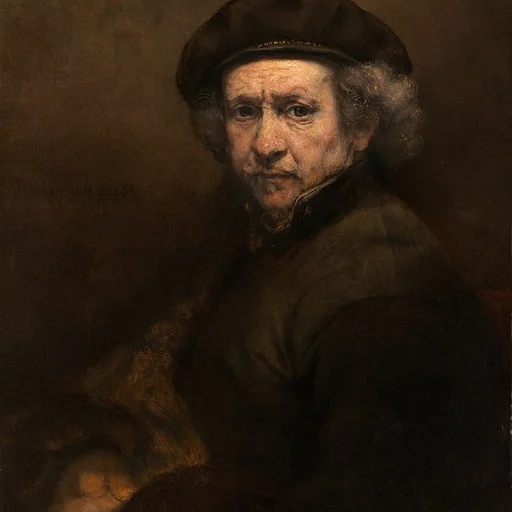
Rembrandt Harmenszoon van Rijn (15 July 1606 – 4 October 1669), known mononymously as Rembrandt, was a Dutch Golden Age painter, printmaker, and draughtsman.


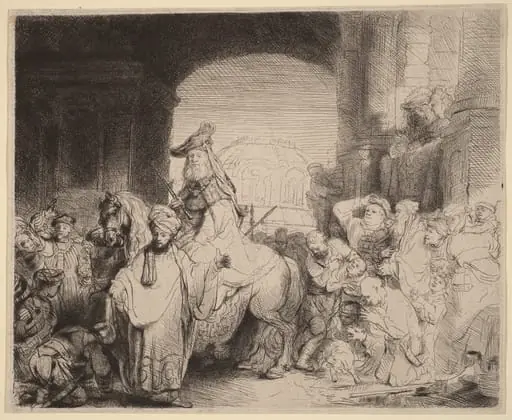 The Triumph of Mordecai
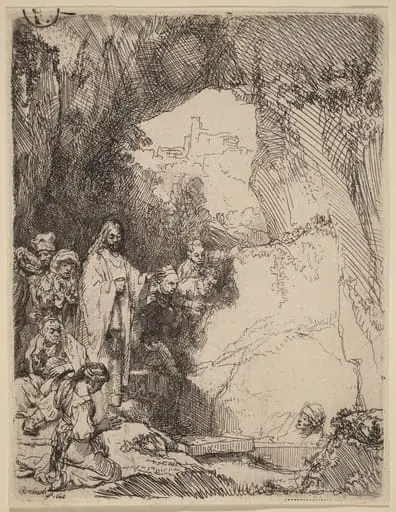 The Raising of Lazarus: Small Plate
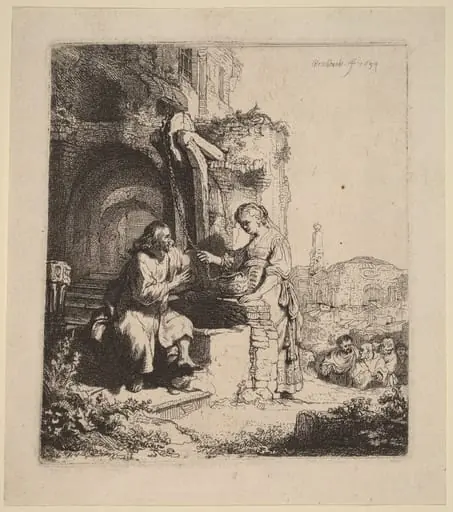 Christ and the Woman of Samaria Among Ruins
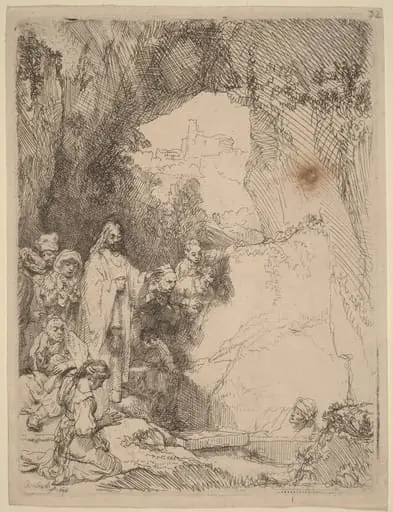 The Raising of Lazarus: Small Plate
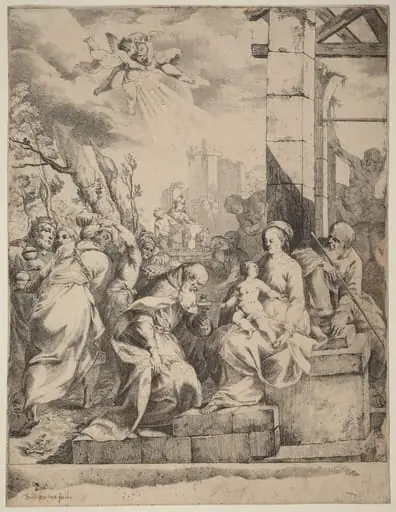 The Adoration of the Magi
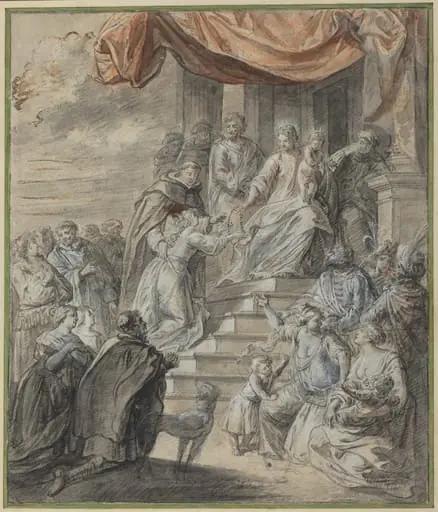 Madonna and Child with Rosary and Saint
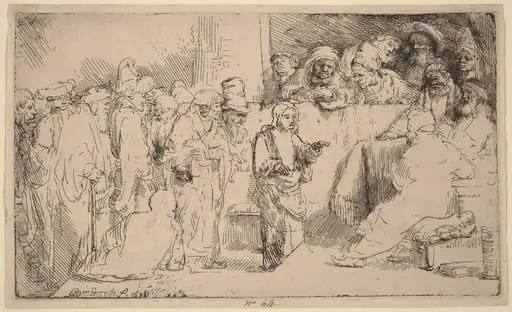 Christ Disputing with the Doctors: a Sketch
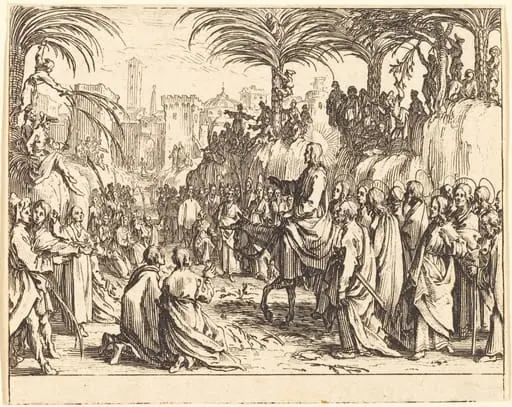 The Entry into Jerusalem
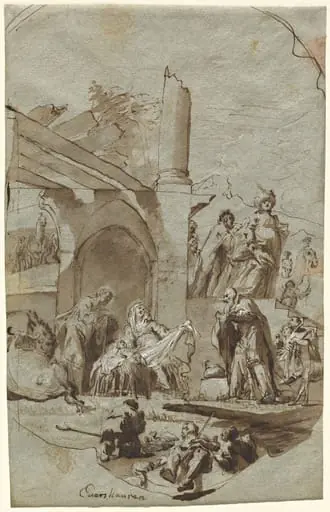 The Adoration of the Magi
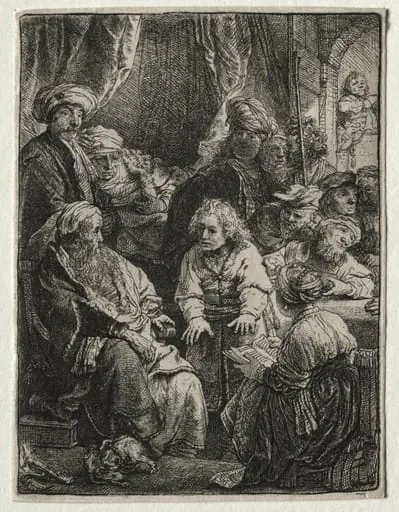 Joseph Telling his Dreams