Artwork
The Raising of Lazarus: Small Plate
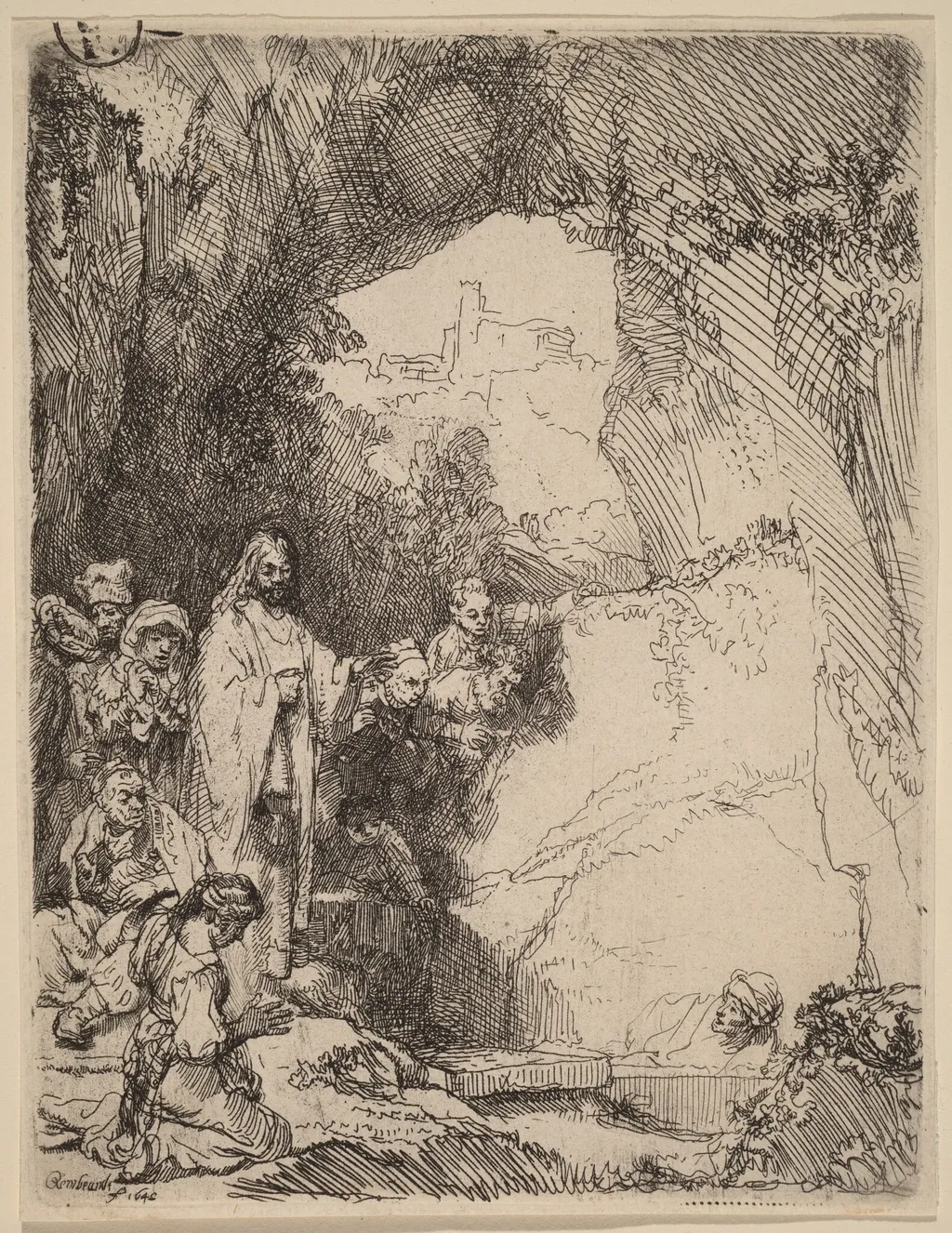
The Raising of Lazarus: Small Plate is an ink print by the Baroque artist Rembrandt. It dates from 1642 and is held in the collection of the National Gallery of Art.
About this work
Overview
Created in 1642, this small etching by Rembrandt van Rijn captures the biblical moment of Lazarus being restored to life. Rendered on laid paper, the work is part of a series of religious prints the artist produced during his mature period. Its intimate scale and stark tonal contrasts reflect Rembrandt’s deep engagement with spiritual narrative through printmaking.
Subject & Meaning
The scene illustrates John 11:43–44, where Christ calls Lazarus from the tomb. A central figure, identified as Jesus, gestures toward a lifeless form wrapped in burial cloths. Surrounding figures react with awe, grief, or hesitation, emphasizing the miracle’s emotional weight. The composition avoids overt drama, instead inviting quiet contemplation of divine intervention and human vulnerability.
Technique & Style
Rembrandt employed fine, incised lines to model forms in deep shadow and selective light. The right-side illumination carves out faces and gestures against a near-black ground, heightening the scene’s solemnity. The etching’s delicate line work and layered hatching convey texture in fabric and stone without detail, relying on tonal gradation to suggest volume and emotion.
History & Provenance
This plate was likely printed shortly after its creation in the 1640s, during Rembrandt’s most prolific printmaking phase. Early impressions were circulated among collectors and fellow artists in Amsterdam. The work’s survival in multiple states suggests it was valued for its expressive power rather than its commercial appeal.
Context
Produced during a period of personal and financial strain, the etching reflects Rembrandt’s increasing focus on inner spiritual states over external grandeur. Unlike contemporaneous Baroque treatments of the subject, this version omits spectacle, aligning with Dutch Reformed values that favored introspection and humility in religious representation.
Legacy
The small plate influenced later generations of printmakers through its economy of means and psychological depth. It remains a key example of how Rembrandt transformed etching into a medium for intimate spiritual storytelling, prioritizing emotional resonance over narrative clarity or ornamental detail.
Artist & collection
Artist
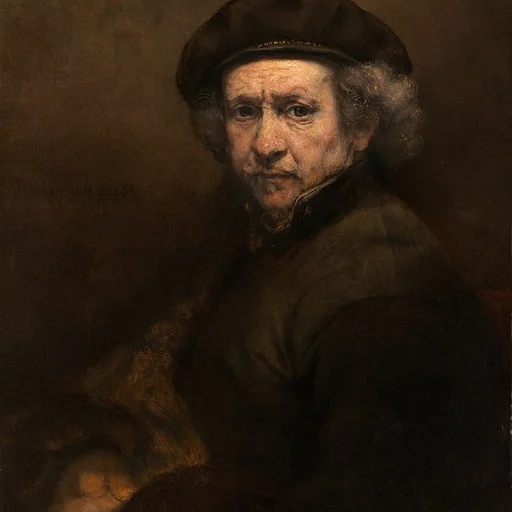
Rembrandt Harmenszoon van Rijn (15 July 1606 – 4 October 1669), known mononymously as Rembrandt, was a Dutch Golden Age painter, printmaker, and draughtsman.

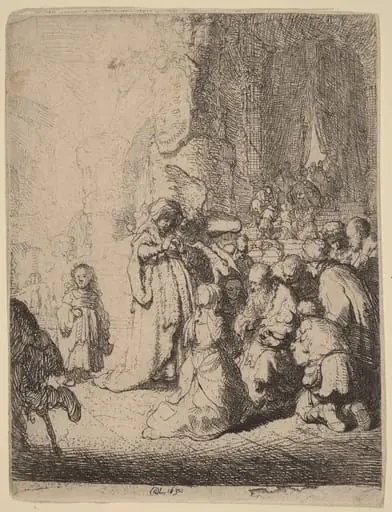 The Presentation in the Temple with the Angel: Small Plate
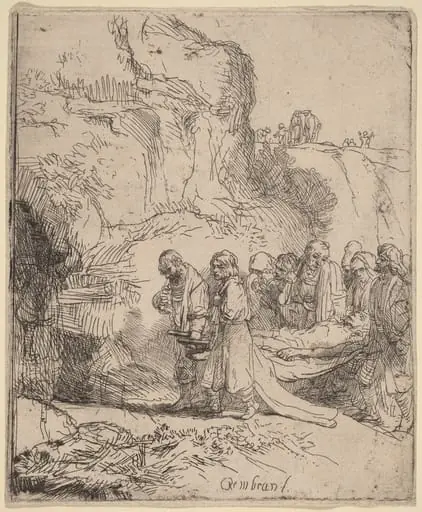 Christ Carried to the Tomb
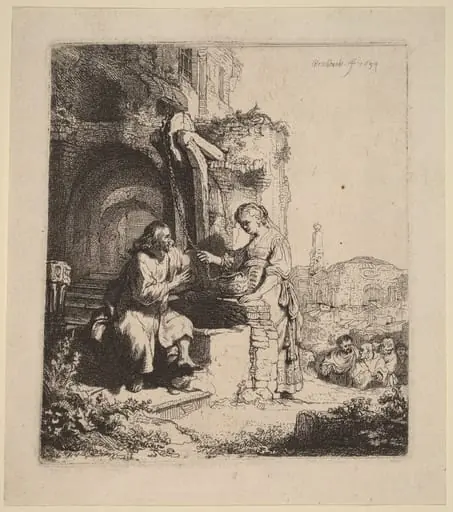 Christ and the Woman of Samaria Among Ruins
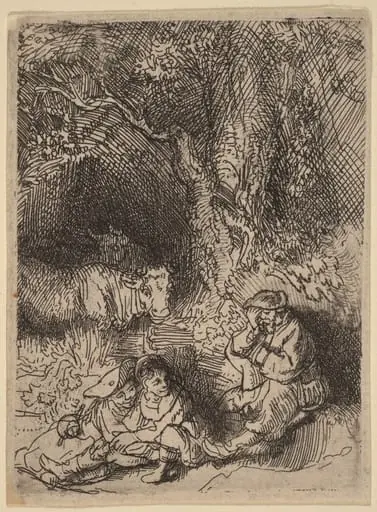 The Sleeping Herdsman
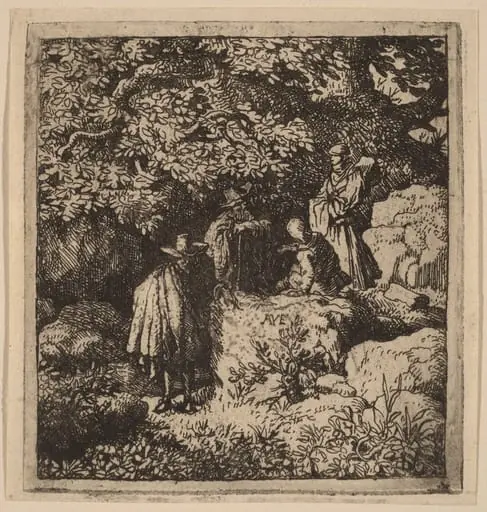 Four Figures under a Tree
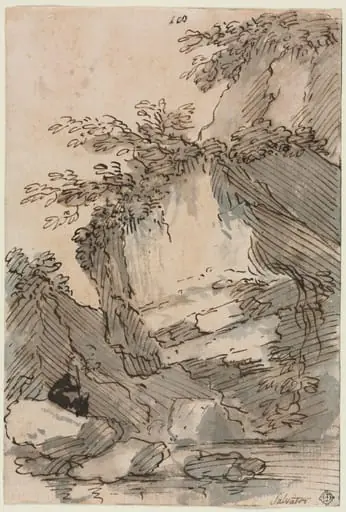 Figures by a Rocky Pool
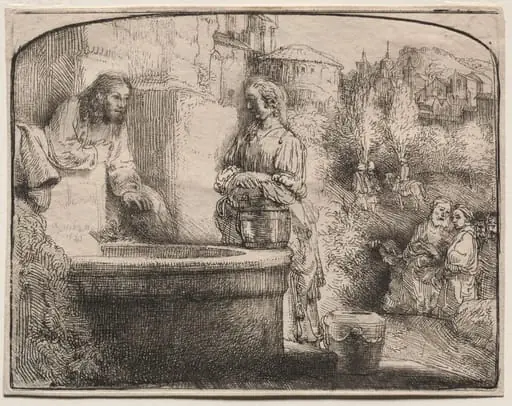 Christ and the Woman of Samaria: An Arched Print
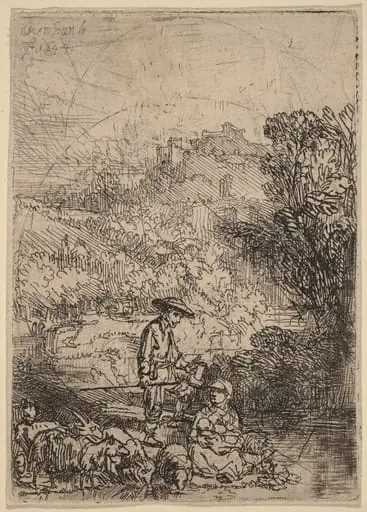 The Shepherd and His Family
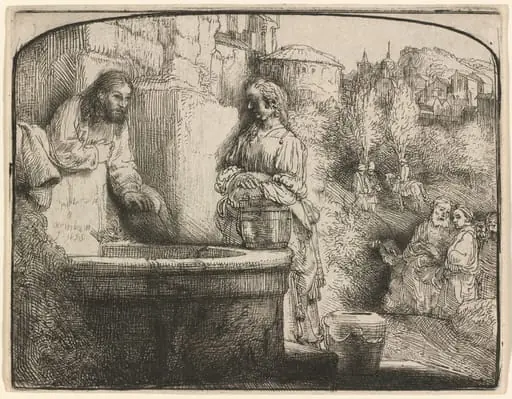 Christ and the Woman of Samaria: an Arched Print
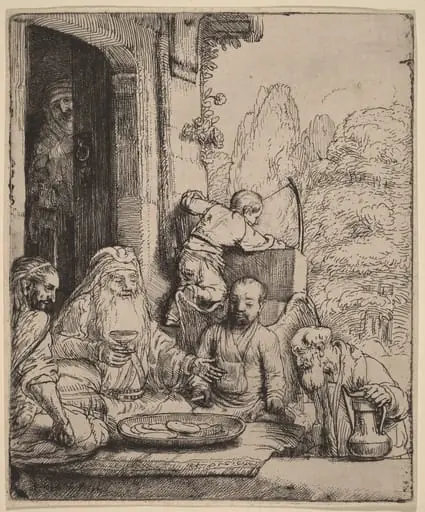 Abraham Entertaining the Angels