Artwork
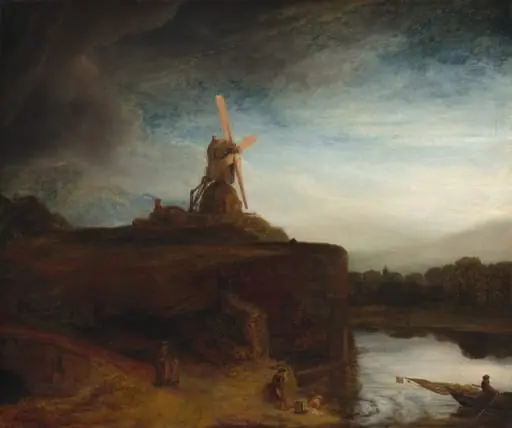
The Windmill
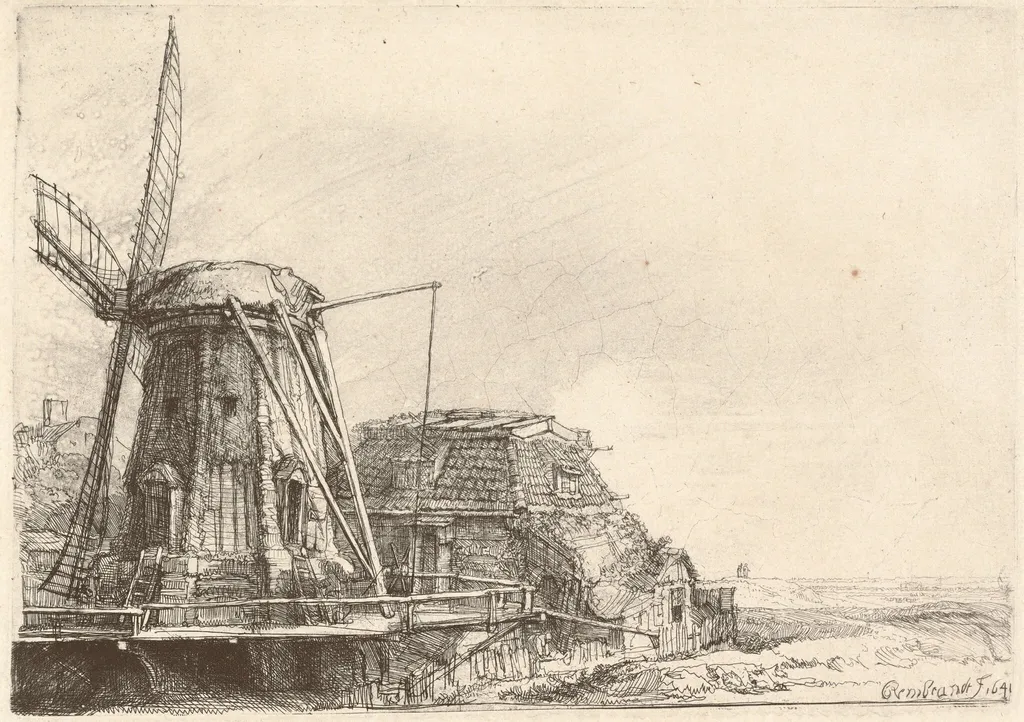
The Windmill is an ink print by the Baroque artist Rembrandt. It dates from 1641 and is held in the collection of the National Gallery of Art.
About this work
Overview
Rembrandt van Rijn’s 1641 etching titled The Windmill presents a solitary windmill perched on a rise, its wooden sails rendered in stark, dark lines that slice through the illuminated sky. The composition is anchored by a few slender trees that lean beside the structure, while the atmosphere above is suggested by a texture of short, scratchy strokes that evoke wind and weather.
Subject & Meaning
The work captures a quiet, rural scene, emphasizing the interplay between light and shadow on the windmill’s form. By isolating the mill against a turbulent sky, Rembrandt invites contemplation of human industry set within the forces of nature, a theme recurrent in his landscape studies.
Technique & Style
Executed as an etching on laid paper, the image was created by incising lines into a copper plate, then immersing it in acid to bite the design. Rembrandt’s handling of the acid and his subsequent drypoint work produce deep, velvety shadows contrasted with delicate, almost sketchy marks that convey atmospheric movement.
History & Provenance
The Windmill is part of Rembrandt’s mature print output and is held in the collection of the National Gallery of Art in Washington, D.C. It exemplifies the artist’s continued experimentation with the etching medium during the early 1640s, a period marked by prolific printmaking activity.
Artist & collection
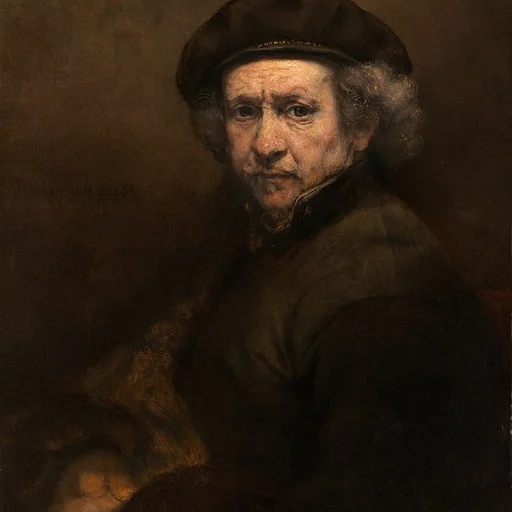
Artist
Rembrandt Harmenszoon van Rijn (15 July 1606 – 4 October 1669), known mononymously as Rembrandt, was a Dutch Golden Age painter, printmaker, and draughtsman.