Artwork
Landscape with a Windmill near a Farmstead
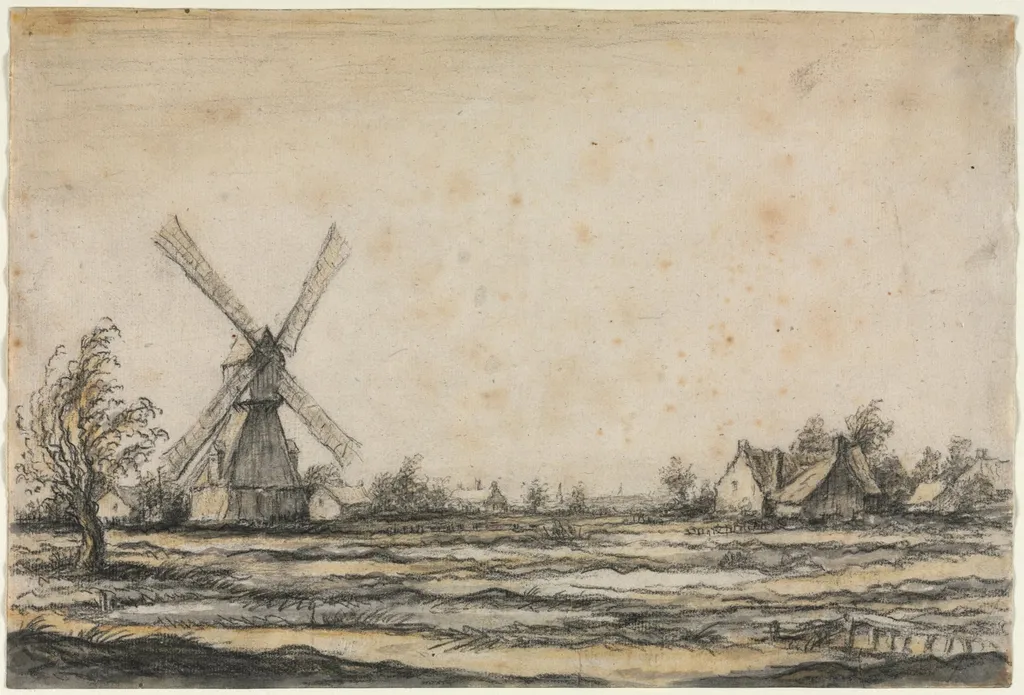
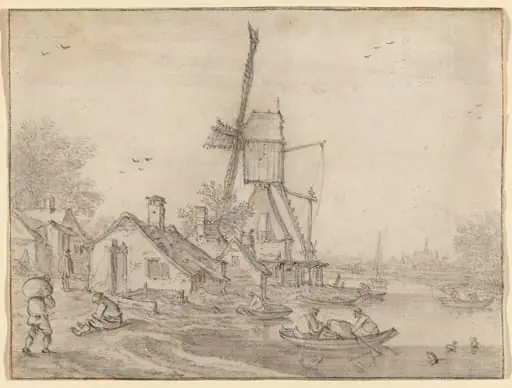
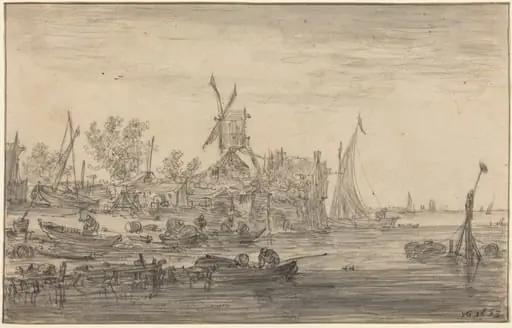
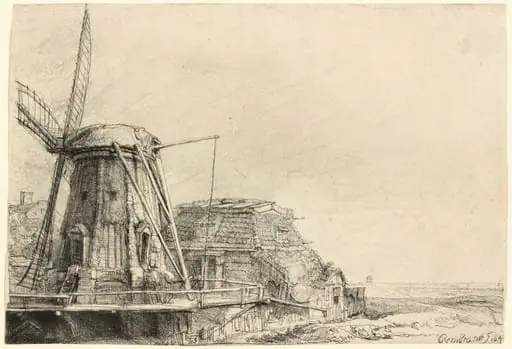
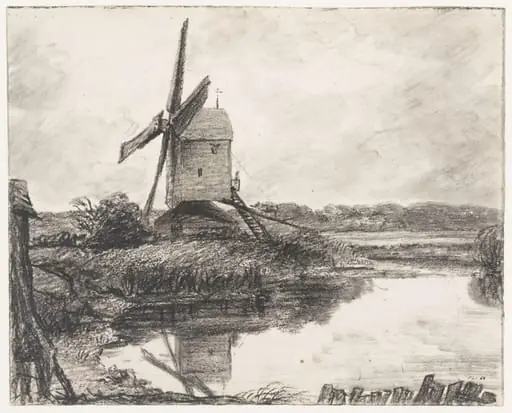
Landscape with a Windmill near a Farmstead is a drawing by the Baroque artist Aelbert Cuyp. It dates from 1643 and is held in the collection of the Cleveland Museum of Art.
About this work
Overview
Unlike many contemporaries who worked primarily indoors, Cuyp often sketched directly from nature, capturing subtle shifts in atmosphere.
Created in 1643, this drawing by Aelbert Cuyp captures a quiet corner of the Dutch countryside near Dordrecht. Executed in pencil and wash, it reflects Cuyp’s early mastery of light and topography. Unlike many contemporaries who worked primarily indoors, Cuyp often sketched directly from nature, capturing subtle shifts in atmosphere. The piece belongs to the Cleveland Museum of Art’s permanent collection, offering insight into his formative approach to landscape.
Subject & Meaning
The scene centers on a large windmill and a modest farmstead nestled among gentle hills, with cattle grazing near a low fence in the foreground. There is no human activity beyond the animals, emphasizing tranquility and the rhythm of rural life. The composition suggests harmony between human structures and the natural world, without overt symbolism—its quietude reflects the everyday dignity of the Dutch landscape rather than narrative or allegory.
Technique & Style
Cuyp employed soft washes and delicate pencil lines to model forms with subtle gradations of tone. He used chiaroscuro not for dramatic contrast, but to suggest the diffused glow of late afternoon light. Colors are muted yet distinct, with warm ochres and pale grays defining the earth and sky. His handling of light reveals a sensitivity to atmospheric conditions, achieved through layered washes that mimic the hazy quality of dusk.
History & Provenance
The drawing entered the Cleveland Museum of Art’s collection in the 20th century, though its earlier ownership remains undocumented. It likely originated in Cuyp’s personal sketchbook, possibly made during a field study near his hometown. As a work on paper, it survived due to careful preservation, offering a rare glimpse into Cuyp’s preparatory process before his larger oil paintings.
Context
In mid-17th-century Holland, landscape drawing was gaining recognition as an independent art form. While many artists relied on studio conventions, Cuyp’s practice of sketching outdoors aligned with a growing interest in direct observation. His focus on local scenery—windmills, pastures, and waterways—reflected broader cultural pride in the Netherlands’ reclaimed land and agricultural economy.
Legacy
This drawing exemplifies Cuyp’s foundational role in elevating landscape as a serious subject in Dutch art. His attention to light and topography influenced later generations of painters who sought to capture the mood of the natural world. Though less celebrated than his oil paintings, his works on paper reveal the disciplined observation that underpinned his entire artistic vision.
Own this work as a print
Artist & collection
Artist
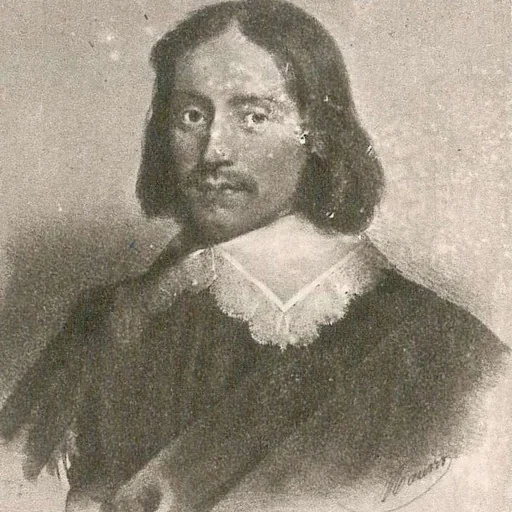
Aelbert Jacobszoon Cuyp or Cuijp (Dutch pronunciation: ; 20 October 1620 – 15 November 1691) was one of the leading Dutch Golden Age painters, producing mainly landscapes.

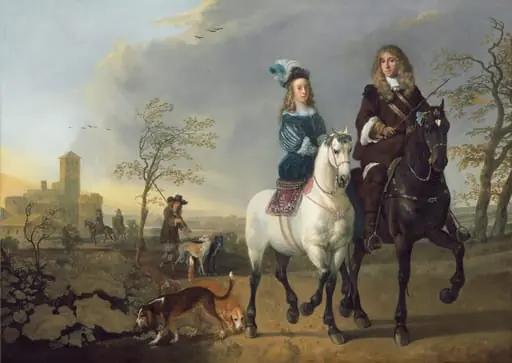 Lady and Gentleman on Horseback
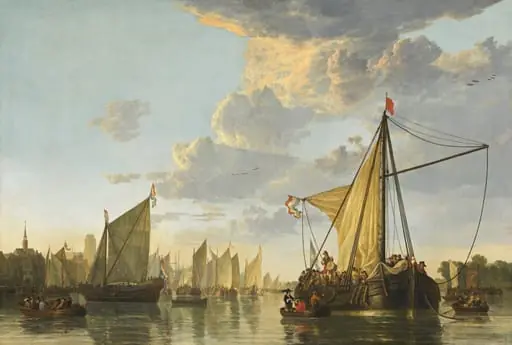 The Maas at Dordrecht
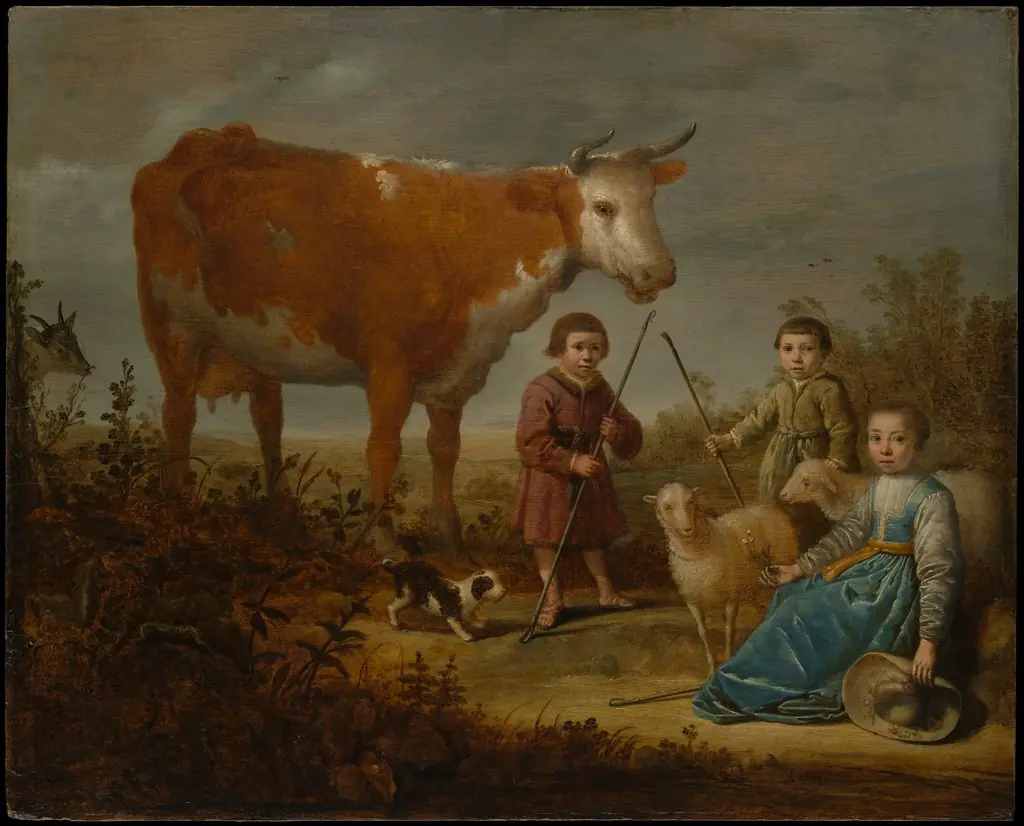 Children and a Cow
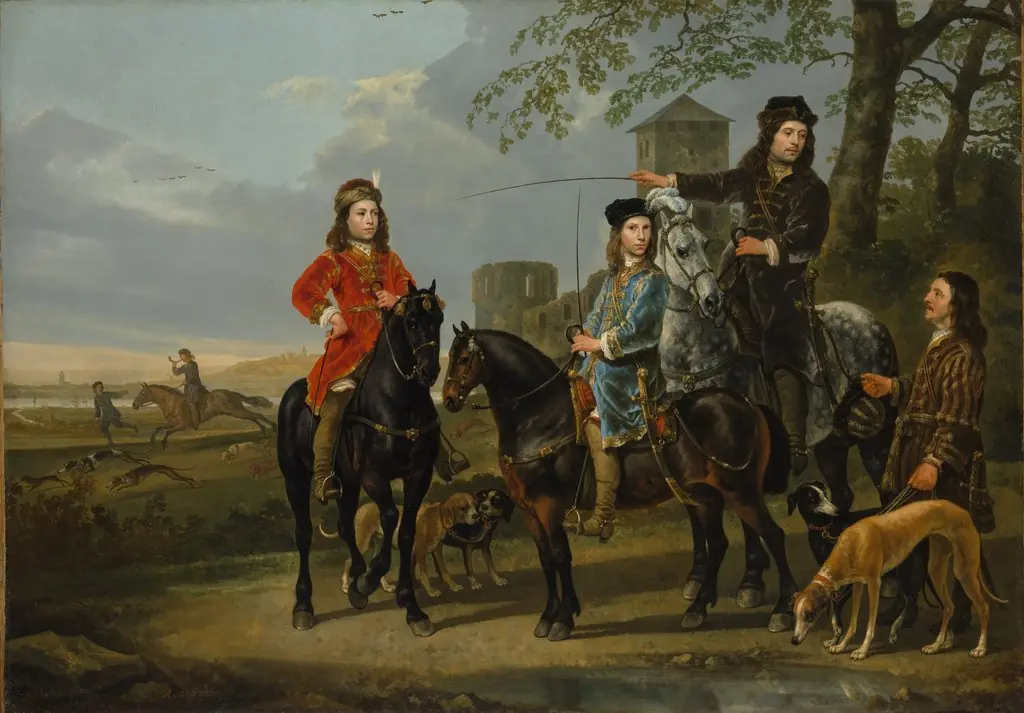 Equestrian Portrait of Cornelis (1639–1680) and Michiel Pompe van Meerdervoort (1638–1653) with Their Tutor and Coachman ("Starting for the Hunt")
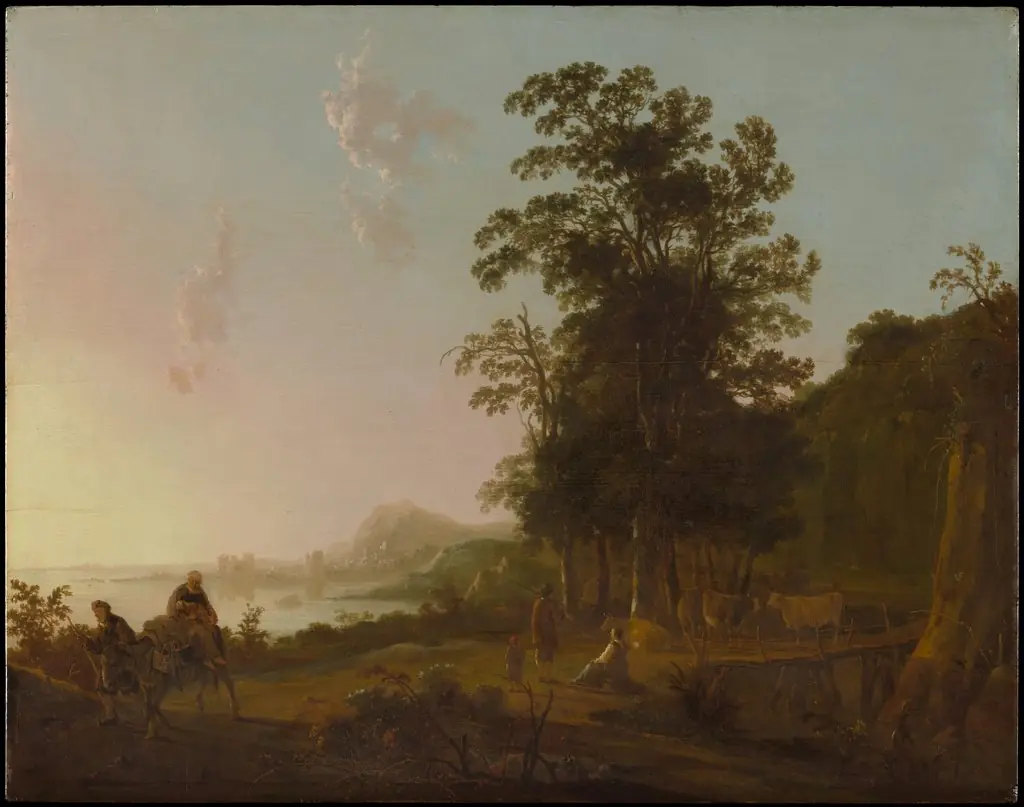 Landscape with the Flight into Egypt
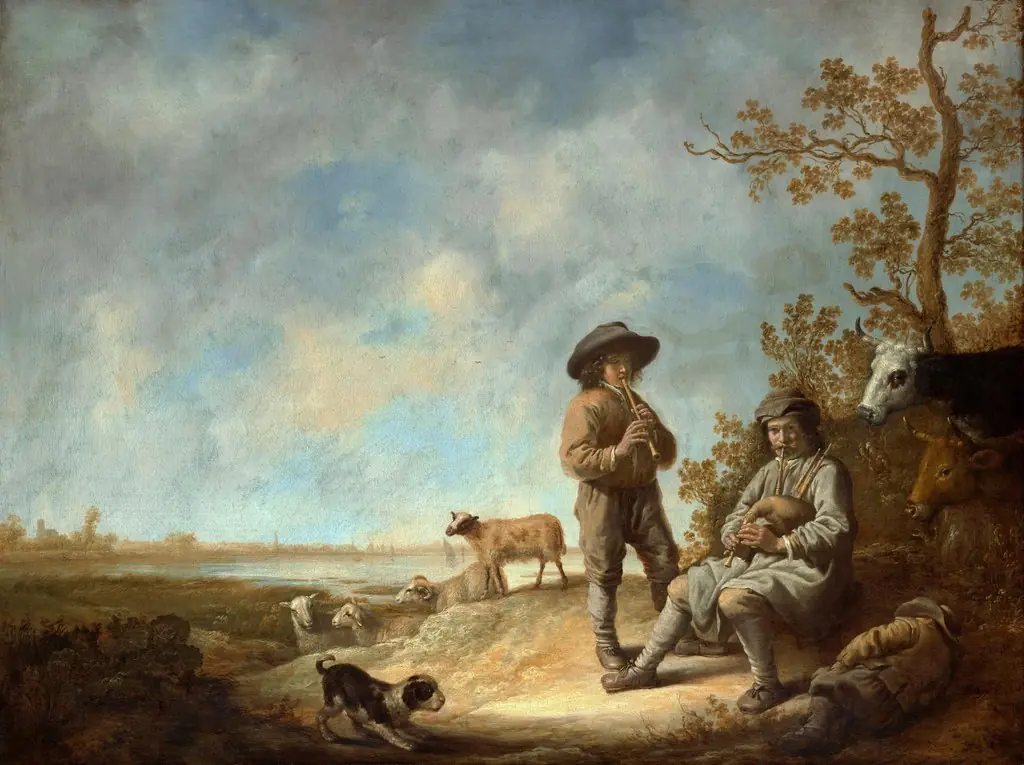 Piping Shepherds
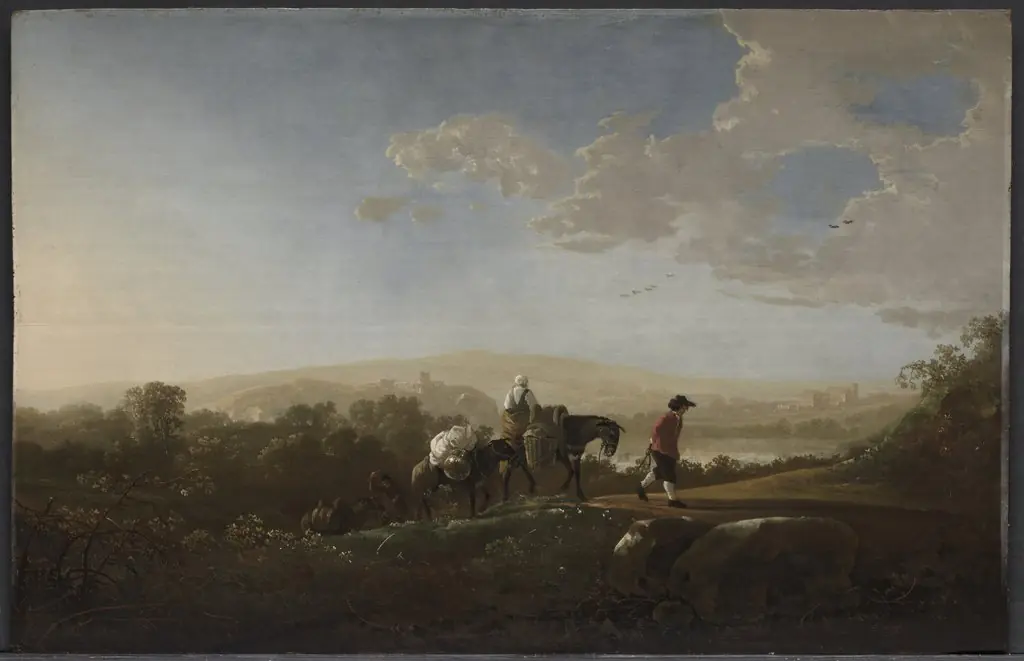 Travellers in Hilly Countryside
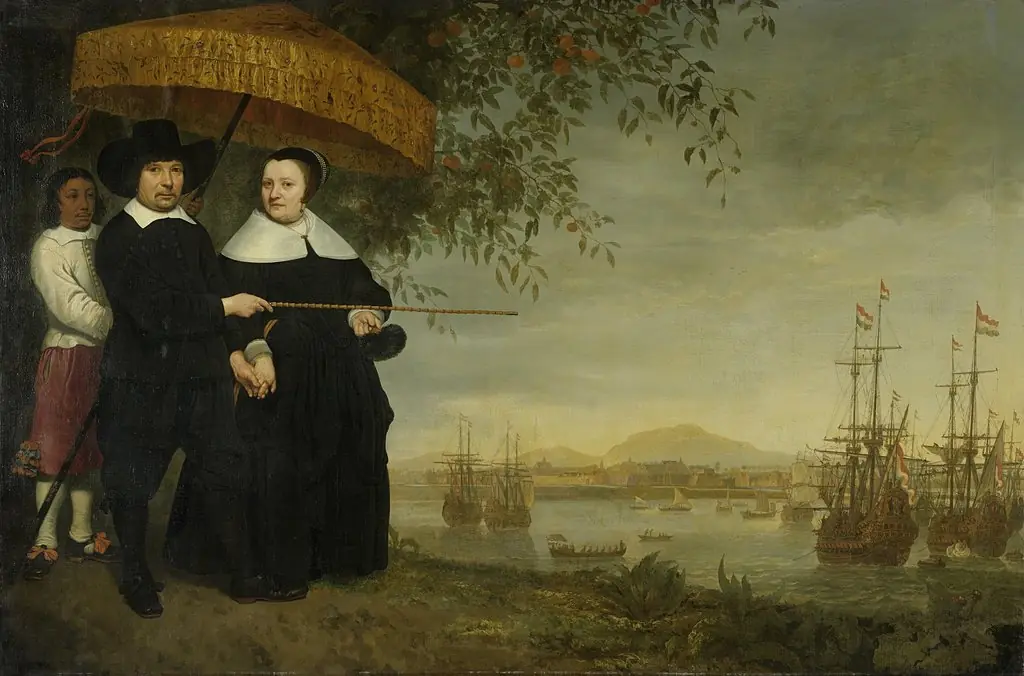 A Chief Merchant of the VOC with his Wife and an Enslaved Servant
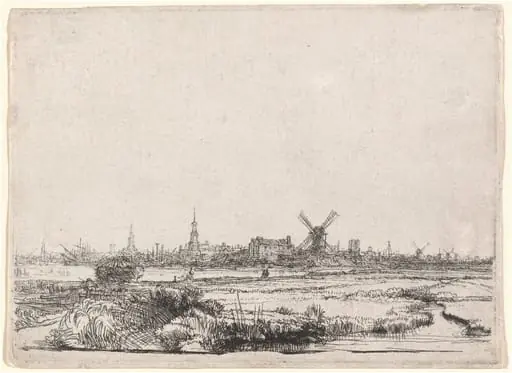
![View of Houtewael near the Sint Anthoniespoort [recto], by Rembrandt](https://artifactworldgallery.com/img/rembrandt--view-of-houtewael-near-the-sint-anthoniespoort-recto--2919925de9060e70-w320.webp)