Artwork
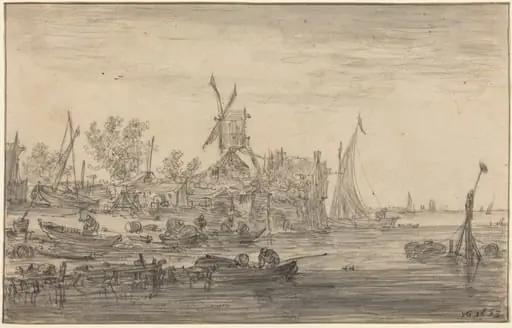
A Windmill and Cottages on a River Bank, Men in Rowing Boats
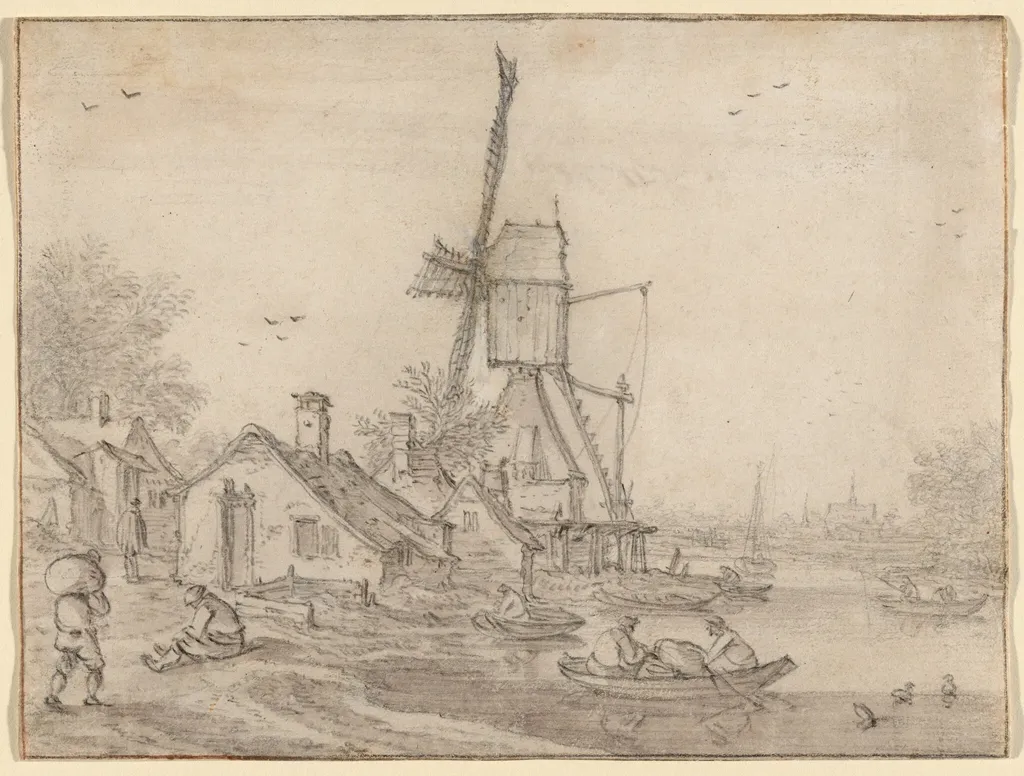
A Windmill and Cottages on a River Bank, Men in Rowing Boats is a chalk drawing by the Baroque artist Velde, Esaias van de, I. It dates from 1615 and is held in the collection of the National Gallery of Art. Created in 1615 by Esaias van de Velde I, this drawing depicts a tranquil riverside scene.
About this work
Overview
Created in 1615 by Esaias van de Velde I, this drawing depicts a tranquil riverside scene. A windmill and a cluster of cottages sit beside a gently flowing river, while several men propel small rowing boats. Rendered in black chalk with a pinkish‑gray wash on laid paper, the work is part of the National Gallery of Art’s collection in Washington.
Subject & Meaning
The composition presents a bucolic landscape where human activity—men rowing—coexists with rural architecture and natural elements. The windmill, a common symbol of Dutch agrarian life, anchors the scene, while the cottages and trees suggest a settled community. The quiet atmosphere invites contemplation of everyday life in the early seventeenth‑century Netherlands.
Technique & Style
Van de Velde employs delicate black chalk lines to define structures and figures, softened by a subtle pink‑gray wash that conveys atmospheric depth. The laid paper surface adds a faint texture, enhancing the sense of distance. The drawing’s restrained palette and economical rendering reflect the Dutch landscape tradition’s emphasis on observation and tonal harmony.
History & Provenance
The drawing was executed in 1615, during the early phase of van de Velde’s career when he was establishing his reputation for landscape studies. It entered the National Gallery of Art’s holdings through acquisition, where it remains on view as an example of early Dutch topographical drawing.
Context
At the time of its creation, Dutch artists were increasingly interested in realistic depictions of the countryside, moving away from purely idealized scenery. Van de Velde’s work aligns with this shift, documenting specific locales and everyday labor, and contributes to the broader development of landscape drawing in the Dutch Golden Age.
Artist & collection


 Foreshore Scene with Windmill
 Landscape with a Windmill near a Farmstead
 The Windmill
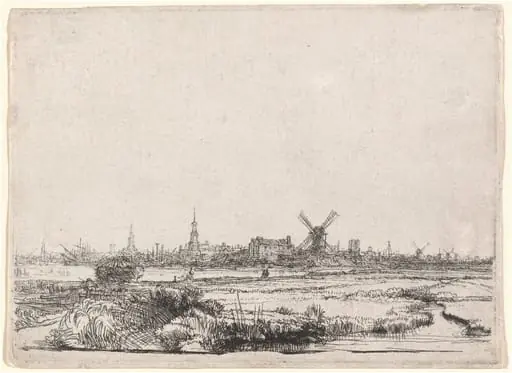 View of Amsterdam from the Northwest
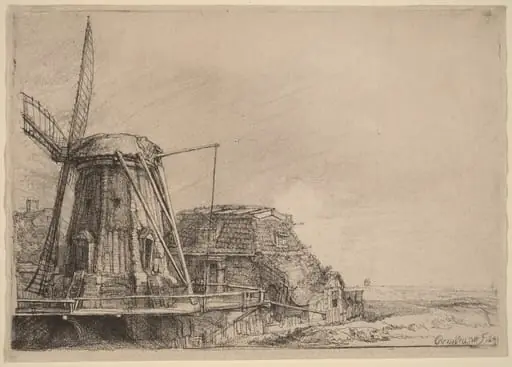 The Windmill
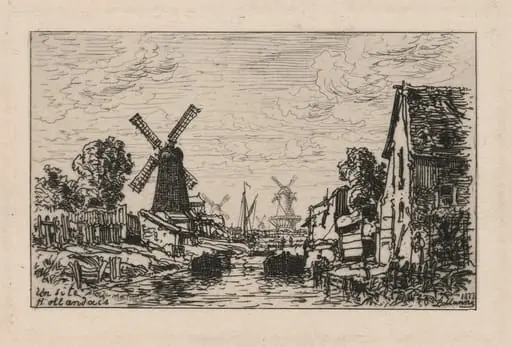 Un Site Hollandais (A Zaandam)
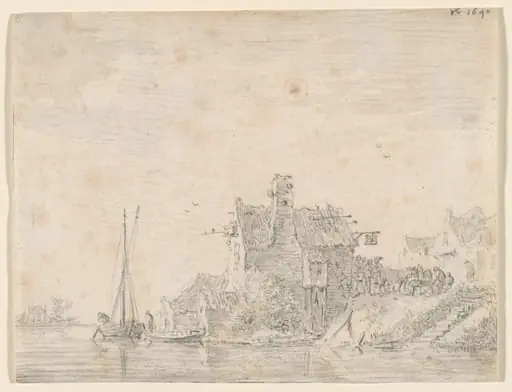 A Tavern by a River
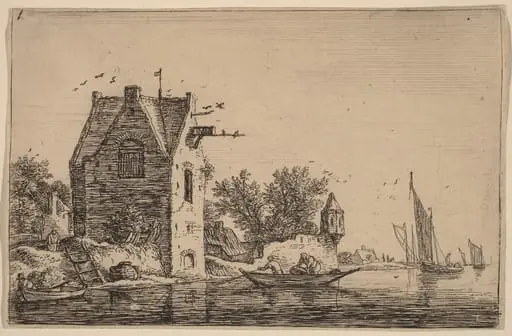 The Sentry Box on the Wall
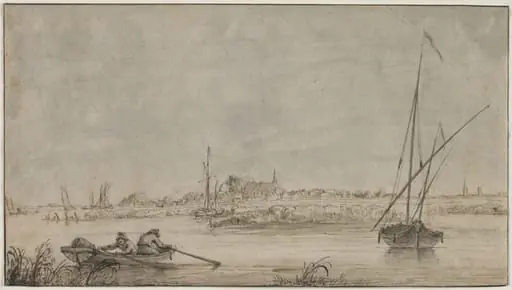 View of Dordrecht from the River
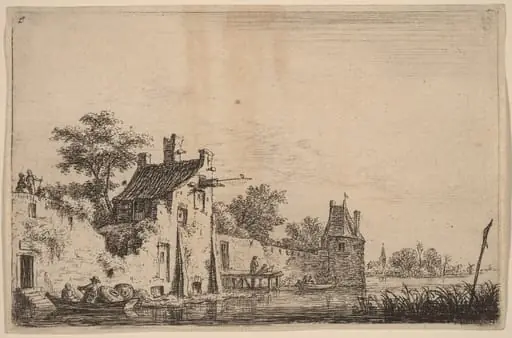 Departure of Two Fishermen
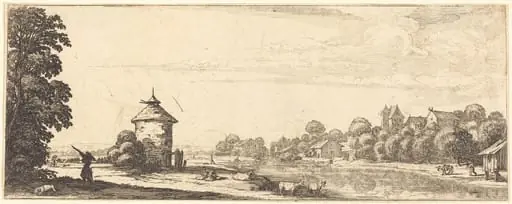 The Dovecot
 Boats on River with Masts