Artwork
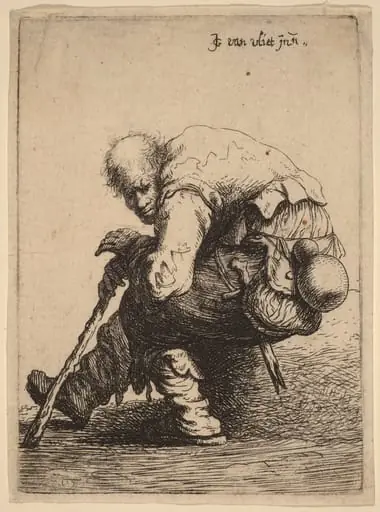
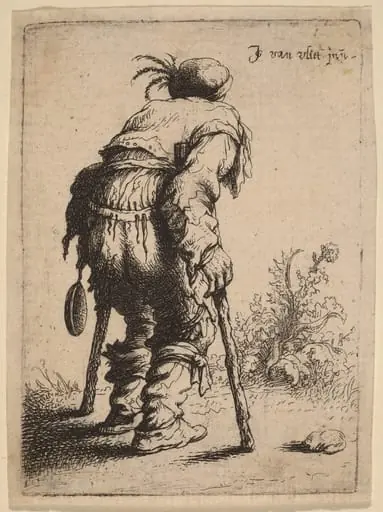
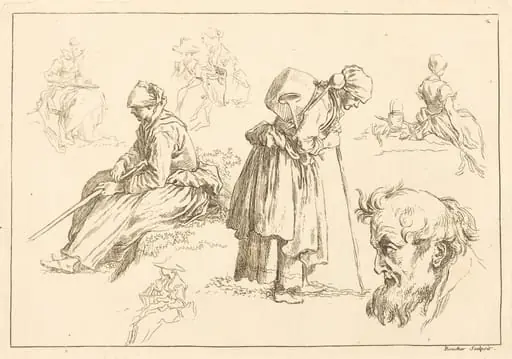
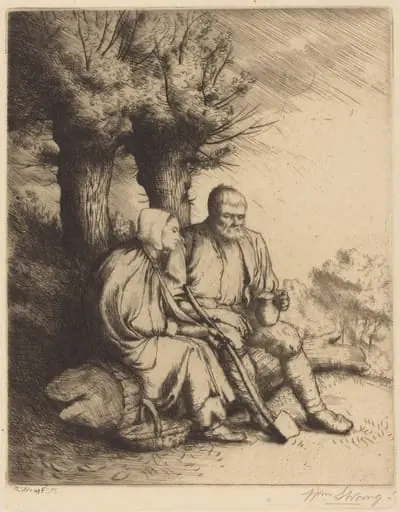
Two Tramps, a Man and a Woman
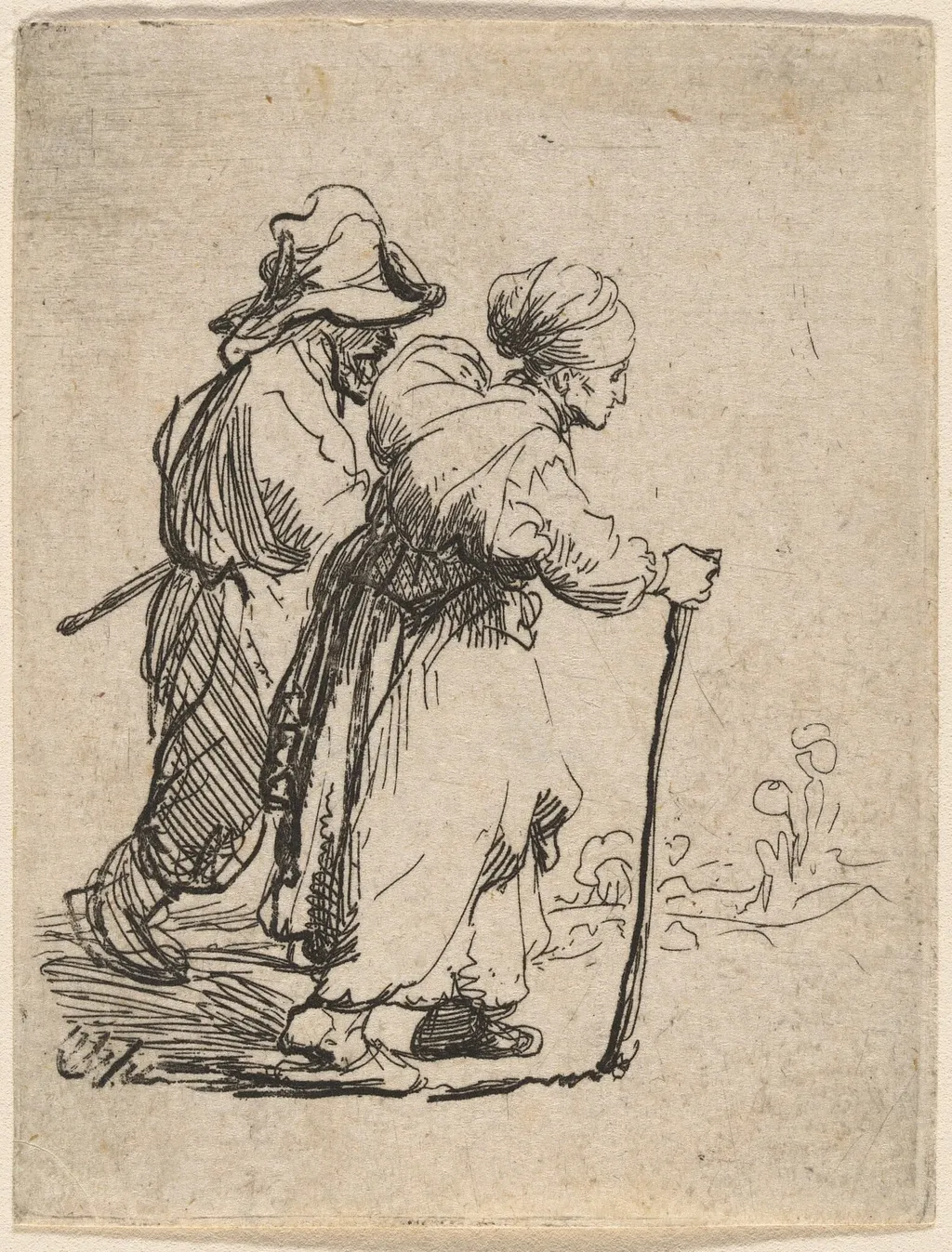
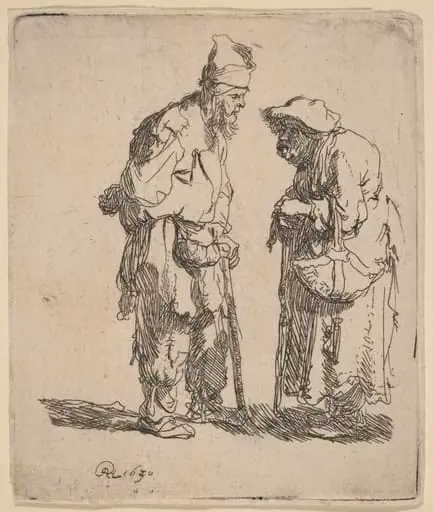
Two Tramps, a Man and a Woman is an ink print by the Baroque artist Rembrandt. It dates from 1634 and is held in the collection of the National Gallery of Art.
About this work
Overview
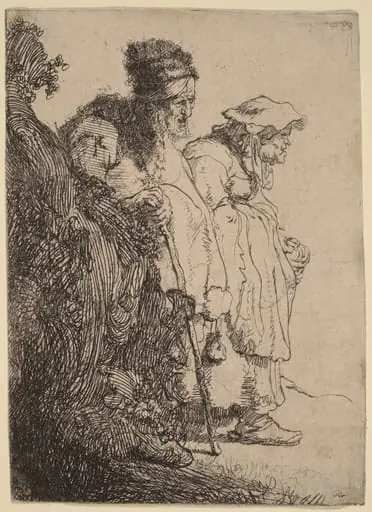
Created around 1634, this etching by Rembrandt van Rijn depicts two itinerant figures on the move. Executed in ink on laid paper, the work captures a fleeting moment of pedestrian life with minimal detail and maximum emotional resonance. The medium’s inherent graininess and the artist’s direct hand contribute to a sense of immediacy, as if the scene were observed and recorded in passing.
Subject & Meaning
Rembrandt avoids moralizing; instead, he presents them as ordinary travelers, their dignity rooted in motion and mutual support rather than circumstance.
The two figures—a man in a broad hat and loose coat, and a woman wrapped in a turban with a burdened shoulder—move in quiet unison, leaning on a staff and each other’s presence. Their postures suggest fatigue and resilience, not theatrical poverty. Rembrandt avoids moralizing; instead, he presents them as ordinary travelers, their dignity rooted in motion and mutual support rather than circumstance.
Technique & Style
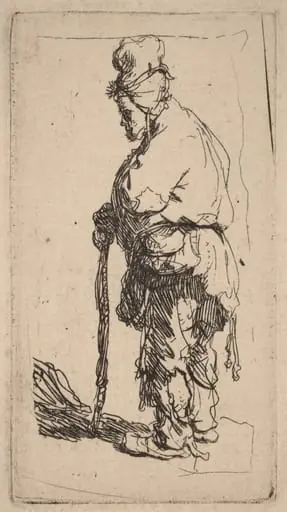
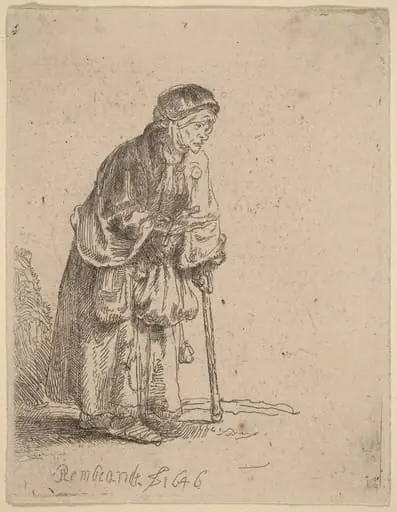
Rembrandt employed rapid, incised lines to model form and texture, allowing the paper’s natural fibres to show through as shadow and depth. The etching’s roughness mirrors the subjects’ worn garments, with no smooth gradients or idealized contours. The scratchy, uneven strokes convey movement and materiality, emphasizing the physicality of both the figures and the medium itself.
History & Provenance
The print emerged during Rembrandt’s early Amsterdam years, a period when he increasingly turned to intimate, everyday subjects. Though no definitive early ownership records survive, it was likely circulated among collectors and fellow artists who valued his unvarnished observations. Its survival in multiple impressions suggests modest but sustained interest in his graphic work during the 17th century.
Context
In 1630s Holland, depictions of the poor were rare in fine art, often confined to religious allegory. Rembrandt’s focus on anonymous wanderers reflects a broader shift toward secular realism in Dutch printmaking. His etchings of travelers, beggars, and laborers quietly challenged idealized norms, offering instead a grounded vision of urban and rural peripheries.
Legacy
This work exemplifies Rembrandt’s influence on the expressive potential of etching. Later artists, from Goya to Van Gogh, drew from his ability to convey psychological depth through minimal, tactile marks. The print’s enduring presence in museum collections underscores its role in redefining printmaking as a vehicle for human observation, not just reproduction.
Artist & collection
Artist
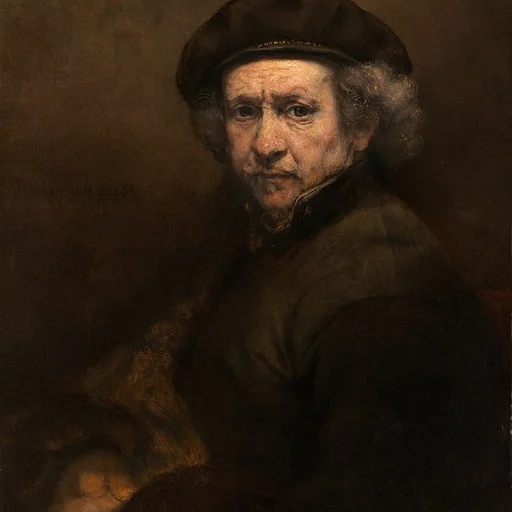
Rembrandt Harmenszoon van Rijn (15 July 1606 – 4 October 1669), known mononymously as Rembrandt, was a Dutch Golden Age painter, printmaker, and draughtsman.