Artwork
Fetiță cu basma
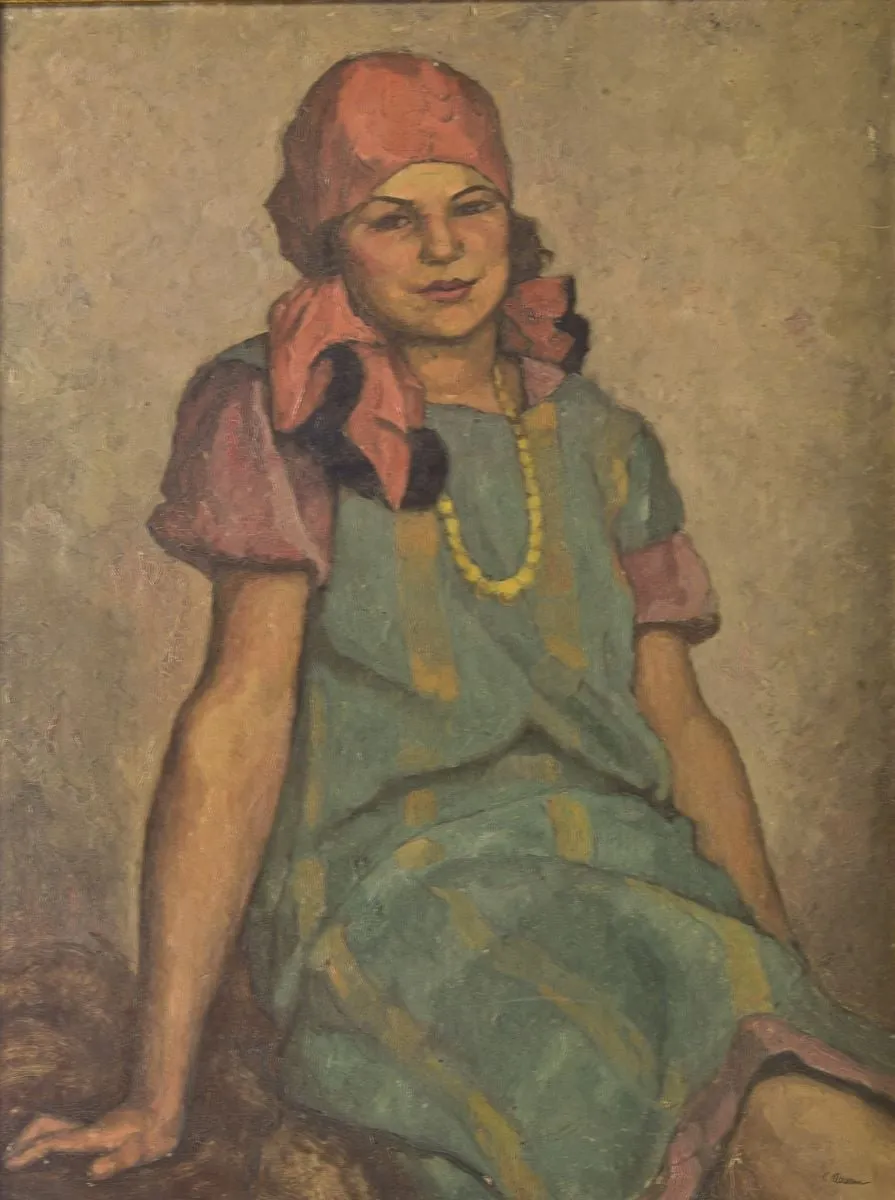
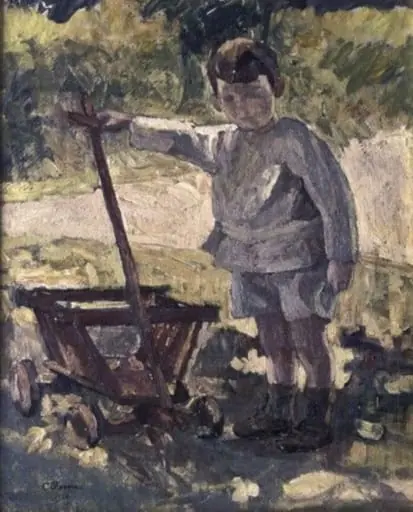
Fetiță cu basma is a print by Camil Ressu. It dates from 1930 and is held in the collection of the National Museum of Art of Romania.
About this work
Overview
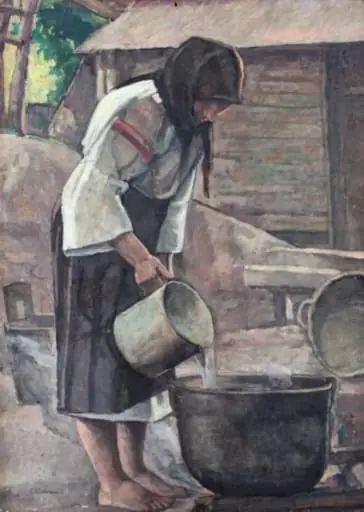
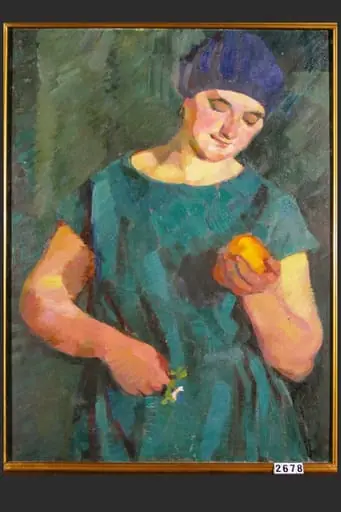
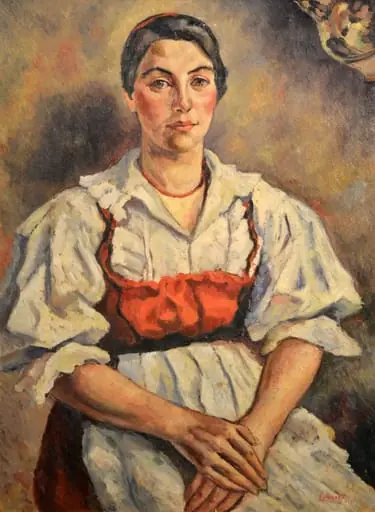
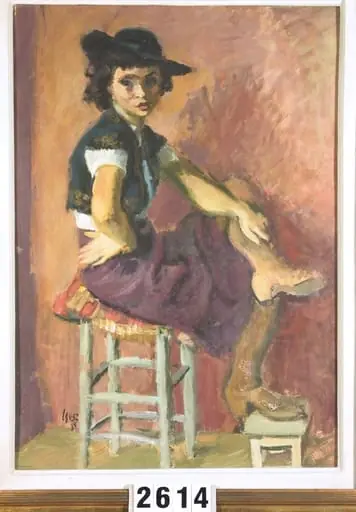
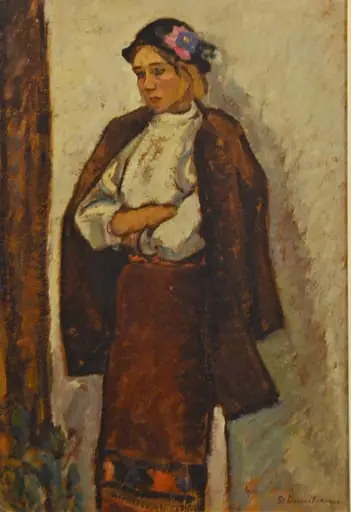
Painted around 1930 by Camil Ressu, Fetiță cu basma is a quiet, intimate portrait of a young girl in a domestic setting. The work belongs to a series of Romanian genre scenes that emphasize everyday life with restrained emotion. Ressu’s focus on a single figure in a modest interior reflects his interest in personal, unadorned moments rather than grand narratives.
Subject & Meaning
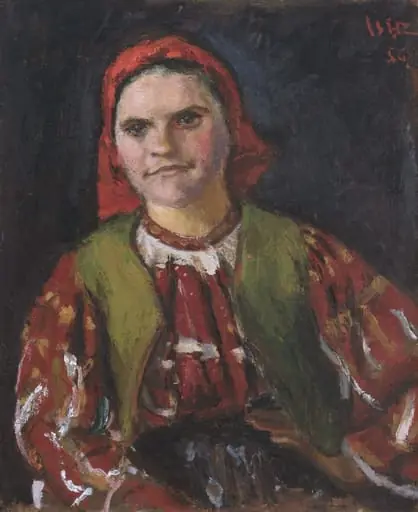
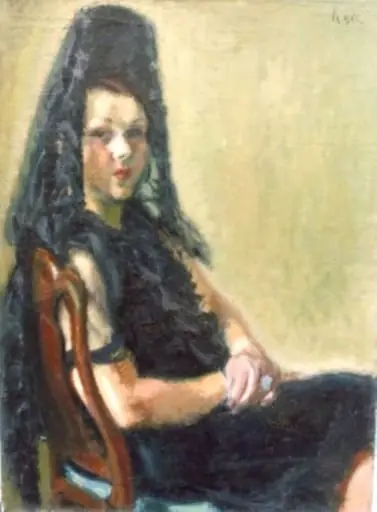
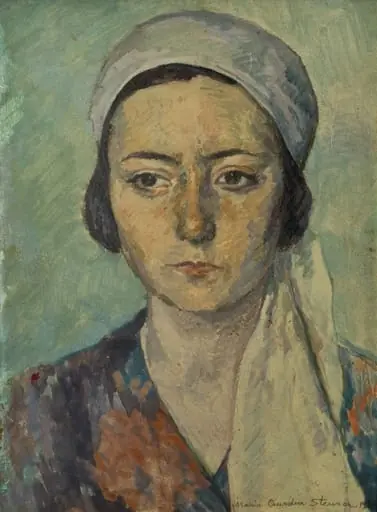
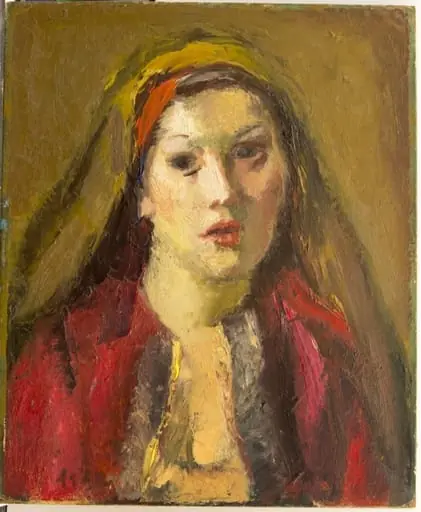
The subject is a girl seated on the floor, dressed in a green gown with a red headscarf, a yellow necklace, and a hint of pink fabric beneath her dress.
The subject is a girl seated on the floor, dressed in a green gown with a red headscarf, a yellow necklace, and a hint of pink fabric beneath her dress. Her neutral expression and relaxed posture convey stillness rather than narrative action. The absence of context or symbolic elements invites contemplation of the child’s presence, suggesting a meditation on innocence and quiet dignity within ordinary life.
Technique & Style
Ressu employs soft, muted tones with deliberate color contrasts—the red scarf against the green dress, the yellow necklace as a subtle highlight—to draw attention without drama. Brushwork is smooth and controlled, avoiding texture or flourish. The light brown background recedes gently, focusing attention on the figure’s form and the quiet harmony of her attire, characteristic of Ressu’s restrained realism.
History & Provenance
The painting was created during a period when Ressu was deeply engaged with Romanian rural and domestic subjects, following his studies in Paris and return to Bucharest. While its early ownership is undocumented, it has remained within Romanian collections since the mid-20th century, often included in exhibitions of interwar Romanian painting, though never widely reproduced.
Context
In early 20th-century Romania, artists like Ressu turned from academic traditions toward intimate, socially grounded scenes. Fetiță cu basma aligns with a broader movement that valued authenticity over idealization, capturing children and peasants with dignity. The work reflects a cultural shift toward national identity expressed through everyday figures, distinct from European modernist experimentation of the same era.
Legacy
Though not among Ressu’s most publicly recognized works, Fetiță cu basma exemplifies his commitment to quiet observation and emotional restraint. It continues to be referenced in scholarly discussions of Romanian interwar art for its subtle use of color and its rejection of sentimentality. The painting remains a quiet touchstone for artists interested in the poetic potential of the ordinary.
Artist & collection

Artist
Camil Ressu was a Romanian painter and academic, one of the most significant art figures of Romania.