Artwork
Spaniolă
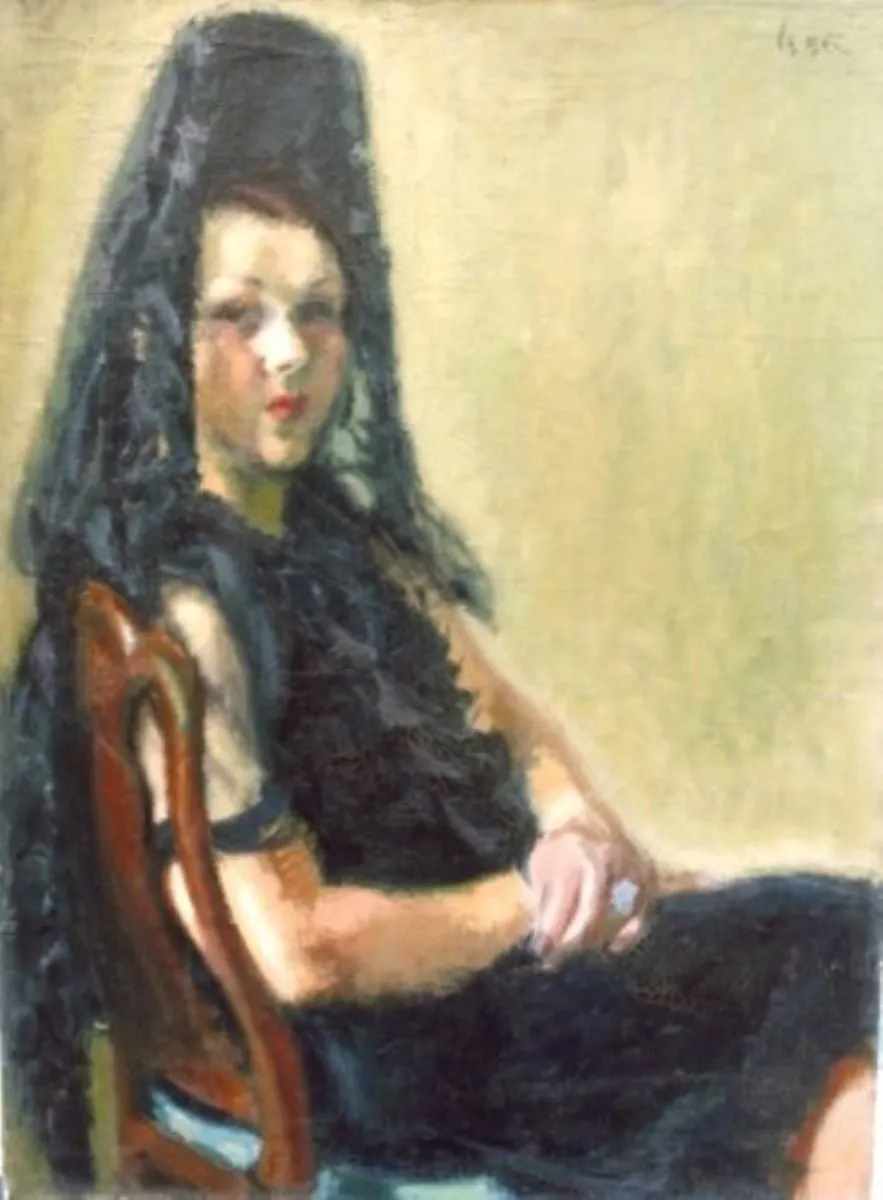
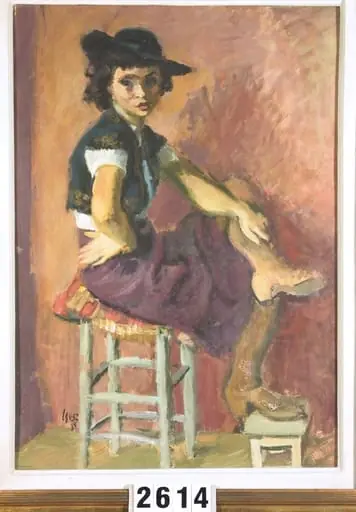
Spaniolă is an unspecified painting by Iosif Iser. It dates from 1940 and is held in the collection of the Bucharest Municipality Museum.
About this work
Overview
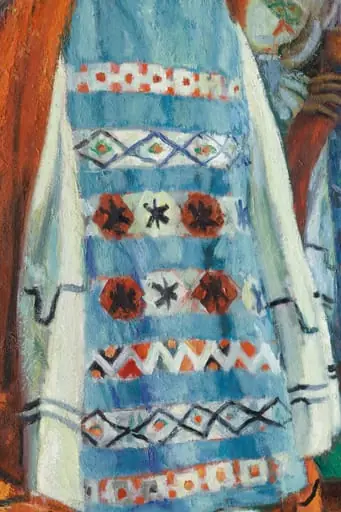
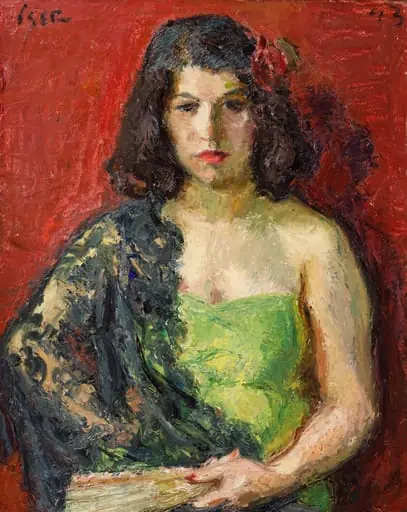
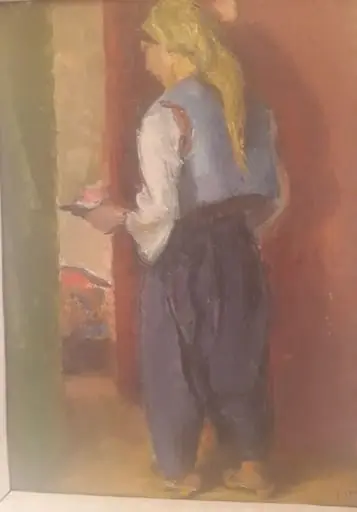
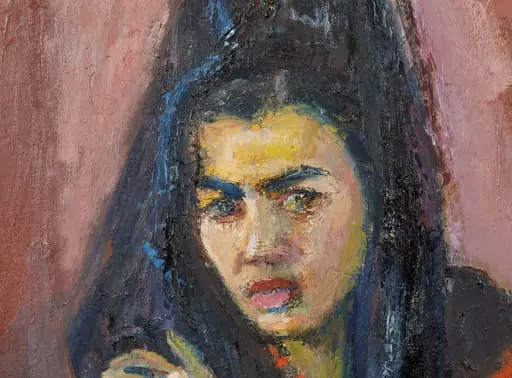
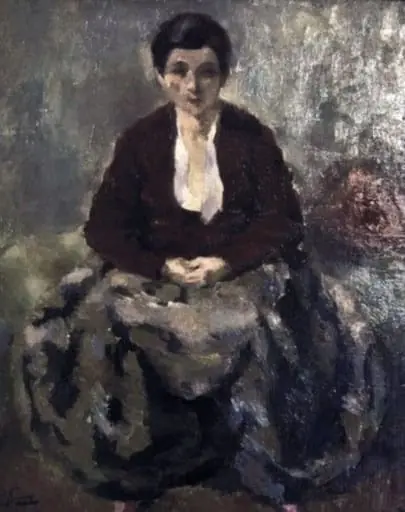
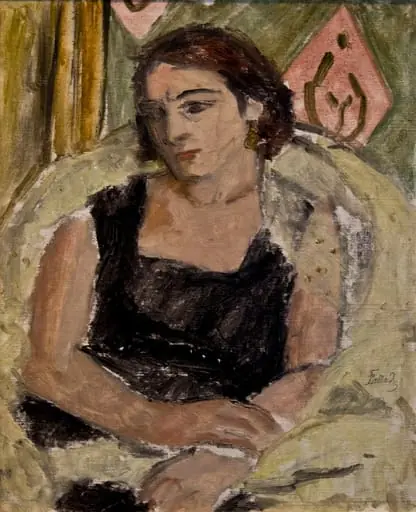
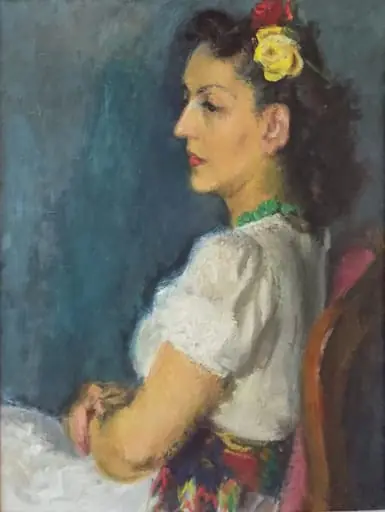
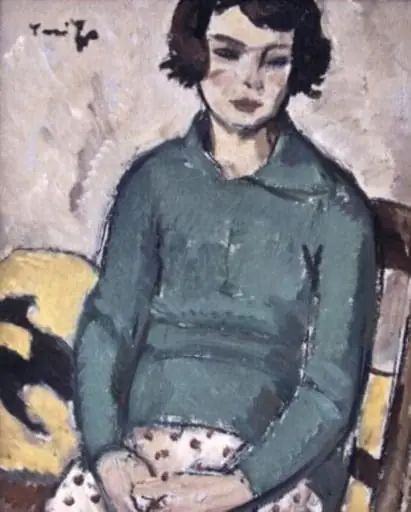
Spaniolă is a 1940 oil painting by Romanian artist Iosif Iser, currently in the collection of the Museum of Ethnography. The work presents a solitary female figure seated in a simple wooden chair, rendered with a pronounced physicality through thickly applied paint. Its restrained palette and unadorned setting focus attention on the subject’s presence rather than narrative detail.
Subject & Meaning
The figure, likely a woman from a rural or traditional background, is depicted with quiet dignity. Her face is partially obscured by a dark shawl, suggesting modesty or introspection. The stillness of her posture and the absence of context invite contemplation of identity, cultural attire, or the quiet resilience of everyday life, without overt symbolism or storytelling.
Technique & Style
Iser employs impasto to build the surface of the painting, applying paint in dense, tactile strokes that catch light and cast subtle shadows. The thick pigment emphasizes texture over smoothness, giving form to the shawl and chair with physical weight. The background, a muted greenish tone, remains flat and unmodulated, contrasting with the sculptural quality of the figure.
History & Provenance
Created in 1940, Spaniolă entered the Museum of Ethnography’s collection shortly after its completion. The work reflects Iser’s engagement with Romanian folk subjects during a period of heightened national cultural interest. Its preservation in an ethnographic institution underscores its role as a record of regional dress and social types, rather than as a purely aesthetic object.
Context
In late 1930s Romania, artists like Iser turned to rural life as a source of authentic identity amid political upheaval. Spaniolă aligns with this trend, portraying a figure whose attire and demeanor evoke traditional customs. The painting avoids romanticization, instead offering a direct, unembellished observation grounded in the artist’s close study of local communities.
Legacy
Spaniolă remains a quiet example of interwar Romanian realism infused with expressive brushwork. While not widely exhibited beyond institutional circles, it contributes to the understanding of how regional identity was visually negotiated in art during a time of social transformation. Its enduring presence in the Museum of Ethnography reflects its value as a cultural document.
Artist & collection
Artist
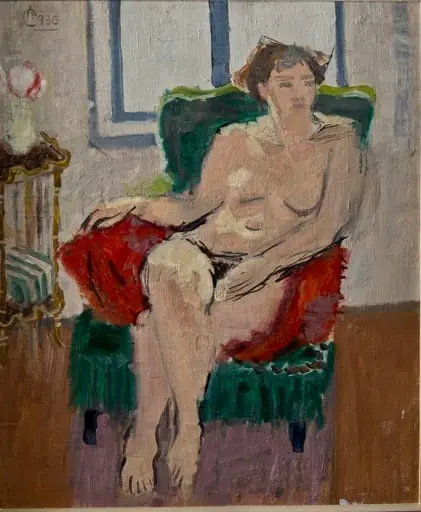
Iosif Iser painted everyday life with a focus on people and places. His 1933 work *Paris. Strada Mouffetard* shows a lively street scene in Paris, while *Nud pe fotoliu* depicts a seated nude figure. His brushwork…