Artwork
Hopgarden
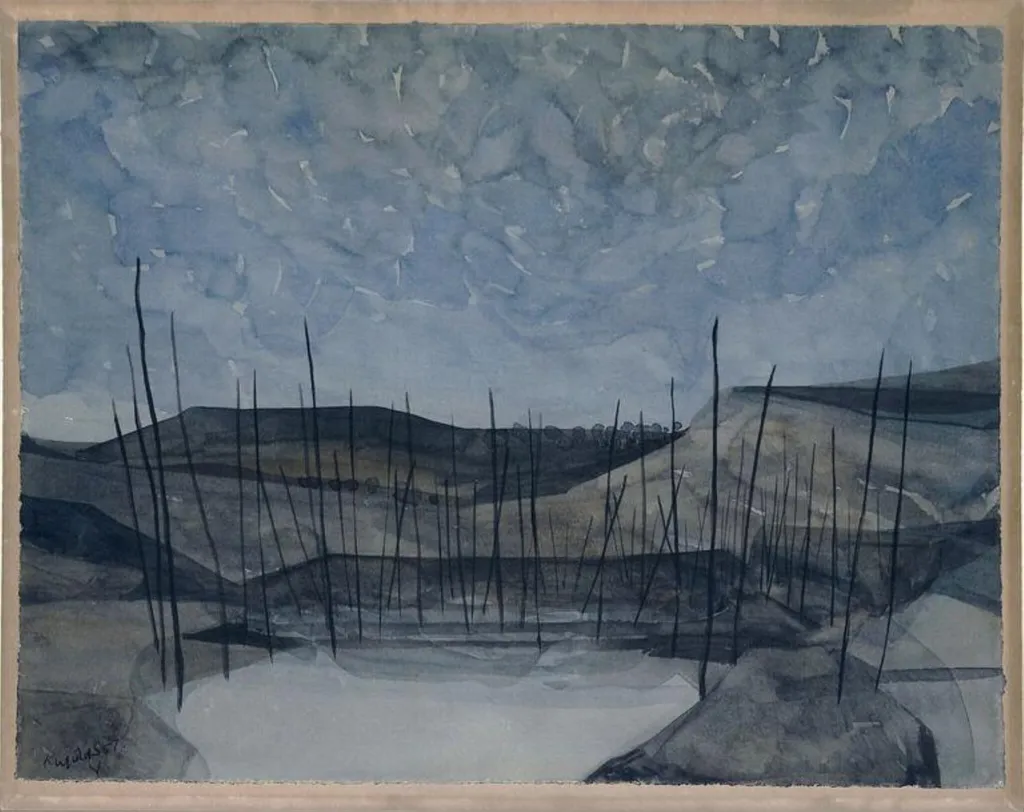
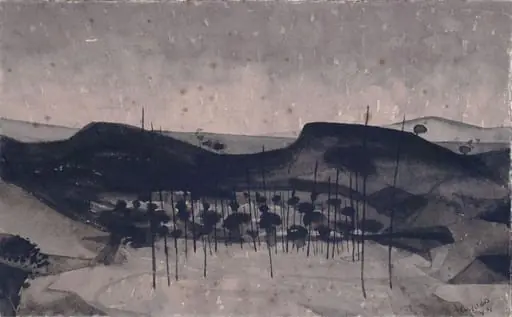
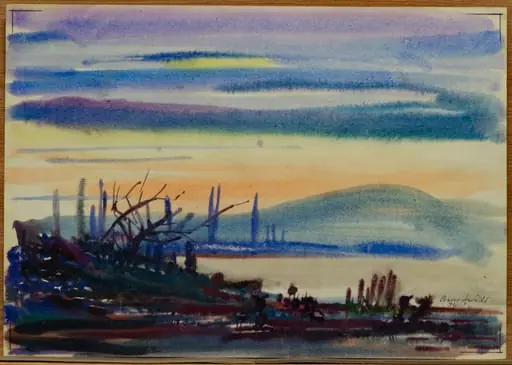
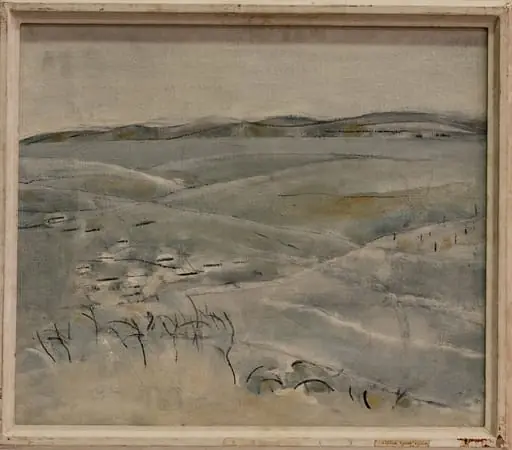
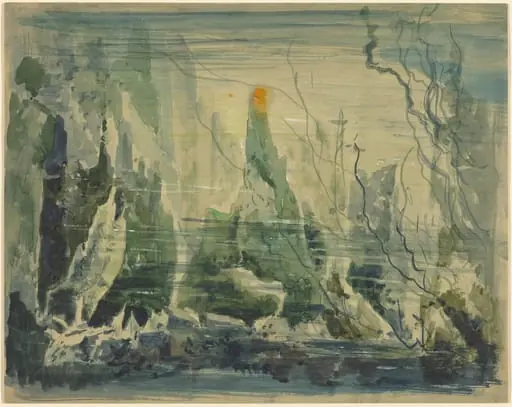
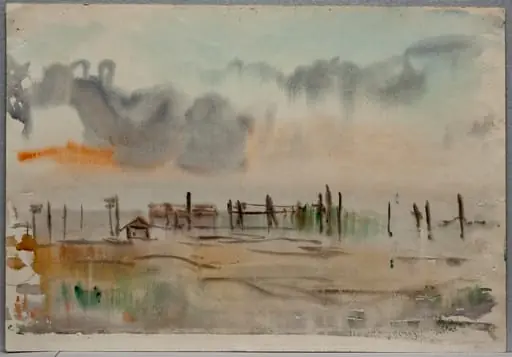
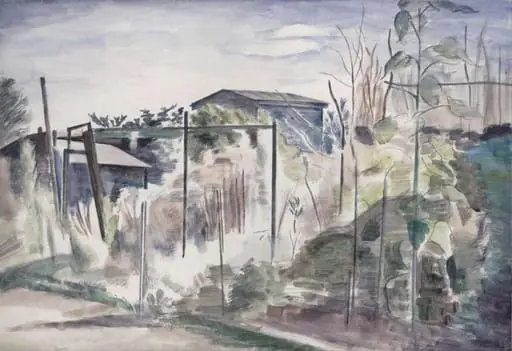
Hopgarden is a watercolor work on paper by Alan Munro Reynolds. It dates from 1957 and is held in the collection of the Victoria and Albert Museum.
About this work
Alan Reynolds painted *Hopgarden* in 1957 using watercolour. It’s a quiet landscape of a Kent farm where tall hop frames stand empty in neat rows.
The artist started as a landscape painter and later shifted toward abstract shapes. This work still shows his early style, with strong lines that recall Paul Nash’s wartime scenes.
Look up the Victoria and Albert Museum next.
Overview
Created in 1957, *Hopgarden* is a watercolour by British artist Alan Reynolds. The composition depicts a tranquil Kentish farm where rows of empty hop‑frames rise from the ground, their regular spacing lending the scene a measured calm. The work exemplifies Reynolds’s early period, before his later turn toward abstraction.
Subject & Meaning
The painting presents a cultivated hop garden, a common feature of Kent’s agricultural landscape. By omitting vines and activity, the empty frames emphasize structure over narrative, inviting contemplation of the cultivated environment as a geometric pattern within the countryside.
Technique & Style
Reynolds employs precise, linear brushwork characteristic of his late Neo‑Romantic phase. The clear delineation of the hop frames and their rhythmic repetition echo the stark, broken forms found in Paul Nash’s wartime landscapes, while the restrained palette underscores the work’s quiet mood.
History & Provenance
Alan Reynolds, initially celebrated as a leading landscape painter, produced *Hopgarden* during a period of critical and commercial success. By the late 1960s he shifted toward abstraction, influenced by German avant‑garde figures such as Paul Klee. The watercolour is now held in the collection of the Victoria and Albert Museum.
Artist & collection
Artist
Alan Munro Reynolds made gentle watercolours and drawings of quiet places. In *Hopgarden* he shows a patch of hops against a soft sky, all painted in 1957. His *Drawing from a plant, No.3* is a careful pencil study of…