Artwork
Olive Grove at Delphi
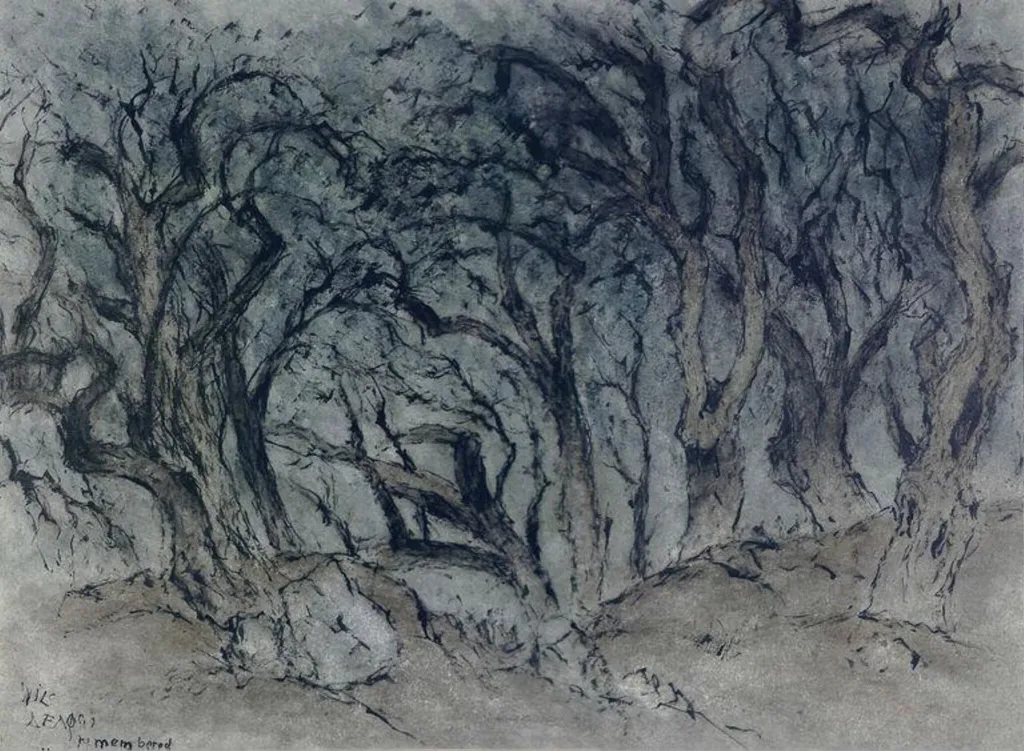
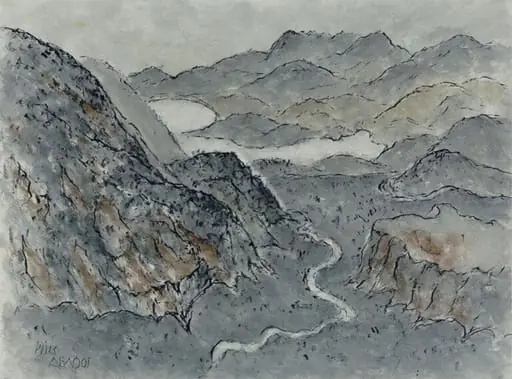
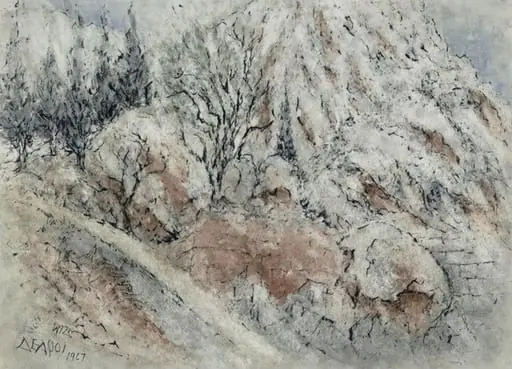
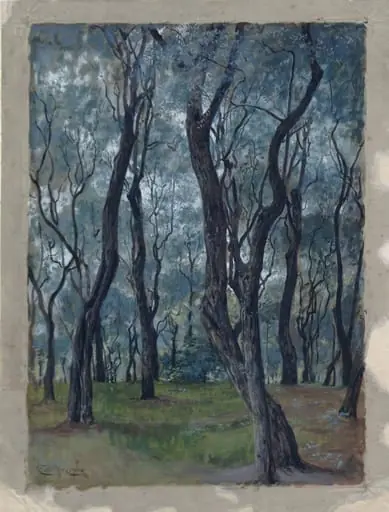
Olive Grove at Delphi is a watercolor work on paper by Wilczynski. It dates from 1965 and is held in the collection of the Victoria and Albert Museum.
About this work
Overview
A secondary image on the reverse depicts classical architecture and figures in combat, suggesting a layered engagement with Greek cultural memory.
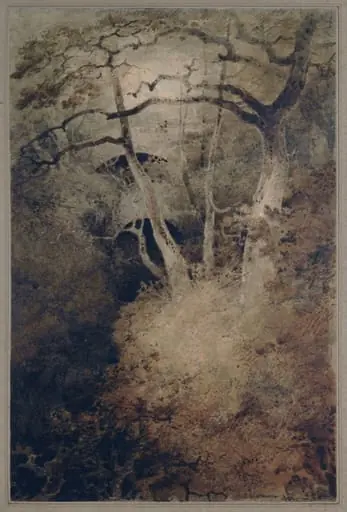
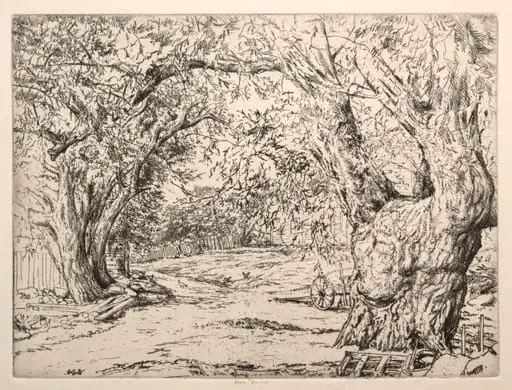
Created in 1965, this watercolour and Indian ink work by Wilczynski captures an olive grove near Delphi, Greece. The piece is signed by the artist and features an inscription in Greek. A secondary image on the reverse depicts classical architecture and figures in combat, suggesting a layered engagement with Greek cultural memory. The dual-sided composition reflects a deliberate interplay between landscape and myth.
Subject & Meaning
The scene portrays an ancient olive grove, its trees twisted by time and climate, standing as silent witnesses to centuries of history. The quiet stillness of the grove contrasts with the violent imagery on the reverse, implying a tension between enduring nature and human conflict. The Greek inscription may reference local lore or personal reflection, anchoring the work in its physical and cultural setting.
Technique & Style
Wilczynski employed watercolour with subtle Indian ink linework to render the gnarled trunks and dense canopy. Layered washes create depth in the shadows beneath the trees, while dry brushstrokes suggest the parched, uneven earth. The interplay of light and dark emphasizes texture over detail, evoking the weathered resilience of the olives without idealizing their form.
History & Provenance
The work entered the collection of the Victoria and Albert Museum, where it is held alongside other modern watercolours of Mediterranean landscapes. Its dual-sided nature and handwritten Greek text suggest it may have been made during the artist’s travels in Greece, possibly as a personal record rather than a commissioned piece. The inscription and imagery hint at a private dialogue with Hellenic heritage.
Context
In mid-20th century Europe, many artists turned to ancient landscapes as sites of cultural reflection amid postwar uncertainty. Wilczynski’s depiction of Delphi’s olive groves aligns with this trend, using natural forms to evoke continuity and memory. The inclusion of warrior imagery on the reverse connects the quiet land to mythic narratives of ancient Greece, common in artistic responses to classical antiquity.
Legacy
This work contributes to a modest but significant body of modern watercolours that engage with Mediterranean landscapes through intimate, observational techniques. Its dual imagery and handwritten text distinguish it from more conventional travel sketches, offering a layered meditation on place, history, and personal response. It remains a quiet example of how landscape can carry historical weight beyond representation.
Artist & collection
Artist
Wilczyński is a surname of Polish-language origin. It derives either directly from Wilk or from toponyms with this stem. About 17,000 people use the surname in Poland, with the greatest number found in Ostrów…