Artwork
The Death of Dido
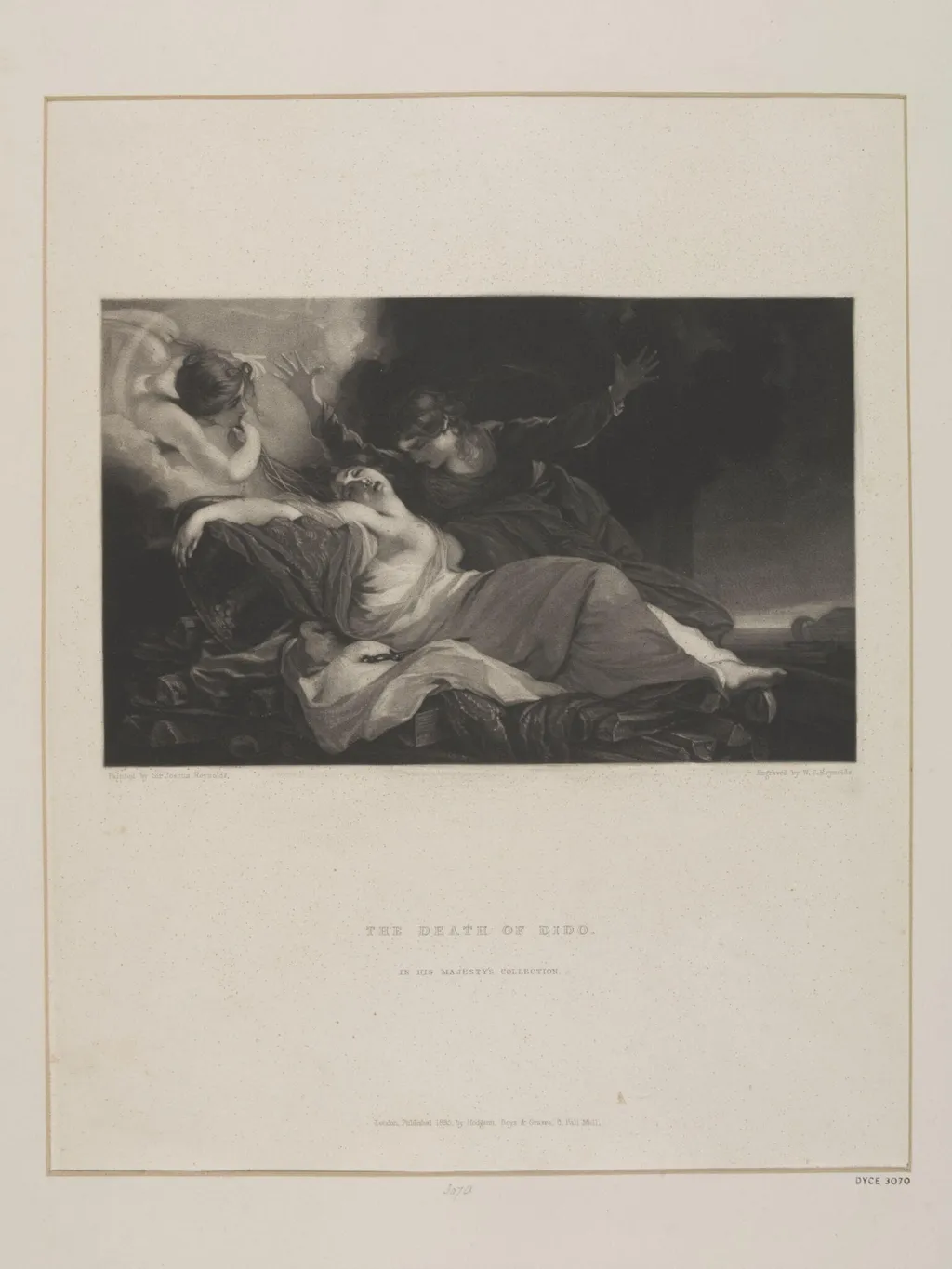
The Death of Dido is a print by the Romanticist artist Samuel William Reynolds. It dates from 1835 and is held in the collection of the Victoria and Albert Museum. This print depicts the suicide of Dido, the legendary queen of Carthage, as described in Virgil’s Aeneid.
About this work
Overview
This print depicts the suicide of Dido, the legendary queen of Carthage, as described in Virgil’s Aeneid. Two winged figures hover above her lifeless form, one extending a hand toward her, the other holding a torch. The composition is shrouded in deep shadow, pierced only by a soft luminescence around the figures and a distant window, emphasizing the solemnity of the moment.
Subject & Meaning
Dido’s death follows her abandonment by Aeneas, who leaves to found Rome. The scene captures her final act—not as violent, but as resigned, her posture calm despite the tragedy. The winged figures may symbolize spirits or personifications of fate and death, while the torch suggests the burning of her funeral pyre. The image conveys emotional closure rather than spectacle.
Technique & Style
The artist employs chiaroscuro to heighten the emotional tone, contrasting deep blacks with faint, ethereal light. Delicate linework defines the drapery of Dido’s robe and the wings of the figures, while the background recedes into near-obscurity. The restrained palette and focus on atmosphere align with Romantic sensibilities, prioritizing mood over narrative clarity.
History & Provenance
The print originates from a 19th-century European tradition of illustrating classical literature, likely produced as part of a series on mythological or literary themes. Its precise origin and publisher remain undocumented, but its style suggests influence from Romantic-era printmakers who favored dramatic, introspective scenes from antiquity.
Context
During the early 1800s, European artists frequently turned to ancient texts for subjects that evoked deep emotion and moral complexity. Dido’s story, emblematic of love, betrayal, and sacrifice, resonated with Romantic ideals that valued inner experience over rational order. This print reflects a broader cultural fascination with tragic female figures from antiquity.
Legacy
Though not widely reproduced or attributed to a major artist, the print contributes to a visual lineage of Dido’s death in Western art. Its quiet intensity distinguishes it from more theatrical depictions, offering a contemplative interpretation that influenced later symbolic treatments of mythological suicide in print and painting.
Artist & collection
Artist
Samuel William Reynolds made finely detailed prints in England during the late 1700s and early 1800s.

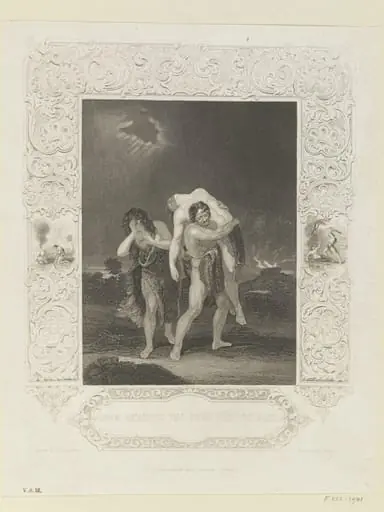 Adam bearing the body of Abel
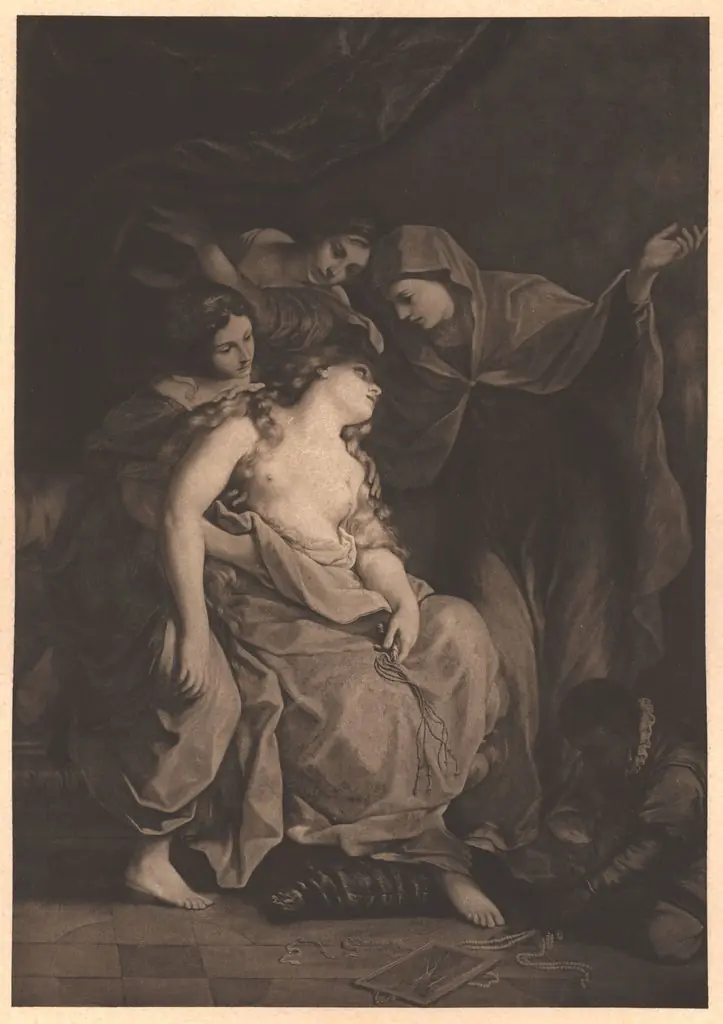 The Petitent Magdalen
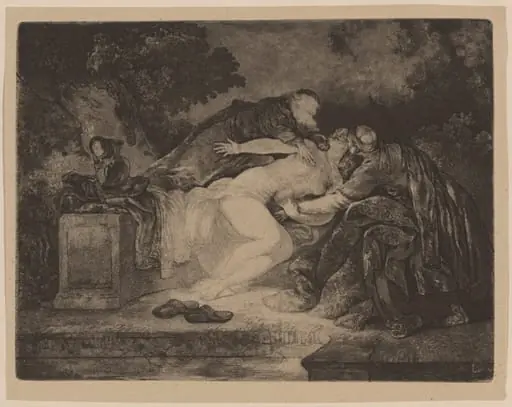 Susannah and the Elders
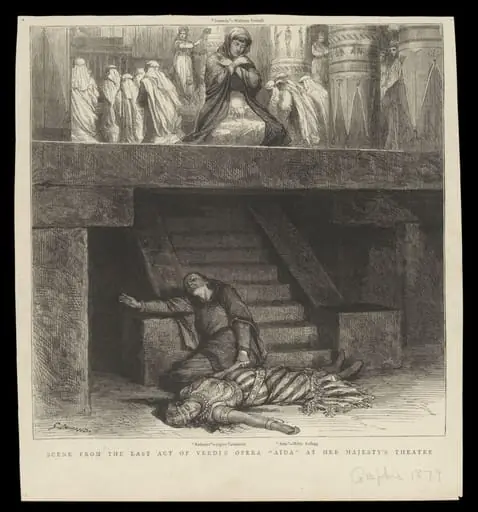 H Beard Print Collection
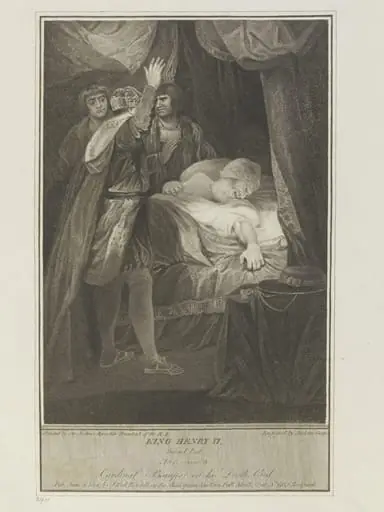 Cardinal Beaufort's Bedchamber
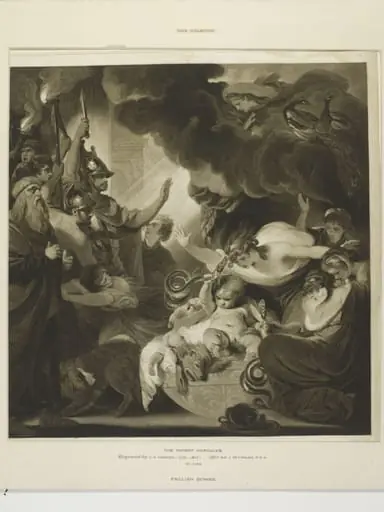 The Infant Hercules
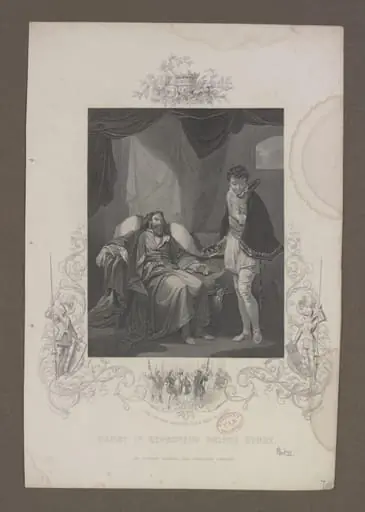 Henry IV, Reproving Prince Henry
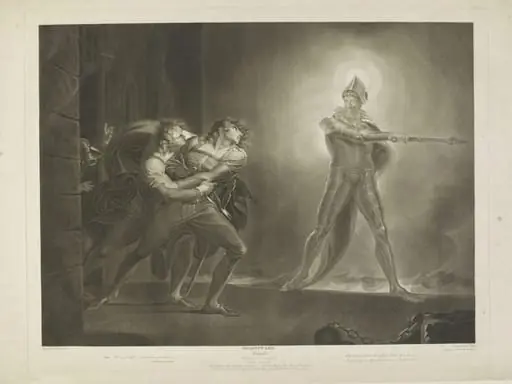 Scene from Hamlet, Act I., Scene IV.
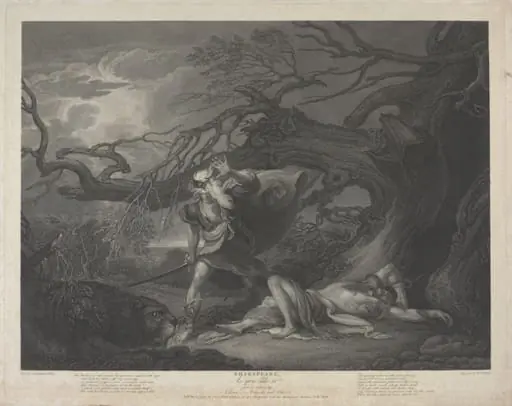 H Beard Print Collection
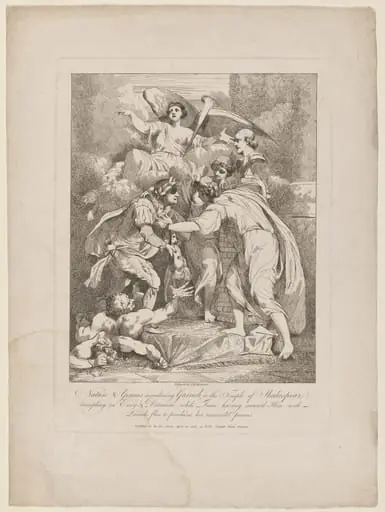 Nature and Genius Introducing Garrick to the Temple of Shakespeare
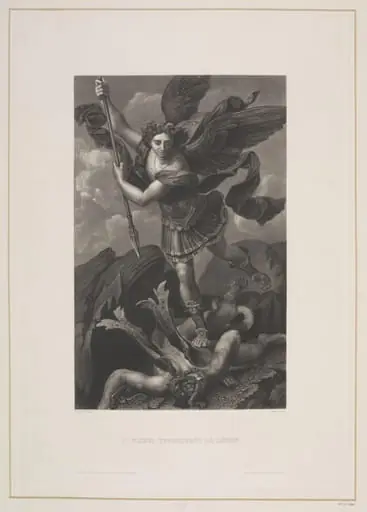 St. Michael
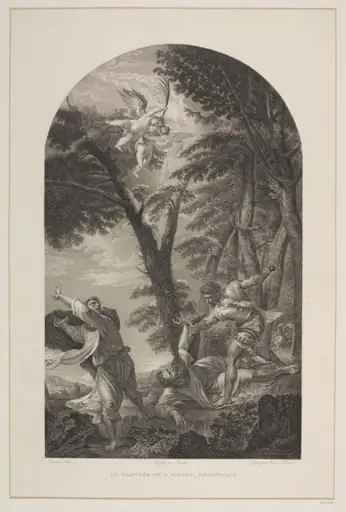 Martyrdom of St. Peter the Dominican