Artwork
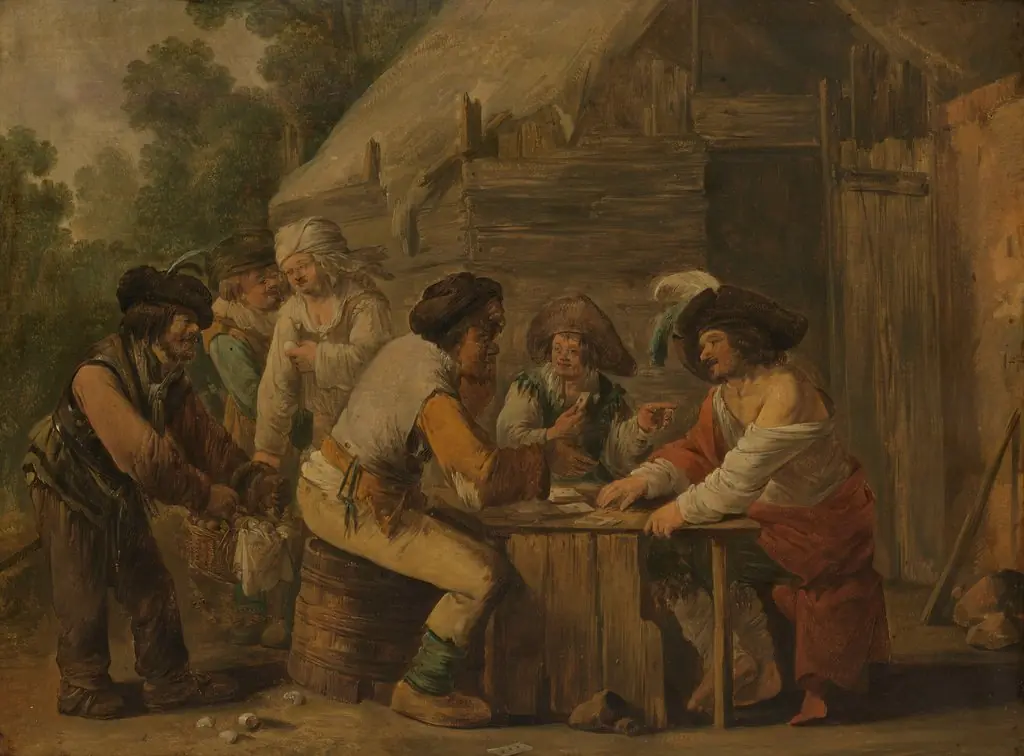
Card Players
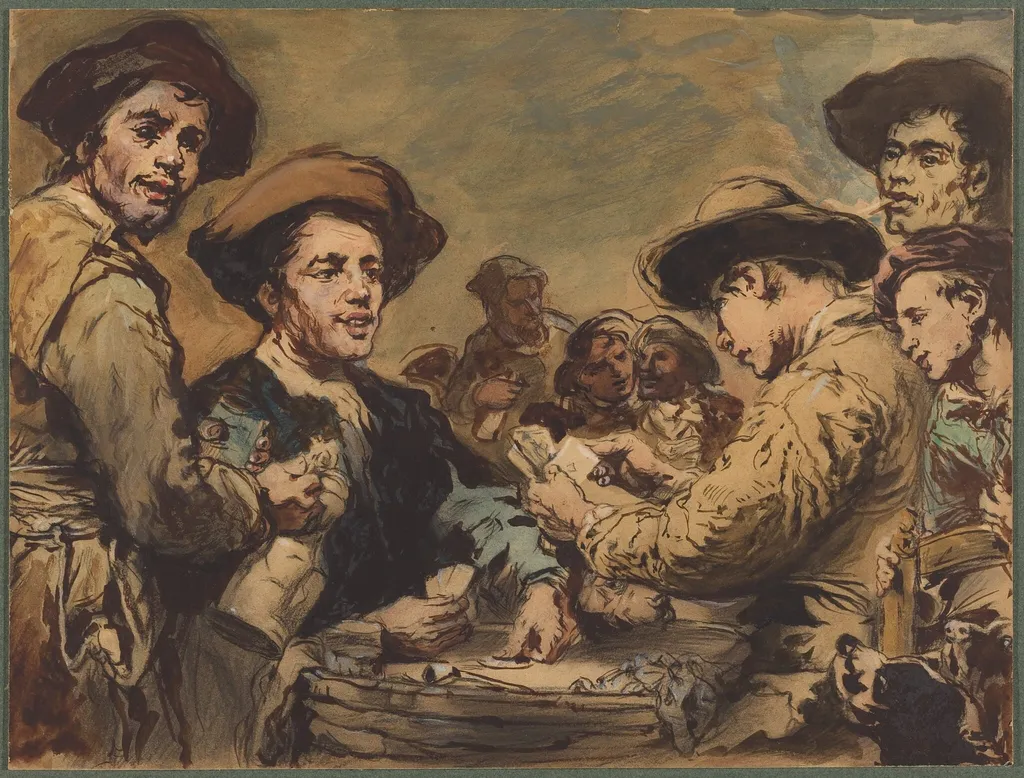
Card Players is an ink drawing by the Impressionist artist Augustin Théodule Ribot. It dates from 1878 and is held in the collection of the National Gallery of Art.
About this work
Overview
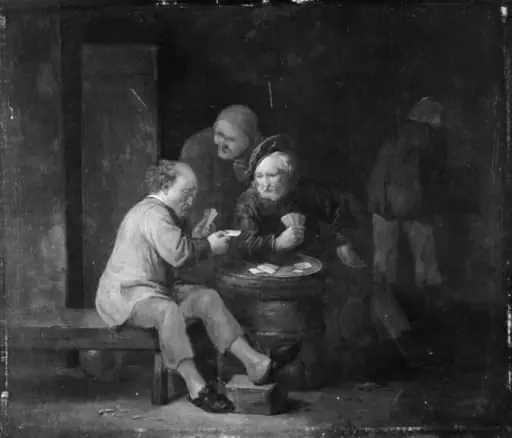
Augustin Théodule Ribot’s drawing Card Players, executed around 1878, combines pen, brown ink, watercolor and gouache on a black‑crayon ground, with accents of white gouache applied directly on the paper. The work depicts a quiet interior scene of two men seated at a card table, illuminated by a single lamp.
Subject & Meaning
The composition focuses on the two players, their hunched postures and the intimate glow that outlines their faces. The lamp’s light creates a contrast between the illuminated figures and the surrounding shadows, suggesting a moment of concentration and the subdued atmosphere of a private gaming space.
Technique & Style
Ribot employs a layered approach: a dark crayon base is overpainted with ink and watercolor, while selective white gouache highlights the brightest areas. The ink lines are loose and gestural, especially in the rendering of the hands, giving a sense of immediacy. This method aligns with the glazing technique, where translucent layers build depth and luminosity.
History & Provenance
Created in the late 1870s, the drawing reflects Ribot’s early exposure to the play of light in his childhood work at a butcher’s shop, where he observed how illumination interacts with skin and fabric. The piece has remained in private collections before entering its current institutional setting.
Context
Ribot’s interest in everyday scenes and the effects of artificial light places this work within the broader 19th‑century realist tradition. The focus on ordinary leisure activities and the atmospheric rendering of interior light echo contemporary concerns with modern urban life.
Legacy
The drawing exemplifies Ribot’s skill in capturing transient light effects, influencing later artists who explored chiaroscuro in intimate genre scenes. Its nuanced handling of medium and light continues to be studied as a reference for the glazing technique in drawing.
Artist & collection