Artwork
Untitled
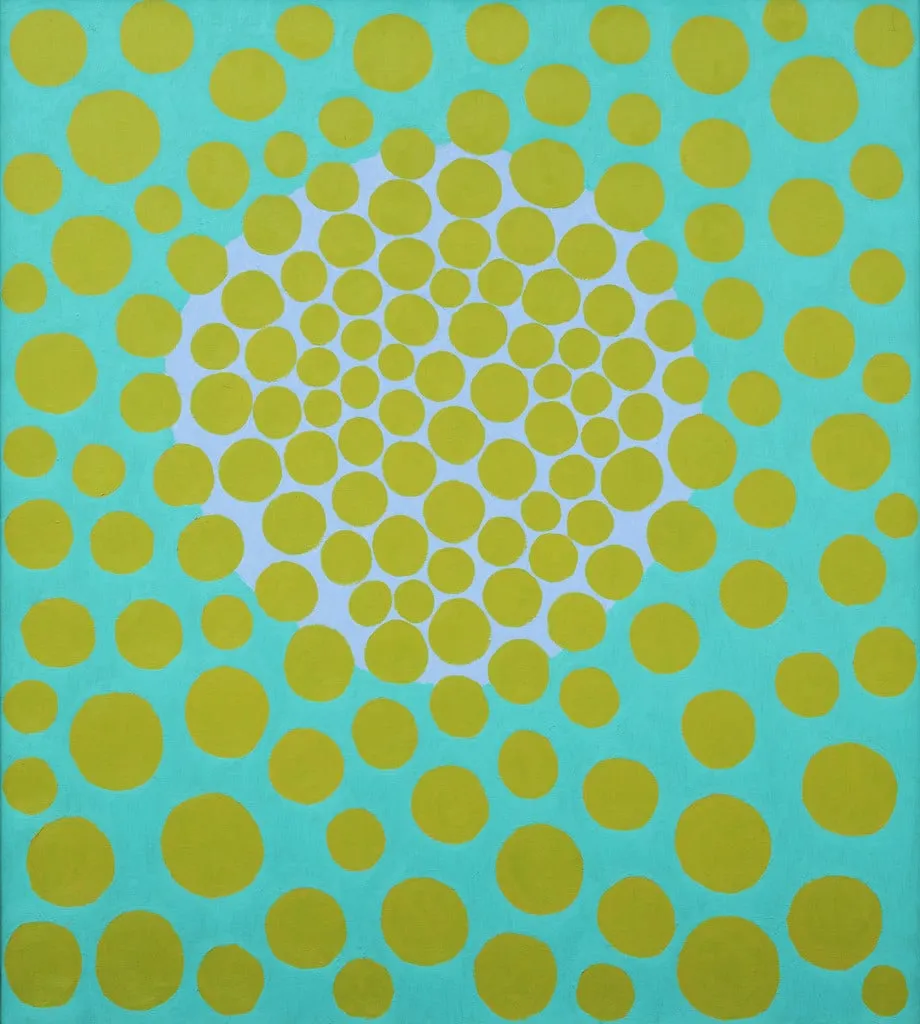
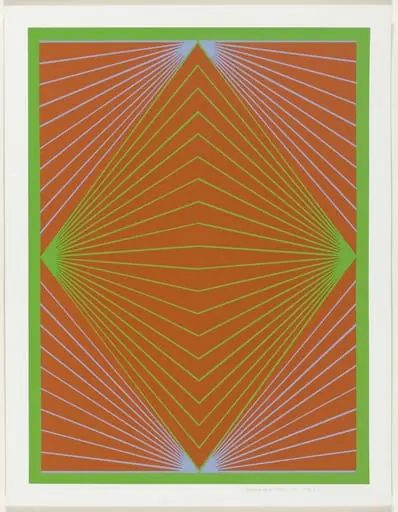
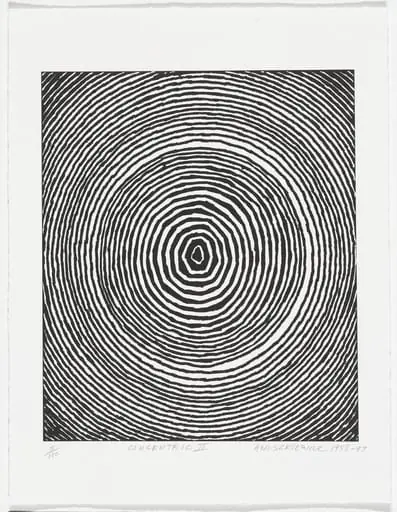
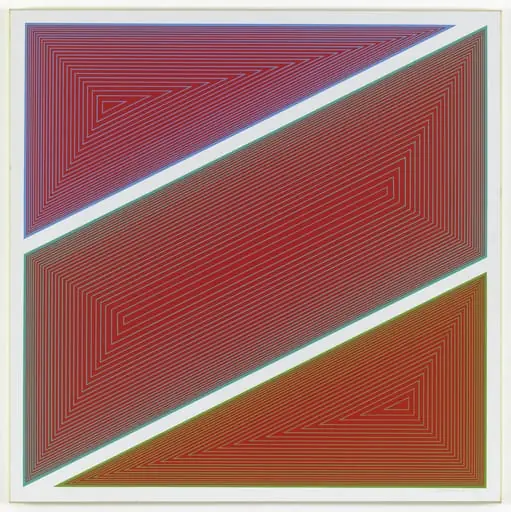
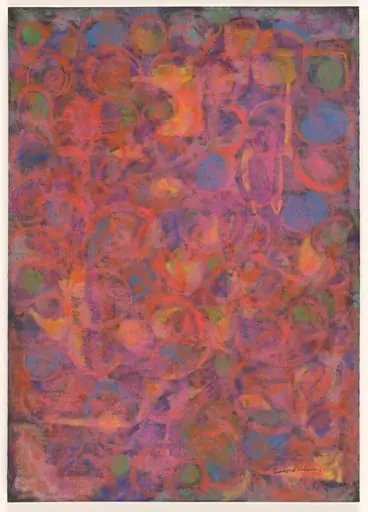
Untitled is an oil painting by Richard Anuszkiewicz. It dates from 1960 and is held in the collection of the Museum of Modern Art.
About this work
Overview
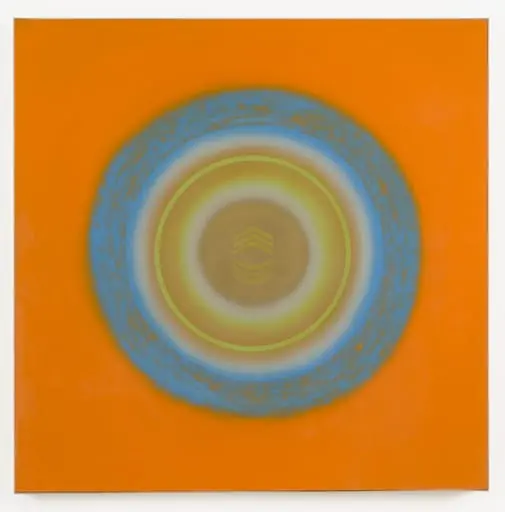
Created in 1960, this oil on canvas painting by Richard Anuszkiewicz is a non-representational work that exemplifies the principles of Op Art.
Created in 1960, this oil on canvas painting by Richard Anuszkiewicz is a non-representational work that exemplifies the principles of Op Art. Its composition relies entirely on the interaction of simple geometric forms and contrasting hues to generate visual tension. The absence of depth or texture emphasizes the flatness of the surface, aligning with the movement’s focus on perceptual experience rather than narrative or symbolism.
Subject & Meaning
The painting presents no figurative subject; instead, it uses an arrangement of yellow circles on a light blue ground to investigate how color and form affect perception. The varying sizes and overlapping placements of the circles create subtle rhythmic shifts, prompting the viewer’s eye to move across the surface. Meaning emerges not from representation but from the optical sensations generated by the precise placement of shapes and their chromatic contrast.
Technique & Style
Anuszkiewicz applied oil paint with uniform, flat tones, avoiding brushwork texture or gradation. The circles are rendered with sharp, clean edges, enhancing their geometric clarity. The limited palette—yellow and blue—heightens the visual impact through complementary contrast. This methodical approach reflects a deliberate pursuit of optical precision, characteristic of the artist’s engagement with perceptual science and modernist abstraction.
History & Provenance
The work entered the collection of The Museum of Modern Art in New York, where it remains part of its permanent holdings. Acquired during the height of Op Art’s recognition in the early 1960s, it reflects the institution’s interest in postwar American abstraction. Its inclusion underscores its significance as an early example of Anuszkiewicz’s exploration into chromatic and spatial dynamics within geometric abstraction.
Context
Emerging in the late 1950s and early 1960s, Op Art responded to broader cultural interests in perception, psychology, and industrial design. Anuszkiewicz’s work aligned with contemporaries like Bridget Riley and Victor Vasarely, who used precise forms to activate visual motion. Unlike earlier abstract traditions, Op Art sought to make the viewer’s sensory experience the subject, distancing itself from emotional expression in favor of structured optical effects.
Legacy
This painting contributes to a broader shift in postwar art toward viewer-centered experience and perceptual inquiry. Anuszkiewicz’s systematic use of color and geometry influenced later developments in minimalism and design-based art. While not widely exhibited as a singular icon, its presence in MoMA’s collection ensures its role as a reference point in the study of optical abstraction and its enduring impact on visual culture.
Artist & collection
Artist
Richard Joseph Anuszkiewicz (; May 23, 1930 – May 19, 2020) was an American painter, printmaker, and sculptor. The son of Polish immigrants, he developed a geometric style.