Artwork
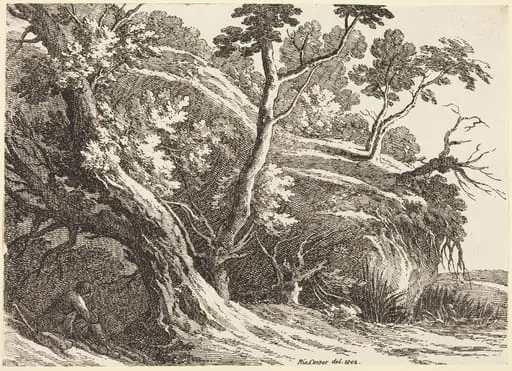
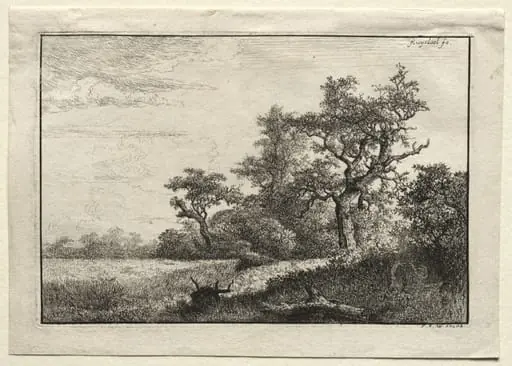
Specimens of Polyautography: Man Seated under an Oak
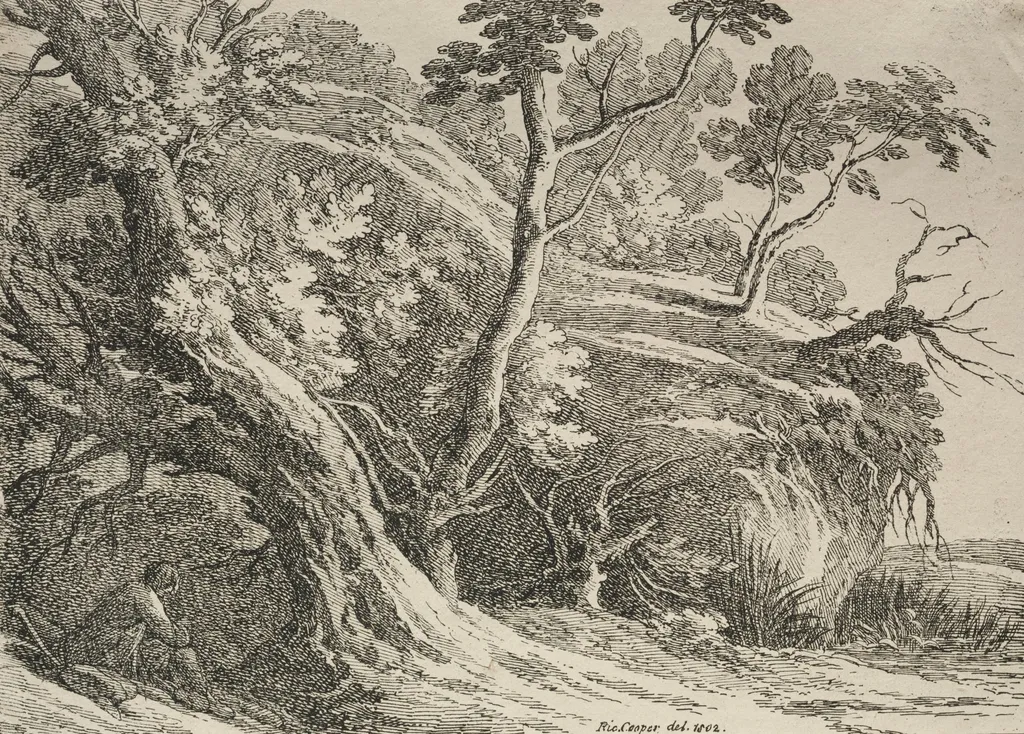
Specimens of Polyautography: Man Seated under an Oak is a print by the Romanticist artist Richard Cooper. It dates from 1802 and is held in the collection of the Cleveland Museum of Art.
About this work
Overview
The piece reflects his mastery of linear precision and tonal subtlety, bridging traditional draftsmanship with emerging reproductive technologies.
Created in 1802 by Richard Cooper II, this print is part of a small series experimenting with polyautography—an early technique for transferring drawn images onto lithographic stone. Cooper, a respected drawing instructor at Eton and tutor to Queen Charlotte, used this method to reproduce his delicate pencil work. The piece reflects his mastery of linear precision and tonal subtlety, bridging traditional draftsmanship with emerging reproductive technologies.
Subject & Meaning
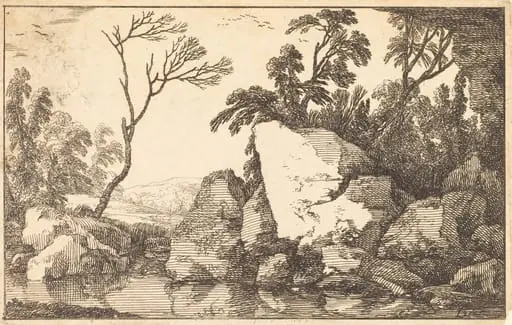
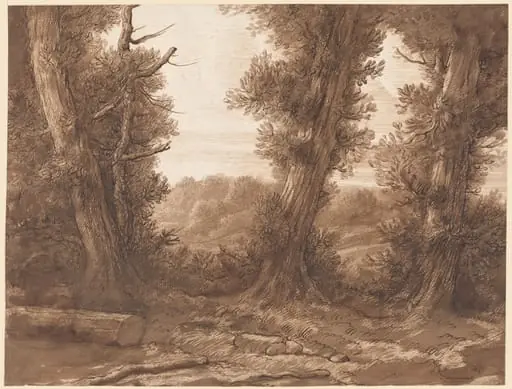
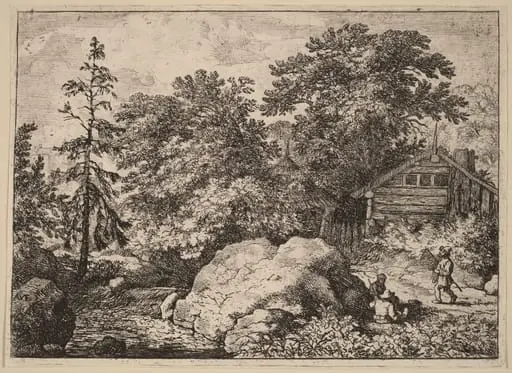
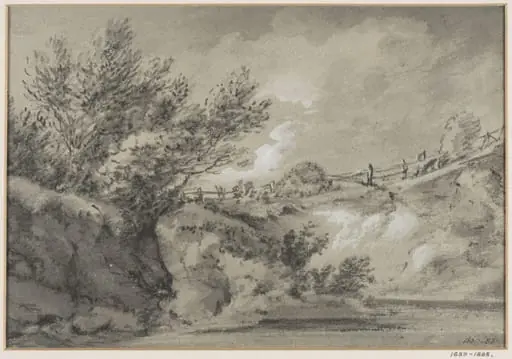
A solitary man sits quietly beneath a sprawling oak, his posture suggesting introspection rather than action. The tree, with its twisted limbs and dense foliage, dominates the composition, framing the figure in a natural enclosure. No narrative is given, but the scene evokes contemplation, aligning with early 19th-century sensibilities that valued solitude and the emotional resonance of wild landscapes.
Technique & Style
Rendered entirely in black ink, the print relies on fine hatching and varied line weight to suggest texture and depth. The bark of the oak is meticulously detailed with crosshatched strokes, while the grass and stream are indicated with fluid, rhythmic marks. The absence of tone or color emphasizes structure and form, showcasing Cooper’s skill in monochrome draftsmanship and his interest in translating hand-drawn intimacy into printed form.
History & Provenance
The print originates from Cooper’s series of polyautographic experiments, a lesser-known chapter in British printmaking history. As a teacher to aristocratic patrons, Cooper had access to resources and audiences uncommon for artists of his time. Though few examples survive, this work reflects his efforts to elevate drawing through mechanical reproduction, positioning him at the intersection of academic tradition and technical innovation.
Context
Produced during the rise of Romanticism, the image aligns with contemporary interests in nature as a vessel for quiet emotion. Unlike dramatic landscapes of the era, Cooper’s scene avoids grandeur, favoring intimacy and restraint. His focus on a single figure in a modest woodland setting reflects a broader cultural shift toward personal reflection and the sublime in everyday natural forms.
Legacy
Though polyautography never became a dominant print medium, Cooper’s work contributed to the evolution of lithographic processes in Britain. His careful translation of drawing into print influenced later artists exploring the potential of mechanical reproduction. The piece remains a quiet testament to his role in sustaining the tradition of topographical and figurative drawing during a period of rapid artistic change.
Artist & collection
Artist
Richard Cooper (or Richard Cooper Jr. or Richard Cooper II; 6 February 1740 in Edinburgh – December 1822 at Eltham), was the son of Richard Cooper senior (1701-1764) and his wife Anne Lind. He is considered one of…