Artwork
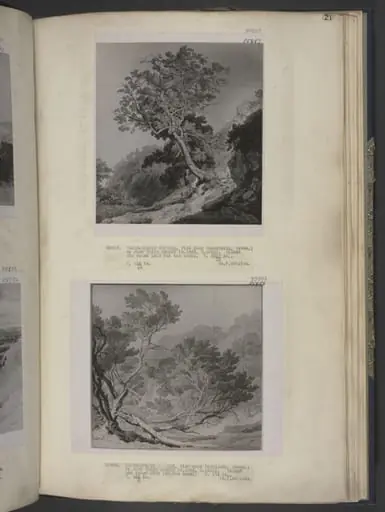
Trees at Fordland, Devon
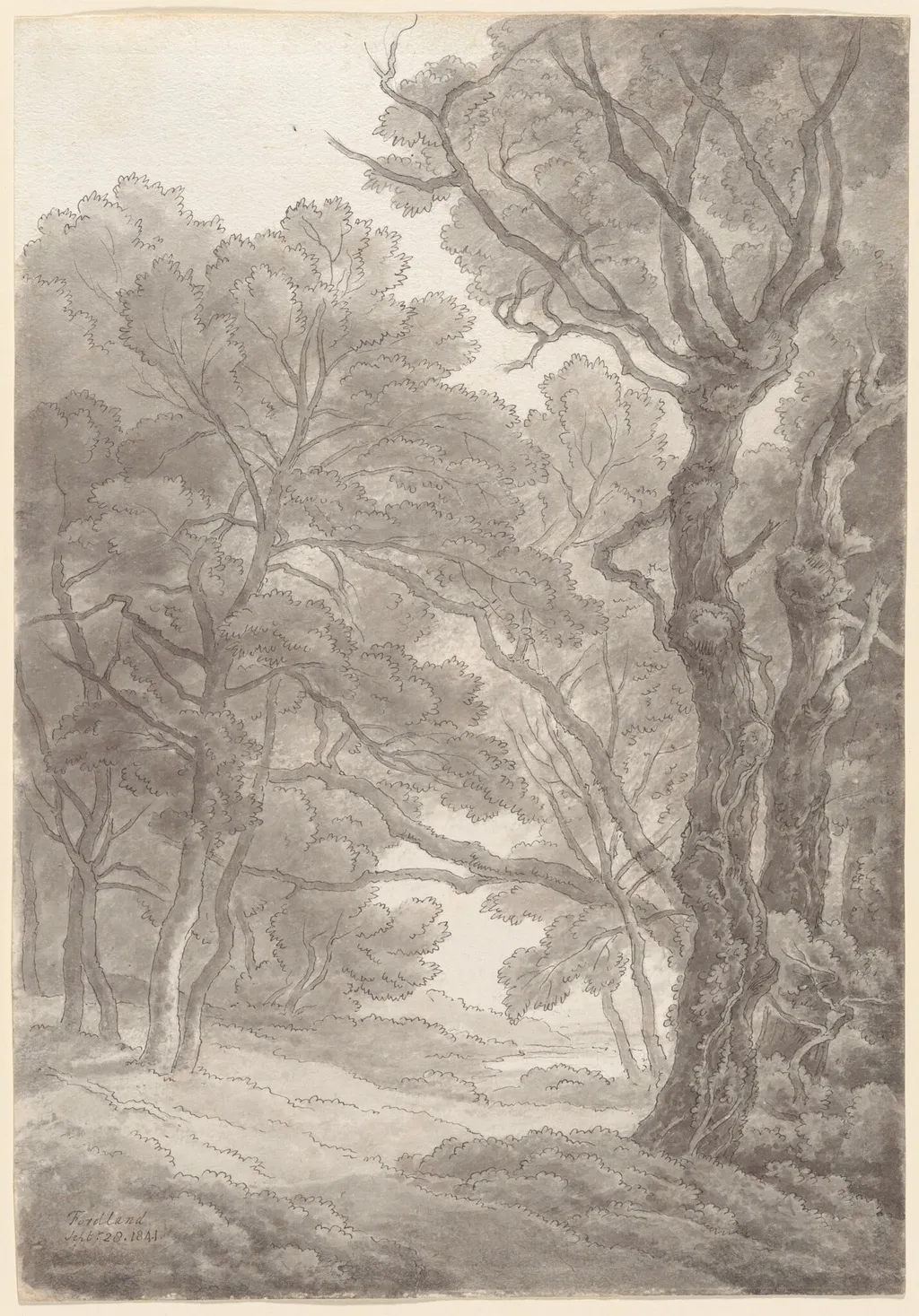
Trees at Fordland, Devon is an ink drawing by the Romanticist artist John White Abbott. It dates from 1841 and is held in the collection of the National Gallery of Art.
About this work
The trees look almost like they’re growing straight out of the paper, with lots of small lines defining their bark and leaves.
This sketch shows a quiet forest scene with three tall trees at the center. Their branches twist and spread out, filling most of the page. The ground is lightly drawn with grass and a few bushes, while the sky is barely there—just a faint line at the top. The whole thing is done in gray ink and wash, giving it a soft, misty look.
The artist signed it "Fordland" and dated it 1841, which matches the facts. The trees look almost like they’re growing straight out of the paper, with lots of small lines defining their bark and leaves.
Want to see more? Check out Romanticism for other works that focus on nature’s wild beauty.
Overview
Created in 1841, *Trees at Fordland, Devon* is a delicate drawing by John White Abbott, executed in pen and gray ink with wash on heavy laid paper. Though trained as a surgeon and apothecary in Exeter, Abbott devoted considerable effort to landscape art. This work exemplifies his quiet, observational approach to nature, capturing a specific locale in southwest England with restrained tonal gradations and minimal detail.
Subject & Meaning
The drawing centers on three towering trees, their gnarled trunks and expansive branches dominating the composition. Surrounding undergrowth is suggested with sparse strokes, while the sky is reduced to a faint horizon line. The scene evokes solitude and the quiet persistence of nature, reflecting a Romantic-era sensitivity to the individual character of place rather than grand spectacle. The signature 'Fordland' anchors the work in a real, local setting.
Technique & Style
Abbott employed fine pen lines to define bark texture and leaf clusters, layered with soft gray washes to suggest depth and atmosphere. The heavy laid paper absorbed the ink evenly, enhancing the muted, hazy quality of the image. His technique, influenced by Francis Towne, avoids dramatic contrasts, favoring subtle tonal transitions that mimic the diffuse light of a misty day in Devon.
History & Provenance
The drawing remained in private hands until entering the National Gallery of Art’s collection in Washington, D.C. Its provenance reflects its status as a personal, intimate study rather than a public commission. Abbott’s works were not widely exhibited in his lifetime, and this piece survives as a testament to his private engagement with the landscapes around his home in Devon.
Context
In early 19th-century England, landscape drawing was a common pursuit among amateur artists and professionals alike. Abbott’s work aligns with a broader trend of topographical and naturalistic studies, often made for personal reflection rather than sale. His focus on unidealized rural scenes contrasts with the more theatrical landscapes of contemporaries, emphasizing quiet observation over dramatic effect.
Legacy
Though Abbott is less known today than his professional peers, his drawings like *Trees at Fordland* contribute to an understated tradition of British landscape art rooted in direct observation. The work’s preservation in a major public collection underscores its value as a record of regional scenery and the quiet discipline of 19th-century amateur draftsmanship.
Artist & collection
Artist
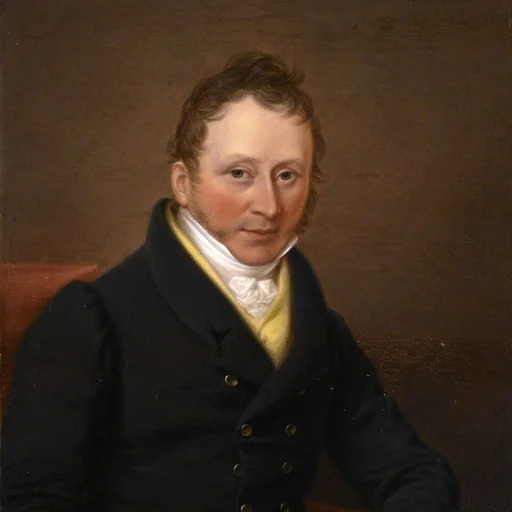
John White Abbott (13 May 1763 – 1851) was an English surgeon and apothecary in Exeter, remembered as a keen amateur painter in both watercolour and oils. His watercolours are close in style to those of his teacher, Francis Towne.

 At Colney
 The Big Trees
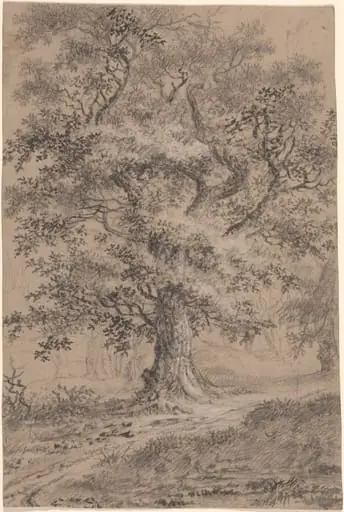 A Leafy Oak by a Woodland Path
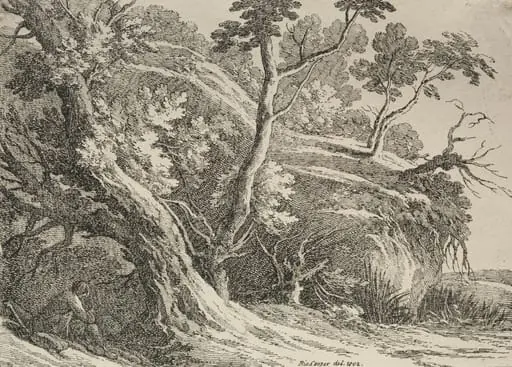 Specimens of Polyautography: Man Seated under an Oak
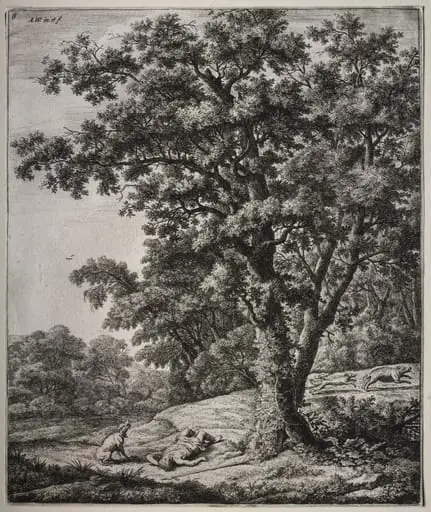 Six large upright landscapes with scenes from Ovid's Metamorphoses: The Death of Adonis
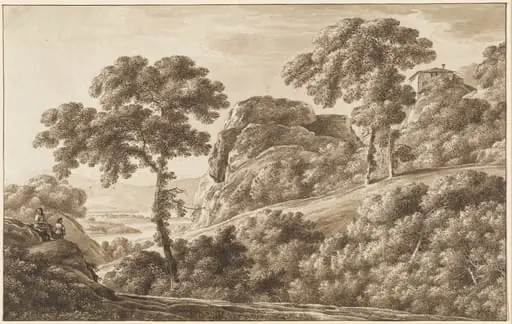 The Isar with Boulders on the Isarhohe
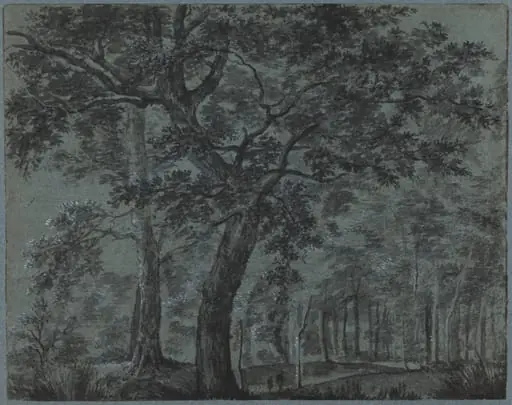 Woods at Night with Travelers
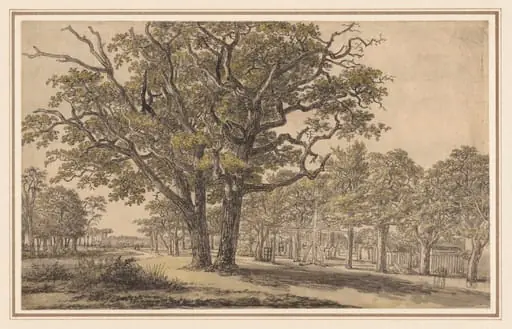 Landscape (recto)
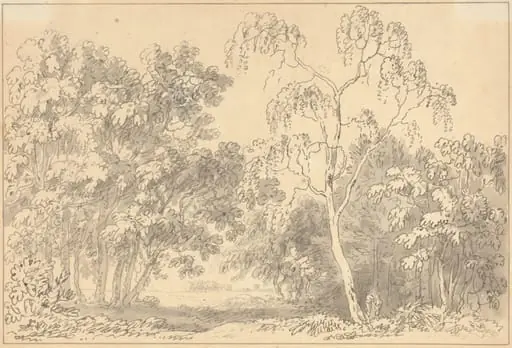 Wooded Landscape
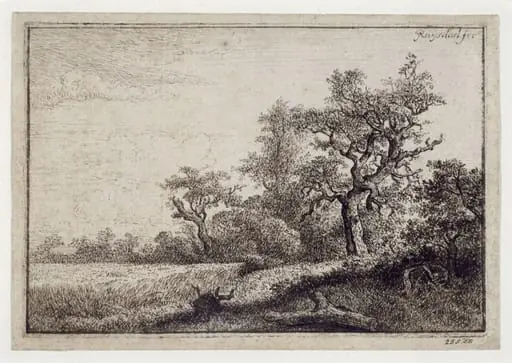 The Wheatfield. After Jacob Ruysdael
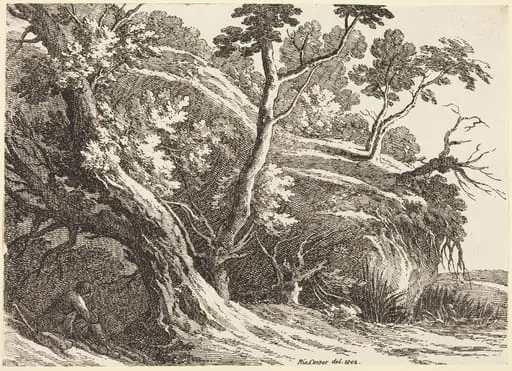 Landscape with Large Trees
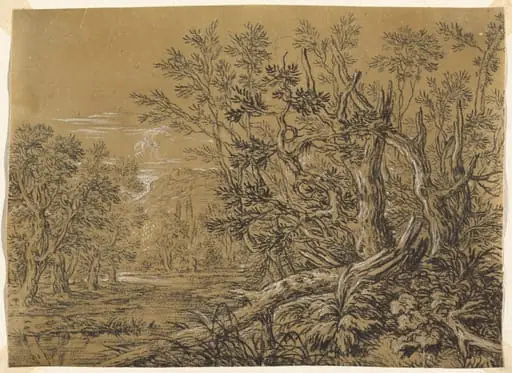 Stream through an Ancient Forest