Artwork
Untitled
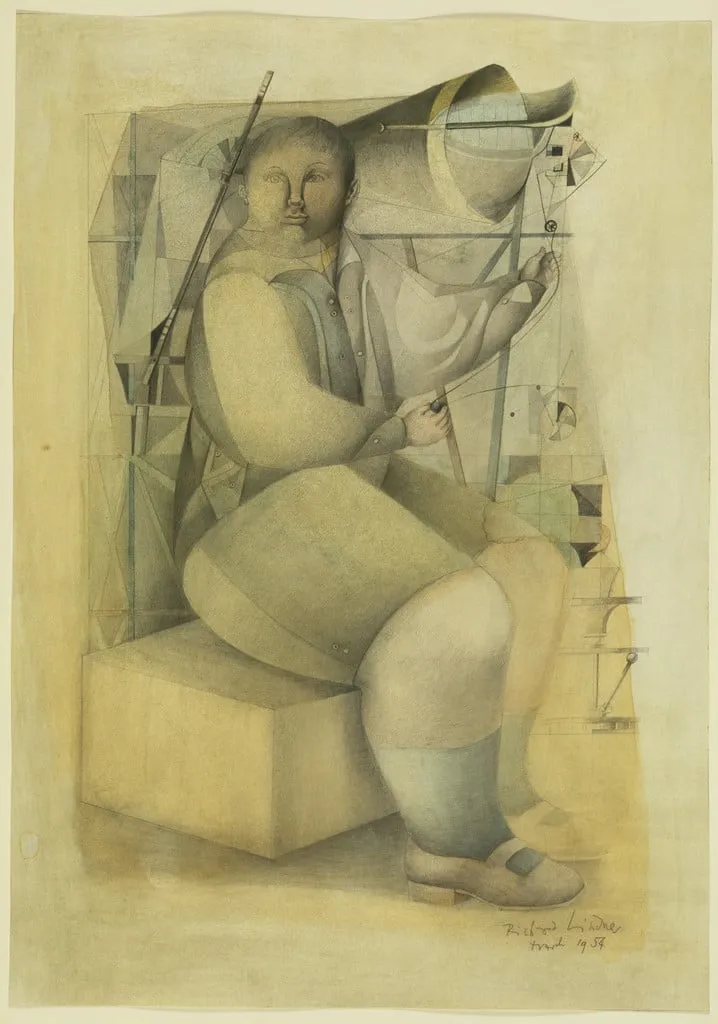
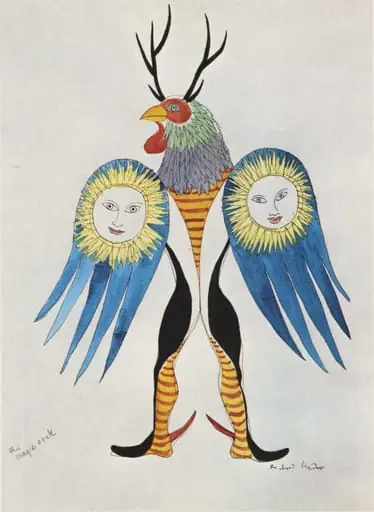
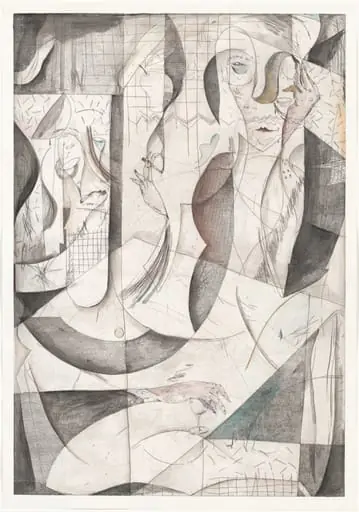
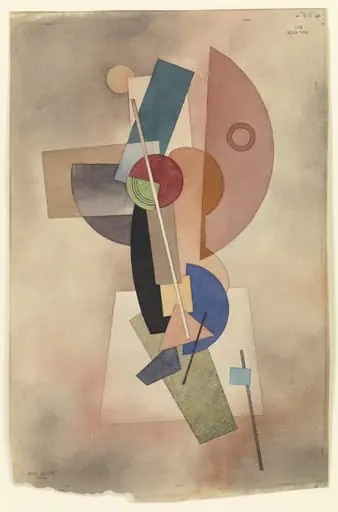
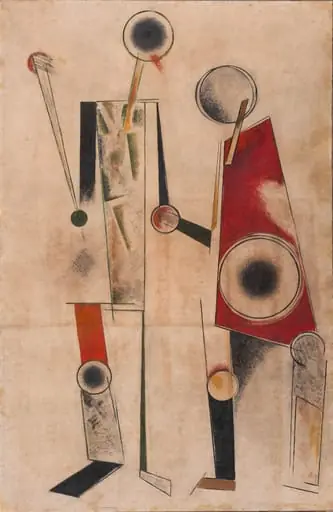
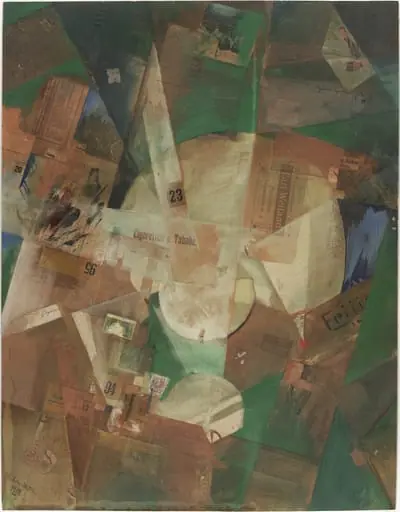
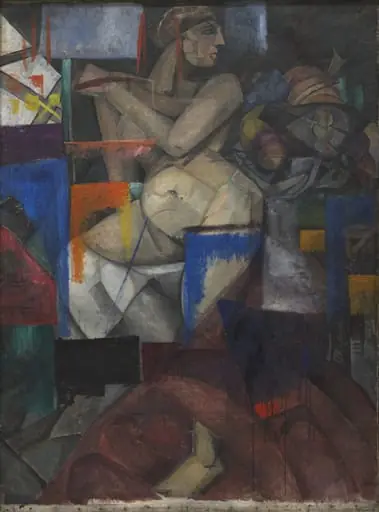
Untitled is a watercolor drawing by Richard Lindner. It dates from 1954 and is held in the collection of the Museum of Modern Art.
About this work
Overview
The composition balances geometric elements with organic forms, suggesting a psychological space rather than a literal setting.
Created in 1954, this watercolor and pencil drawing by Richard Lindner is part of The Museum of Modern Art’s collection. It presents a solitary figure in a sparse, abstracted environment, rendered with restrained tones of gray and beige. The composition balances geometric elements with organic forms, suggesting a psychological space rather than a literal setting. The medium’s transparency and delicate lines contribute to an atmosphere of stillness and introspection.
Subject & Meaning
A seated figure, clad in a white shirt and shorts, holds two distinct objects—one elongated, the other compact—suggesting tools or symbols without clear function. Behind them, a sweeping, sail-like form looms, evoking movement or isolation. The figure’s posture and gaze imply inward focus, though no narrative is explicitly defined. The ambiguity invites interpretation, aligning with Lindner’s interest in modern alienation and the tension between the mundane and the surreal.
Technique & Style
Lindner employed watercolor’s fluidity to build layered washes of muted gray and beige, allowing the paper’s texture to remain visible. Pencil lines define the figure and structural elements with precision, contrasting the softness of the pigment. The background’s angular shapes and rhythmic lines create a sense of spatial ambiguity, merging architectural abstraction with dreamlike distortion. The technique reflects a deliberate tension between control and spontaneity.
History & Provenance
The work was completed in 1954 during a period when Lindner was refining his distinctive visual language in New York. It entered The Museum of Modern Art’s collection shortly after its creation, reflecting early institutional recognition of his unique synthesis of European modernism and American pop sensibilities. No public record of prior ownership exists, suggesting it may have been acquired directly from the artist.
Context
In the mid-1950s, Lindner was developing a style that merged surrealism, commercial illustration, and urban iconography. This drawing emerged alongside his broader exploration of isolated figures in ambiguous environments, responding to postwar anxieties and the rise of mass media. Unlike his later, more colorful works, this piece reflects a quieter, more introspective phase, rooted in European expressionist traditions yet distinctly American in its emotional detachment.
Legacy
This drawing exemplifies Lindner’s early contribution to postwar American art, bridging European avant-garde sensibilities with emerging American themes of isolation and mechanized life. While less known than his later paintings, it reveals the foundational concerns that shaped his career: the psychological weight of ordinary objects, the fragmentation of identity, and the quiet drama of the unseen. It remains a key reference for understanding his evolution as an artist.
Artist & collection