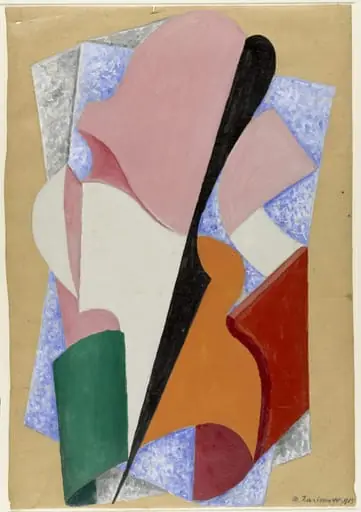
Artwork
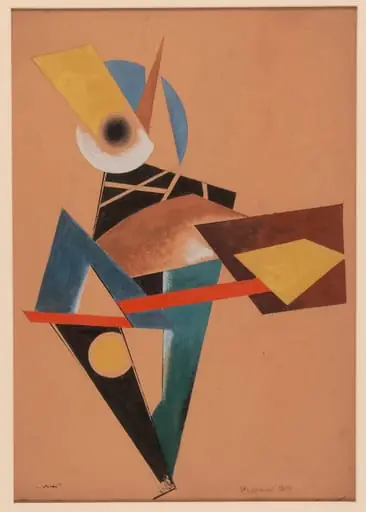
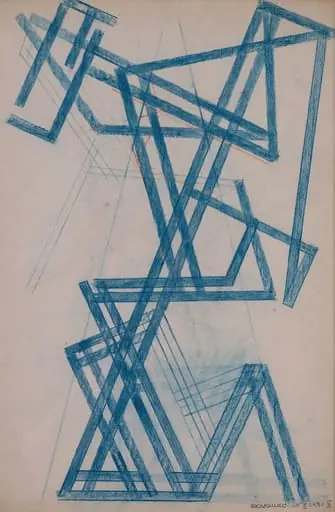
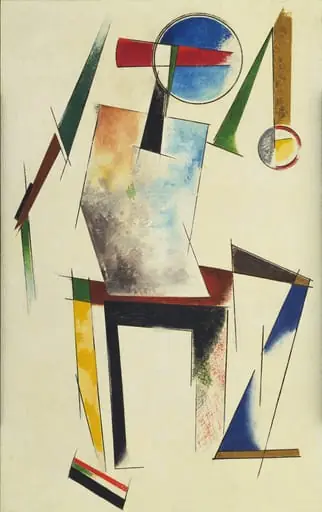
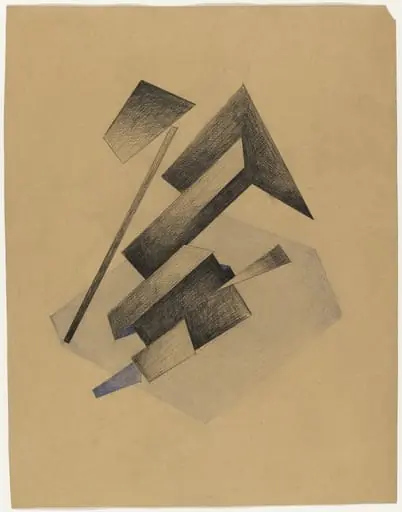
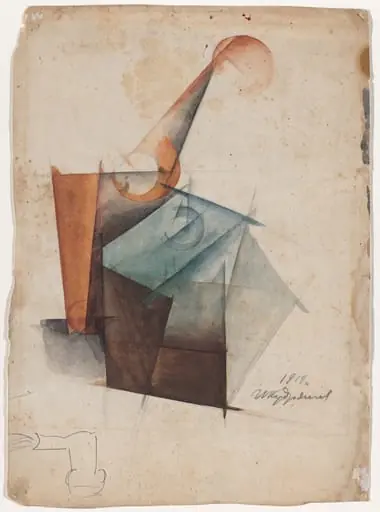
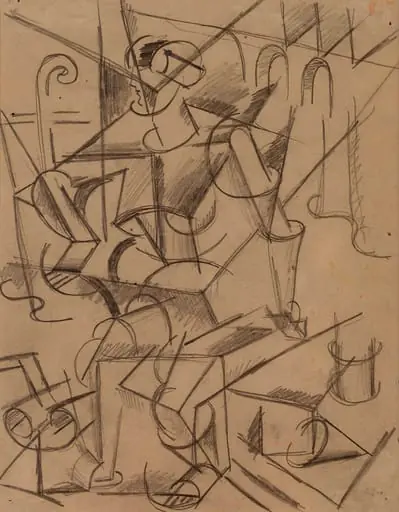
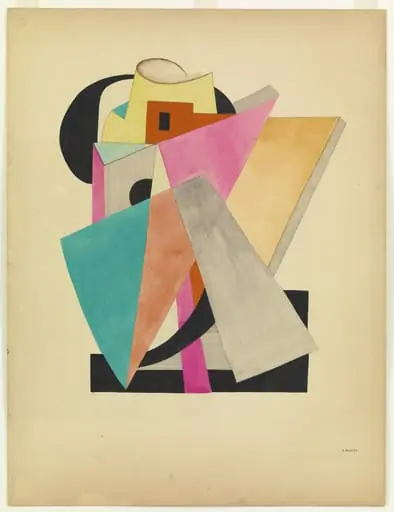
Μη παραστατική κατασκευή με ζωγραφισμένες προβολές επιφανειών μιας σύνθετης σύνθεσης με χρώματα.
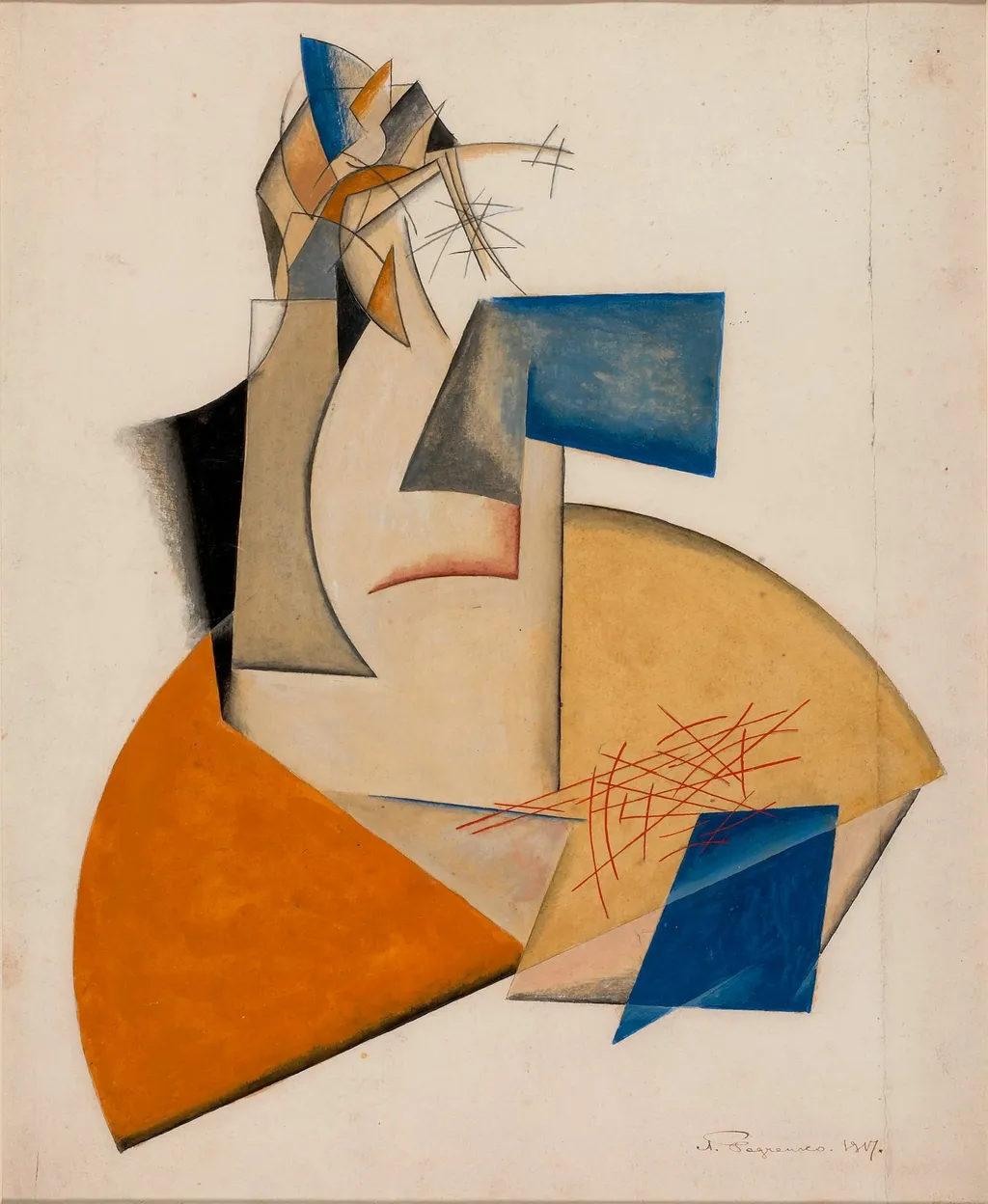
Μη παραστατική κατασκευή με ζωγραφισμένες προβολές επιφανειών μιας σύνθετης σύνθεσης με χρώματα. is a drawing by Aleksandr Rodchenko. It dates from 1917 and is held in the collection of the Metropolitan Organisation of Museums of Visual Arts of Thessaloniki – MOMus.
About this work
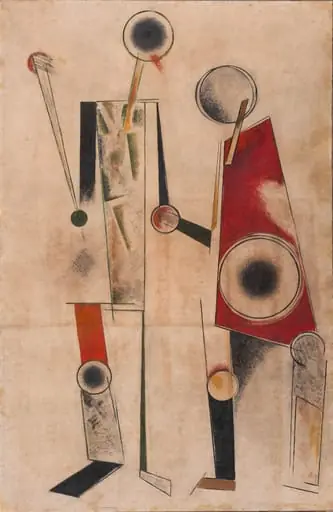
This drawing uses flat shapes and sharp lines in red, black, and white. It looks abstract but maps out how surfaces might fold or stack.
Rodchenko did this in 1917, the year of Russia’s revolution. The work feels almost like blueprints or instructions instead of a picture.
It’s a far cry from his later photos. Check out more of his drawings at the Museum of Ethnography.
Overview
Created in 1917, this drawing belongs to the early phase of Russian avant-garde art, a period marked by radical experimentation following political upheaval.
Created in 1917, this drawing belongs to the early phase of Russian avant-garde art, a period marked by radical experimentation following political upheaval. It rejects traditional representation, instead proposing a visual system based on geometric abstraction. The work functions less as an image and more as a structural proposal, using minimal color and precise lines to suggest spatial relationships. Its tone aligns with the era’s broader shift toward art as a tool for reimagining form and function.
Subject & Meaning
The drawing does not depict a recognizable scene but explores the potential arrangement of flat planes in space. It resembles technical diagrams or architectural schematics, implying movement, layering, or folding of surfaces. This approach reflects a desire to move beyond illusionism toward a visual language grounded in material and structure. The absence of narrative or symbolism signals a deliberate turn toward abstraction as a means of expressing modernity’s new possibilities.
Technique & Style
Executed in red, black, and white, the composition relies on flat, unmodulated shapes and sharply defined edges. There is no shading, texture, or perspective—only clean lines and angular forms. The precision suggests a deliberate alignment with industrial or engineering aesthetics. This stripped-down method reflects the avant-garde’s rejection of decorative traditions in favor of clarity, economy, and functional logic, anticipating later constructivist principles.
History & Provenance
Produced in 1917, the year of the Russian Revolution, the drawing emerged amid intense social and political transformation. It was made by Aleksandr Rodchenko during his transition from figurative work to abstraction, before his later photographic practice. While its early provenance is not fully documented, it is now associated with collections that preserve avant-garde experimental works, including the Museum of Ethnography, where related drawings are held.
Context
The work arose in a Russia undergoing rapid industrialization, urban change, and revolutionary fervor. Artists sought to break from imperial-era aesthetics and align art with the new socialist order. Influenced by emerging technologies and a rejection of bourgeois traditions, creators turned to geometry, typography, and abstraction. This drawing exemplifies how visual experimentation became a form of ideological inquiry, seeking to redefine art’s role in society.
Legacy
This drawing anticipates key developments in Constructivism and industrial design, influencing later movements that prioritized structure over representation. Rodchenko’s shift from this type of drawing to photography and graphic design reflects the broader trajectory of Russian avant-garde artists who sought to merge art with practical life. Though not widely exhibited at the time, such works now serve as critical references in understanding the origins of modern abstract design.
Artist & collection
Artist
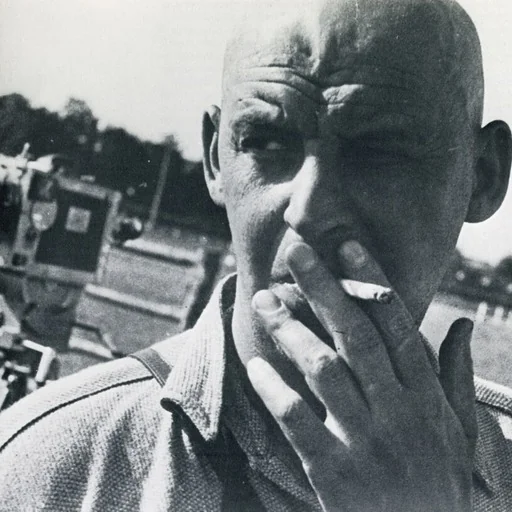
Aleksander Mikhailovich Rodchenko (Russian: Александр Михайлович Родченко; 5 December 1891 – 3 December 1956) was a Russian and Soviet artist, sculptor, photographer, and graphic designer.
Museum
Metropolitan Organisation of Museums of Visual Arts of Thessaloniki – MOMus
Continue through works from the same source collection.