Artwork
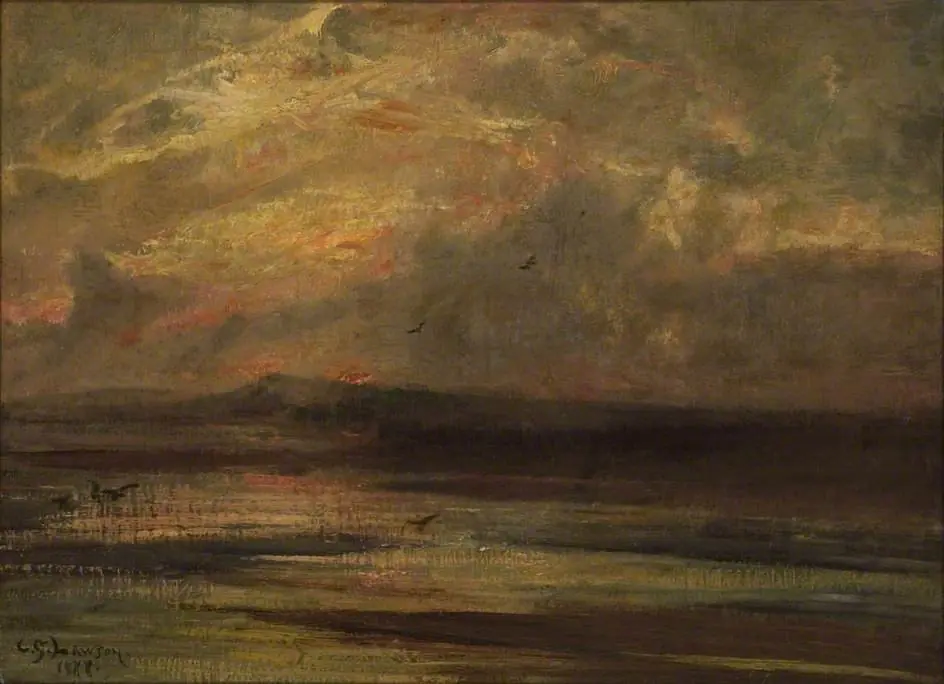
Sunset: A Sketch
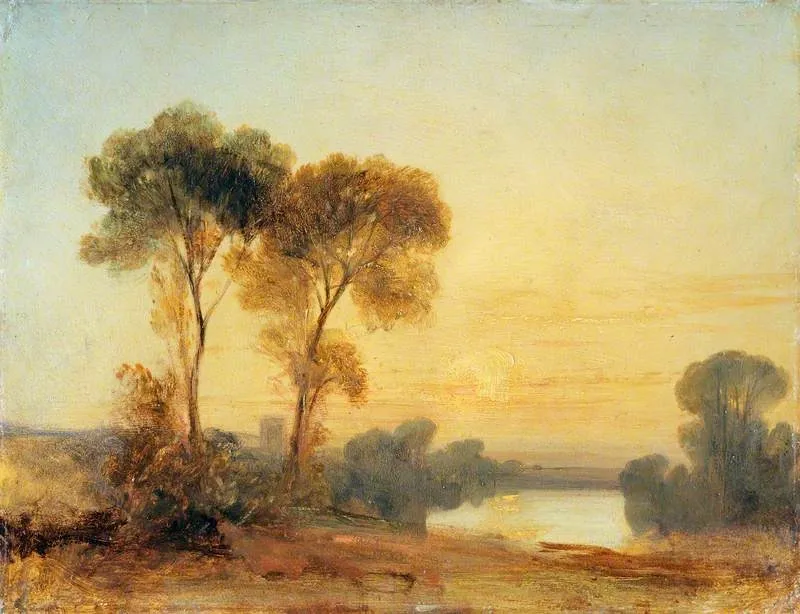
Sunset: A Sketch is an unspecified painting by Richard Parkes Bonington. It dates from 1825 and is held in the collection of the Victoria and Albert Museum.
About this work
The warm tones of the sky and the cool tones of the water and foliage create a sense of contrast, drawing the viewer's eye through the composition.
This painting, titled "Sunset: A Sketch," presents a serene landscape. The scene is dominated by a large tree on the left, with smaller trees and bushes in the foreground. A body of water, possibly a lake or river, stretches across the middle ground, meeting the horizon line. The sky above is a warm, golden hue, suggesting the setting sun.
The artist's use of color and light creates a sense of depth and atmosphere in the painting. The warm tones of the sky and the cool tones of the water and foliage create a sense of contrast, drawing the viewer's eye through the composition.
To learn more about the artist's techniques and style, explore the works of Richard Parkes Bonington (British, 1802–1828).
Overview
Richard Parkes Bonington painted *Sunset: A Sketch* circa 1825 during his time in France, where he absorbed local landscape traditions while maintaining his English sensibilities. Though brief, his career produced works distinguished by rapid, responsive brushwork and a keen sensitivity to natural light. This piece exemplifies his practice of sketching outdoors to capture fleeting moments, treating the canvas as a record of perception rather than a polished finish.
Subject & Meaning
The painting depicts a quiet evening scene: a lone large tree anchors the left, while smaller vegetation frames a still body of water leading to a low horizon. The sky, bathed in amber and rose, suggests the sun’s final glow, its warmth contrasting with the cooler tones of the water and foliage. No human figures or structures appear, emphasizing nature’s quiet transience. The composition invites contemplation of day’s end, not as drama, but as gentle dissolution.
Technique & Style
Bonington employed loose, wet-on-wet brushwork to blend hues seamlessly, particularly in the sky, where gradients of gold and pale violet suggest atmospheric diffusion. The water reflects the sky’s tones with minimal detail, enhancing its stillness. Foreground elements are rendered with quicker strokes, creating texture without definition. His method prioritized optical effect over precision, anticipating Impressionist concerns with light and immediacy.
History & Provenance
Created during Bonington’s years in Paris, the work likely originated as a study for larger compositions or as an independent observation. It remained within private collections after his death in 1828 at age 25. Its survival as a finished sketch reflects its value to contemporaries who recognized his unique ability to translate transient effects into paint, even in informal formats.
Context
In the 1820s, landscape painting in both England and France was shifting from idealized compositions toward direct observation. Bonington stood at this crossroads, influenced by English watercolor traditions and French plein-air practices. His sketches like this one contributed to a broader movement that valued spontaneity and sensory experience over academic convention, bridging Romanticism and emerging modern approaches.
Legacy
Though his life was short, Bonington’s approach to light and atmosphere influenced a generation of British and French painters. His willingness to treat sketches as complete works challenged hierarchical notions of finish. Artists such as Constable and later the Impressionists acknowledged his role in redefining how nature could be rendered—not as a monument, but as a moment.
Artist & collection
Artist
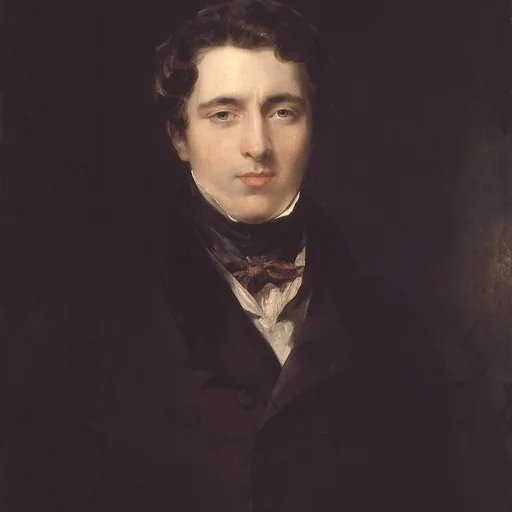
Richard Parkes Bonington (25 October 1802 – 23 September 1828) was an English Romantic landscape painter.

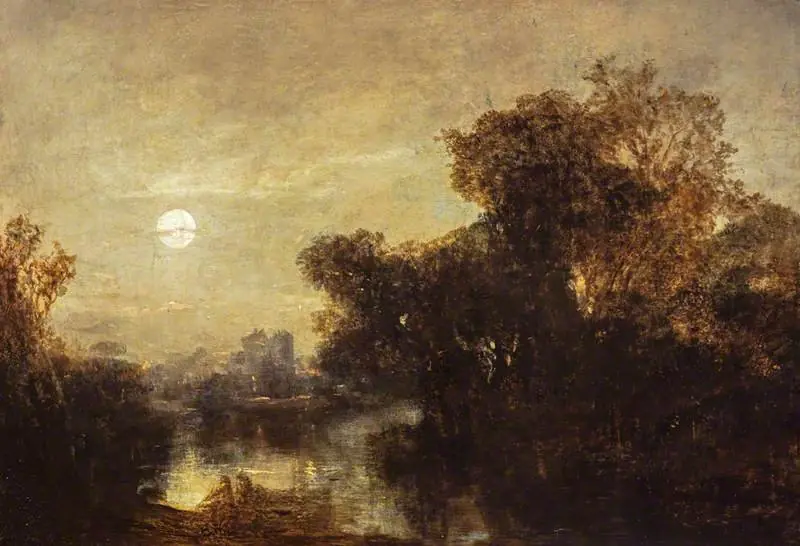 Moonlight, Blairlogie
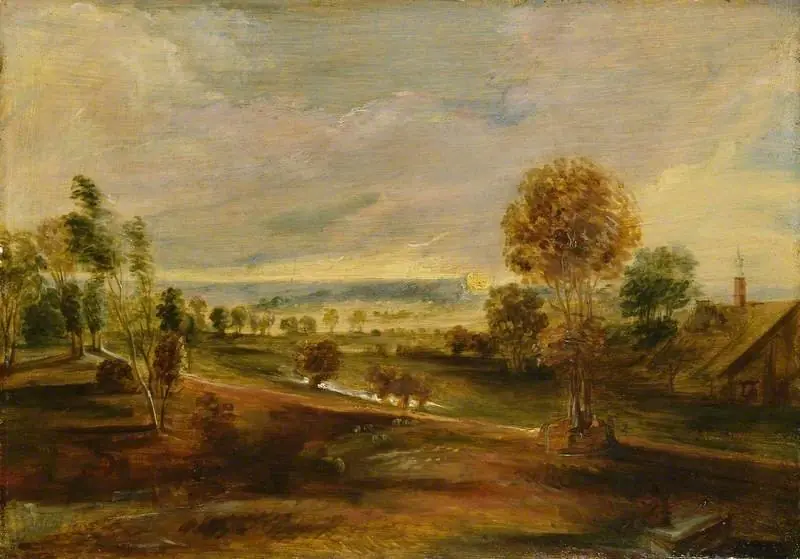 Landscape with Farm Buildings at Sunset
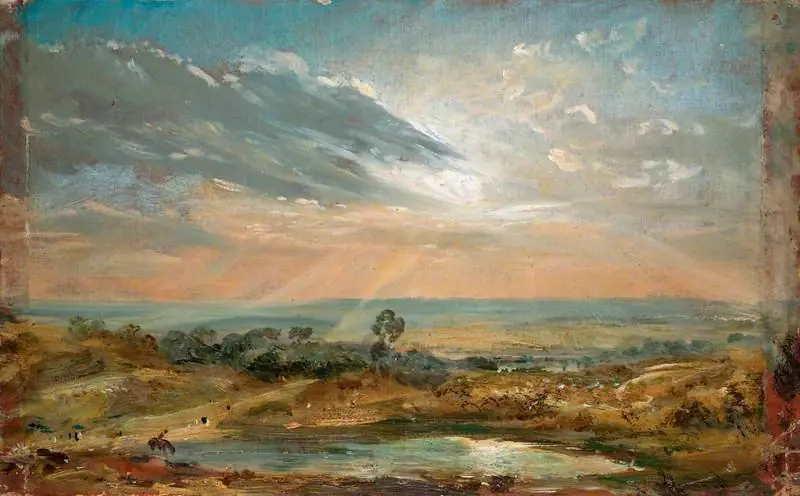 Branch Hill Pond, Hampstead
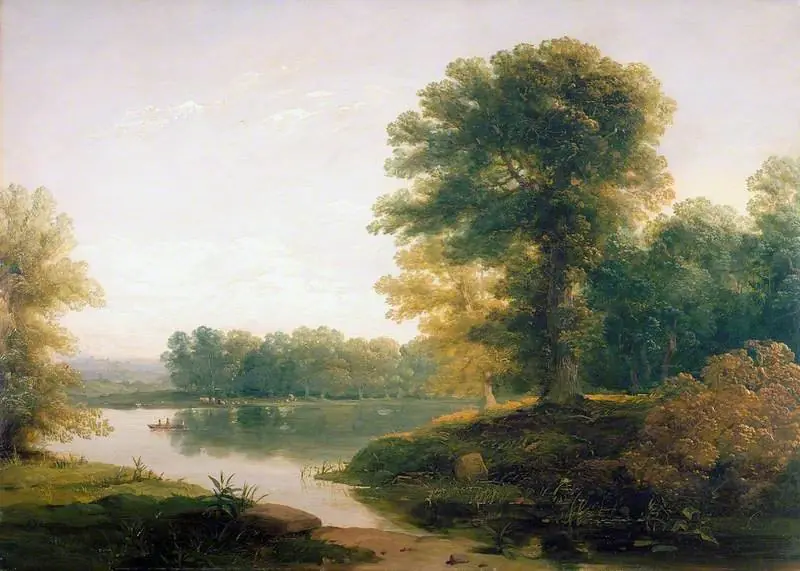 Landscape
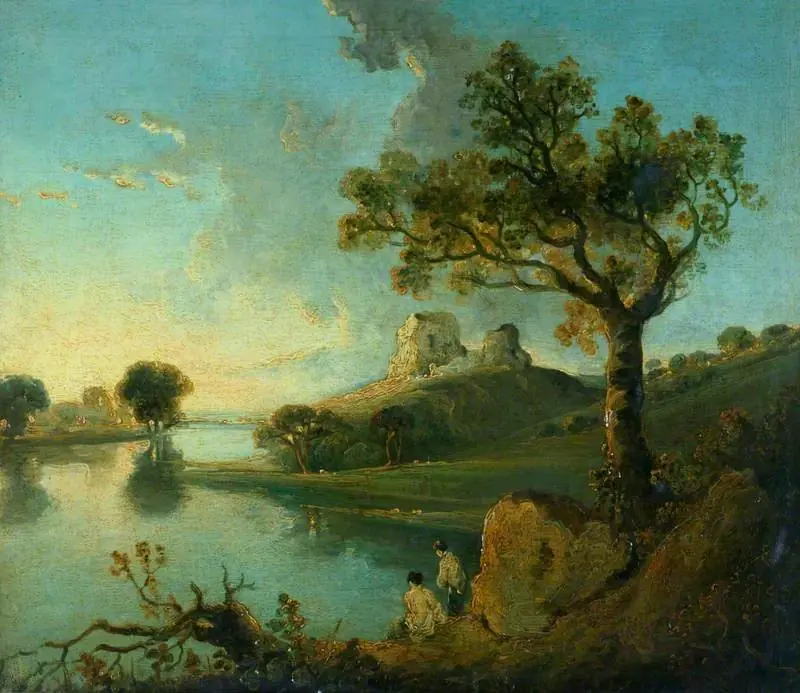 River Scene with a Ruined Castle and Figures
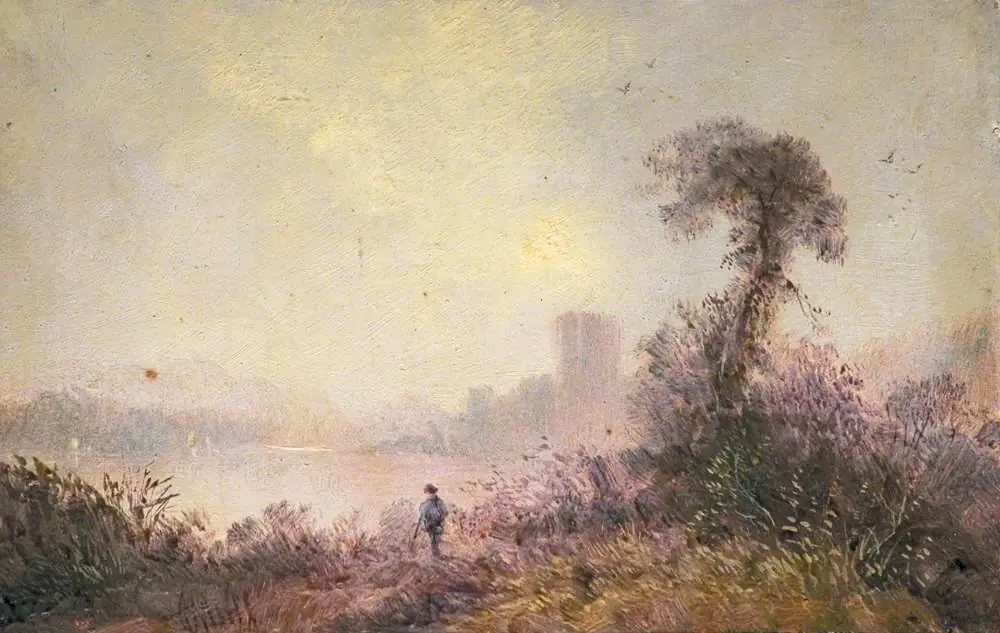 Chepstow
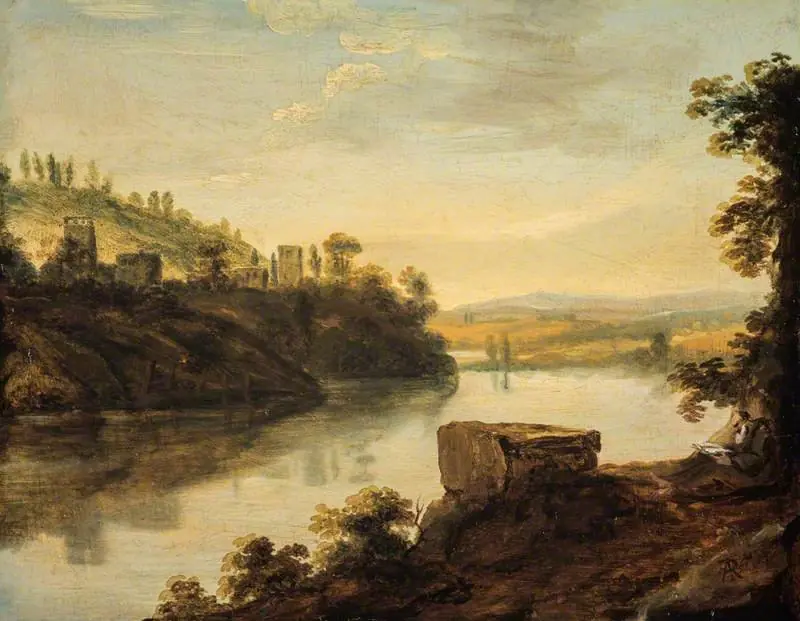 Italian River Landscape with a Hermit
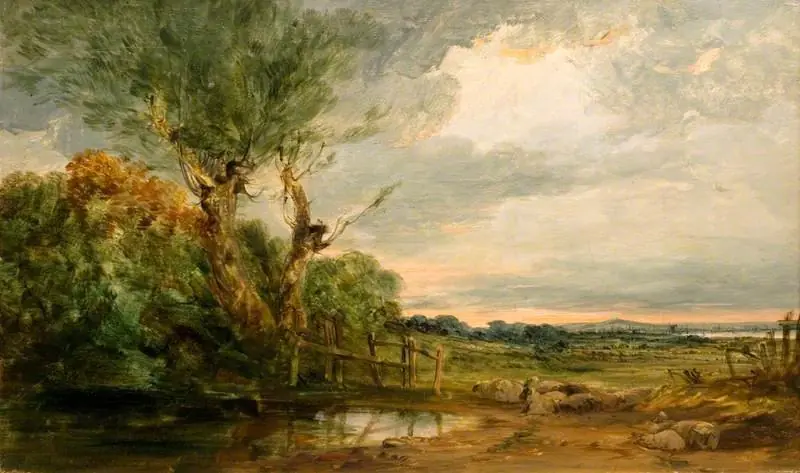 Near Blackheath: Blackwall Reach from Charlton Fields
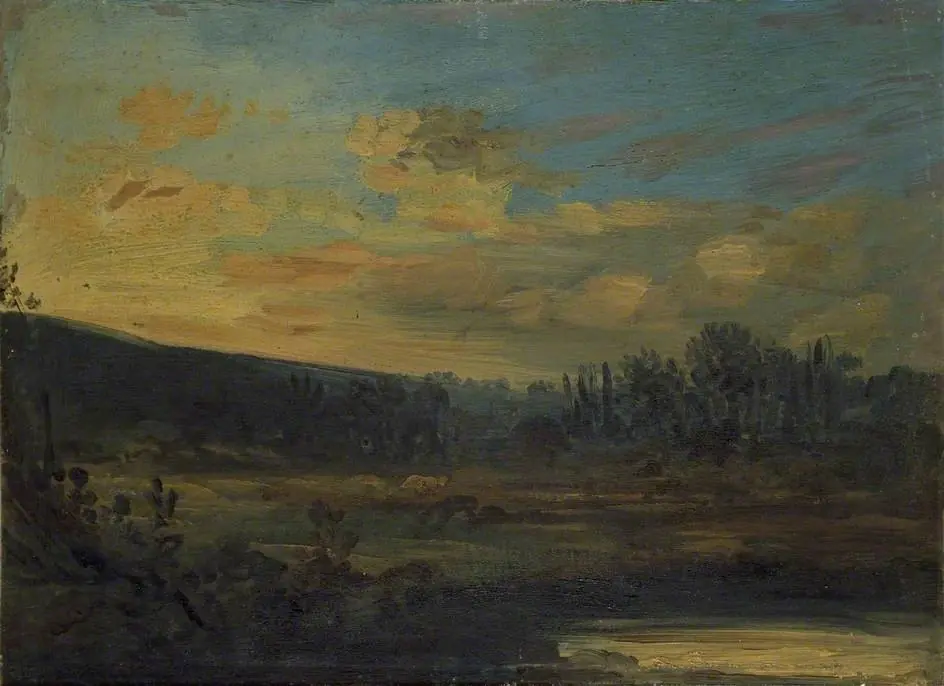 Harnham, near Salisbury
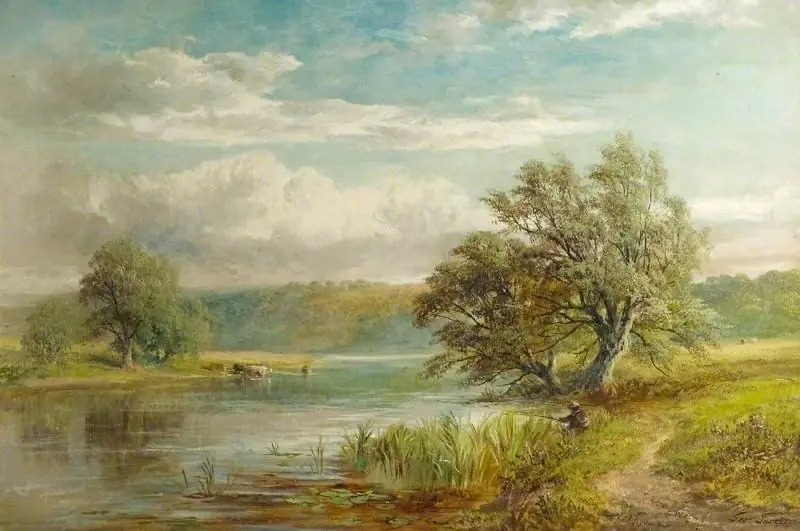 The Trent below Weston Cliff
 A Fisherman
 Sunset