Artwork
Self-Portrait of the Artist's Father in a Forest
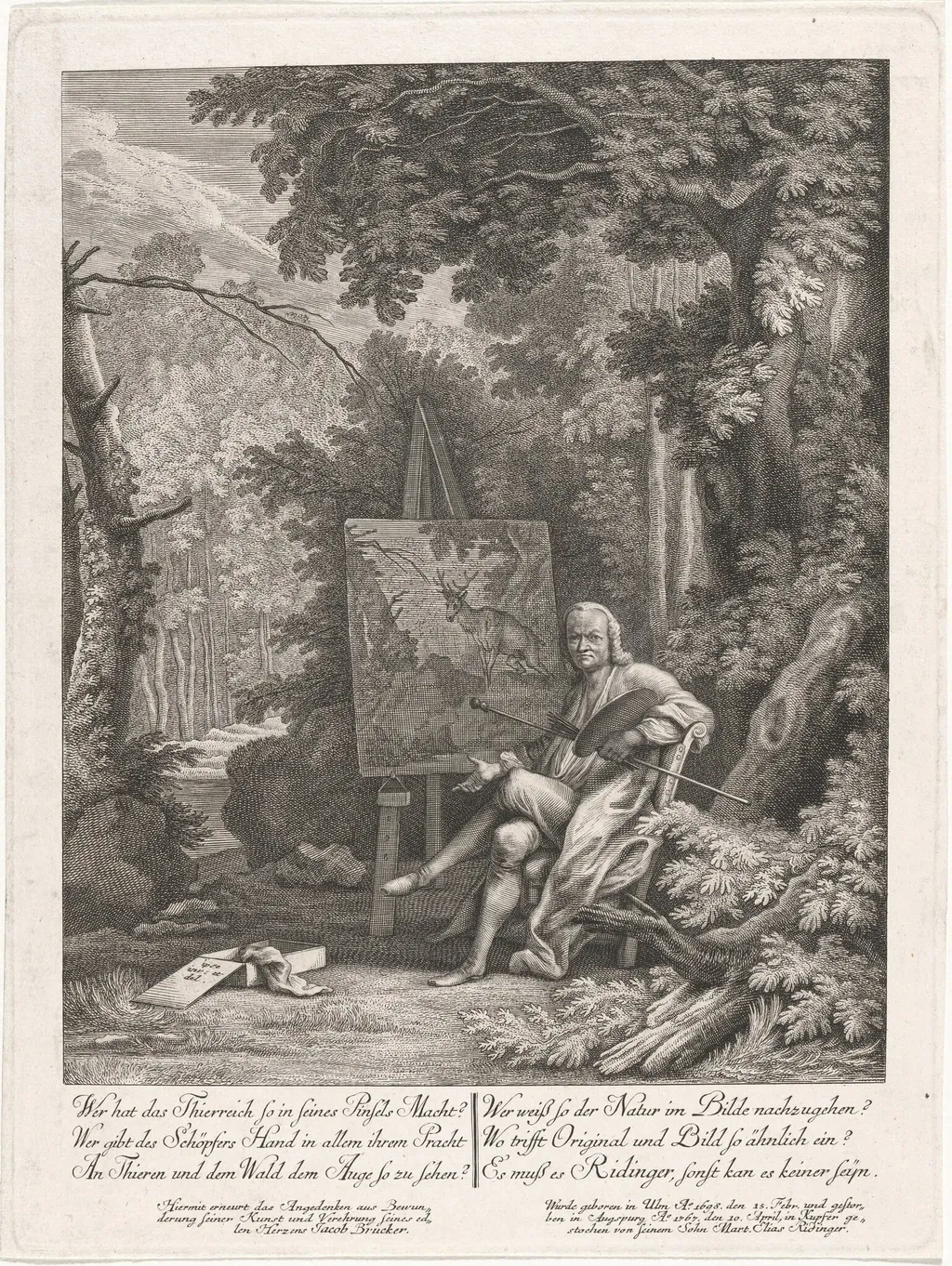
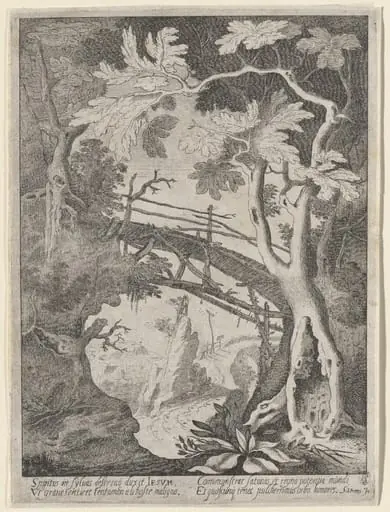
Self-Portrait of the Artist's Father in a Forest is an ink print by the Baroque artist Martin Elias Ridinger. It dates from 1767 and is held in the collection of the National Gallery of Art.
About this work
To learn more about the Baroque movement, which influenced Ridinger's work, explore the Baroque style and its characteristics.
The image presents a serene forest scene, with a man seated on a chair in the foreground. He is dressed in a long coat and holds a bow and arrow, while a canvas on an easel stands beside him. The forest surroundings are lush and vibrant, with trees and foliage filling the background.
A closer look reveals the man's attire, which appears to be from the 18th century. His coat is long and ornate, and he wears a hat and boots. The canvas on the easel is blank, suggesting that the man may be an artist.
The image is a self-portrait of the artist's father in a forest, created by Martin Elias Ridinger after 1767. To learn more about the Baroque movement, which influenced Ridinger's work, explore the Baroque style and its characteristics.
Overview
Self-Portrait of the Artist's Father in a Forest is an etching and engraving on laid paper by Martin Elias Ridinger, dated after 1767. The work is part of the collection at the National Gallery of Art in Washington.
Subject & Meaning
The print depicts a serene forest scene with a seated figure, identified as the artist's father, dressed in 18th-century attire, including a long coat, hat, and boots. He holds a bow and arrow, with a blank canvas on an easel beside him, implying his potential role as an artist.
Technique & Style
The work showcases Ridinger's skill in etching and engraving, capturing detailed textures of the forest's lush foliage and the subject's attire. The composition balances foreground clarity with the depth of the vibrant natural surroundings.
History & Provenance
Created after 1767 by Martin Elias Ridinger, the piece is now held in the collection of the National Gallery of Art, Washington.
Context
Ridinger's work was influenced by the Baroque movement, evident in the dramatic yet serene portrayal of nature and the detailed rendering of the subject.
Legacy
As a specific legacy of this piece is not broadly documented in the provided facts, its significance largely lies within Ridinger's broader oeuvre and the Baroque influence on subsequent artistic movements.
Artist & collection

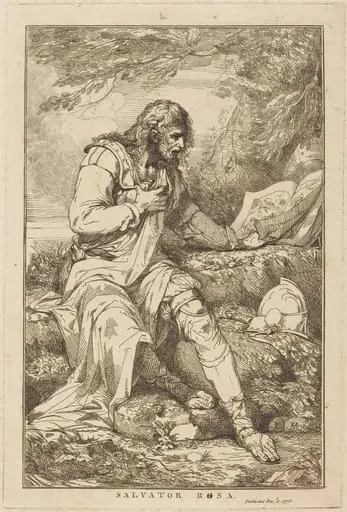 Salvator Rosa
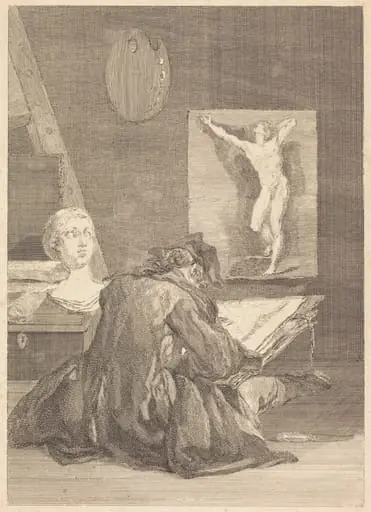 Le Dessinateur (The Draughtsman)
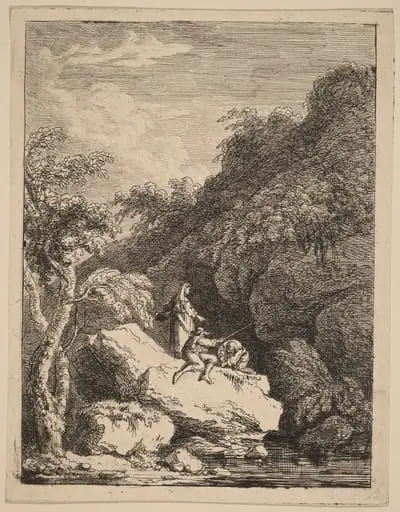 The Outskirts of Florence, on the Way to Rome
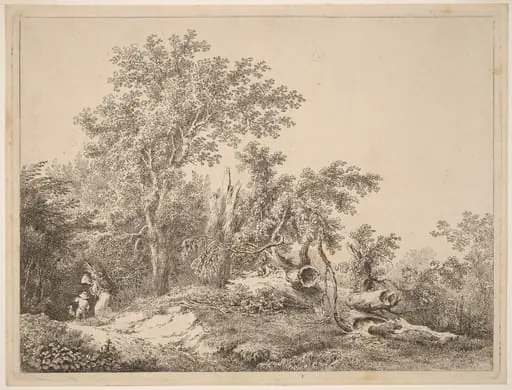 Landscape with Broken Tree
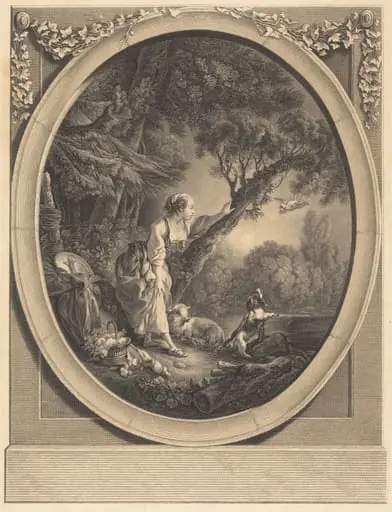 L'Arrivée du Courrier
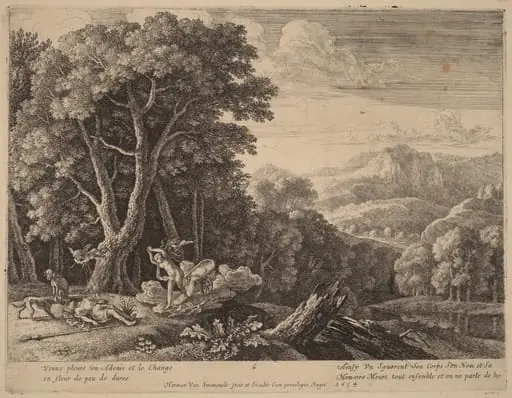 Venus Lamenting over Adonis' Death
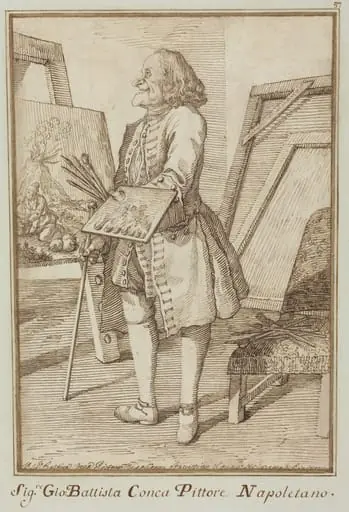 Signore Sebastiano Conca, Pittore Napoletano (Signore Sebastiano Conca, Neapolitan Painter)
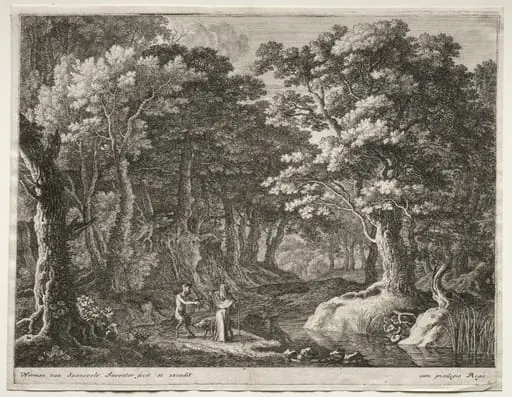 The Penitents: The Temptation of St. Anthony
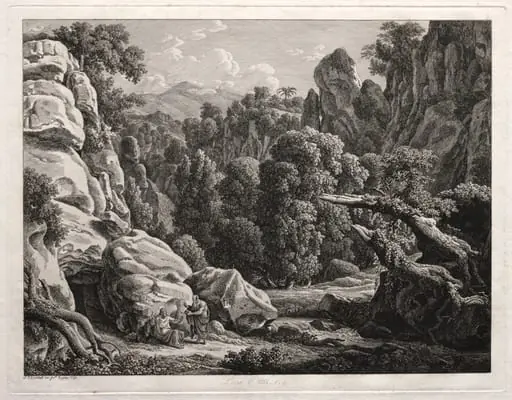 Heroic Landscape: Landscape with the Temptation of Christ
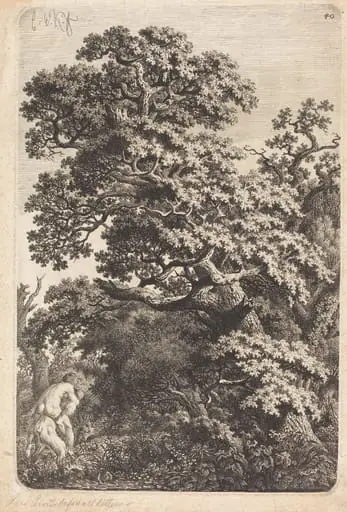 Satyr and Nymph in a Swamp
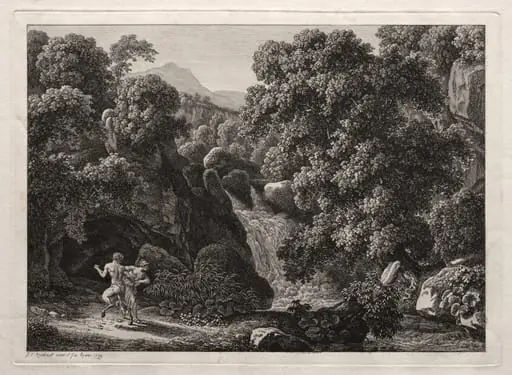 Heroic Landscape: The Satyr and the Nymph
 A Rocky Landscape with the Temptation of Christ