Artwork
The Penitents: The Temptation of St. Anthony
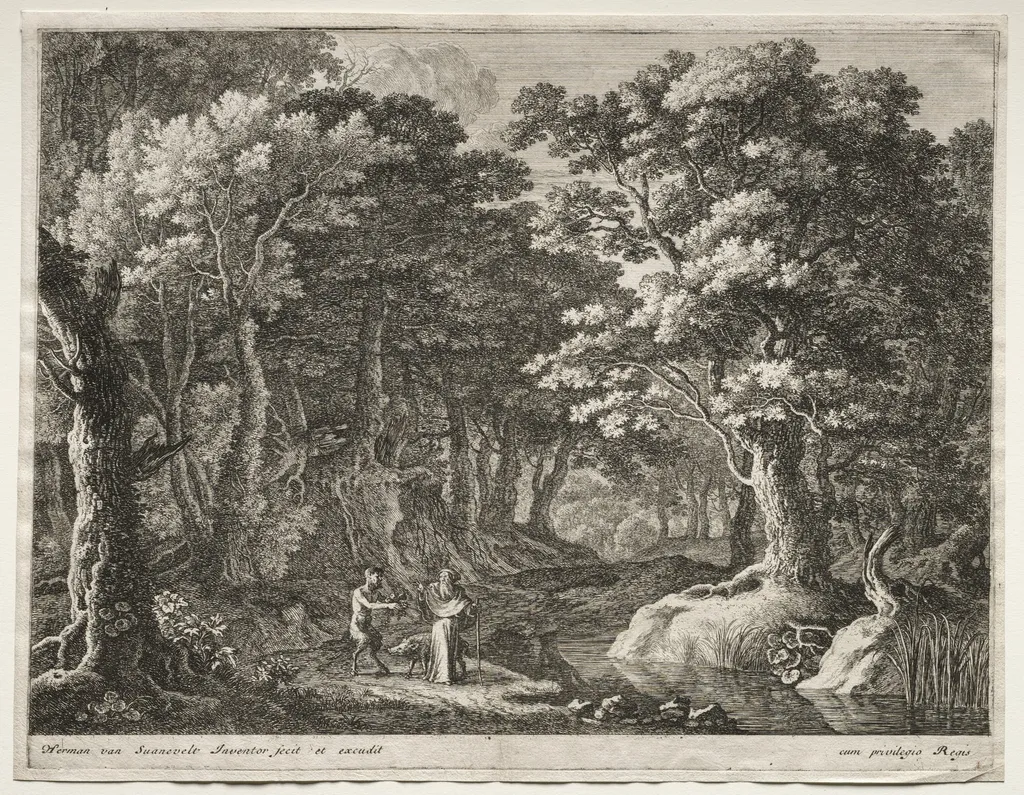
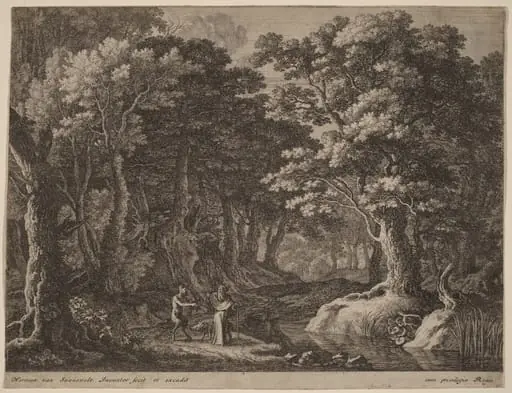
The Penitents: The Temptation of St. Anthony is a print by the Baroque artist Herman van Swanevelt. It dates from 1638 and is held in the collection of the Cleveland Museum of Art.
About this work
Overview
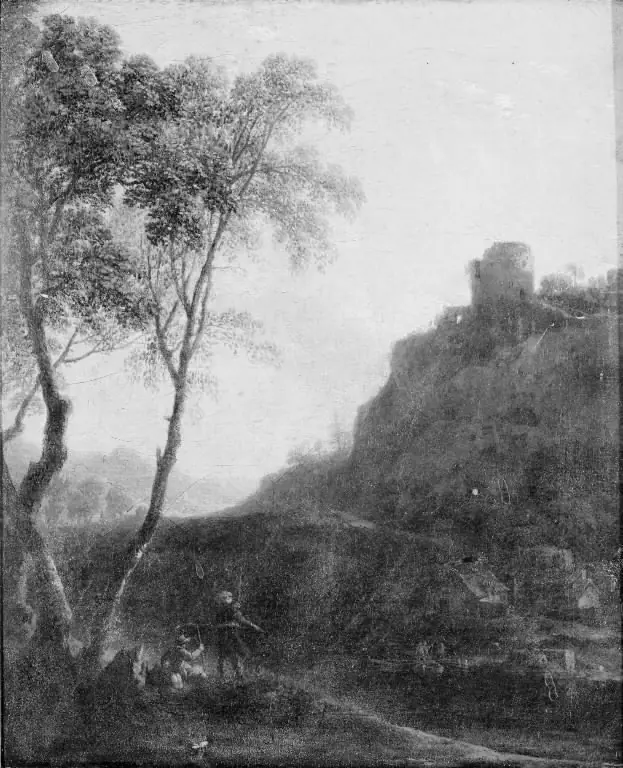
Rendered in ink or etching, the scene unfolds in a dense woodland near a still pond, with two figures positioned among tangled trees and reeds.
Created in 1638 by Herman van Swanevelt, this black-and-white print depicts a quiet moment from the legend of St. Anthony’s temptation. Rendered in ink or etching, the scene unfolds in a dense woodland near a still pond, with two figures positioned among tangled trees and reeds. The composition emphasizes naturalism and subdued atmosphere, distinguishing it from more theatrical interpretations of the same subject.
Subject & Meaning
The two figures represent St. Anthony and a companion, likely a hermit or disciple, during a moment of spiritual trial. Though the scene lacks overt demons or supernatural elements, the stillness and isolation evoke inner struggle. The calm posture of the standing figure contrasts with the contemplative slump of the other, suggesting meditation amid temptation rather than direct confrontation.
Technique & Style
Van Swanevelt employed fine linear shading to model form and depth, using delicate hatching to suggest texture in bark, reeds, and water. The trees are rendered with dense, overlapping branches, creating a sense of enclosure. Subtle contrasts between light and shadow enhance the three-dimensionality of the landscape, reflecting a Northern European tradition of detailed natural observation.
History & Provenance
The print entered the collection of The Cleveland Museum of Art as part of its broader holdings of early modern European prints. Its provenance prior to the museum’s acquisition is not widely documented, but its date and style align with van Swanevelt’s known output during his time in Rome, where he absorbed Italian landscape traditions while maintaining a Northern sensitivity to detail.
Context
Produced during the Baroque era, this print diverges from the era’s typical dynamism, favoring introspection over spectacle. While contemporaries like Caravaggio emphasized dramatic lighting and emotional intensity, van Swanevelt’s approach reflects a quieter, more contemplative strand of religious imagery, influenced by both Italian landscape painting and Flemish printmaking traditions.
Legacy
This work stands as an example of how religious narratives were rendered with psychological subtlety in 17th-century printmaking. Though less celebrated than van Swanevelt’s paintings, this print illustrates his skill in translating spiritual themes into intimate, atmospheric scenes—contributing to a broader tradition of meditative landscape in early modern art.
Own this work as a print
Artist & collection

 Devil Tempting St. Anthony
 The Flight into Egypt: The Large Tree and the Cascade
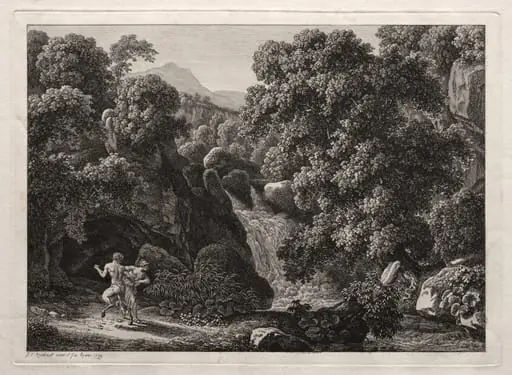 Heroic Landscape: The Satyr and the Nymph
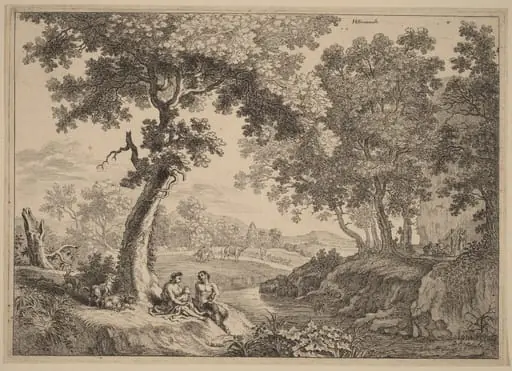 Satyr Family Seated under a Tree
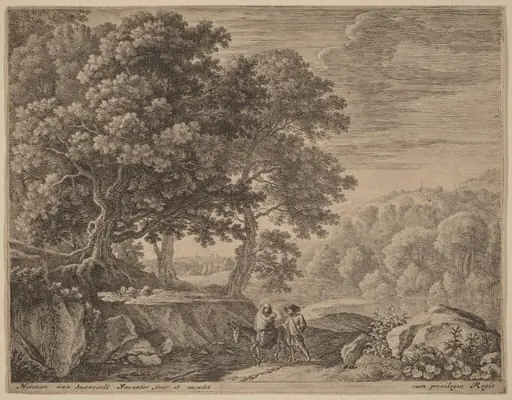 The Little Angels on the Hill
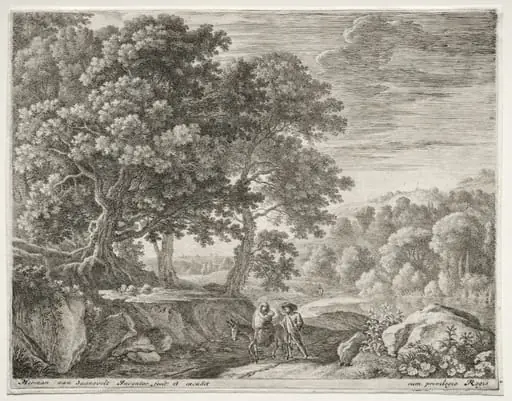 The Flight into Egypt
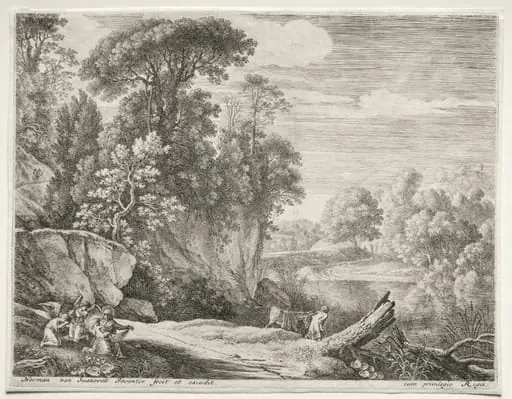 The Donkey Led to the River
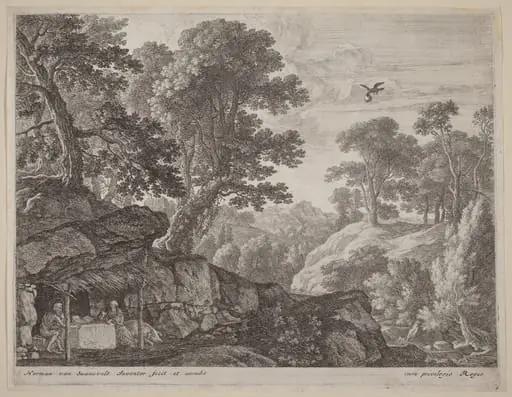 Saint Paul and Saint Anthony by the Entrance to the Cave
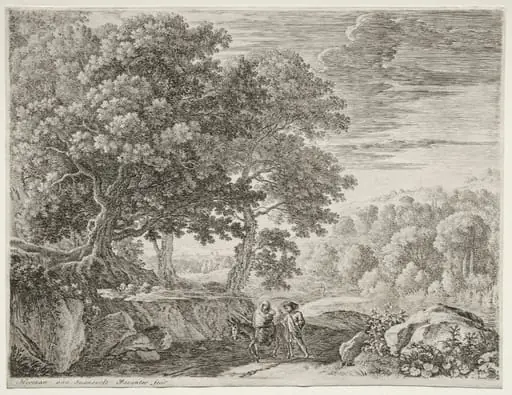 The Flight into Egypt: The Holy Family
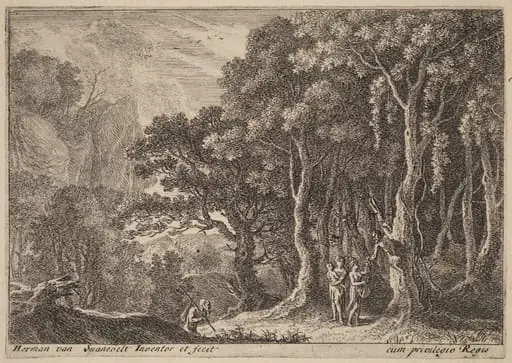 A Satyr Gathering Fruit
 The Large Tree and the Cascade
 Landscape with Man Pushing a Cart