Artwork
Heroic Landscape: The Satyr and the Nymph
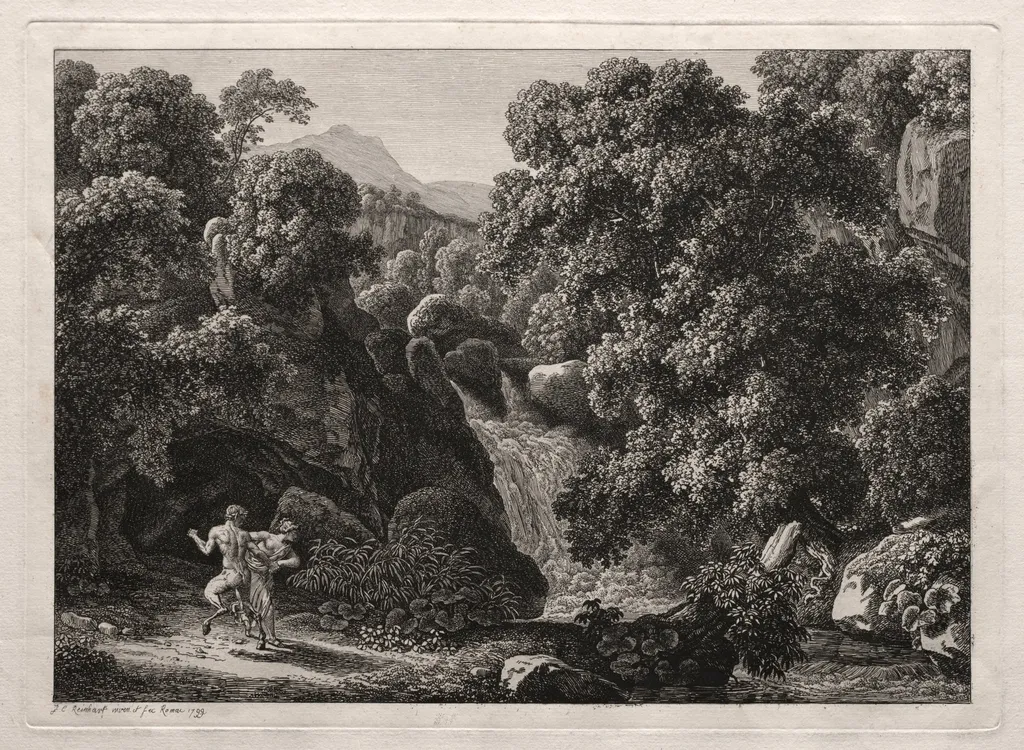
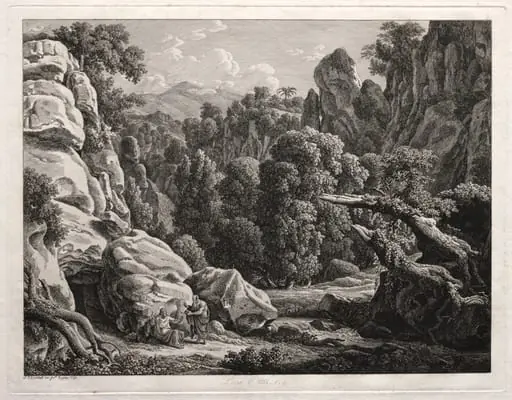
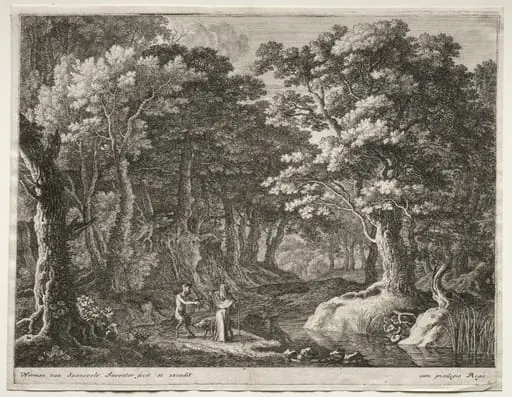
Heroic Landscape: The Satyr and the Nymph is a print by the Romanticist artist Johann Christian Reinhart. It dates from 1799 and is held in the collection of the Cleveland Museum of Art.
About this work
Overview
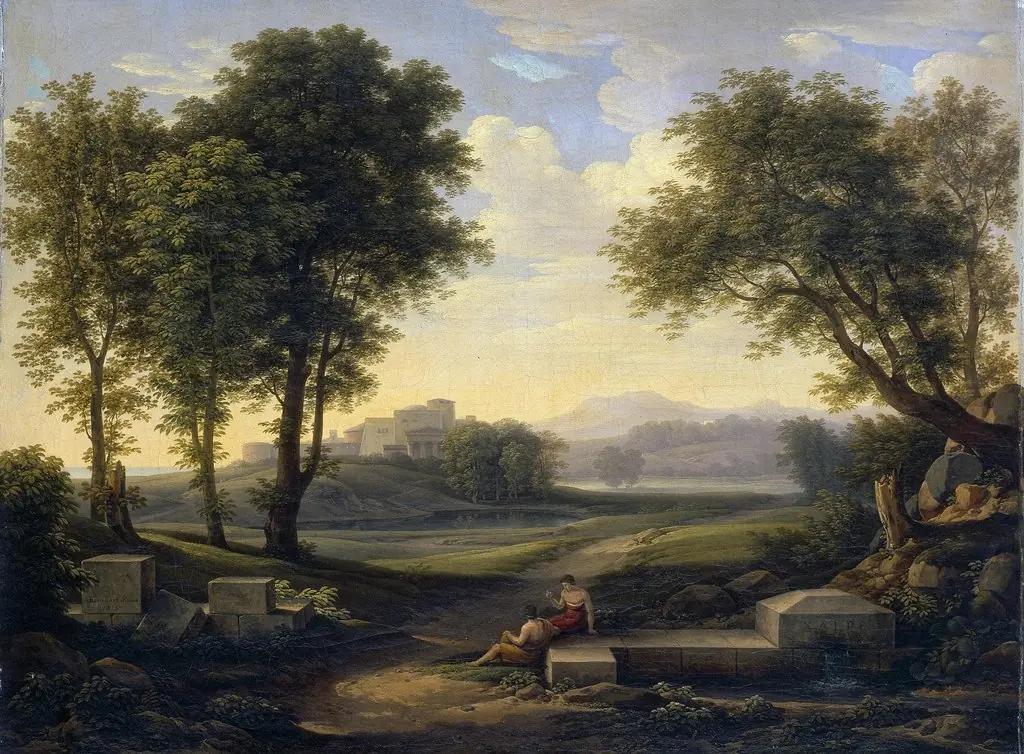
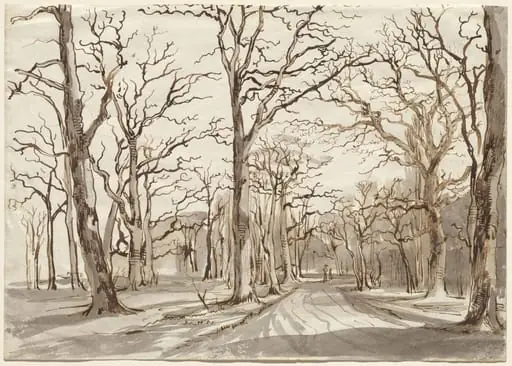
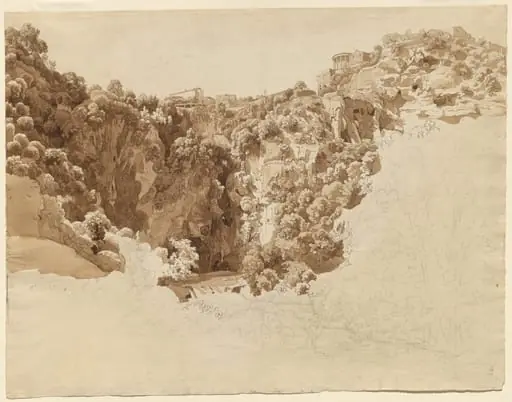
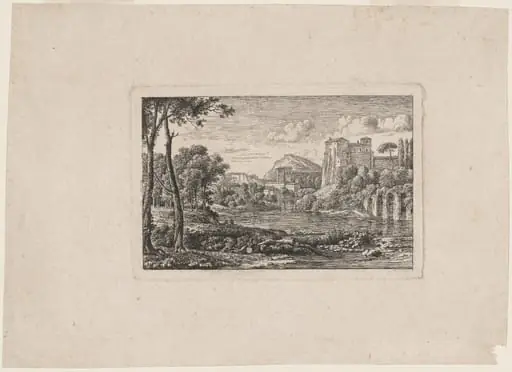
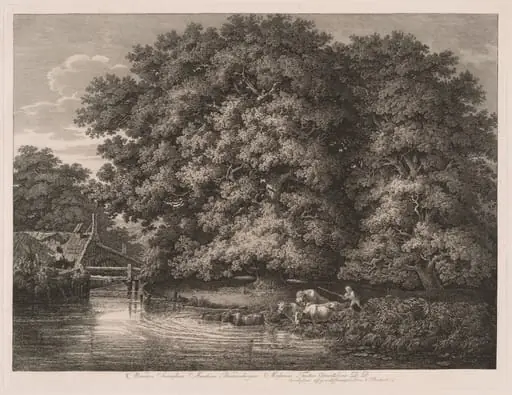
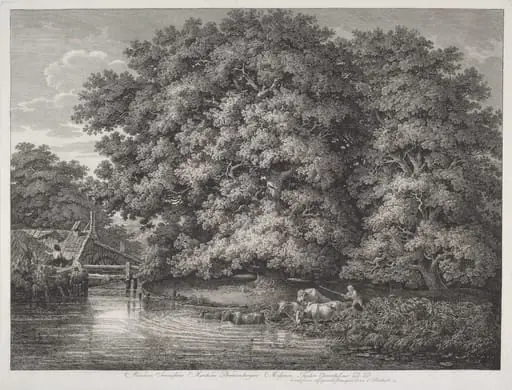
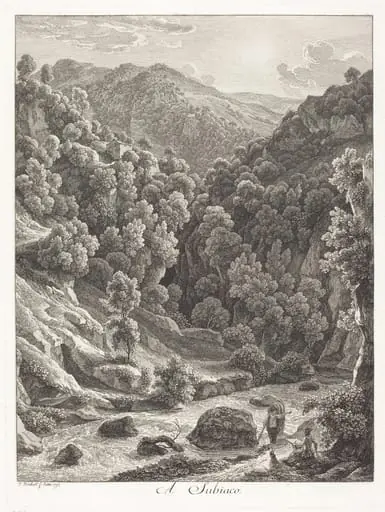
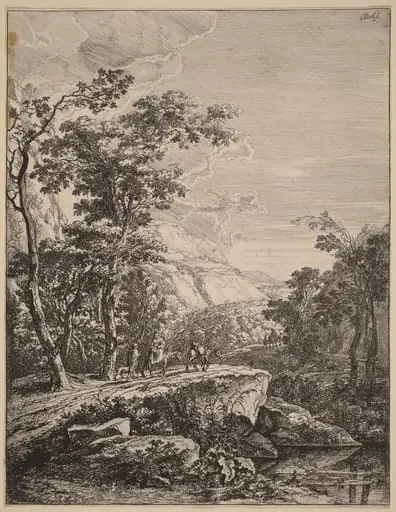
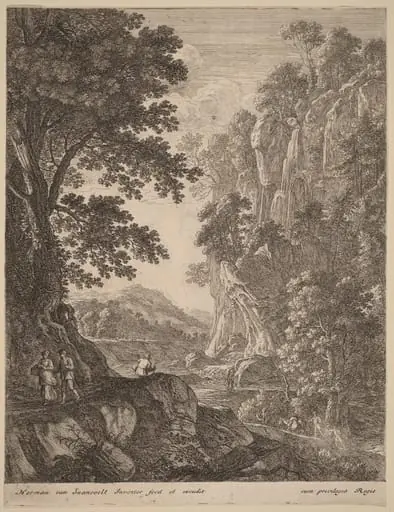
Created in 1799 by Johann Christian Reinhart, this black-and-white print depicts a dramatic natural scene dominated by dense woodland and a cascading waterfall.
Created in 1799 by Johann Christian Reinhart, this black-and-white print depicts a dramatic natural scene dominated by dense woodland and a cascading waterfall. The composition centers on a mythological encounter between a satyr and a nymph, rendered with precise linework that emphasizes texture and movement. The work is part of the collection at The Cleveland Museum of Art, reflecting Reinhart’s engagement with classical themes through the medium of printmaking.
Subject & Meaning
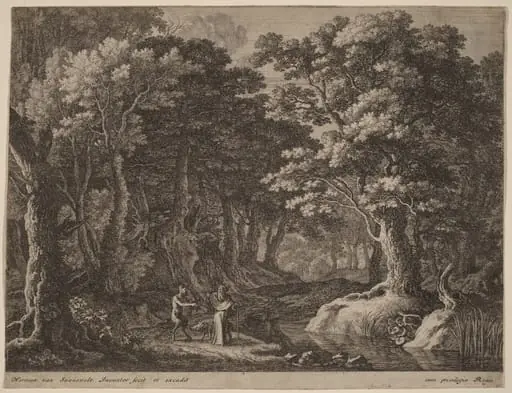
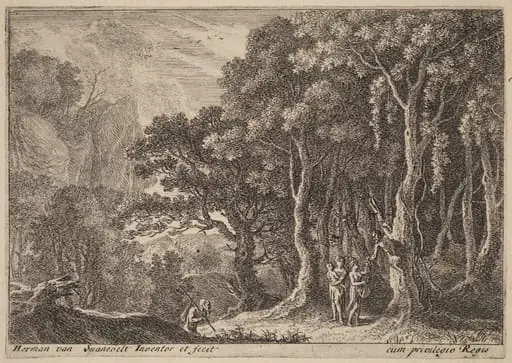
The scene portrays a moment from classical mythology: a satyr, identified by his goat-like horns and partial nudity, pursues a nymph, whose flowing garments and averted gaze suggest tension or flight. The interaction evokes ancient narratives of nature spirits and human-like deities, but without overt violence or resolution. The ambiguity in the nymph’s expression invites contemplation rather than narrative closure, aligning with Romantic-era interest in emotional ambiguity within myth.
Technique & Style
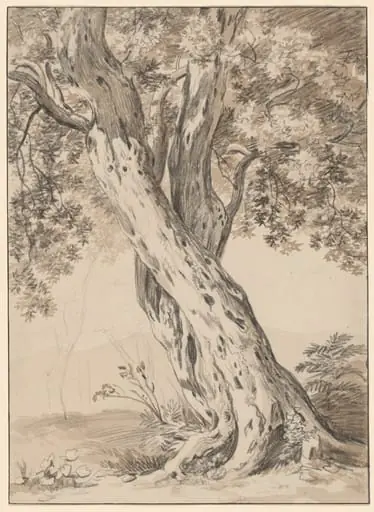
Reinhart employed fine, incised lines to render the rugged surfaces of rocks, bark, and foliage, creating a sense of tactile intensity. The contrast between the sharp, detailed foreground and the softly blurred, misty mountains in the distance enhances spatial depth. The monochromatic palette focuses attention on form and movement, characteristic of 18th-century German printmaking traditions that valued precision and atmospheric effect over color.
History & Provenance
The print was produced in 1799 during Reinhart’s formative years in Italy, where he absorbed classical landscapes and mythological subjects. It entered The Cleveland Museum of Art’s collection through established acquisition channels in the 20th century. While not widely exhibited, it remains a representative example of Reinhart’s early work, bridging Neoclassical discipline with emerging Romantic sensibilities in Northern European art.
Context
This work emerged during a period when European artists increasingly turned to nature and myth as vehicles for emotional expression. Reinhart’s depiction of the satyr and nymph reflects broader trends in Romanticism, where wild landscapes symbolized untamed forces and ancient stories offered psychological depth. Unlike overtly dramatic Romantic paintings, this print conveys tension through restraint, aligning with printmaking’s tradition of subtlety and nuance.
Legacy
Though not among Reinhart’s most famous works, this print exemplifies his skill in translating natural grandeur and mythic tension into the intimate scale of the printed image. It influenced later German and Austrian printmakers who sought to merge classical subject matter with atmospheric realism. Today, it serves as a quiet but significant artifact of early Romantic visual culture in Central Europe.
Own this work as a print
Artist & collection

Artist
Johann Christian Reinhart was a German painter and engraver. He was one of the founders, along with Joseph Anton Koch, of German romantic classical landscape painting.