Artwork
Untitled
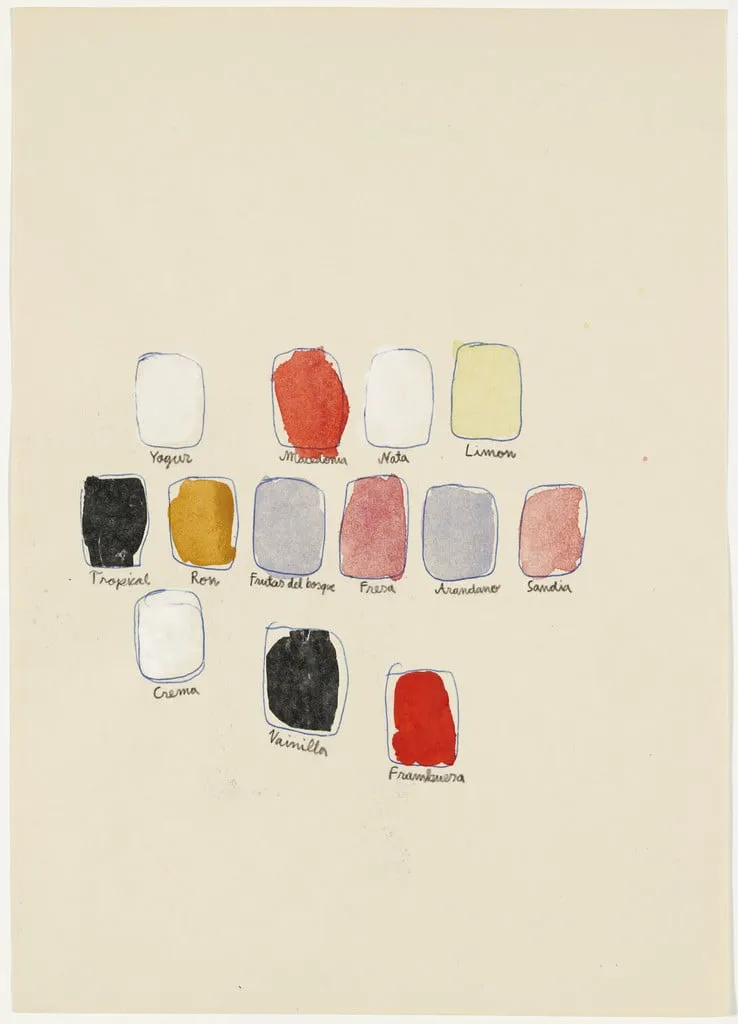
Untitled is a watercolor drawing by Riiko Sakkinen. It dates from 1999 and is held in the collection of the Museum of Modern Art.
About this work
Overview
Created in 1999 by Riiko Sakkinen, this drawing combines watercolor, ballpoint pen, and pencil on metallic paper.
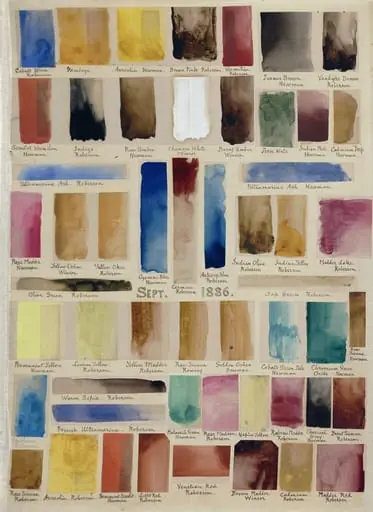
Created in 1999 by Riiko Sakkinen, this drawing combines watercolor, ballpoint pen, and pencil on metallic paper. It features ten rectangular fields, each filled with a distinct hue and labeled in precise, miniature script. The work resists traditional composition, instead presenting color as both object and text. Its materials and scale suggest an intimate, deliberate process, balancing spontaneity with control.
Subject & Meaning
The rectangles evoke everyday substances—yogurt, lemon, strawberry, rum—without directly depicting them. Labels in ballpoint pen identify these associations, inviting viewers to connect color with sensory memory. The work does not narrate but implies a quiet taxonomy of taste and texture, transforming abstract color into coded experience. Meaning emerges through recognition, not representation.
Technique & Style
Watercolor provides translucent, layered washes that allow the metallic paper to subtly shimmer beneath. Ballpoint pen lines, fine and uniform, label each shape with clinical clarity. Pencil underdrawing guides the edges, ensuring geometric precision. The contrast between fluid pigment and rigid script creates a tension between organic sensation and systematic classification, defining the work’s quiet conceptual tone.
History & Provenance
The work entered the collection of The Museum of Modern Art in New York following its creation in 1999. It was produced during a period when Sakkinen was exploring the intersection of language, color, and perception. Its acquisition reflects institutional interest in non-traditional drawing practices that challenge conventional boundaries between painting, writing, and conceptual art.
Context
Emerging from late 1990s Nordic art circles, the piece aligns with a broader interest in minimalism and semiotics. It shares affinities with artists who treat color as linguistic sign rather than emotional tool. Unlike expressive abstraction, it favors restraint, using mundane references to ground abstraction in lived experience, resisting grand narratives in favor of subtle, personal associations.
Legacy
The work contributes to an expanded understanding of drawing as a medium for conceptual inquiry. Its use of everyday references and precise labeling has influenced subsequent artists exploring color taxonomy and sensory language. Though modest in scale, it persists as a quiet example of how labeling can transform perception, turning simple shapes into vessels of memory and meaning.
Artist & collection