Artwork
Study for the painting 'Burn'
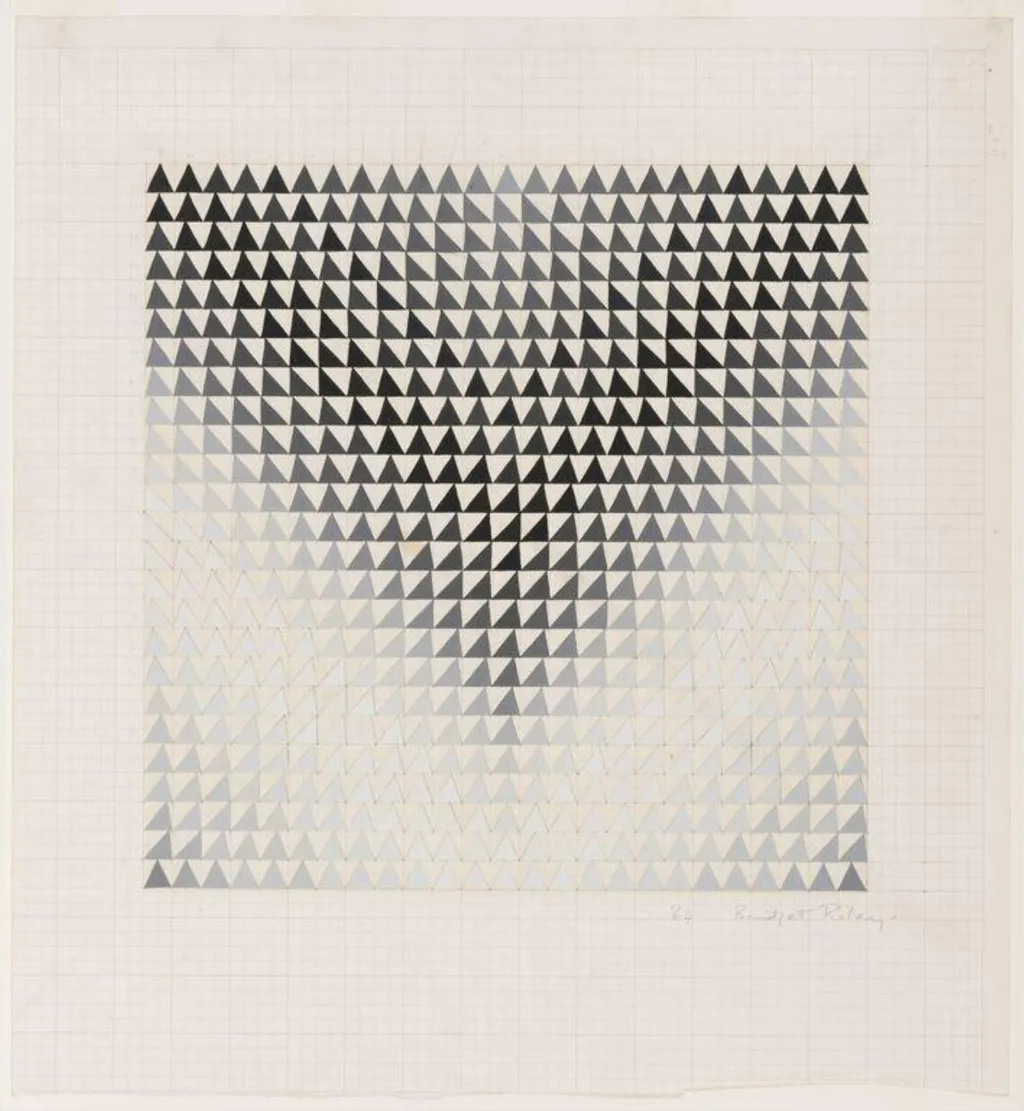
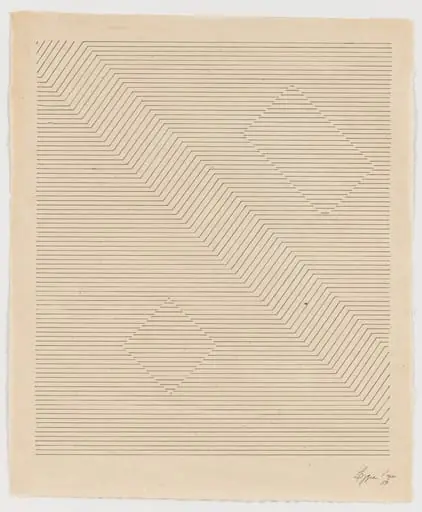
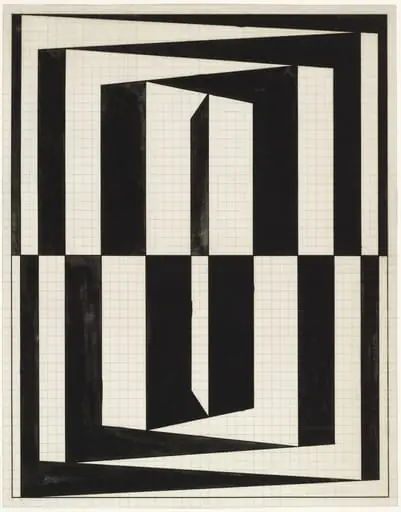
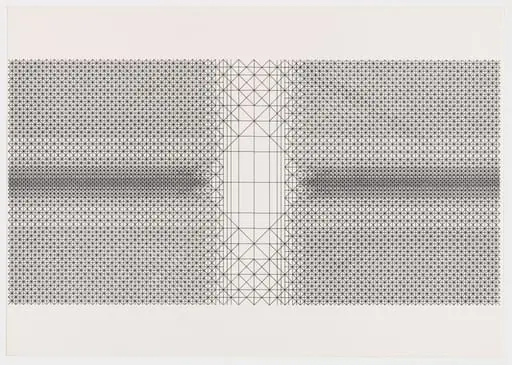
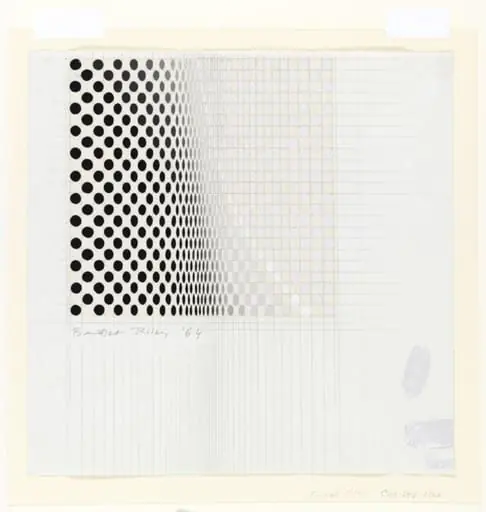
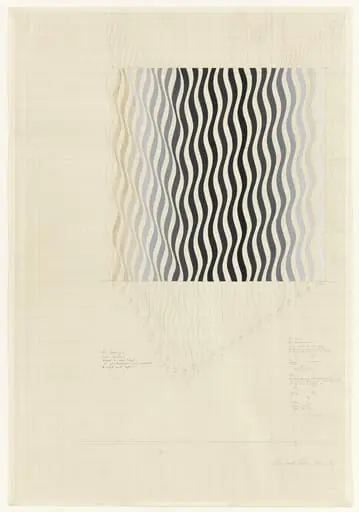
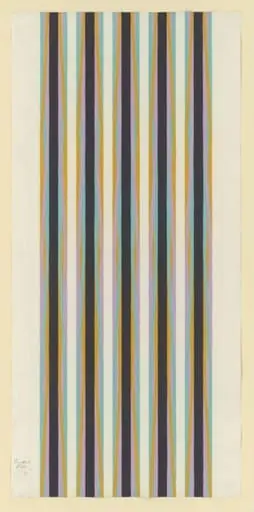
Study for the painting 'Burn' is a watercolor work on paper by Bridget Louise Riley. It dates from 1964 and is held in the collection of the Victoria and Albert Museum. This watercolour study was created as a preparatory work for Bridget Riley’s later painting titled “Burn.
About this work
Overview
This watercolour study was created as a preparatory work for Bridget Riley’s later painting titled “Burn.” Executed in the artist’s characteristic subtle palette, the piece explores the interaction of line and colour that would define the final composition.
Subject & Meaning
The study focuses on the dynamic relationship between overlapping bands of hue, suggesting movement and visual vibration. By arranging the colours in precise, rhythmic sequences, Riley investigates how simple geometric forms can generate a sense of both calm and kinetic energy.
Technique & Style
Riley employs transparent washes of watercolour, allowing layers to build gradually. The delicate gradations and crisp edges reflect her training in precise draftsmanship, while the overall effect emphasizes optical phenomena rather than representational content.
History & Provenance
After completing her studies at Goldsmiths College and the Royal College of Art, Riley worked in commercial design, notably creating the Woolmark logo. The “Study for ‘Burn’” dates from the period when she was transitioning from graphic work to her signature abstract paintings.
Context
Emerging in the early 1960s, Riley’s work aligns with the Op Art movement, which explored visual perception through repetitive patterns and colour contrasts. This study exemplifies her interest in how minimal visual elements can produce complex sensory responses.
Artist & collection
Artist
Bridget Riley’s black-and-white paintings from the early 1960s twist stripes and curves into optical illusions.