Artwork
Small Round Temple
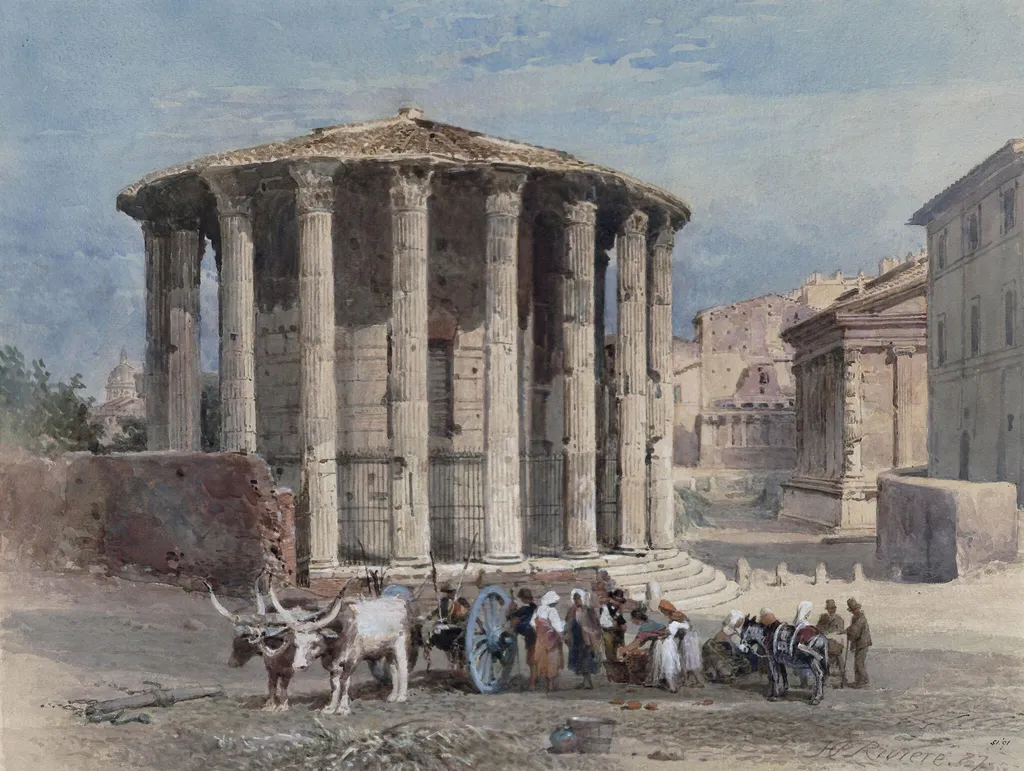
Small Round Temple is a watercolor work on paper by the Impressionist artist Henry Parsons Riviere. It dates from 1887 and is held in the collection of the Victoria and Albert Museum.
About this work
Overview
Rendered in delicate washes, the scene blends architectural precision with quiet everyday life, featuring carts and figures in the foreground.
Painted in 1887 by Henry Parsons Riviere, this watercolour captures two ancient Roman temples in the Piazza Bocca della Verità. The round structure, traditionally identified as the Temple of Vesta, stands alongside the rectangular Temple of Fortuna Virilis. Rendered in delicate washes, the scene blends architectural precision with quiet everyday life, featuring carts and figures in the foreground. The artist signs and dates the work, affirming its place in his documented travels through Italy.
Subject & Meaning
The painting juxtaposes enduring classical architecture with contemporary 19th-century activity. The temples, though ancient, are not isolated monuments but integrated into the lived environment of Rome—ox-drawn carts, pedestrians, and weathered stone coexist. This suggests a contemplative view of history not as distant relic, but as a continuous, inhabited landscape. The absence of overt drama invites quiet reflection on time’s layering within urban space.
Technique & Style
Riviere employs transparent watercolour washes to suggest atmospheric depth, with soft gradients in the sky and muted earth tones for surrounding buildings. The temple’s stone columns are defined with precise, dry brushwork, while shadows cast by the architecture ground the scene in natural light. The technique avoids heavy detail in the background, allowing the temple to emerge as a focal point through tonal contrast rather than sharp outline.
History & Provenance
The watercolour is part of Riviere’s series of Italian sketches made during his travels in the late 19th century. It reflects the tradition of British watercolourists documenting classical ruins, though Riviere’s approach is less romanticized than many of his contemporaries. The work’s survival in private collections indicates it was likely acquired by a collector interested in topographical accuracy rather than grand historical narrative.
Context
In 1887, Rome was undergoing modernization, yet its ancient structures remained central to its identity. Artists like Riviere recorded these sites as both archaeological subjects and living spaces. The temple’s dual names—Vesta and Santa Maria del Sole—reflect its reuse over centuries, a reality Riviere captures without commentary, presenting the site as it appeared in daily use rather than idealized ruin.
Legacy
Riviere’s watercolour contributes to a modest but persistent genre of 19th-century topographical art that prioritizes observation over embellishment. While not widely exhibited, it remains a quiet record of how classical architecture was perceived in its contemporary context. Its value lies in its unembellished documentation, offering insight into the textures of Rome beyond the monumental.
Artist & collection

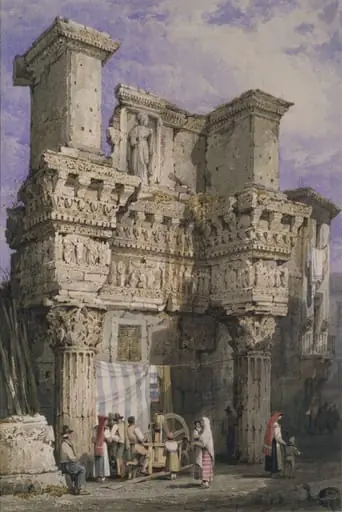 Forum of Nerva, Rome
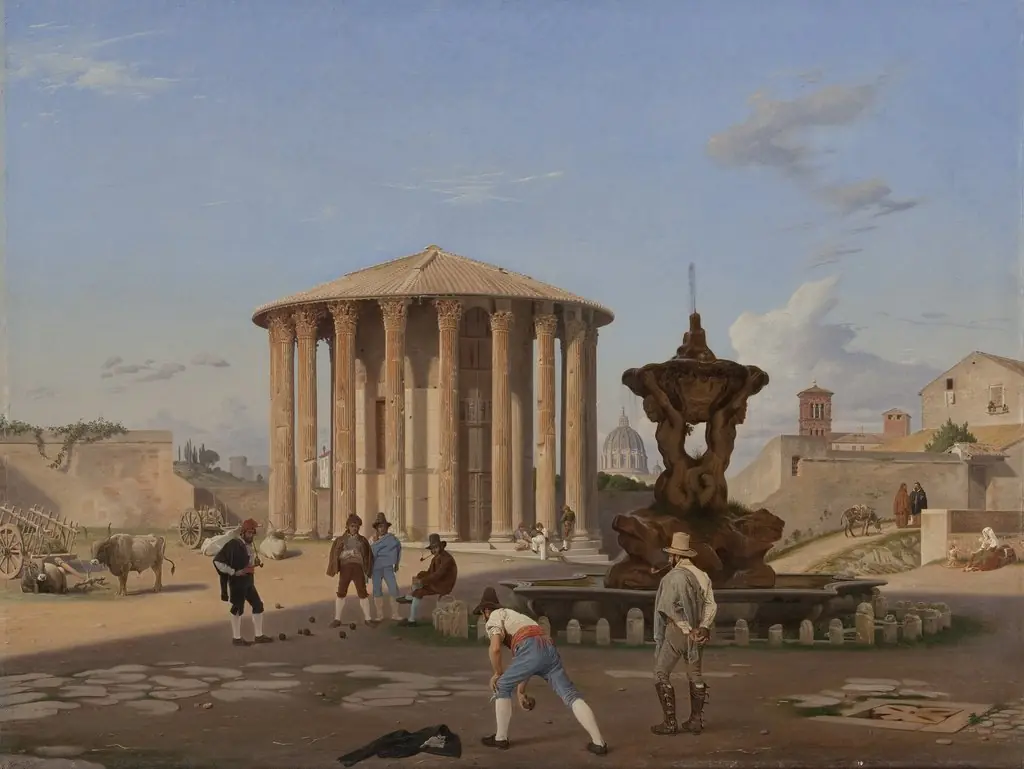 Vestatemplet med dets omgivelser
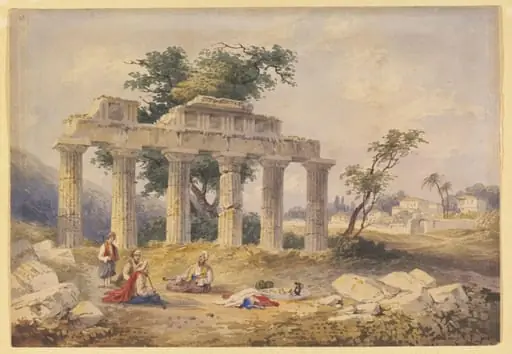 Temple at Boudroun, Halicarnassus
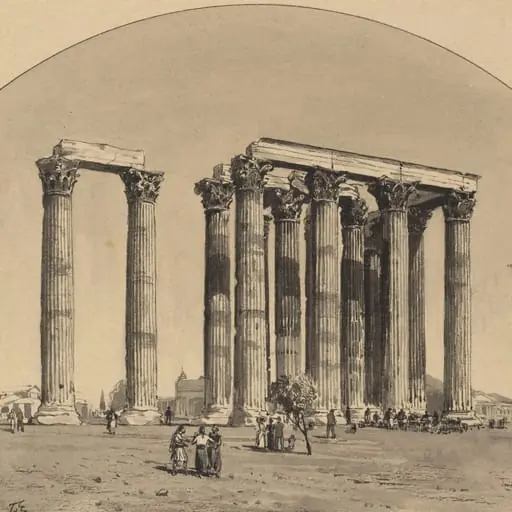 Temple of Olympian Zeus
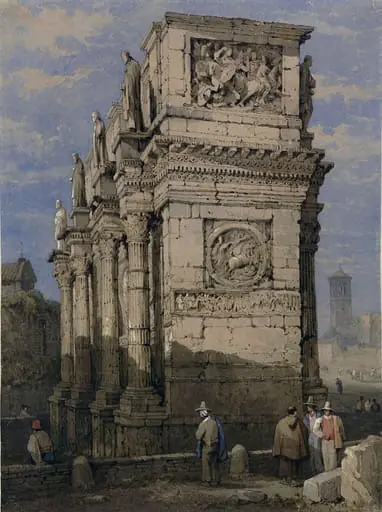 Arch of Constantine, Rome
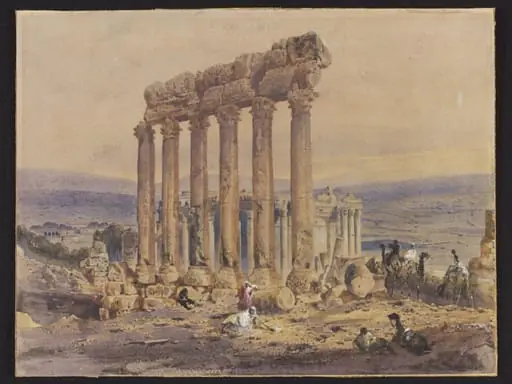 The Temple of Jupiter, Baalbek
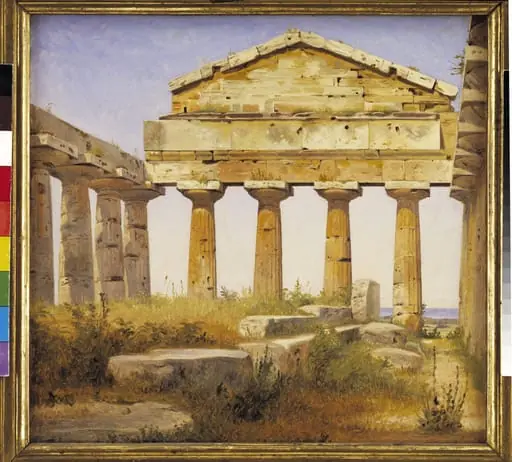 The Temple of Athena in Paestum
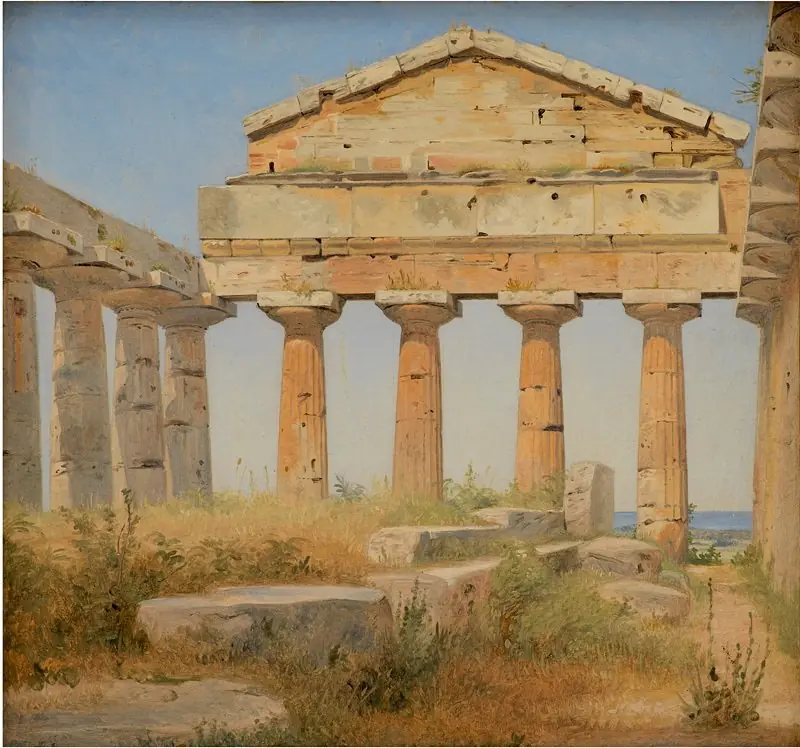 The Temple of Athena in Paestum
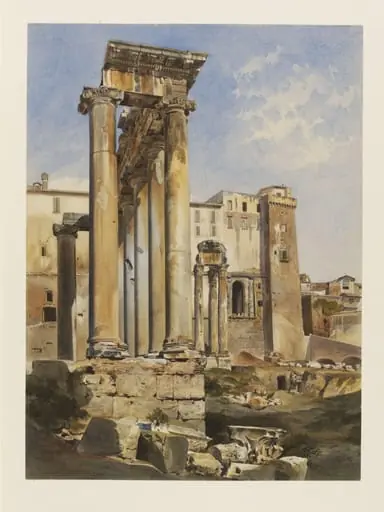 The Temple of Saturn and the Temple of Concord, Rome
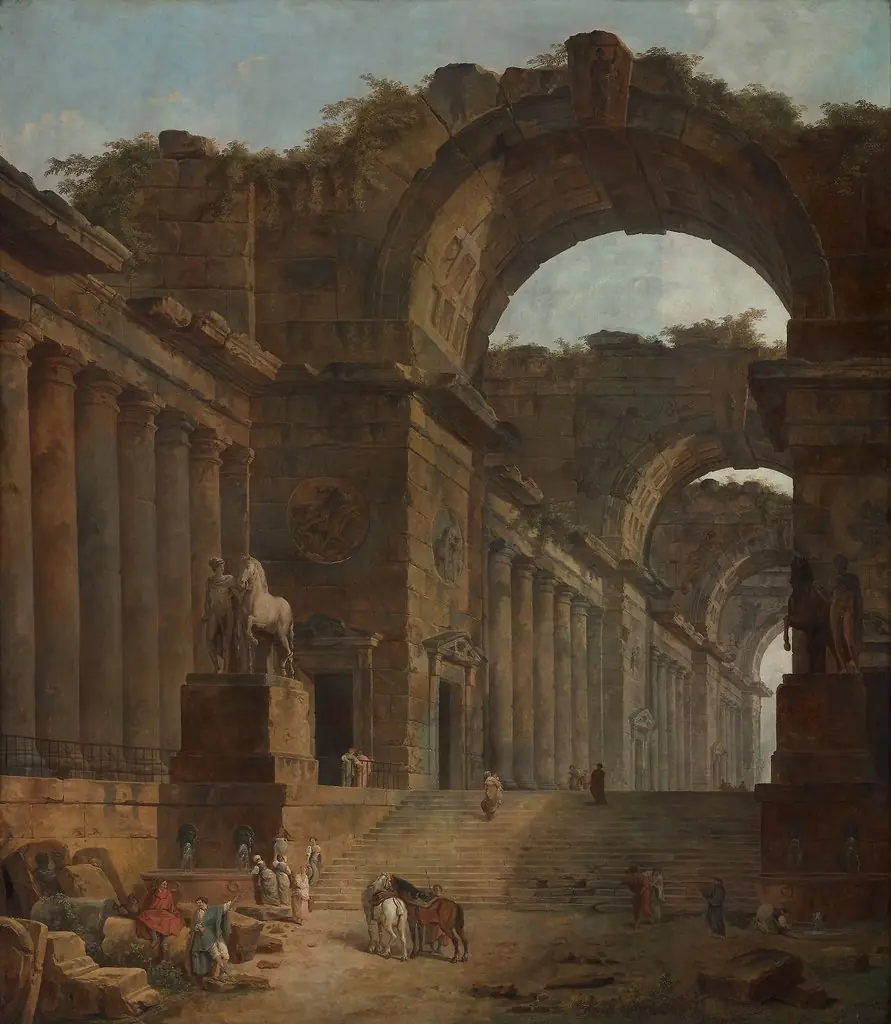 The Fountains
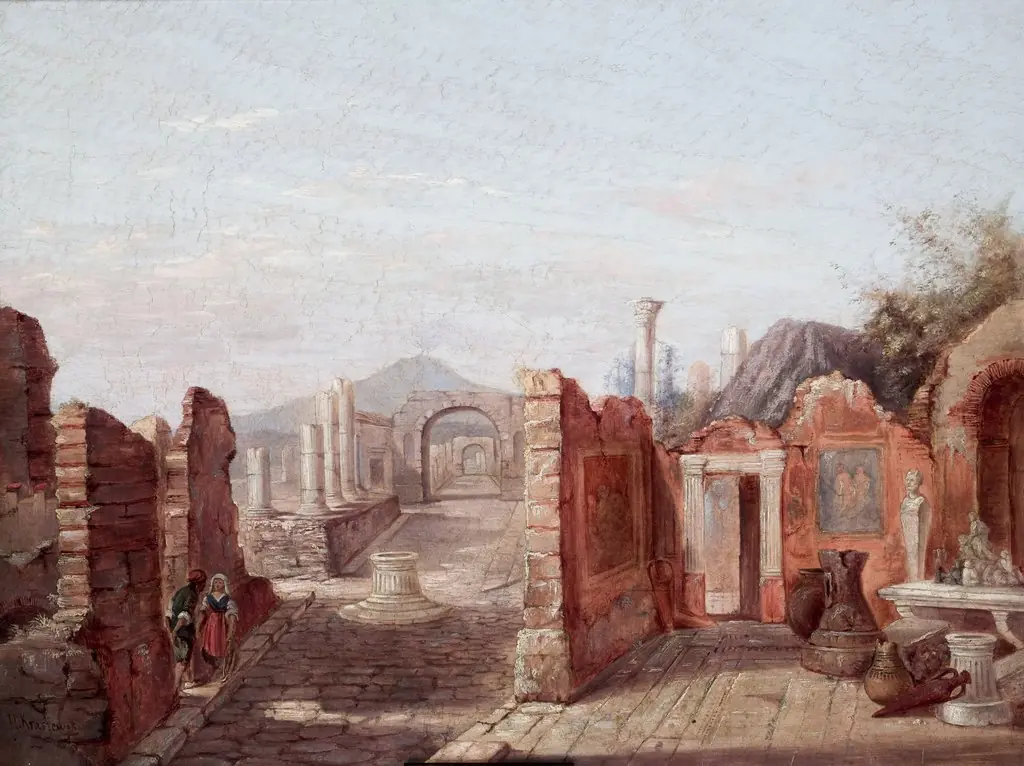 Ruins of Pompeii
 Ancient Temple