Artwork
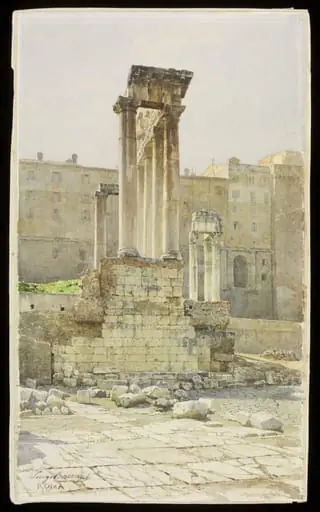
The Temple of Saturn and the Temple of Concord, Rome
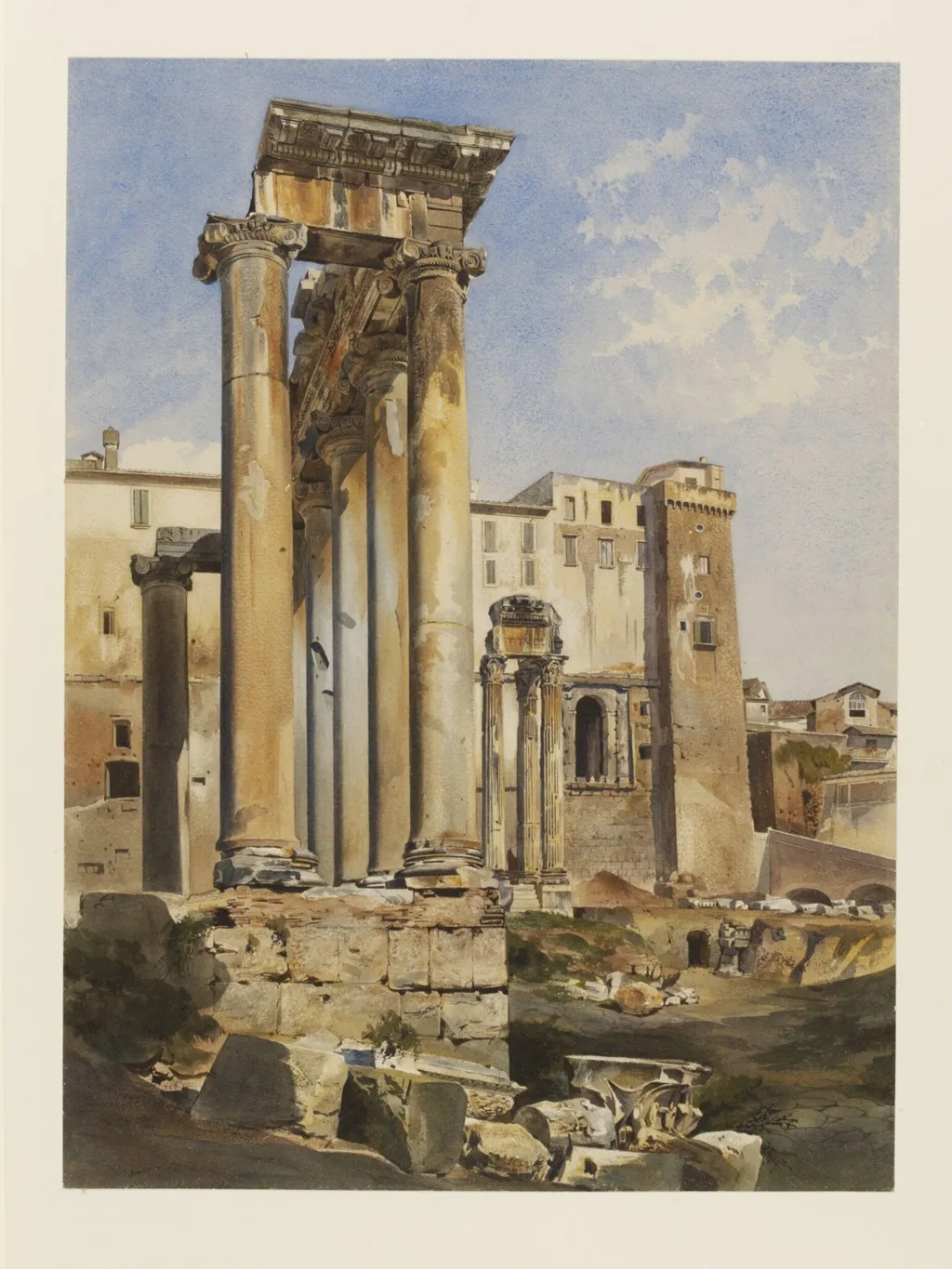
The Temple of Saturn and the Temple of Concord, Rome is a watercolor work on paper by the British Romanticist artist Thomas Hartley Cromek. It dates from 5 and is held in the collection of the Victoria and Albert Museum.
About this work
Overview
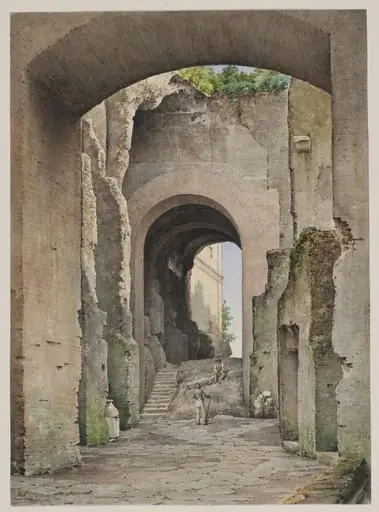
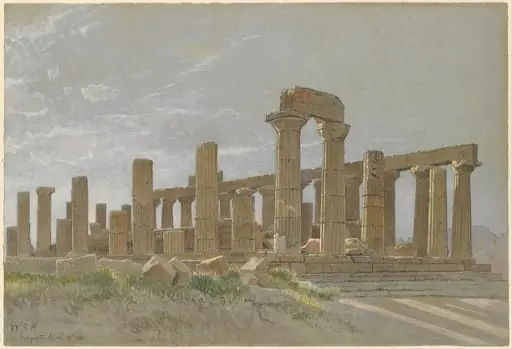
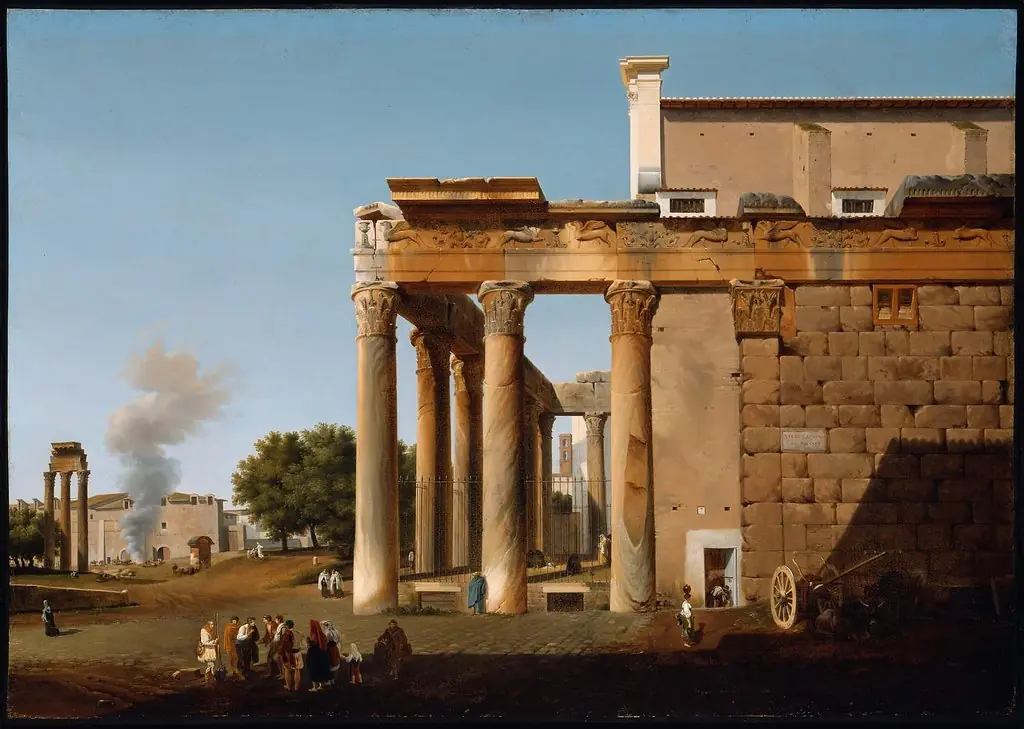
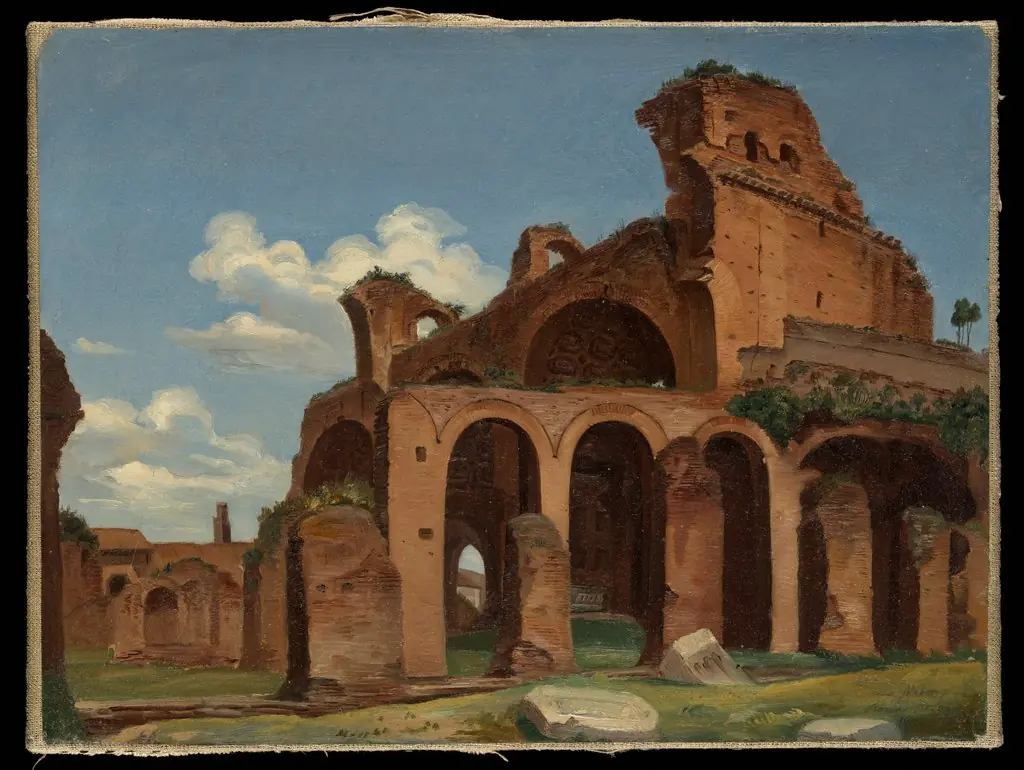
Thomas Hartley Cromek created this watercolour and pencil work depicting the ancient Roman ruins of the Temple of Saturn and the Temple of Concord.
Thomas Hartley Cromek created this watercolour and pencil work depicting the ancient Roman ruins of the Temple of Saturn and the Temple of Concord. The piece is signed and dated by the artist, indicating a deliberate record of its making. Rendered in muted earth tones with subtle accents of blue and green, the composition captures the quiet decay of these structures against a soft sky, reflecting a topographical interest common in early 19th-century travel sketches.
Subject & Meaning
The ruins of two Republican-era temples frame the scene, their fragmented columns and weathered stonework suggesting the passage of centuries. Rather than idealizing the past, Cromek presents the temples as silent witnesses to time’s erosion. The absence of human figures enhances a sense of abandonment, aligning the image with a contemplative view of antiquity common among Romantic-era observers who saw in ruins a meditation on impermanence.
Technique & Style
Cromek employed watercolour with delicate pencil underdrawing to define the architectural forms. The textures of crumbling stone are suggested through layered washes and dry brushwork, emphasizing surface decay without overt dramatization. The sky is rendered in pale, even tones, allowing the ruins to dominate the visual field. Details like the small windows and distant tower are rendered with restrained precision, reinforcing the work’s documentary character.
History & Provenance
The work was produced during a period when British artists frequently traveled to Italy to study classical ruins. Cromek, active in the early 1800s, likely made this sketch during one such journey. Its signed and dated status suggests it was intended as a personal record or preparatory study, rather than a finished exhibition piece. Its survival offers insight into the practice of topographical artists documenting Rome’s antiquities before extensive restoration.
Context
In the early 19th century, Roman ruins were popular subjects for travelers and artists drawn to the remnants of antiquity. Cromek’s depiction aligns with a broader trend of viewing these sites not as monuments to be restored, but as evocative fragments of a lost world. His focus on texture and decay reflects a shift from neoclassical idealism toward a more introspective, Romantic sensibility that valued atmosphere over grandeur.
Legacy
Though not widely exhibited in its time, the work contributes to a body of watercolours that preserved the appearance of Roman ruins before modern archaeological interventions. It stands as a quiet example of how amateur and professional artists alike contributed to the visual documentation of classical heritage, offering a record shaped by personal observation rather than institutional agenda.
Artist & collection