Artwork
Untitled
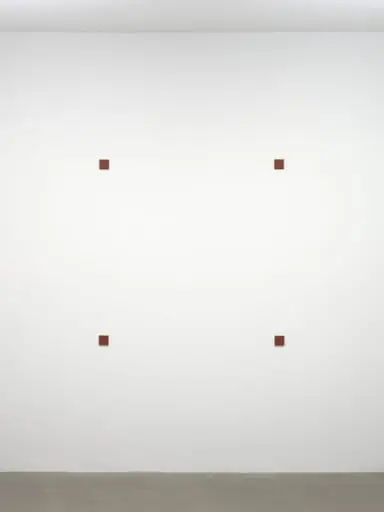
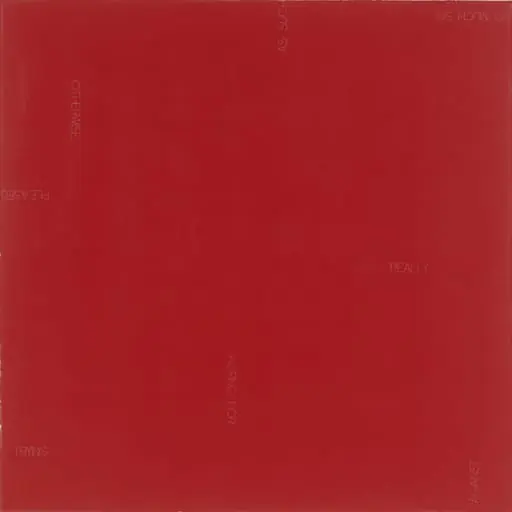
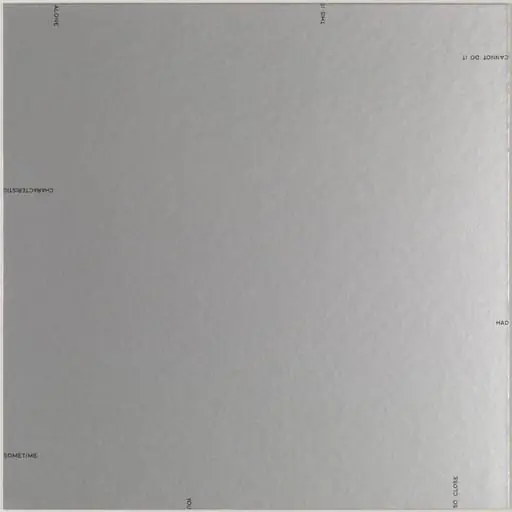
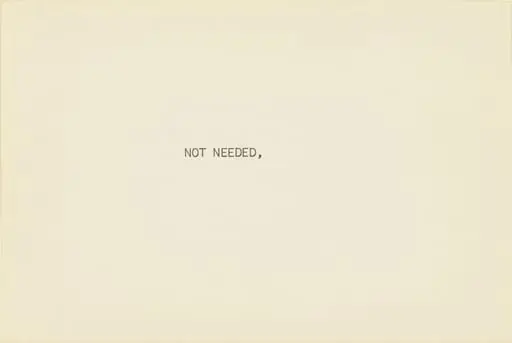
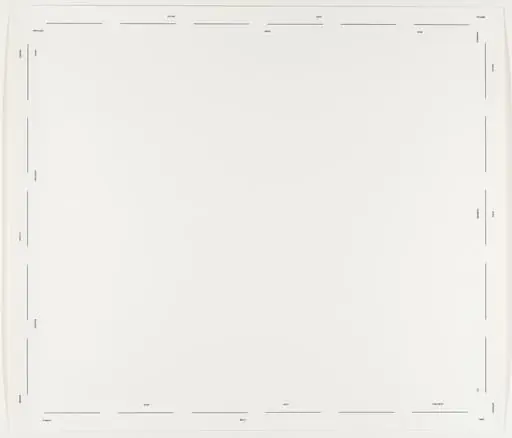
Untitled is an ink print by Robert Barry. It dates from 1978 and is held in the collection of the Museum of Modern Art.
About this work
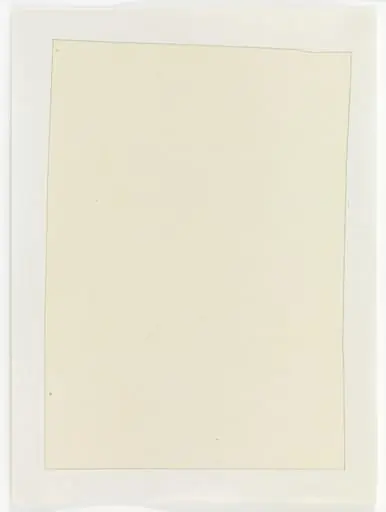
There’s nothing to see except the paper itself, no lines, no texture, not even a hint of something hidden.
This image is completely blank—just a smooth, empty white surface with no marks, shapes, or colors. There’s nothing to see except the paper itself, no lines, no texture, not even a hint of something hidden.
The artist made this on purpose in 1978, calling it *Untitled*. It’s not a mistake—it’s a work that forces you to think about what art can be when it looks like nothing.
Want to know more? Check out etching to see how artists use acid and metal plates to create prints.
Overview
Robert Barry created this etching in 1978 as part of his ongoing investigation into the boundaries of artistic expression. Unlike traditional prints, the work contains no visible marks, ink, or texture—only the bare surface of the paper. Its emptiness is intentional, reflecting Barry’s broader interest in art that exists beyond physical form. The piece challenges assumptions about what a printed image must contain.
Subject & Meaning
The work’s subject is absence itself. By presenting a completely blank sheet, Barry shifts focus from visual content to the conditions of perception and expectation. The viewer is invited to confront the idea of art as an experience rather than an object. The title, 'Untitled,' reinforces this neutrality, resisting interpretation while insisting on the legitimacy of the void as a form of expression.
Technique & Style
Though produced using the traditional etching process—acid biting into a metal plate—the final print reveals no etched lines or tonal variations. Barry’s use of the medium is subversive: he exploits its capacity for precision to achieve total visual erasure. The technique becomes a tool for negation, aligning with conceptual art’s emphasis on idea over aesthetics. The result is a print that is technically complete yet visually silent.
History & Provenance
Created during a period when Barry was deeply engaged with non-material practices, this etching emerged alongside his works involving radio waves, light, and language. It was not exhibited as a novelty but as a serious extension of his conceptual investigations. The work entered institutional collections as part of a broader reassessment of printmaking’s potential beyond representation, reflecting its significance within late 20th-century art discourse.
Context
In the late 1970s, conceptual art was challenging the dominance of object-based creation. Artists like Barry, Sol LeWitt, and Lawrence Weiner questioned the necessity of physical artifacts. This etching aligns with that movement’s interest in dematerialization, echoing contemporaneous works that used text, instruction, or absence to redefine art’s material limits. It responds to a cultural moment seeking to expand art’s definition beyond the visible.
Legacy
The work remains a reference point in discussions about the limits of artistic media. Its radical simplicity has influenced subsequent generations of artists exploring invisibility, silence, and the institutional framing of art. While not widely reproduced, it is cited in academic and curatorial contexts as a pivotal example of how minimal intervention can provoke profound reconsideration of artistic value and perception.
Artist & collection
Artist
Robert Barry (born March 9, 1936) is an American artist. Since 1967, Barry has produced non-material works of art, installations, and performance art using a variety of otherwise invisible media. In 1968, Robert Barry…