Artwork
Allo Paris: The Bridges of Paris and Notre-Dame
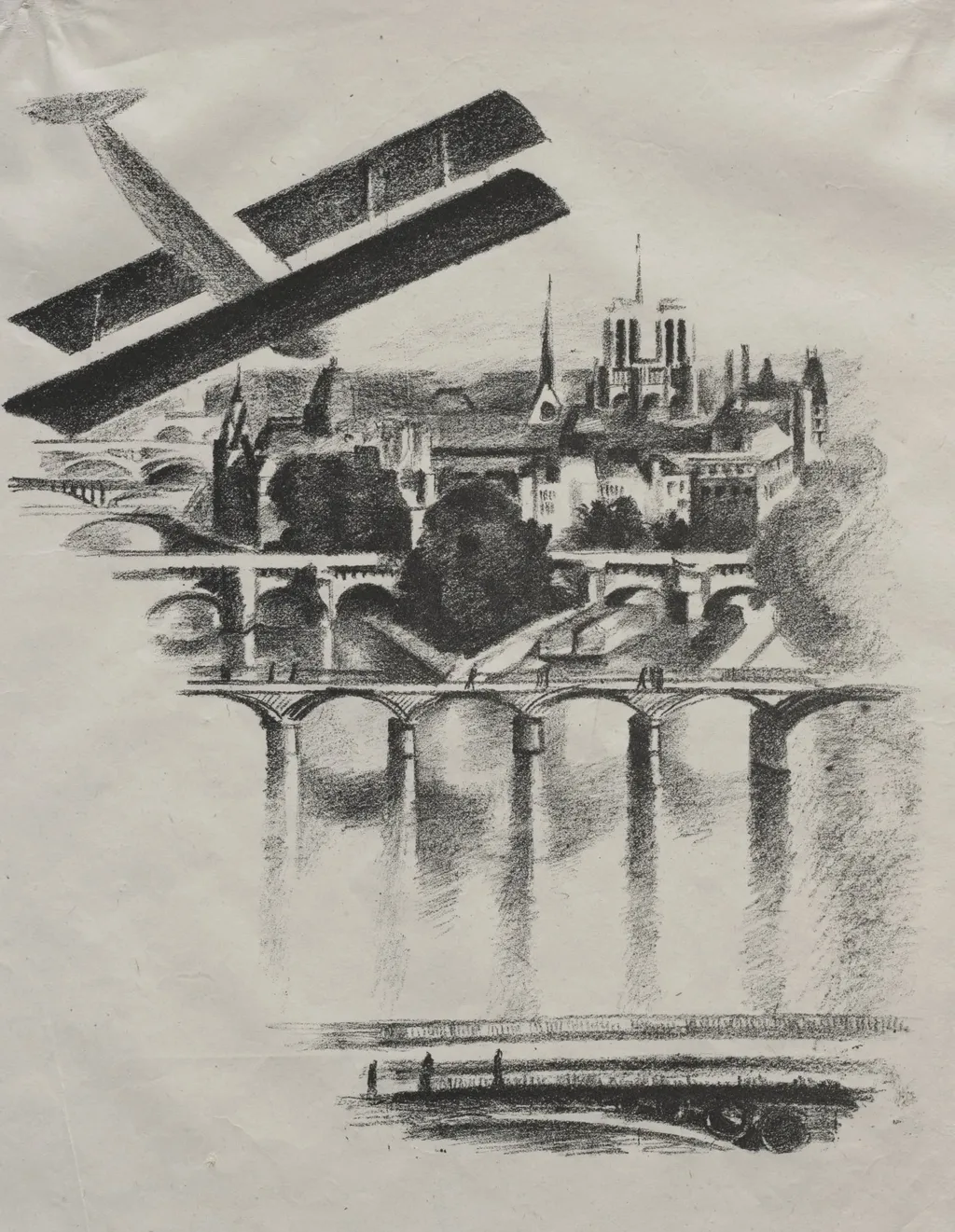
Allo Paris: The Bridges of Paris and Notre-Dame is a print by Robert Delaunay. It dates from 1926 and is held in the collection of the Cleveland Museum of Art.
About this work
Overview
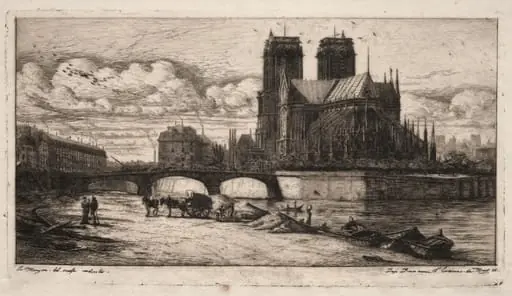
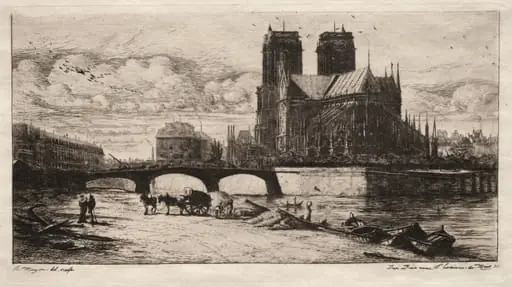
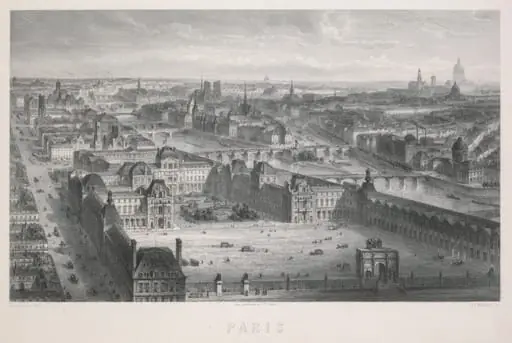
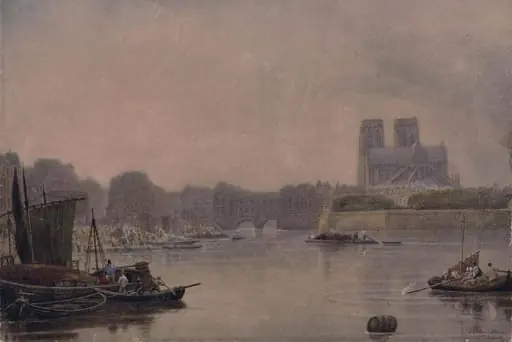
Robert Delaunay’s 1926 print titled Allo Paris: The Bridges of Paris and Notre‑Dame captures a bustling urban vista along the Seine.
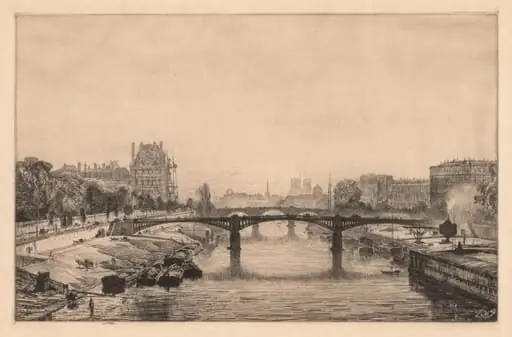
Robert Delaunay’s 1926 print titled Allo Paris: The Bridges of Paris and Notre‑Dame captures a bustling urban vista along the Seine. Central to the composition is the iconic cathedral, flanked by a series of arched bridges that span the river, while distant spires and domes punctuate the skyline. The scene is animated by low‑flying aircraft and a train moving beneath the bridges, suggesting the modern rhythm of the city.
Subject & Meaning
The work juxtaposes historic architecture with contemporary transportation, highlighting Paris’s blend of heritage and progress. By placing Notre‑Dame at the heart of the image, Delaunay underscores the cathedral’s symbolic centrality, while the bridges and moving vehicles convey connectivity and the flow of urban life in the early twentieth century.
Technique & Style
Executed with rapid, sketch‑like lines, the print emphasizes light and shadow through loose, gestural strokes. Delaunay’s approach resembles a preparatory study, favoring immediacy over detailed finish. The economy of line and the dynamic placement of planes and train convey movement, reflecting the artist’s interest in capturing fleeting impressions of modernity.
History & Provenance
Created in 1926, Allo Paris: The Bridges of Paris and Notre‑Dame entered the collection of the Cleveland Museum of Art, where it remains on view. The piece represents a period when Delaunay explored urban subjects through printmaking, complementing his more widely known experiments with color and abstraction.
Artist & collection

Artist
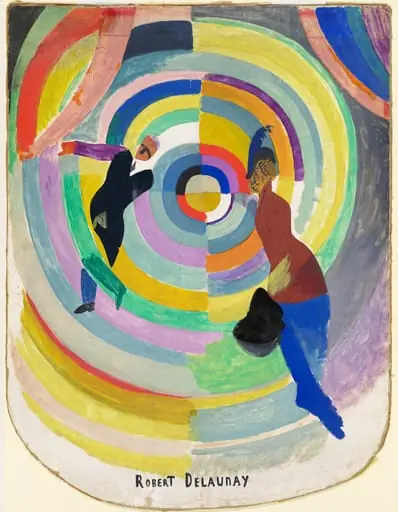
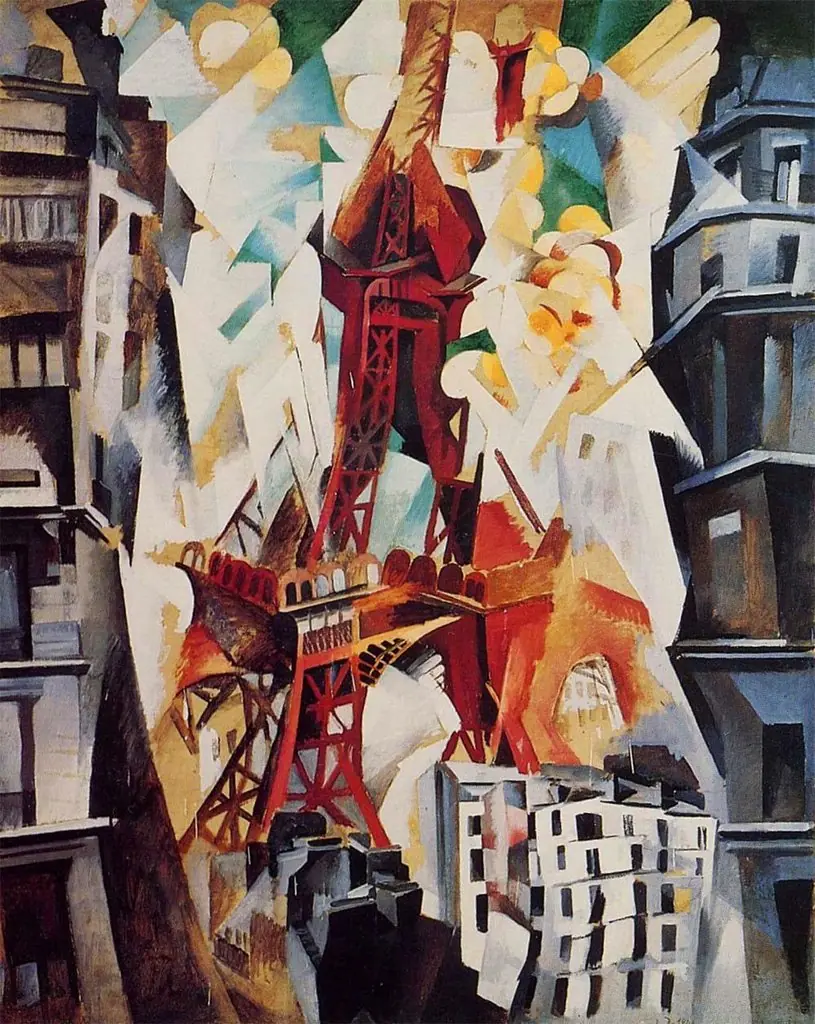
Robert Delaunay was a French artist of the School of Paris movement; who, with his wife Sonia Delaunay and others, co-founded the Orphism art movement, noted for its use of strong colours and geometric shapes.