Artwork
Notre Dame, Paris
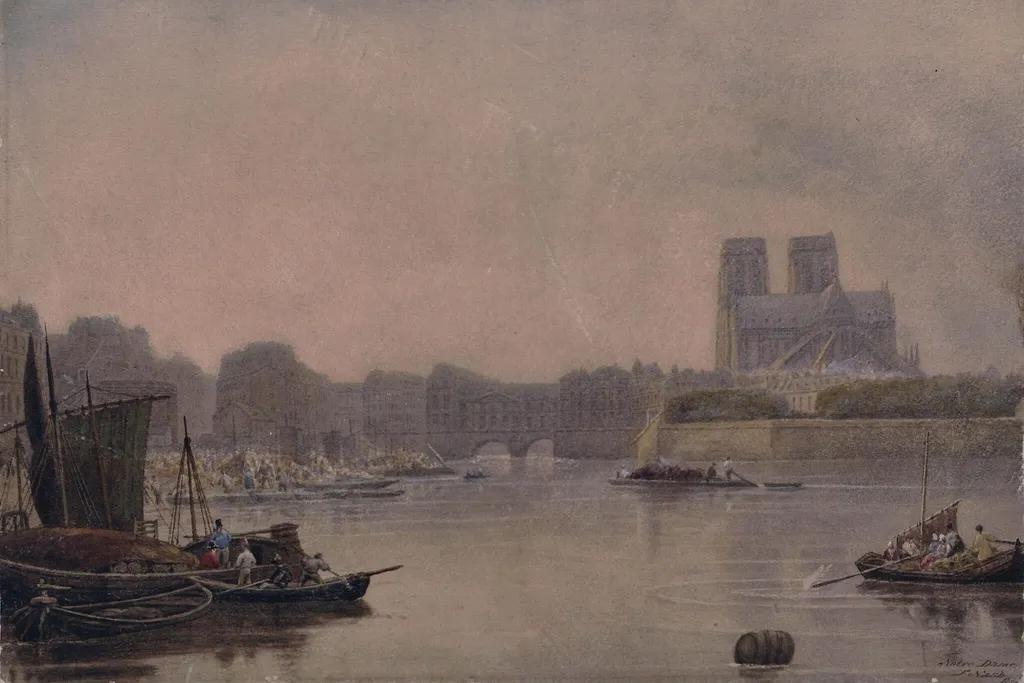
Notre Dame, Paris is a watercolor work on paper by the Romanesque artist Frederick Nash. It dates from 1850 and is held in the collection of the Victoria and Albert Museum.
About this work
Overview
Frederick Nash’s 1850 watercolour presents a tranquil view of Paris, centered on the iconic cathedral of Notre‑Dame. The composition balances the soaring façade of the cathedral with a bustling river scene, where several small boats carry passengers under a soft, hazy sky.
Subject & Meaning
The work juxtaposes the monumental architecture of Notre‑Dame—its twin towers and grand arched portal—with everyday river traffic, suggesting a harmonious coexistence of historic grandeur and contemporary urban life. The calm atmosphere invites contemplation of the city’s enduring presence.
Technique & Style
Executed in delicate watercolour, Nash employs muted tones and gentle brushwork to render atmospheric light on water and stone. Subtle washes convey depth, while a faint pencil sketch on the reverse hints at the preparatory process behind the finished image.
History & Provenance
Signed by Nash, the piece dates to 1850, a period when the artist was active in documenting French landscapes. The presence of an underlying pencil landscape on the back indicates it may have been a study or a finished work intended for private collection.
Artist & collection

Artist
Frederick Nash was an American lawyer and jurist from Hillsborough, North Carolina. He served on the North Carolina Supreme Court and was its chief justice from 1852 until his death.

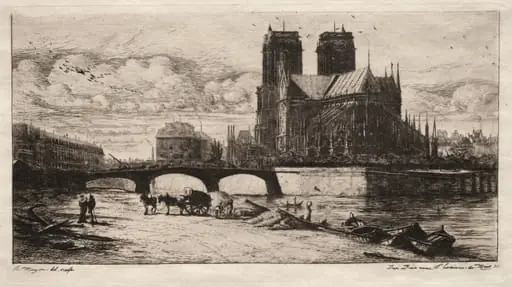 Etchings of Paris: The Apsis of the Cathedral of Notre Dame
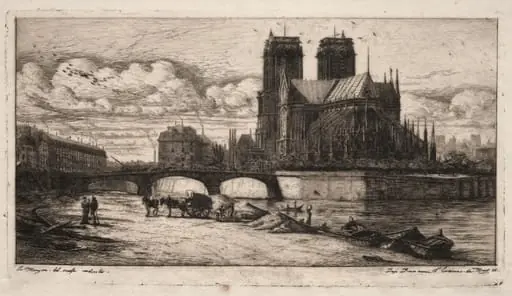 Etchings of Paris: The Apse of the Cathedral of Notre Dame
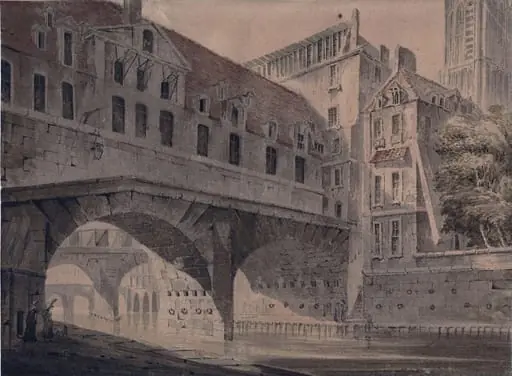 The Pont de l'Hotel Dieu and the South Tower of Notre Dame, Paris
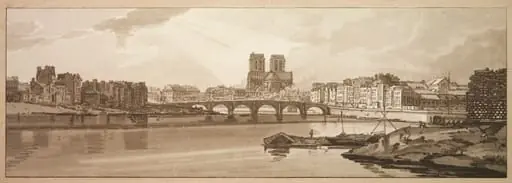 A Selection of Twenty of the Most Picturesque Views in Paris: View of Pont de la Tournelle & Notre Dame taken from the Arsenal
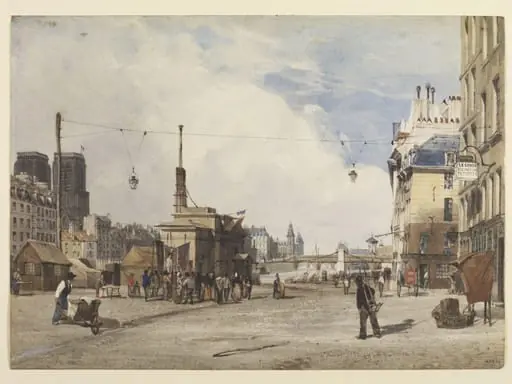 Quai de la Greve, Paris
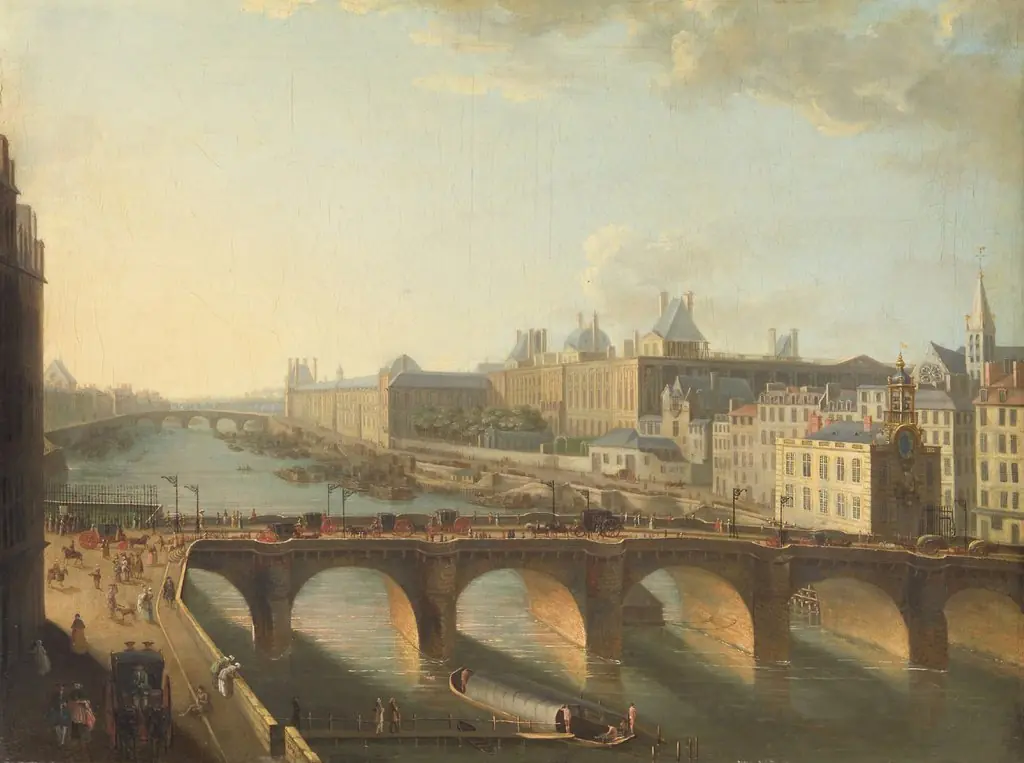 View of the Pont-Neuf in Paris from the Quai de la l’Horloge
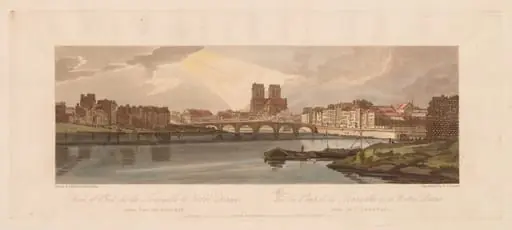 A Selection of Twenty of the Most Picturesque Views in Paris: View of the Pont de la Tournelle & Notre Dame Taken from the Arsenal
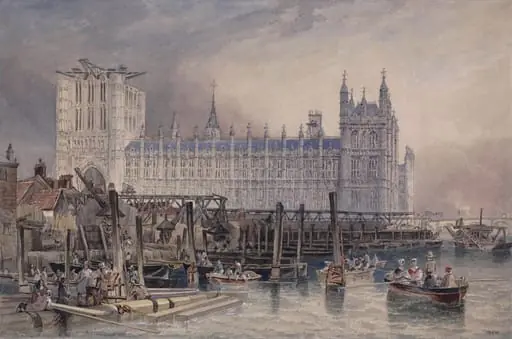 The Houses of Parliament in course of erection