Artwork
L'Abside de Notre Dame de Paris
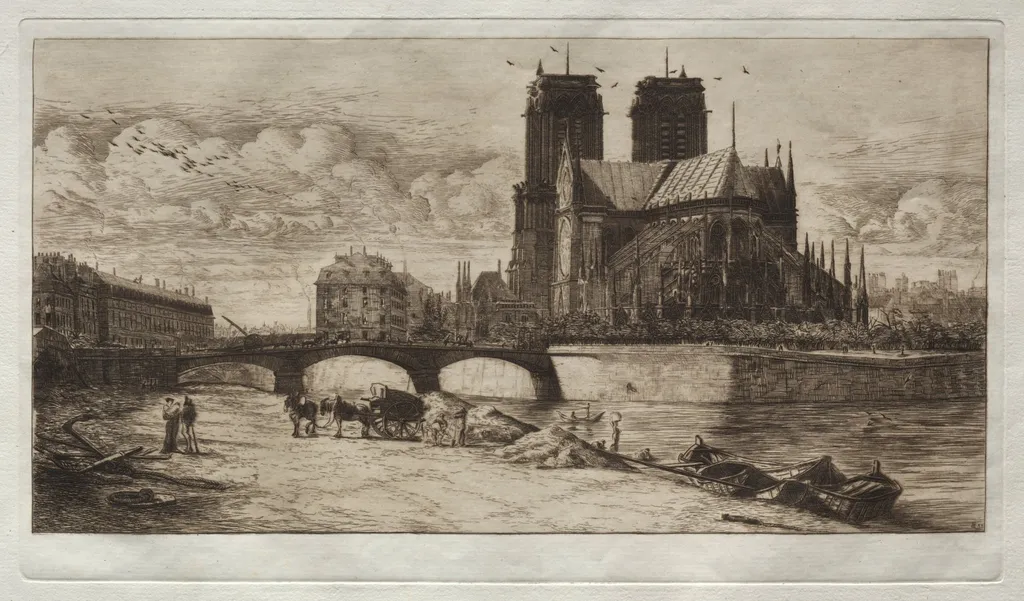
L'Abside de Notre Dame de Paris is a print by the Impressionist artist Edmond Gosselin. It dates from 1881 and is held in the collection of the Cleveland Museum of Art.
About this work
Overview
Created around 1881 by French artist Edmond Gosselin, this print depicts the apse of Notre-Dame de Paris as seen from the Seine’s left bank. The composition centers on the cathedral’s eastern end, framed by the river, a stone bridge, and bustling riverside activity. The work captures a quiet moment in urban life, blending architectural detail with the rhythms of daily movement along the water.
Subject & Meaning
Scaffolding suggests ongoing maintenance, grounding the sacred structure in the practical concerns of its time.
The scene portrays Notre-Dame not as a monument alone, but as part of a living city. Scaffolding suggests ongoing maintenance, grounding the sacred structure in the practical concerns of its time. Figures on the bank, a horse-drawn cart, and small boats emphasize the cathedral’s integration into the rhythms of ordinary life, reflecting a 19th-century interest in the intersection of the historic and the everyday.
Technique & Style
Gosselin employed a detailed, linear approach typical of 19th-century topographical prints. Fine hatching defines the stonework of the cathedral and the texture of the river, while the figures are rendered with minimal detail, suggesting movement rather than individual identity. The perspective draws the eye from foreground activity toward the elevated apse, reinforcing the church’s dominance in the urban landscape.
History & Provenance
The print entered the collection of The Cleveland Museum of Art as part of its holdings of 19th-century European prints. Its origin lies in Gosselin’s broader project of documenting Parisian scenes during a period of rapid urban change. While little is known of its early ownership, its preservation reflects a sustained interest in documentary views of the city during the late 1800s.
Context
In the 1880s, Paris was undergoing extensive restoration of its medieval landmarks under Eugène Viollet-le-Duc. Notre-Dame’s scaffolding in this print aligns with those efforts. Gosselin’s focus on the riverbank—where workers, merchants, and residents interacted—echoes contemporary artistic trends that valued the city’s lived experience over idealized grandeur.
Legacy
Gosselin’s print contributes to a body of work that recorded Paris’s evolving urban fabric during the late 19th century. Though not widely known today, such images served as visual archives of a city in transition. They offer insight into how historical monuments were perceived not as distant relics, but as active components of daily life.
Artist & collection

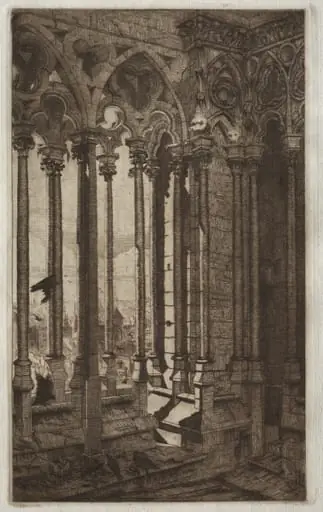
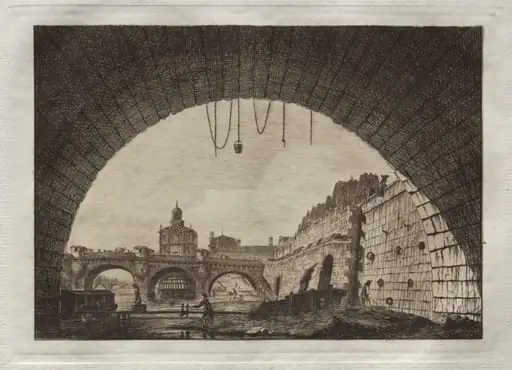
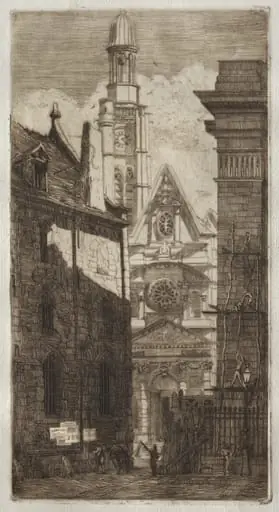
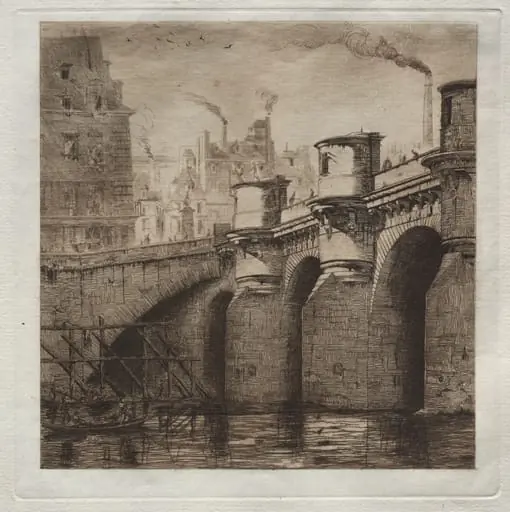
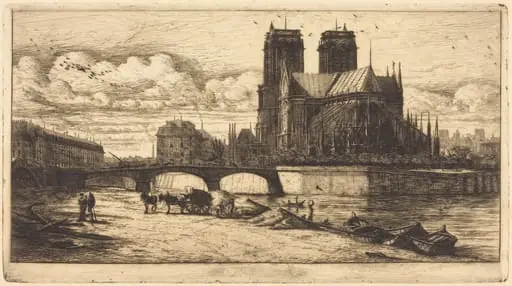 L'abside de Notre-Dame de Paris (The Apse of the Cathedral of Notre Dame, Paris)
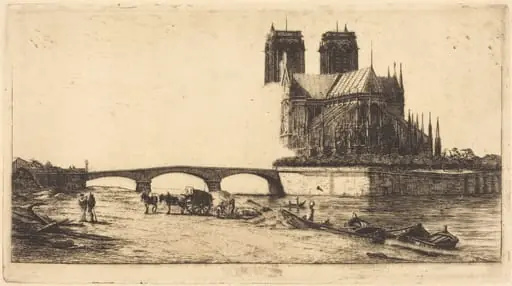 L'abside de Notre-Dame de Paris (The Apse ofthe Cathedral of Notre-Dame, Paris)
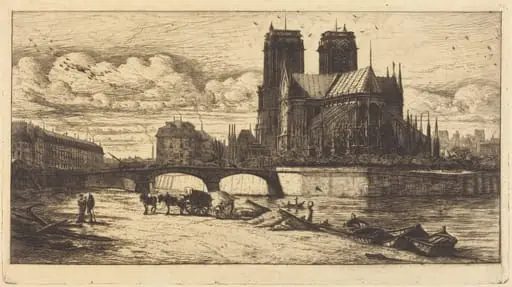 L'abside de Notre-Dame de Paris (The Apse of the Cathedral of Notre-Dame, Paris)
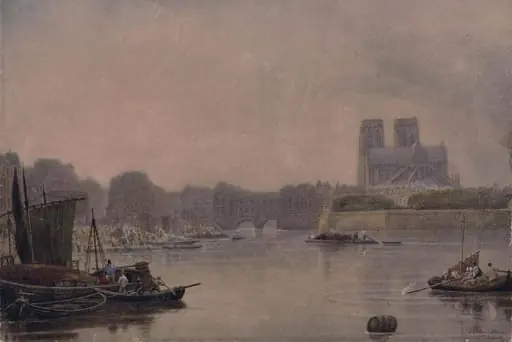 Notre Dame, Paris
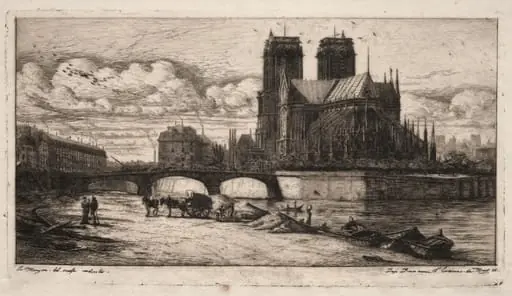 Etchings of Paris: The Apse of the Cathedral of Notre Dame
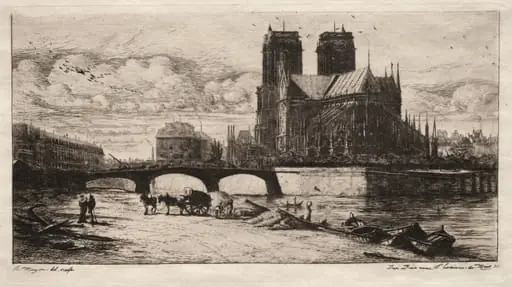 Etchings of Paris: The Apsis of the Cathedral of Notre Dame
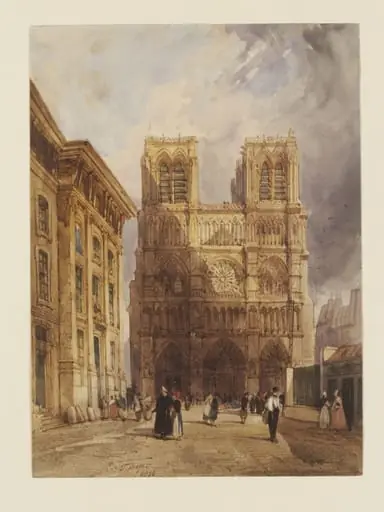 Notre Dame, Paris
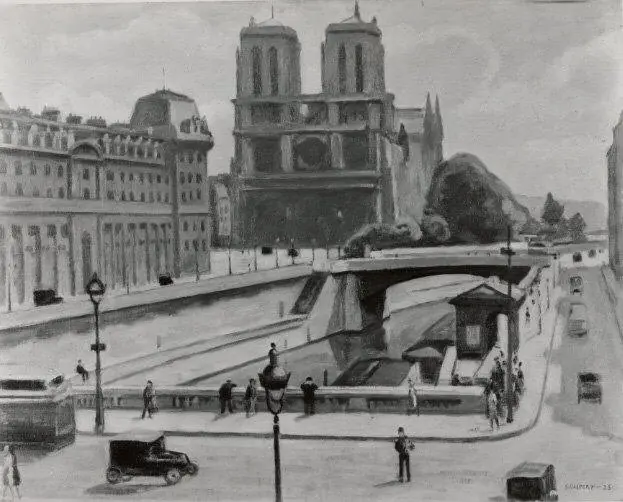 Notre Dame, Paris
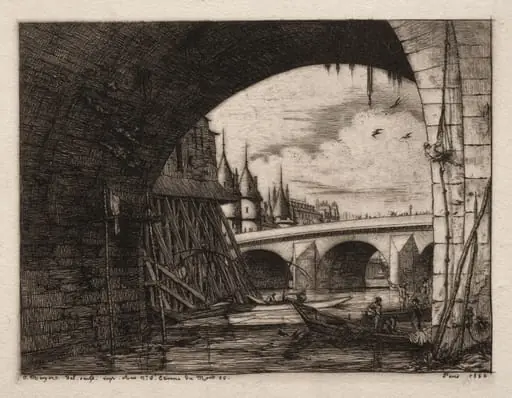 L'arch du Pont Notre Dame, Paris