Artwork
A Roman Capriccio with the Pyramid of Gaius Cestius
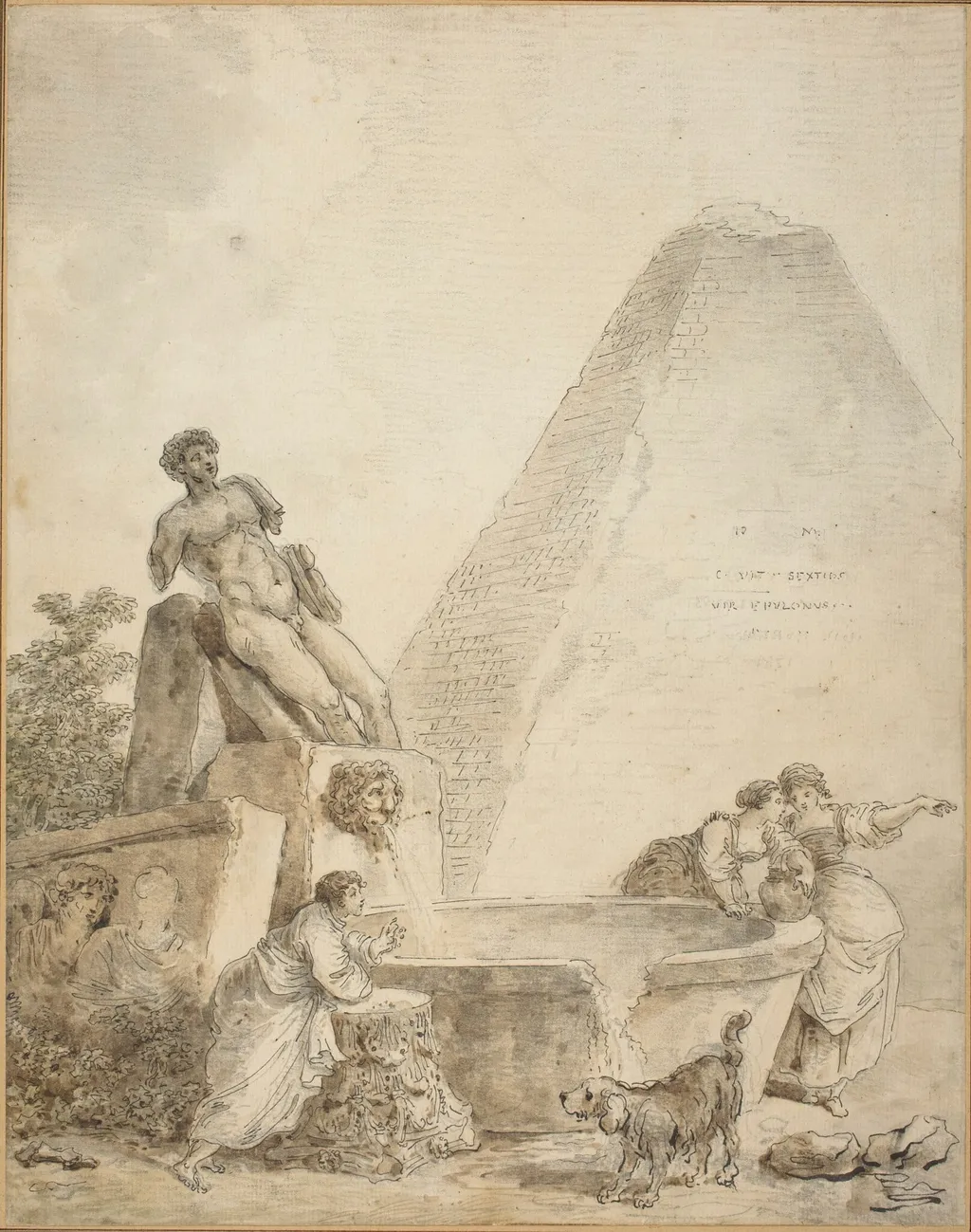
A Roman Capriccio with the Pyramid of Gaius Cestius is an ink drawing by the Romanticist artist Hubert Robert. It dates from 1781 and is held in the collection of the National Gallery of Art.
About this work
Overview
Created in 1781 by French artist Hubert Robert, this drawing depicts a fictionalized Roman landscape centered on the Pyramid of Gaius Cestius.
Created in 1781 by French artist Hubert Robert, this drawing depicts a fictionalized Roman landscape centered on the Pyramid of Gaius Cestius. Executed in pen and black ink with brown and gray-brown washes over black chalk, it exemplifies the capriccio tradition—architectural fantasies blending real monuments with imaginative composition. The work reflects Robert’s fascination with ruins and his skill in transforming topography into evocative, atmospheric scenes.
Subject & Meaning
The scene juxtaposes the ancient Egyptian-inspired pyramid with modest human figures and a dog, suggesting quiet contemplation amid decay. A seated figure and a standing one near a stone pedestal imply leisure or study, while the dog’s upward gaze adds a subtle narrative tension. The pyramid, though historically accurate, is recontextualized within a romanticized Roman setting, emphasizing time’s passage and the layered history of the city.
Technique & Style
Robert employed black chalk as an underdrawing, then layered pen lines and washes to model form and depth. The brown and gray-brown tones create atmospheric perspective, softening distant elements while sharpening foreground details. The use of counterproof—a technique transferring the initial sketch to the reverse side—demonstrates his methodical approach. Texture is suggested through varied ink pressure and wash density, enhancing the tactile quality of stone and earth.
History & Provenance
The drawing was made during Robert’s extended stay in Rome, where he studied antiquities and produced numerous capricci for European collectors. It entered the collection of the Louvre in the 19th century, likely through acquisition or donation. Its preservation on laid paper, a common support for 18th-century drawings, reflects the period’s standard practices and the work’s status as a study rather than a finished commission.
Context
Robert’s work emerged amid growing 18th-century interest in classical antiquity and the picturesque. While Enlightenment thinkers sought archaeological accuracy, artists like Robert favored emotional resonance over strict realism. His capricci catered to Grand Tour travelers seeking evocative souvenirs, blending documented ruins with invented compositions to satisfy a taste for melancholy grandeur and romanticized decay.
Legacy
Robert’s drawings helped define the capriccio as a distinct genre within European landscape art. His influence extended to later Romantic painters who embraced ruins as symbols of transience. Though not widely exhibited in his lifetime as a standalone work, this drawing remains a representative example of his ability to transform architectural observation into poetic meditation, shaping how generations viewed ancient Rome.
Artist & collection
Artist
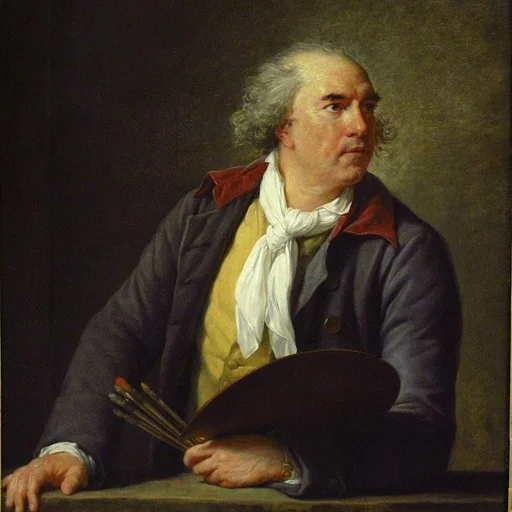
Hubert Robert (French pronunciation: ; 22 May 1733 – 15 April 1808) was a French painter in the school of Romanticism, noted especially for his landscape paintings and capricci, or semi-fictitious picturesque depictions of ruins in Italy…

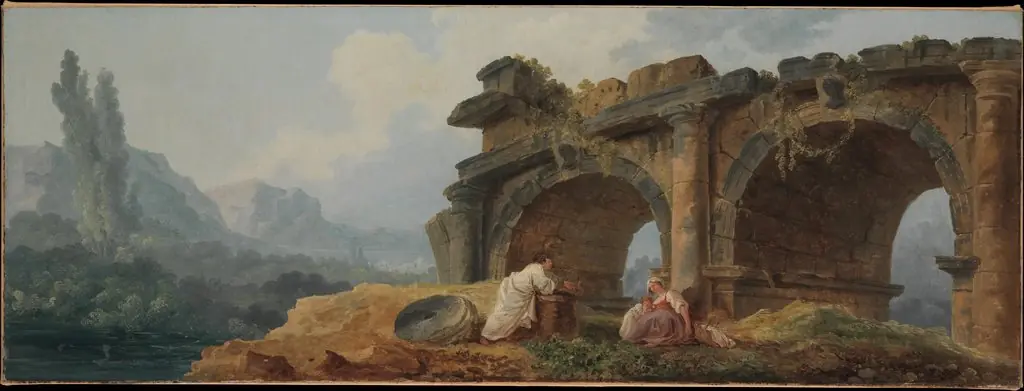
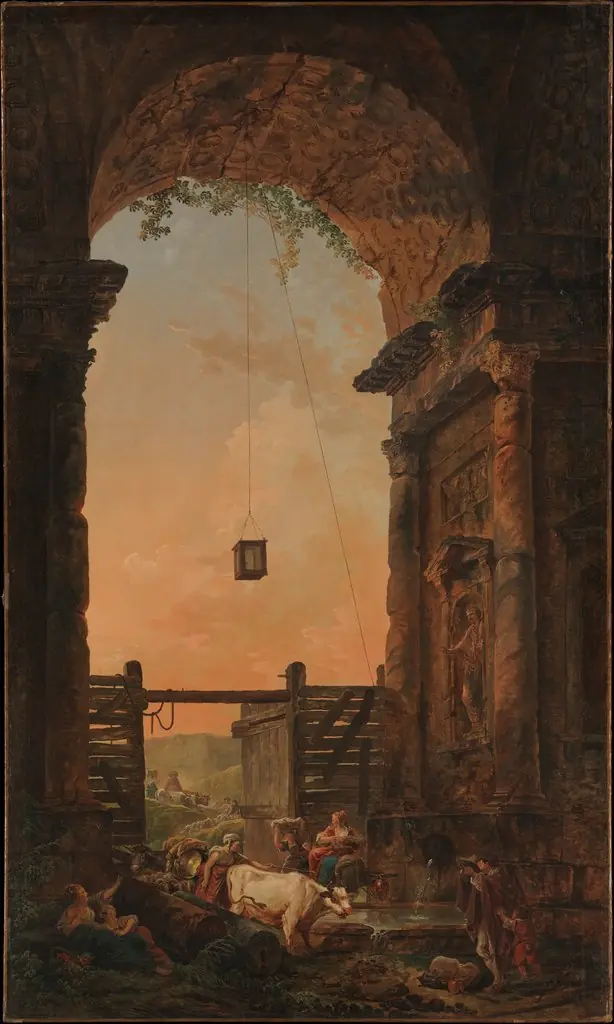
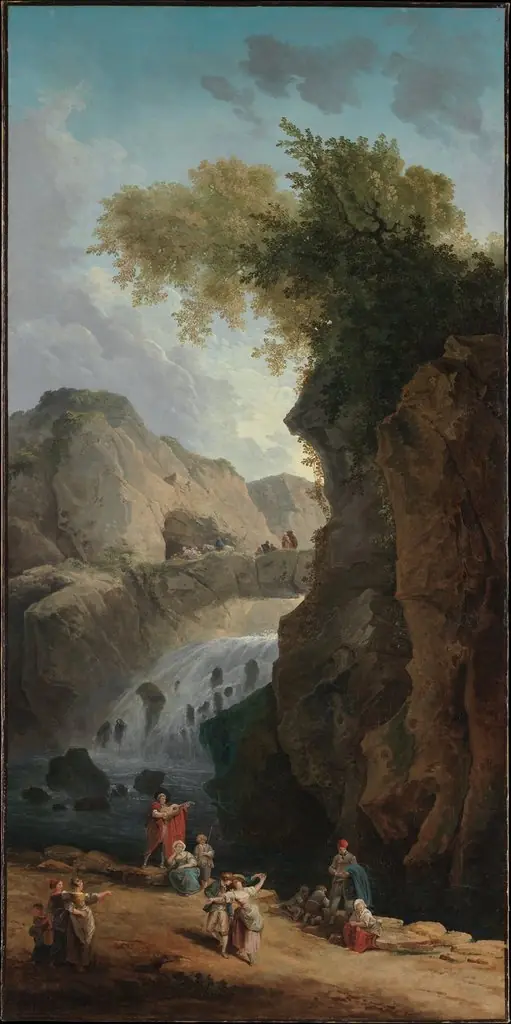
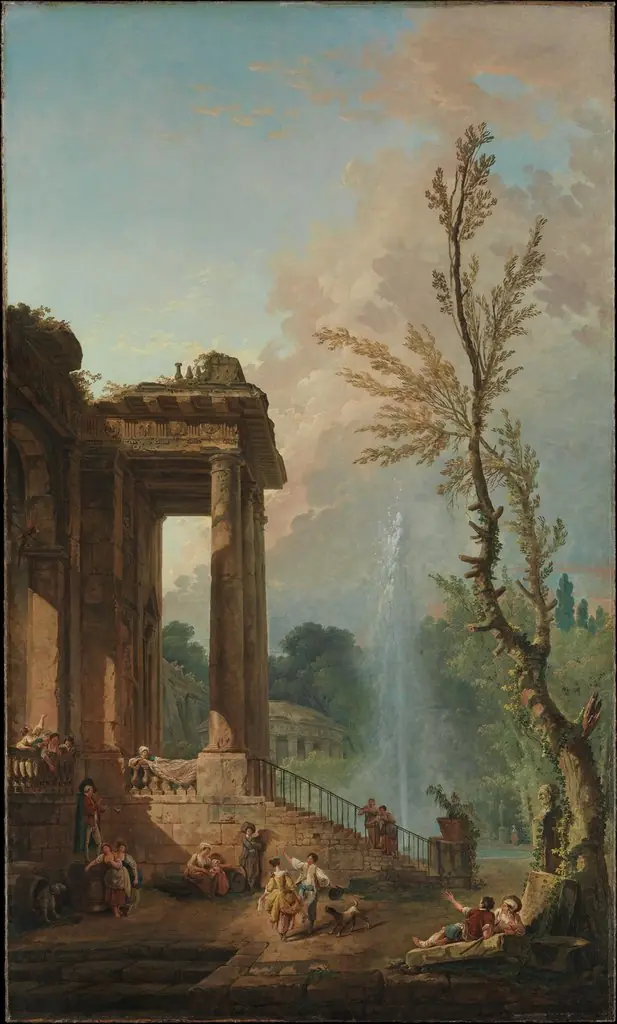
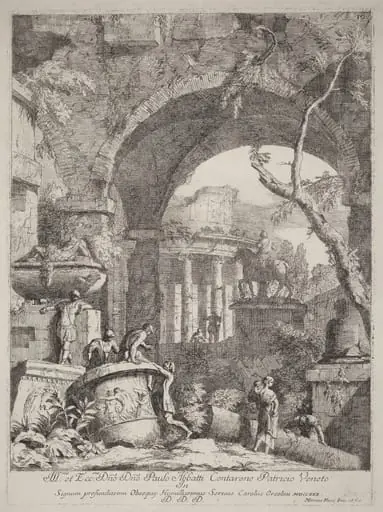 Capriccio: Ruins
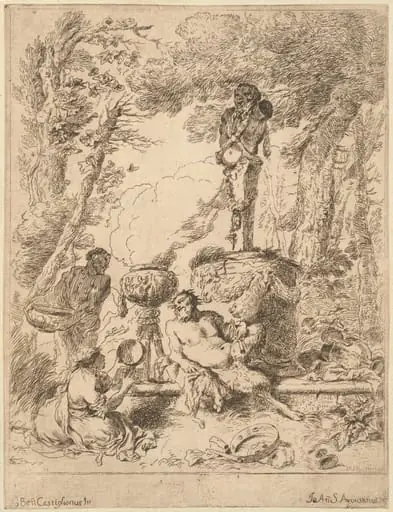 Bacchanal by a Herm
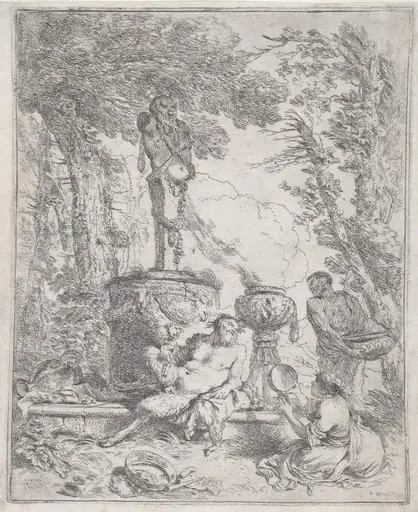 Pan Reclining before a Herm
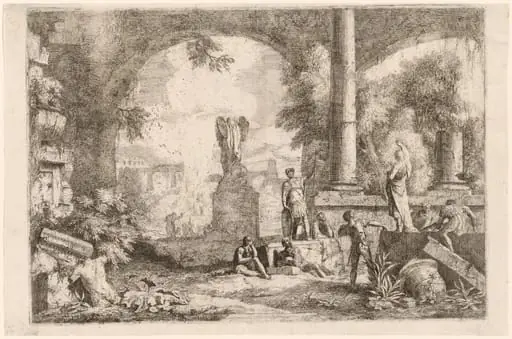 Capriccio of Antique Ruins with Men Gazing at a Classical Orator
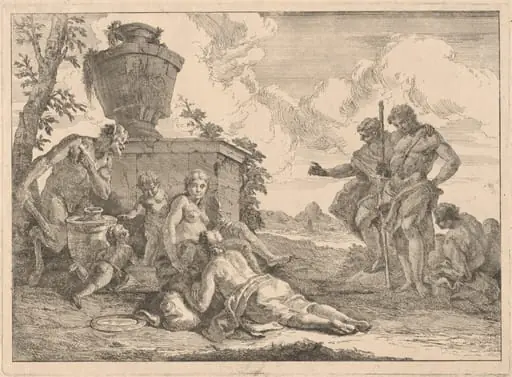 A Satyr with a Staff and Seven Other Figures
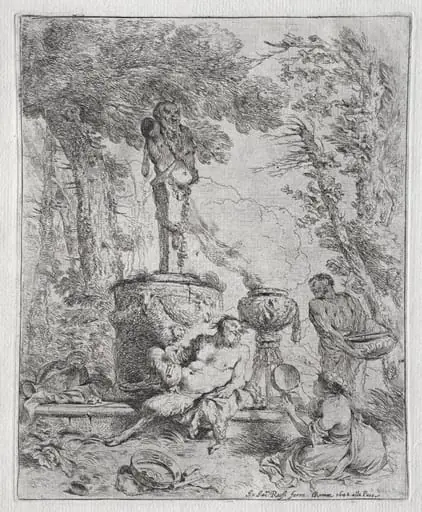 Fete of Pan
 The Disciples at the Tomb
 Landscape with a Satyr Family and Classical Sculpture
 Allegorical Portrait of Pierre Buirette de Belloy
 The Sarcophagus
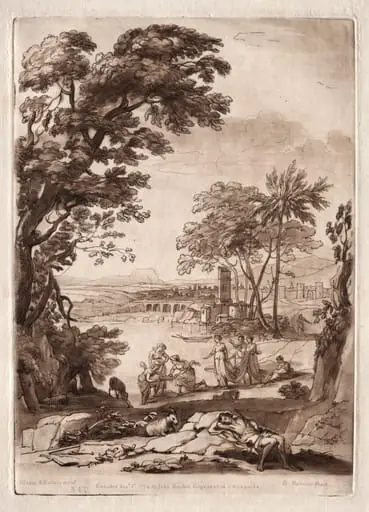 Liber Veritatis: No. 47, A River Scene with the Finding of Moses
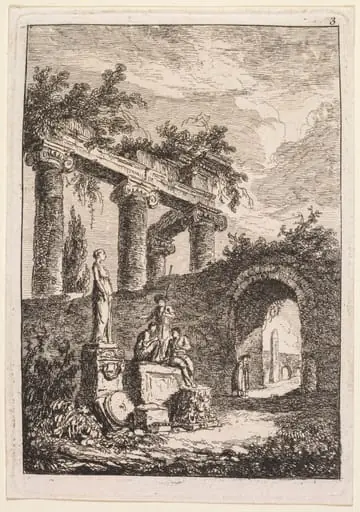 The Statue in Front of Ruins