Artwork
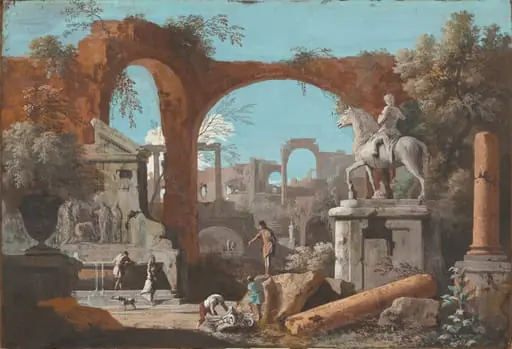
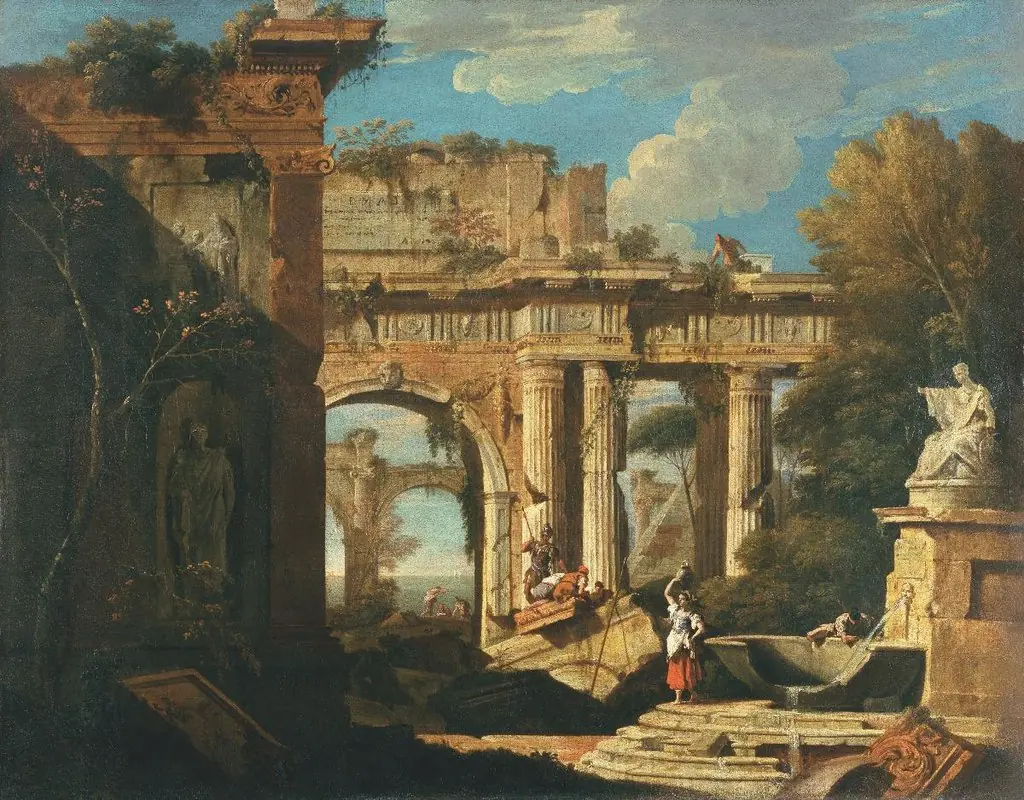
Capriccio of Antique Ruins with Men Gazing at a Classical Orator
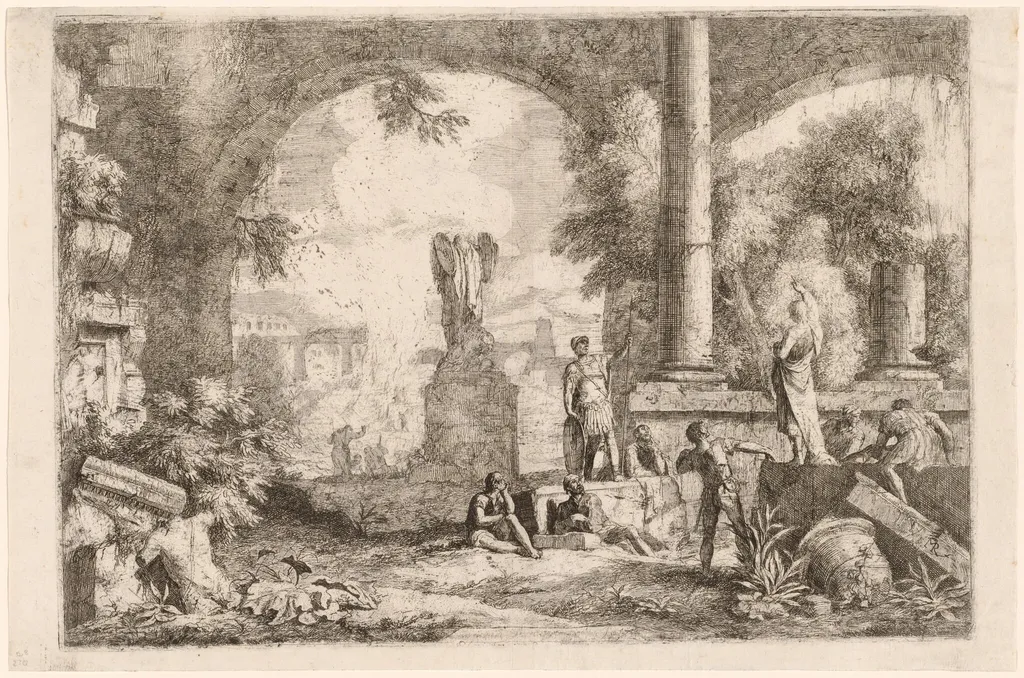
Capriccio of Antique Ruins with Men Gazing at a Classical Orator is an ink print by the Baroque artist Marco Ricci. It dates from 1724 and is held in the collection of the National Gallery of Art.
About this work
Overview
It combines architectural fragments with figures in quiet contemplation, blending real and invented elements to evoke a mood of historical reverie.
This etching, dated around 1724, is a working proof by Marco Ricci that presents an imagined landscape of classical antiquity. It combines architectural fragments with figures in quiet contemplation, blending real and invented elements to evoke a mood of historical reverie. The scene is not a documented site but a poetic reconstruction, typical of the capriccio tradition in 18th-century Italian printmaking.
Subject & Meaning
A lone orator, elevated on a stone platform, gestures toward a small group of men who observe or converse nearby. The figures, dressed in loosely rendered classical attire, appear absorbed in thought rather than active debate. The ruins surrounding them—crumbling columns, broken arches—suggest the passage of time and the fading of public discourse, inviting reflection on the legacy of ancient rhetoric and its endurance in memory.
Technique & Style
Ricci employed fine, controlled etching lines to render the textures of weathered stone and the soft folds of fabric. The composition uses atmospheric perspective, with lighter, sparser detailing in the distance to suggest depth. The working proof status reveals subtle adjustments in the plate, showing the artist’s process of refining light, shadow, and spatial relationships before final printing.
History & Provenance
Created during Ricci’s mature period in Venice, this print likely circulated among collectors and artists interested in antiquarian themes. As a working proof, it predates the published edition and may have been retained by the artist or shared with patrons for feedback. Its survival offers insight into the iterative nature of print production in early 18th-century Italy.
Context
Ricci’s work emerged amid a broader European fascination with classical ruins, fueled by archaeological discoveries and Grand Tour travels. His capriccios differed from topographical views by blending real monuments with imaginative arrangements, catering to intellectual audiences seeking aesthetic and philosophical resonance over documentary accuracy.
Legacy
This etching exemplifies Ricci’s role in shaping the capriccio genre, influencing later artists like Canaletto and Piranesi. Its quiet, introspective tone contrasts with more theatrical interpretations of antiquity, offering a nuanced vision of history as something felt rather than displayed. The print remains a key reference for understanding how 18th-century artists mediated the past through personal vision.
Own this work as a print
Artist & collection

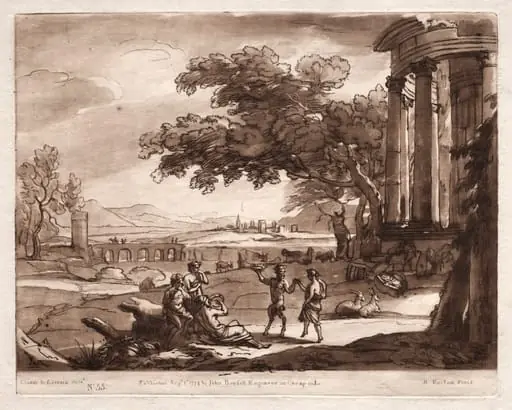 Liber Veritatis: No. 55, A Landscape with a Temple and a Nymph and Satyr Dancing
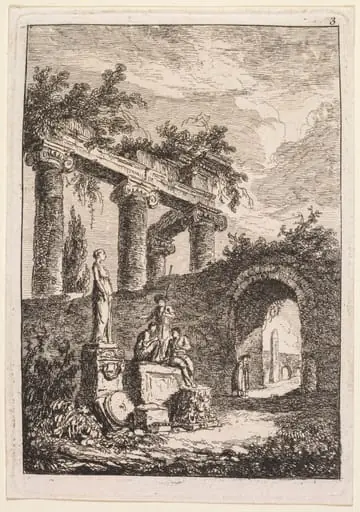 The Statue in Front of Ruins
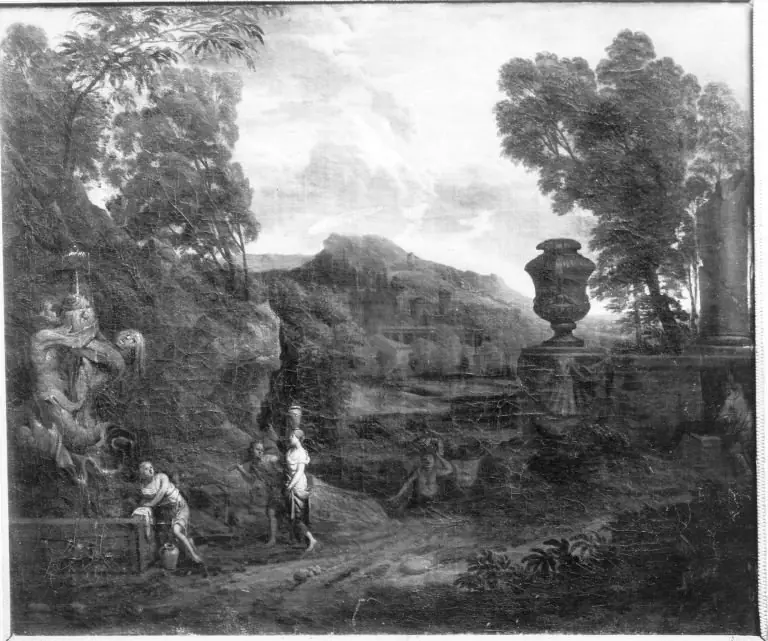 Italienisch-klassische Landschaft
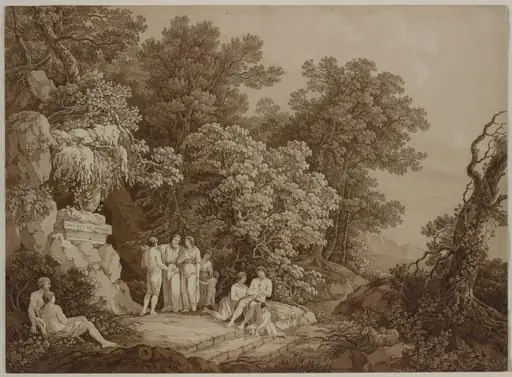 I was also in Arcadia (Kai ego en Arkadia)
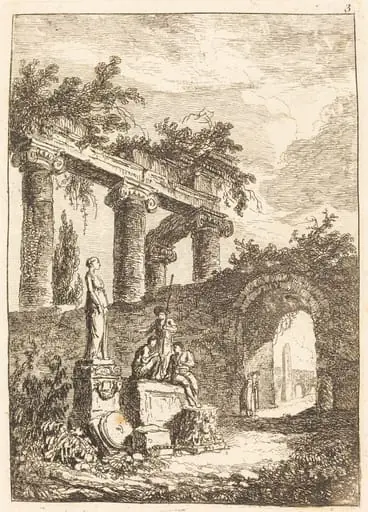 The Statue before the Ruins
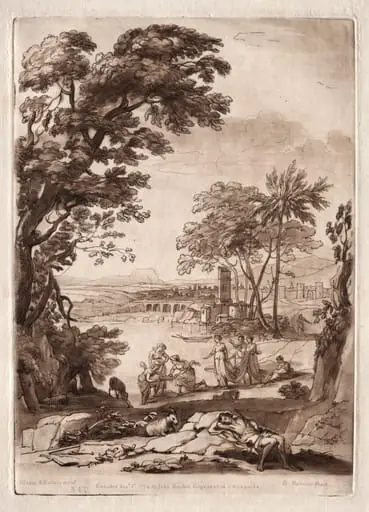 Liber Veritatis: No. 47, A River Scene with the Finding of Moses
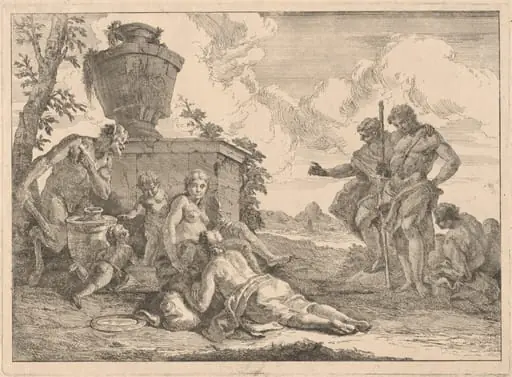 A Satyr with a Staff and Seven Other Figures
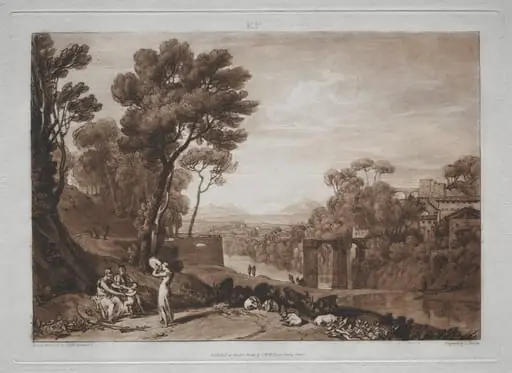 Liber Studiorum: The Woman and the Tambourine
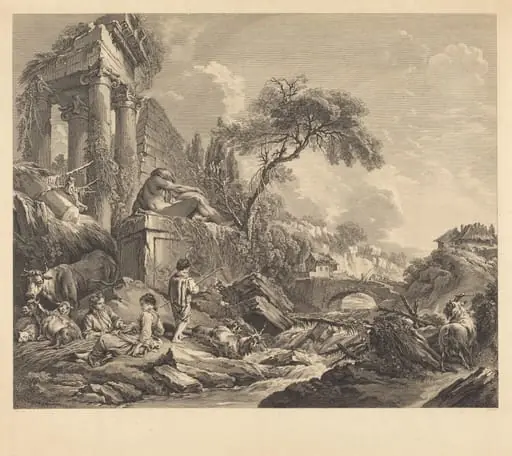 Le moineau de lesbie