Artwork
Landscape with a Fallen Tree (Paysage à l'arbre cassé)
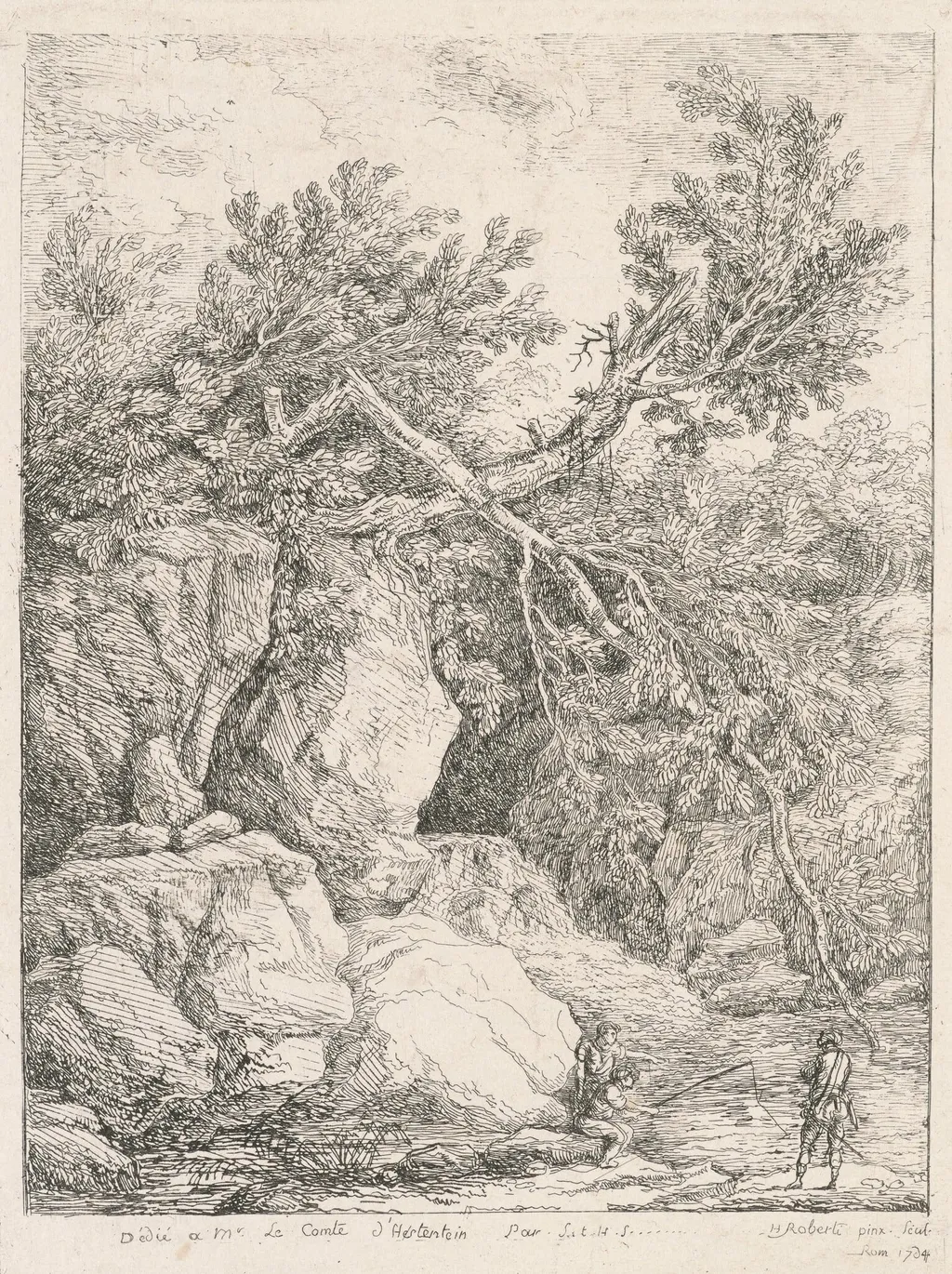
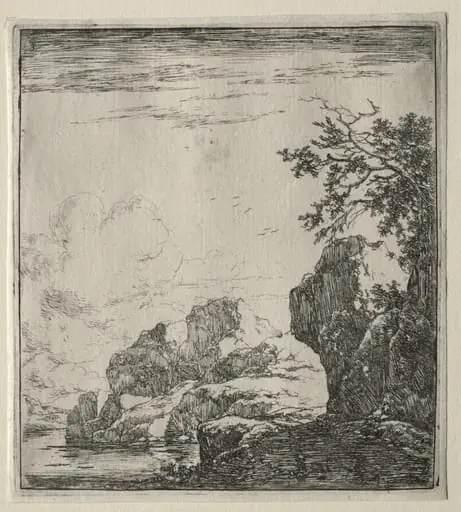
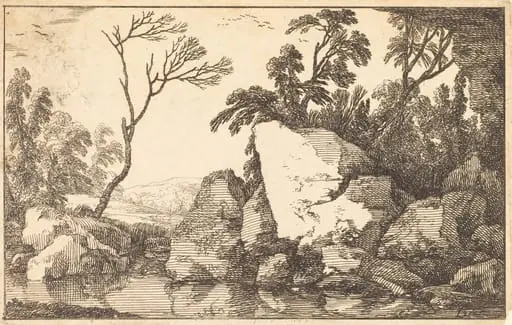
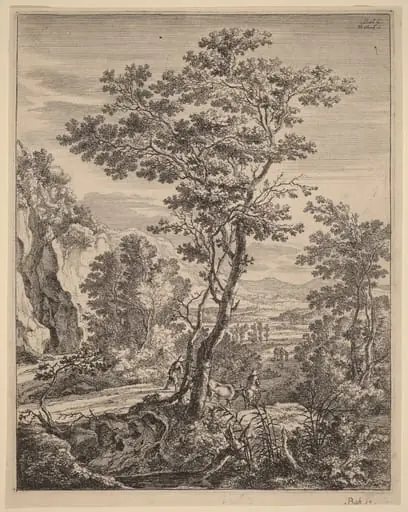
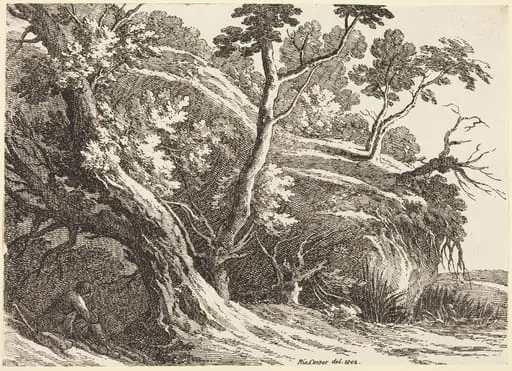
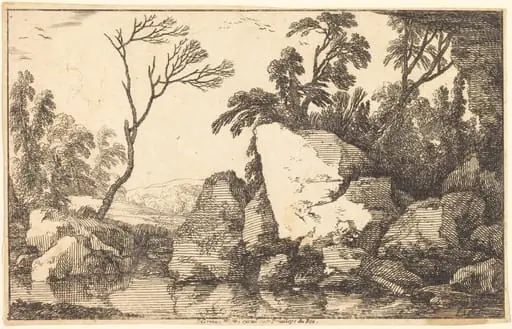
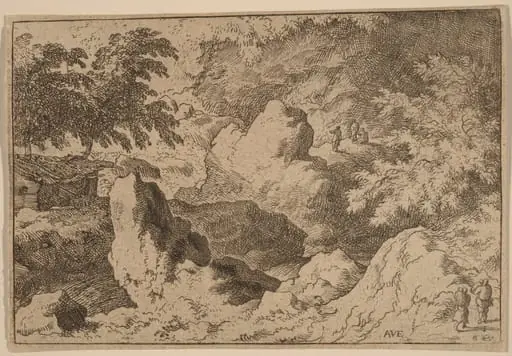
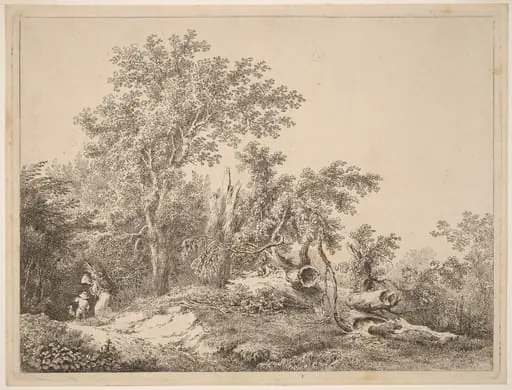
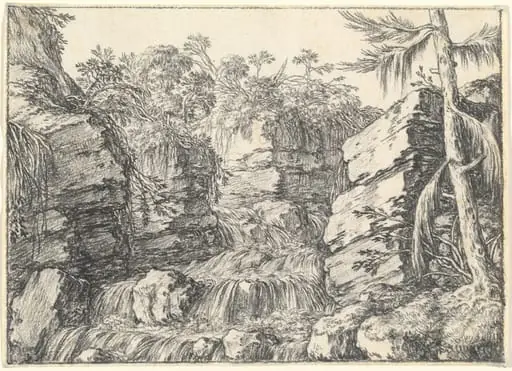
Landscape with a Fallen Tree (Paysage à l'arbre cassé) is an ink print by the Romanticist artist Hubert Robert. It dates from 1764 and is held in the collection of the National Gallery of Art.
About this work
Overview
Created in 1764, *Landscape with a Fallen Tree* is an etching by French artist Hubert Robert, executed on laid paper. As a print, it belongs to a body of work that explores natural decay and atmospheric tension. Robert, known for his imaginative landscapes, used the etching medium to capture the emotional weight of a storm-battered scene, emphasizing texture and mood over color.
Subject & Meaning
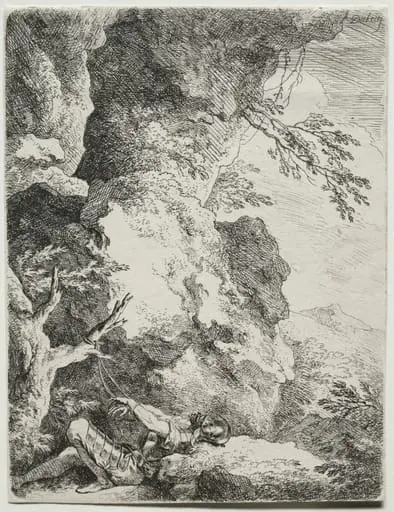
The composition centers on a massive tree, uprooted and sprawled across rugged terrain, its fractured limbs jutting sharply into the air.
The composition centers on a massive tree, uprooted and sprawled across rugged terrain, its fractured limbs jutting sharply into the air. Surrounding it, jagged rocks and sparse grass suggest a wild, untamed environment. The dark, swirling sky implies an ongoing storm, reinforcing themes of nature’s force and impermanence. The fallen tree acts as both literal and symbolic ruin, evoking transience without overt narrative.
Technique & Style
Robert employed fine, incised lines to model form and texture, using etching’s capacity for delicate detail. Cross-hatching and stippling render the bark’s roughness, the uneven ground, and the turbulent sky. The absence of color heightens the focus on tonal gradation and line quality. The technique allows for a sense of movement and depth, characteristic of Robert’s approach to landscape as a psychological space rather than a literal record.
History & Provenance
The print was made during Robert’s early career, following his return from Italy, where he studied classical ruins and natural forms. It reflects his developing interest in combining observed landscapes with imaginative elements. While specific early ownership records are sparse, the work aligns with other etchings from this period that circulated among collectors drawn to romanticized natural scenes.
Context
In mid-18th-century France, landscape art was shifting from idealized classical views toward more emotionally charged, naturalistic scenes. Robert’s work responded to this trend, blending observed topography with invented elements. His etchings, including this one, contributed to a growing appreciation for the sublime in nature—where disorder and decay held aesthetic and philosophical value.
Legacy
Robert’s etchings influenced later generations of landscape artists and printmakers who sought to convey mood through tonal variation and expressive line. *Landscape with a Fallen Tree* exemplifies his role in expanding the expressive potential of printmaking beyond reproduction, establishing it as a medium for personal, atmospheric vision. His approach helped bridge Enlightenment rationalism and emerging Romantic sensibilities.
Artist & collection
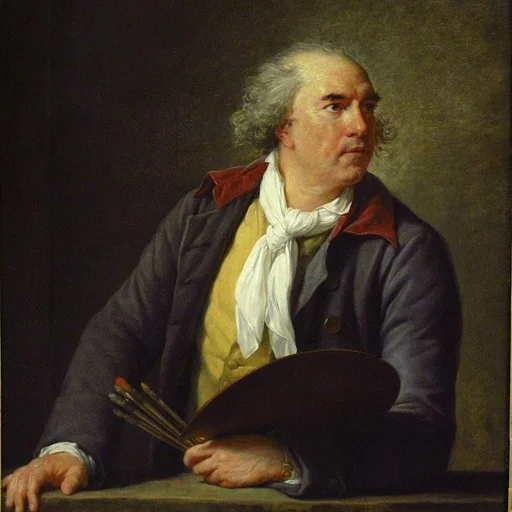
Artist
Hubert Robert (French pronunciation: ; 22 May 1733 – 15 April 1808) was a French painter in the school of Romanticism, noted especially for his landscape paintings and capricci, or semi-fictitious picturesque depictions of ruins in Italy…