Artwork
Landscape with Classical Ruins
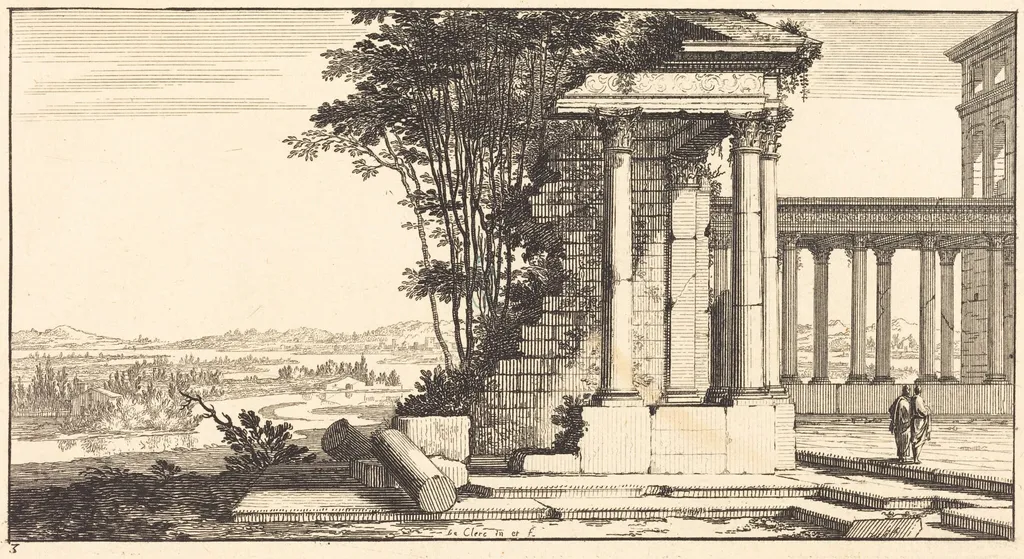
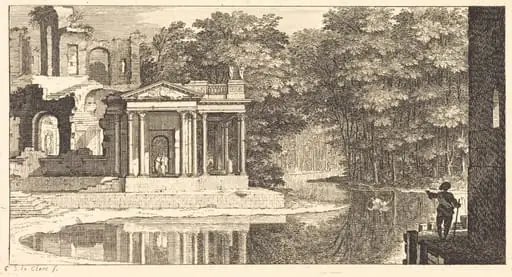
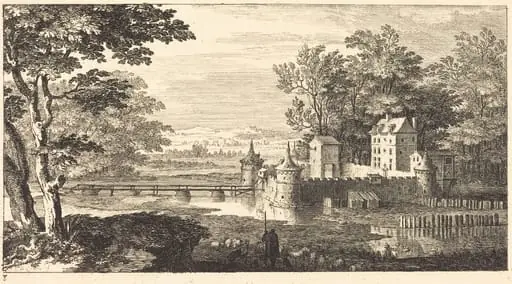
Landscape with Classical Ruins is an ink print by the Baroque artist Sébastien Le Clerc I. It dates from 1673 and is held in the collection of the National Gallery of Art.
About this work
Overview
Created in 1673 by Sébastien Le Clerc I, this etching presents a tranquil yet desolate landscape centered on ancient architectural remains.
Created in 1673 by Sébastien Le Clerc I, this etching presents a tranquil yet desolate landscape centered on ancient architectural remains. The work belongs to a tradition of prints that blend topographical observation with imaginative reconstruction, reflecting 17th-century European fascination with classical antiquity. The medium of etching allows for fine linear detail and subtle tonal gradations, enhancing the atmospheric quality of the scene.
Subject & Meaning
The composition features a crumbling stone structure with surviving columns, overgrown by vegetation, suggesting the passage of time and the erosion of human achievement. A solitary figure in classical robes moves away from the ruins, reinforcing a theme of abandonment and quiet reflection. The scene evokes contemplation on impermanence, a common motif in post-Renaissance art influenced by humanist thought and the ruins of Rome.
Technique & Style
Le Clerc employed etching to achieve delicate textures in the stone surfaces and foliage, using varied line weights to suggest depth and light. The hazy background, rendered with softer, looser strokes, contrasts with the sharper definition of the foreground ruins. This tonal contrast enhances spatial recession, while the absence of bold shadows maintains a subdued, melancholic tone consistent with the subject matter.
History & Provenance
The print was produced during Le Clerc’s early career in Paris, before his later prominence as a scientific illustrator. It likely circulated among collectors and artists interested in antiquarian themes. Though specific early ownership records are sparse, similar works by Le Clerc appear in major European print collections from the late 17th century, indicating its place within contemporary artistic networks.
Context
In the 1670s, French artists increasingly turned to classical ruins as subjects, inspired by archaeological interest and the revival of antiquity in architecture and garden design. Le Clerc’s print aligns with a broader trend among printmakers who translated landscape ideals into intimate, detailed compositions. Unlike grand historical scenes, this work emphasizes quiet solitude, reflecting a shift toward introspective naturalism in print culture.
Legacy
Le Clerc’s etching contributed to the development of topographical printmaking in France, influencing later artists who explored ruins as poetic rather than merely documentary subjects. While not widely reproduced, its restrained aesthetic and technical precision found resonance among collectors of prints and scholars of classical revival. It remains a quiet example of how etching could convey both observation and emotional resonance.
Artist & collection


 Imaginary Architectural Monuments
 Imaginary Architectural Monuments
 Steps to the Four Landmarks
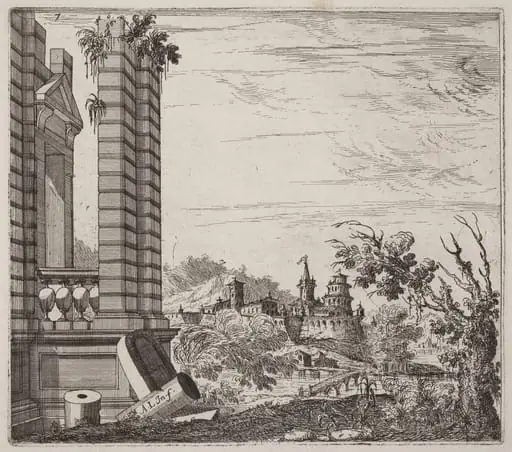 Fantastic River Landscape with Ruins and a Castle
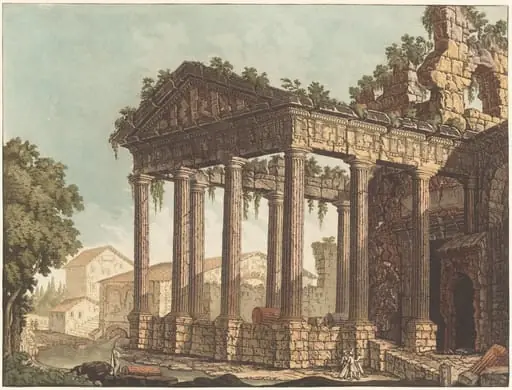 The Temple of Hercules at Cori
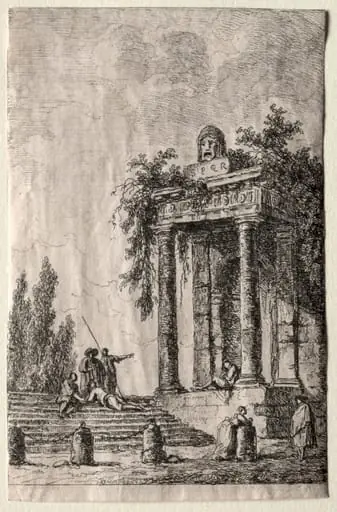 Les Soirées de Rome: The Stairs
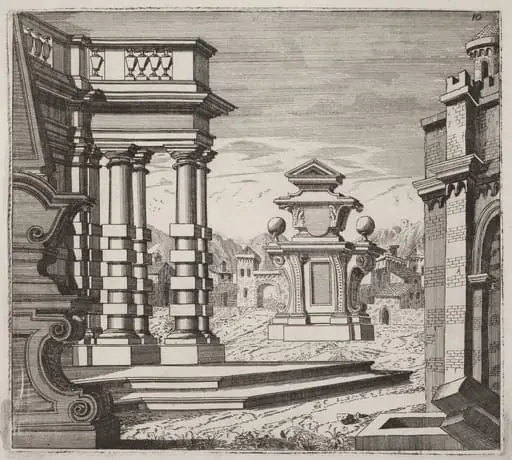 Architectural Fantasy with Portals and Monuments
 Avanco del Tempio della Concordia
 AEdis antiquae, AEdificiorumque adiacentium fragmenta