Artwork
Untitled
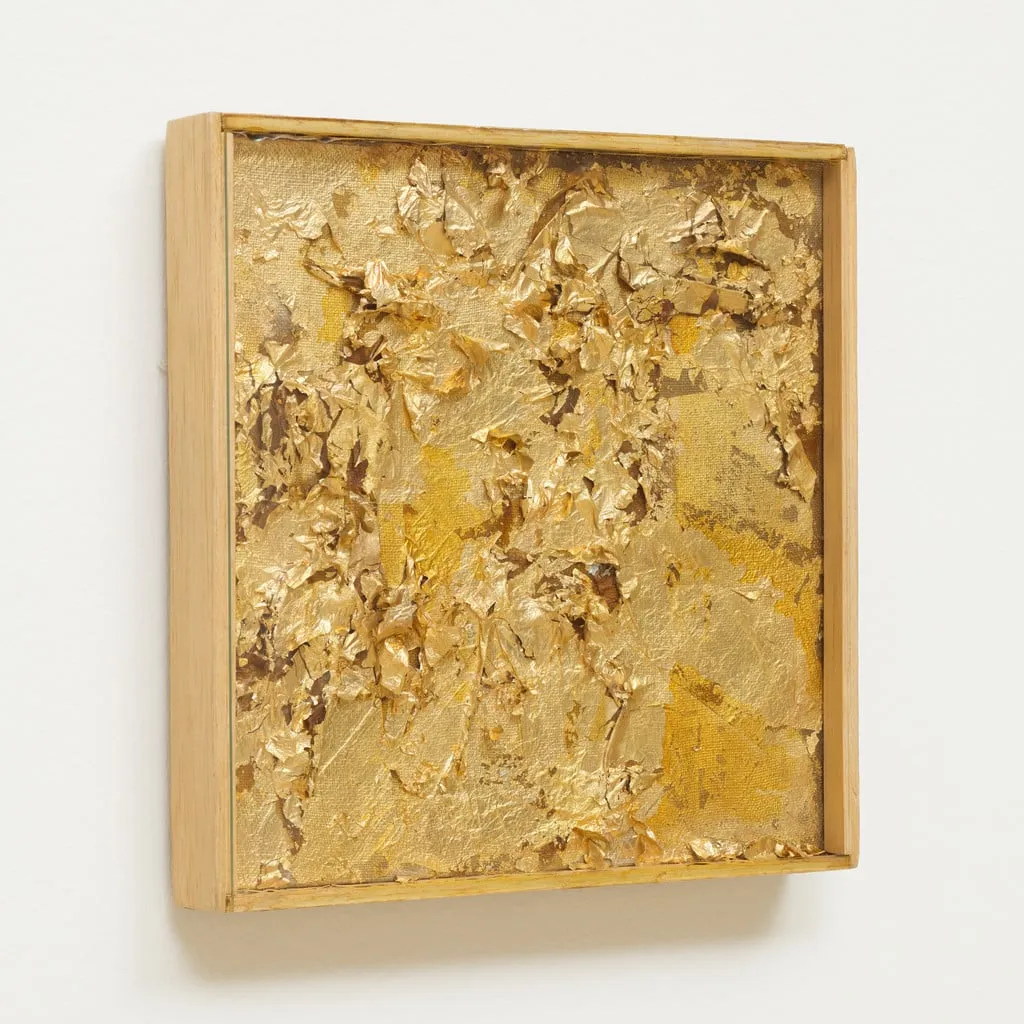
Untitled is a glass painting by Robert Rauschenberg. It dates from 1953 and is held in the collection of the Museum of Modern Art.
About this work
Overview
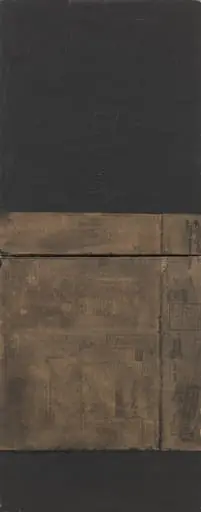
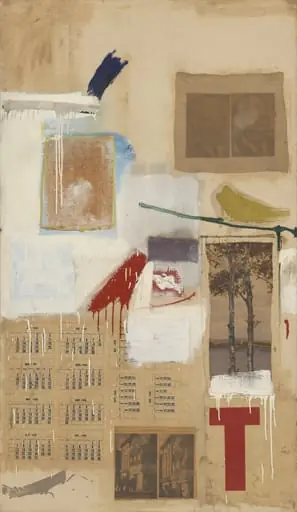
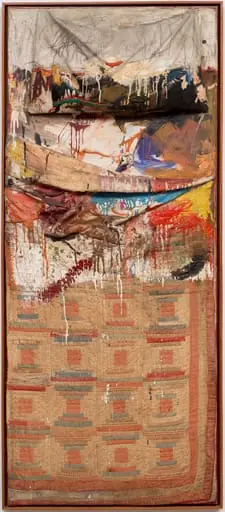
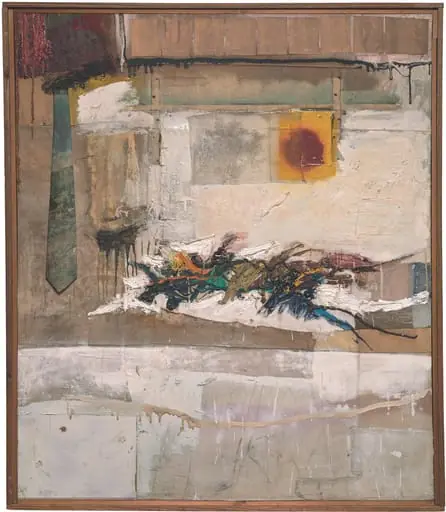
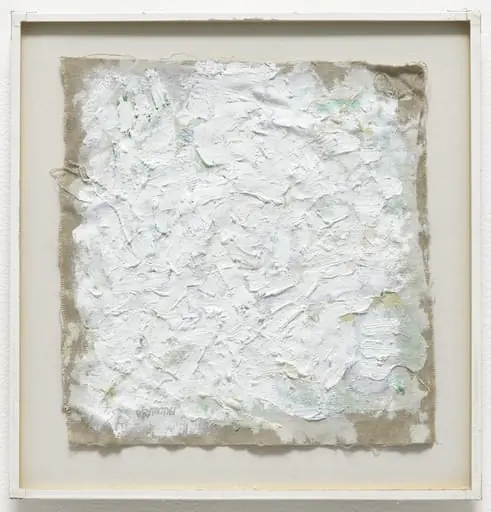
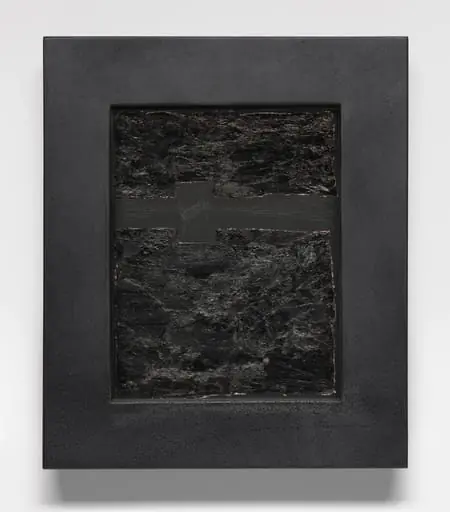
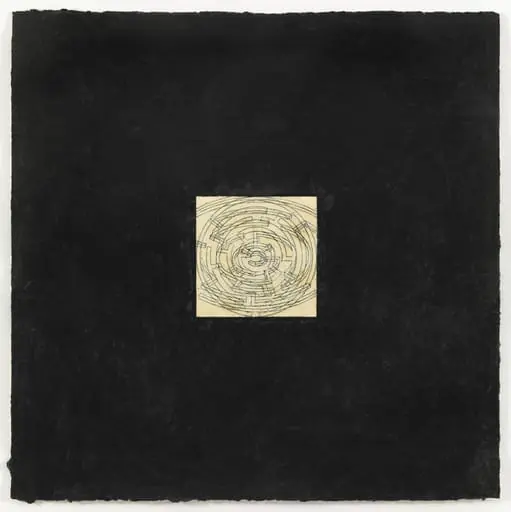
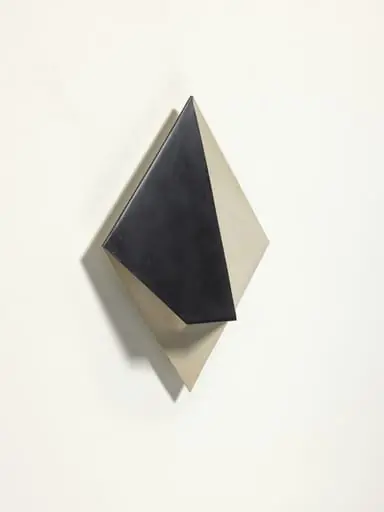
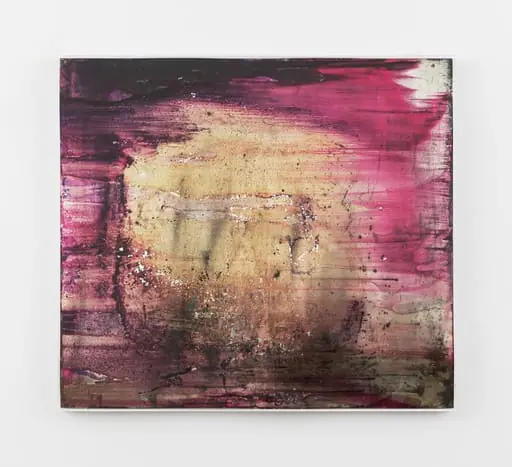
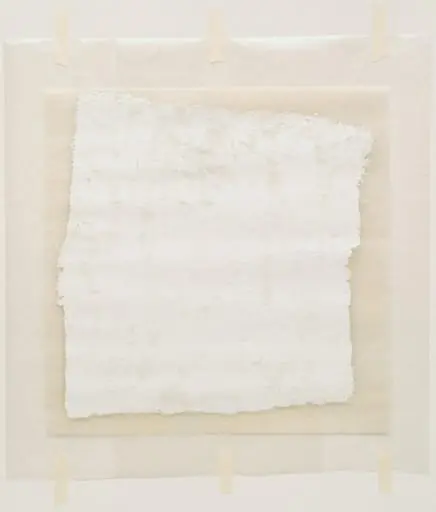
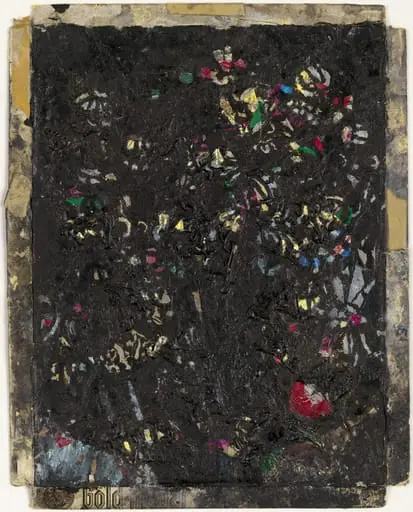
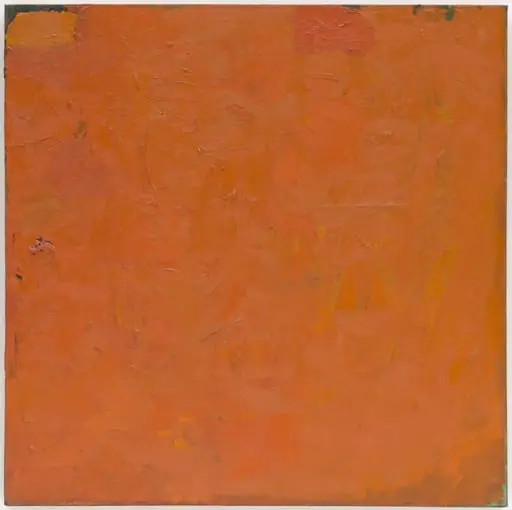
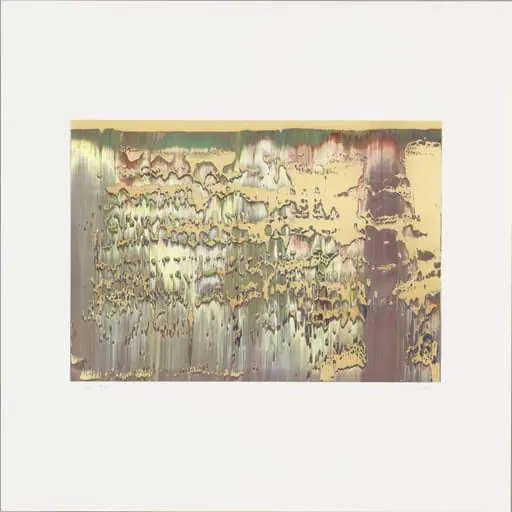
Created around 1953, this work by Robert Rauschenberg combines gold leaf, fabric, and adhesive on canvas, mounted within a simple wooden and glass frame.
Created around 1953, this work by Robert Rauschenberg combines gold leaf, fabric, and adhesive on canvas, mounted within a simple wooden and glass frame. Its surface resists conventional painting techniques, instead presenting a fragmented, tactile layering of materials. The result is an object that blurs the boundary between painting and assemblage, emphasizing physical presence over illusionistic representation.
Subject & Meaning
The work carries no explicit narrative or symbolic imagery. Its meaning emerges from materiality: the tarnished gold leaf suggests decayed luxury, while the rough, crumpled fabric implies impermanence and manual intervention. By rejecting traditional composition, Rauschenberg invites attention to the act of making and the value of ordinary substances elevated through context.
Technique & Style
Gold leaf was applied unevenly over glued fabric stretched on canvas, creating a surface of irregular folds and creases. The adhesive and leafing process left visible seams and lifted edges, enhancing the sense of fragmentation. The palette is restrained—primarily gold and muted browns—with shadows added through underlying tones, not pigment. The technique prioritizes texture over brushwork.
History & Provenance
The piece was produced during Rauschenberg’s early experimental phase, shortly after his studies at Black Mountain College. It entered The Museum of Modern Art’s collection in the 1950s, reflecting the institution’s growing interest in post-war American art that challenged painterly norms. Its preservation in a protective frame underscores its status as a fragile, non-traditional object.
Context
Emerging alongside Abstract Expressionism, this work diverged from its emotional intensity by embracing chance, materiality, and found elements. Rauschenberg’s approach aligned with contemporaries like John Cage and Merce Cunningham, who questioned artistic boundaries. The use of gold—a material associated with religious and elite art—subverted expectations of what painting could be.
Legacy
This work contributed to the development of Neo-Dada and later movements like Arte Povera and Conceptual Art by prioritizing process and material over aesthetic harmony. It demonstrated that painting could be a site of physical experimentation rather than representation, influencing generations of artists to treat surfaces as accumulations of lived experience rather than illusions.
Artist & collection

Artist
Milton Ernest "Robert" or "Bob" Rauschenberg was an American painter and multi-media artist, whose work has been associated with numerous mid-20th century art movements including the New York School, Conceptual Art, Pop art, and Neo-Dada.