Artwork
Untitled
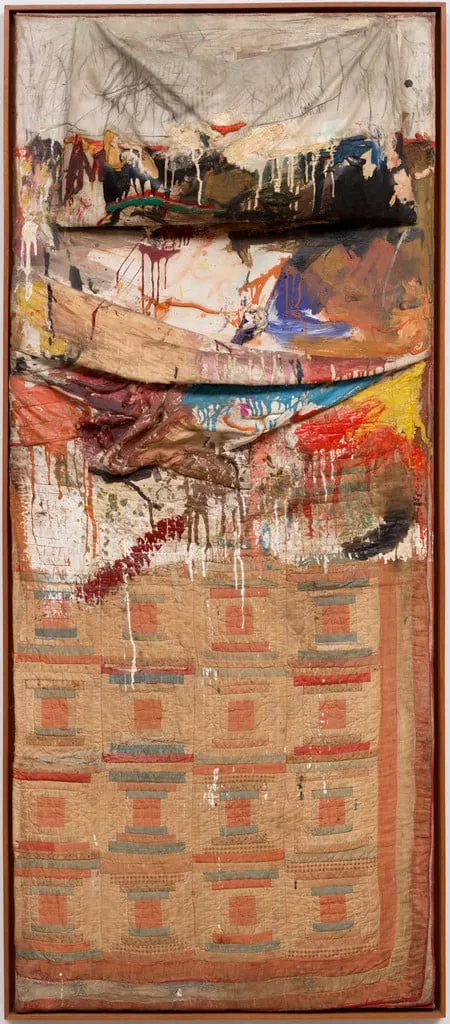
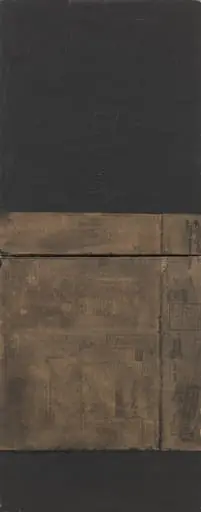
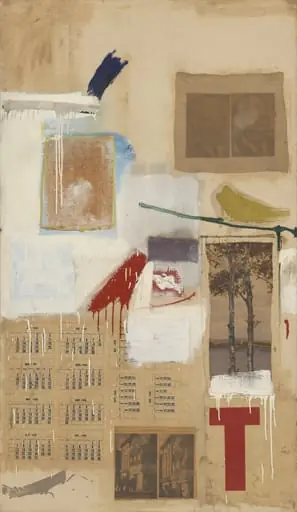
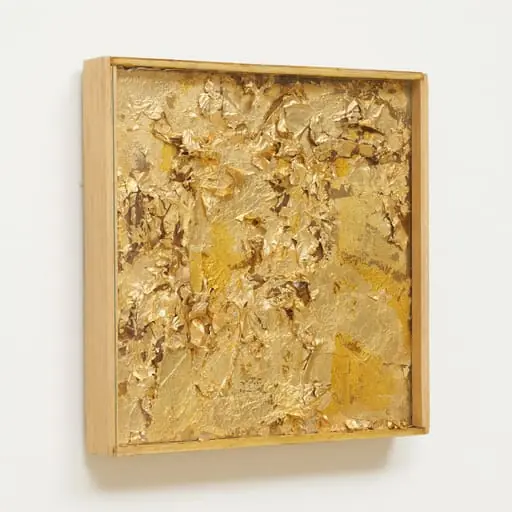
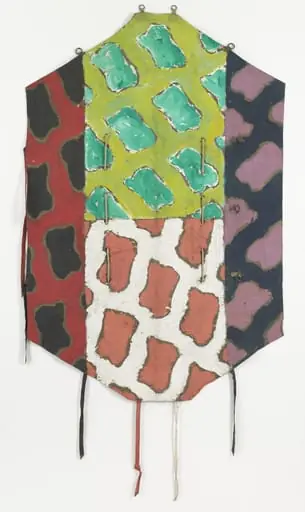
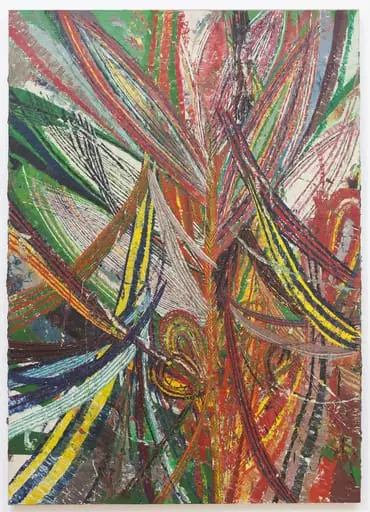
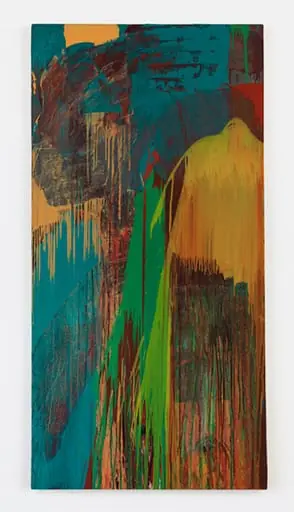
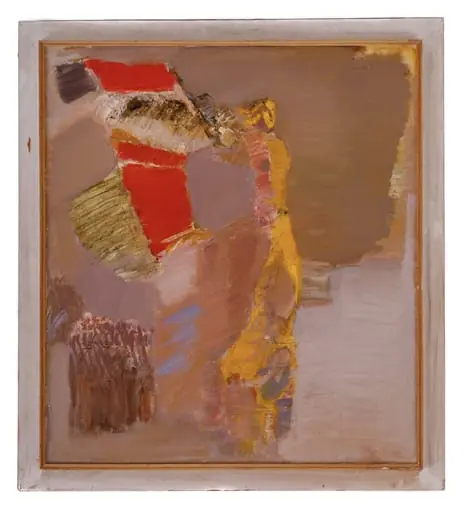
Untitled is an oil painting by Robert Rauschenberg. It dates from 1955 and is held in the collection of the Museum of Modern Art.
About this work
Overview
It resists traditional categorization as a painting, instead merging domestic objects with gestural mark-making.
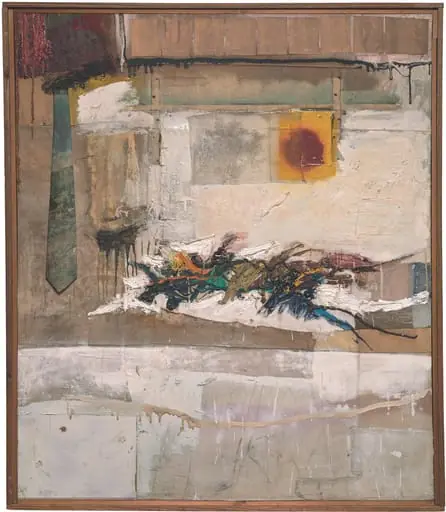
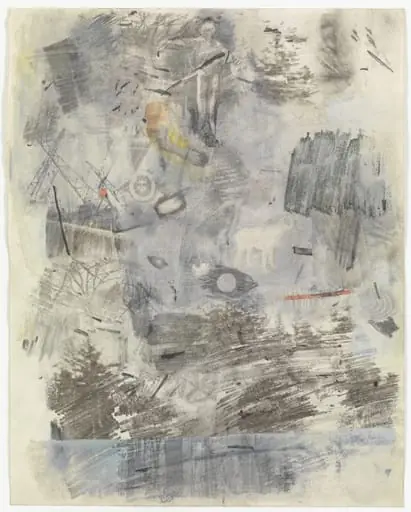
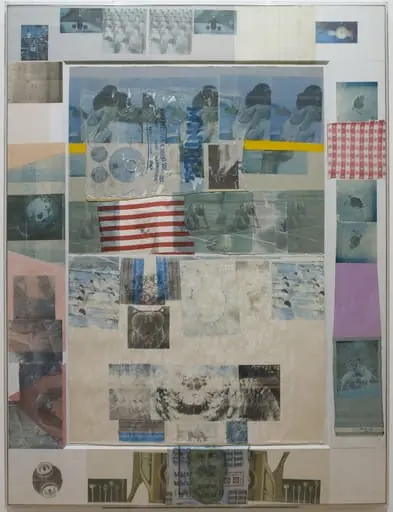
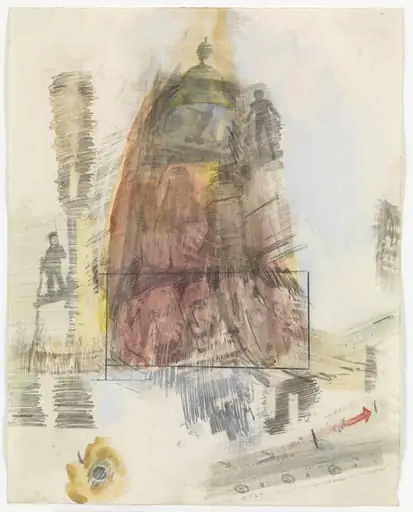
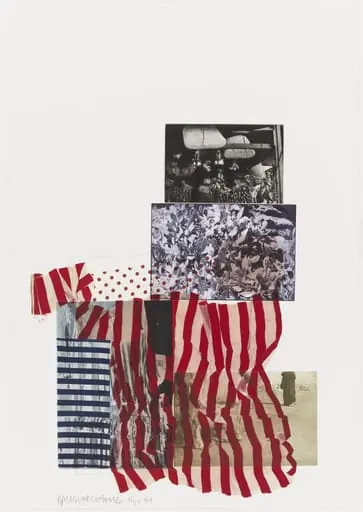
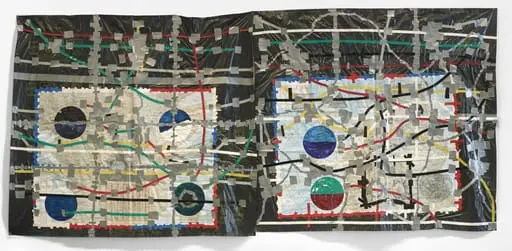
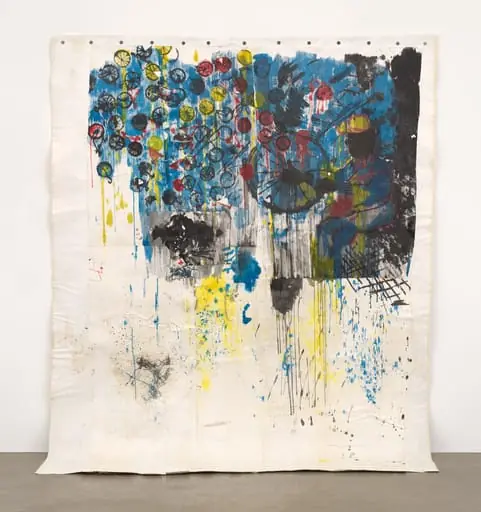
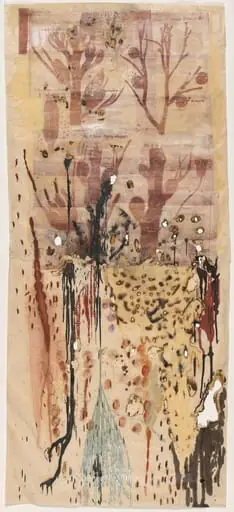
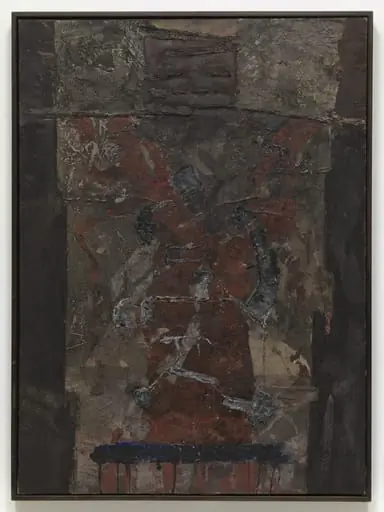
Created in 1955, this work by Robert Rauschenberg combines oil paint and pencil applied to textile materials—quilt, sheet, and pillow—mounted on wooden supports. It resists traditional categorization as a painting, instead merging domestic objects with gestural mark-making. The composition is layered and fragmented, emphasizing materiality over illusion. Its physical presence challenges distinctions between art and everyday life.
Subject & Meaning
No clear narrative or figural subject is present. Instead, the work evokes absence and memory through worn textiles and obscured imagery. The faint, ghostly forms beneath the paint suggest forgotten scenes, while the stained and crumpled fabrics imply use and decay. The collision of domestic materials with aggressive paint application may reflect tensions between private life and public expression.
Technique & Style
Rauschenberg applied oil paint in thick, uncontrolled strokes, allowing drips and smears to dominate the upper layers. Pencil lines sketch ambiguous shapes beneath the paint. The quilt’s structured stripes contrast with the chaotic surface above, while the sheet’s texture absorbs pigment unevenly. The materials were not prepared for painting but repurposed as-is, emphasizing spontaneity and the physicality of the medium.
History & Provenance
The work entered The Museum of Modern Art’s collection in 1957, shortly after its creation. It was produced during Rauschenberg’s early experimentation with combining found objects and paint, a period that led to his Combines. Its inclusion in MoMA’s holdings reflects the institution’s early recognition of his radical approach to materials and form.
Context
Made during the rise of Abstract Expressionism, this piece diverged from its emphasis on pure abstraction by incorporating real-world objects. Rauschenberg’s use of household textiles aligned with broader postwar interests in the mundane and the personal. His work responded to the limitations of painting by expanding its boundaries into sculpture and assemblage.
Legacy
This work contributed to the development of assemblage and Neo-Dada practices, influencing later artists who prioritized material over representation. Its rejection of traditional support surfaces and embrace of imperfection helped redefine what could be considered art. The integration of domestic items into fine art contexts became a lasting strategy in postwar American art.
Artist & collection

Artist
Milton Ernest "Robert" or "Bob" Rauschenberg was an American painter and multi-media artist, whose work has been associated with numerous mid-20th century art movements including the New York School, Conceptual Art, Pop art, and Neo-Dada.