Artwork
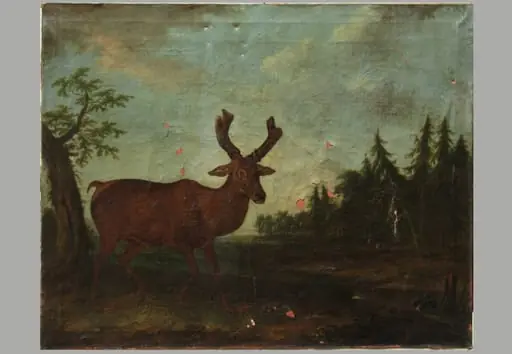
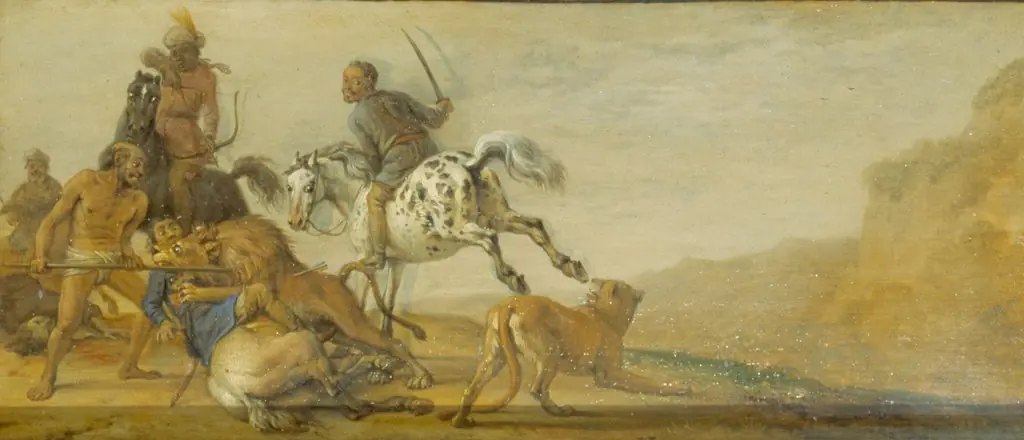
A Band of Tartar Horsemen Hunting an Elk
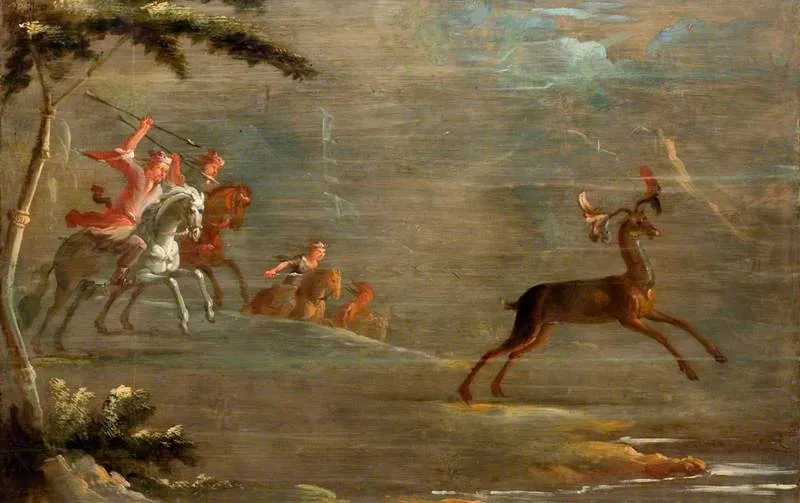
A Band of Tartar Horsemen Hunting an Elk is an oil painting by Robert Robinson. It dates from 1698 and is held in the collection of the Victoria and Albert Museum.
About this work
Overview
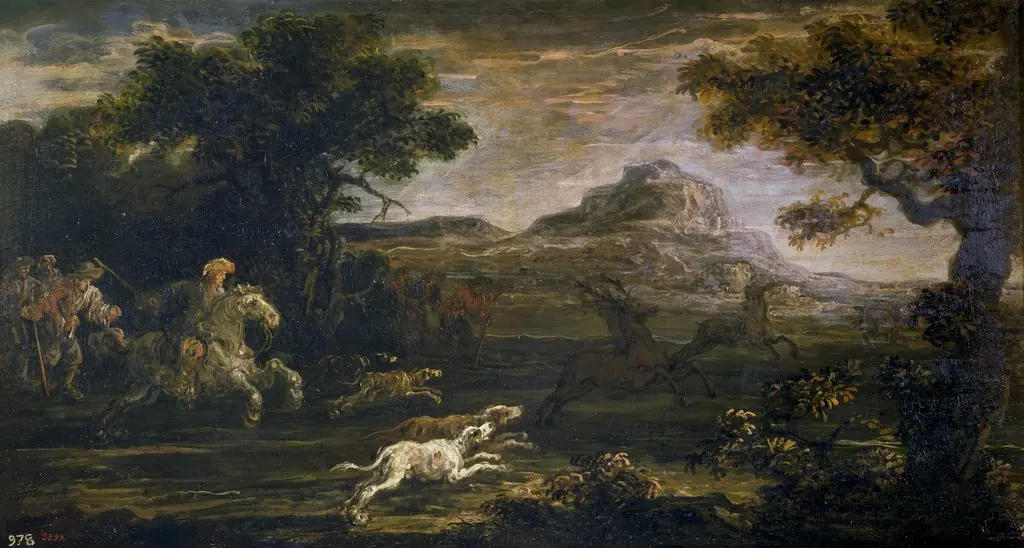
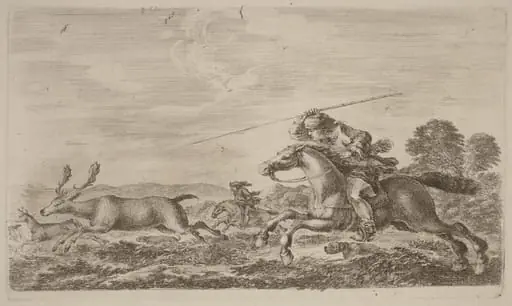
The scene is rendered with dynamic energy, capturing motion through the positioning of riders and the fleeing animal.
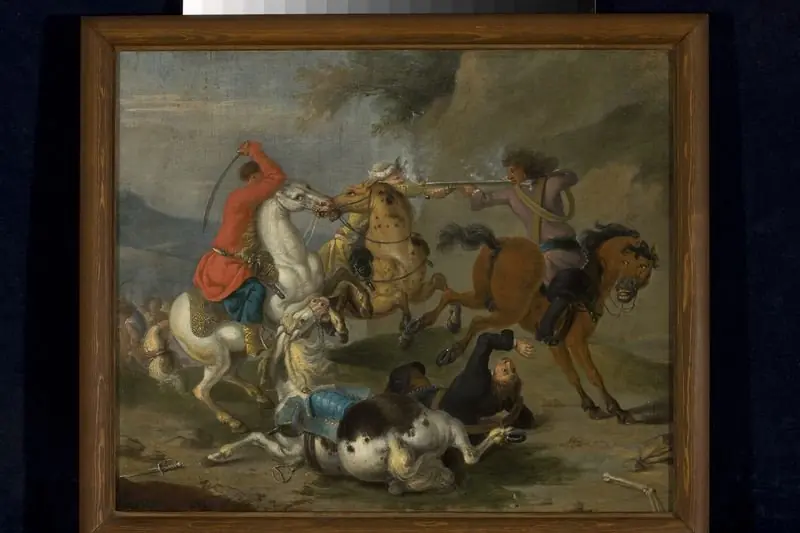
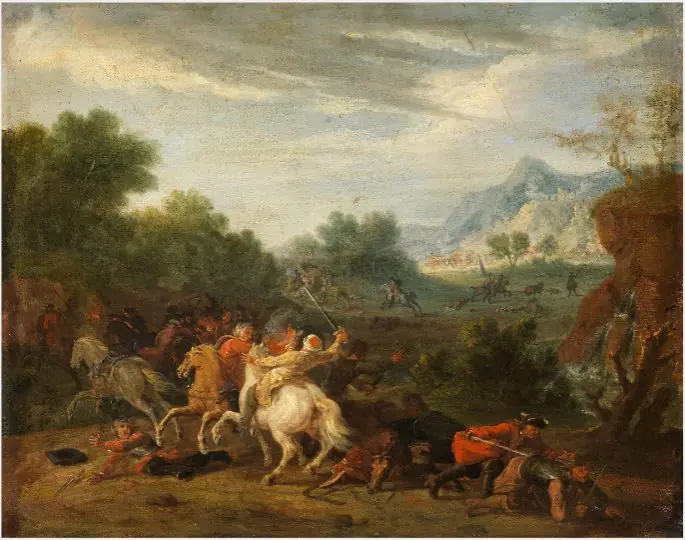
Painted in 1698 by Robert Robinson, this oil work depicts a group of Tartar horsemen in pursuit of an elk. The scene is rendered with dynamic energy, capturing motion through the positioning of riders and the fleeing animal. It resides in the Victoria and Albert Museum, where it is cataloged as an example of late 17th-century European orientalist imagery, though its subject draws from Central Asian nomadic traditions.
Subject & Meaning
The painting portrays a hunting scene common in steppe cultures, where mounted warriors pursued large game for sustenance or status. The elk, shown in flight with prominent antlers, contrasts with the focused riders, one of whom wields a spear. The composition suggests urgency and skill, reflecting ideals of horsemanship and endurance valued in nomadic societies, though filtered through a European artistic lens of the time.
Technique & Style
Robinson employed oil paint to achieve rich, layered tones and a sense of atmospheric depth. Brushwork is fluid, emphasizing movement in the horses’ musculature and the elk’s stride. The background features loose, suggestive rendering of trees and water, enhancing the scene’s momentum without detailed realism. The palette favors earthy browns and muted greens, grounding the action in a naturalistic setting.
History & Provenance
The painting entered the Victoria and Albert Museum’s collection in the 19th century, likely acquired during a period of growing European interest in Eastern cultures. Its origins before that are undocumented. Robinson, a lesser-known artist of the era, produced few surviving works, making this piece a rare example of his engagement with non-European themes, possibly informed by travel accounts or prints rather than firsthand experience.
Context
In late 17th-century England, depictions of 'exotic' peoples and landscapes were popular among collectors, often based on secondhand sources. Robinson’s painting aligns with a trend of orientalist imagery that romanticized or simplified non-Western life. While the scene references Tartar traditions, its execution reflects European conventions of composition and narrative, blending observation with imagination.
Legacy
The painting remains a modest but notable artifact of early orientalist art in Britain. It offers insight into how European artists interpreted distant cultures through limited exposure, prioritizing dramatic effect over ethnographic accuracy. Though not widely studied, it contributes to broader discussions about representation, colonial curiosity, and the evolution of cross-cultural imagery in Western art.
Artist & collection