Artwork
Untitled
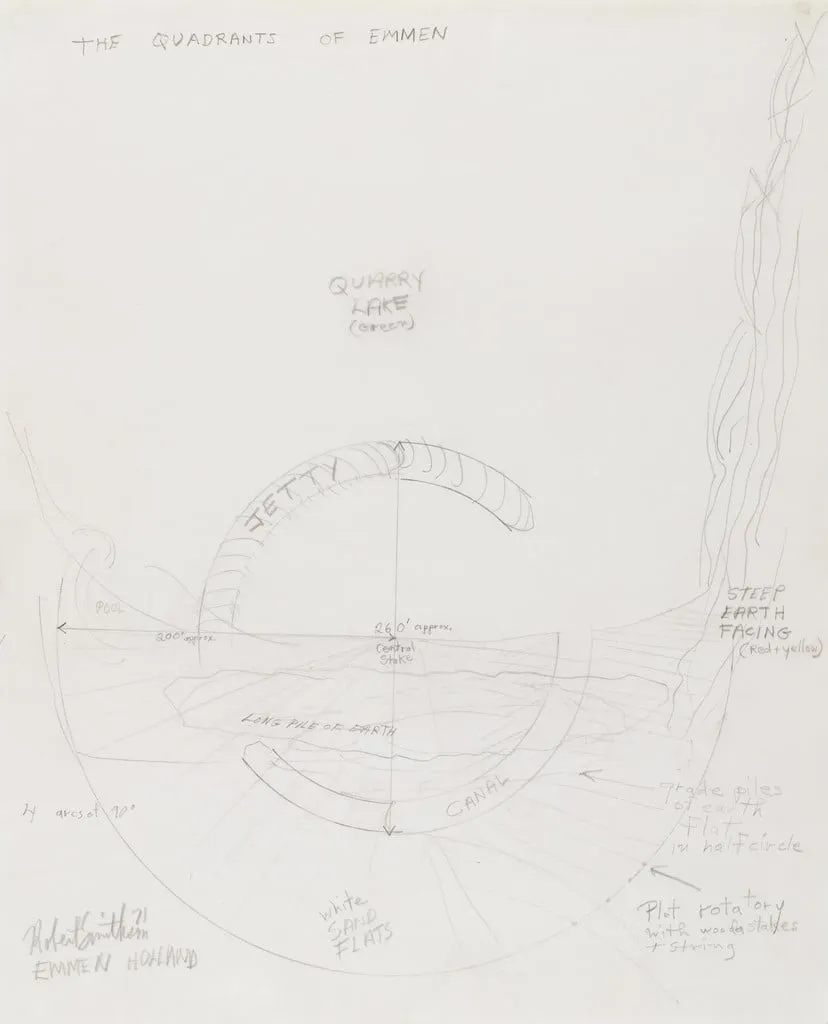
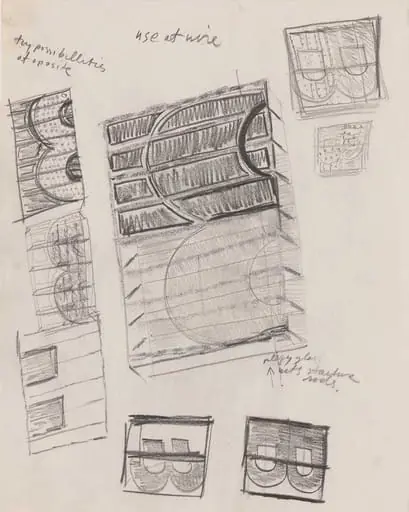
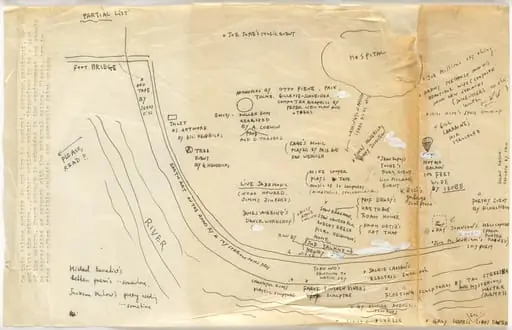
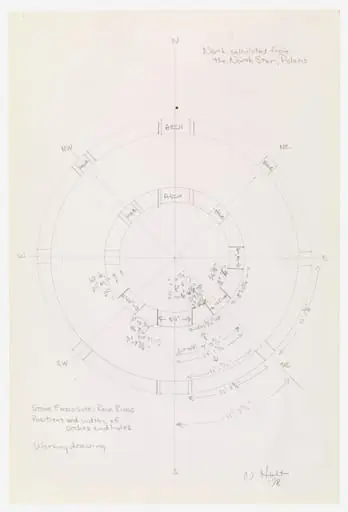
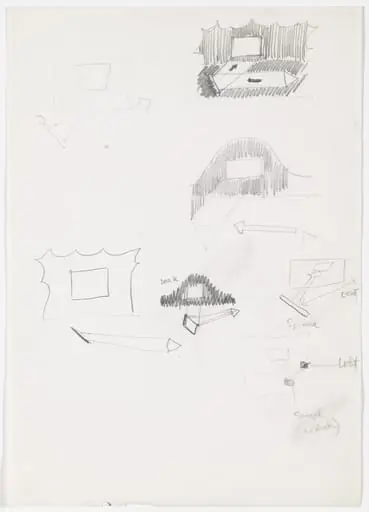
Untitled is a graphite drawing by Robert Smithson. It dates from 1971 and is held in the collection of the Museum of Modern Art.
About this work
Overview
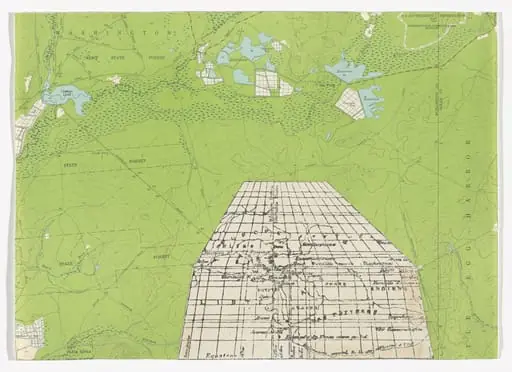
The piece is held in the collection of The Museum of Modern Art and reflects Smithson’s interest in mapping, geology, and engineered landscapes.
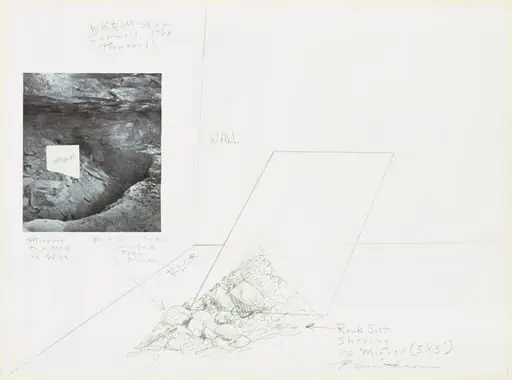
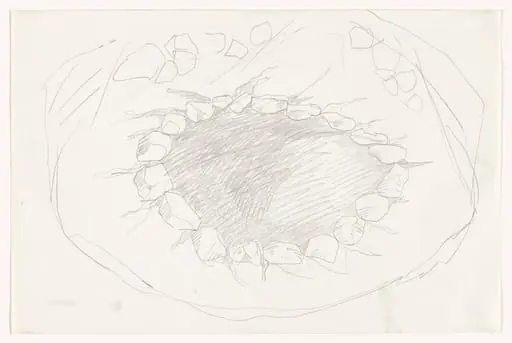
Robert Smithson created this pencil drawing in 1971 as part of his exploration of land-based forms. Executed on paper, it functions not as a finished artwork but as a working diagram. The piece is held in the collection of The Museum of Modern Art and reflects Smithson’s interest in mapping, geology, and engineered landscapes. Its detailed annotations reveal a process of conceptual development rather than aesthetic presentation.
Subject & Meaning
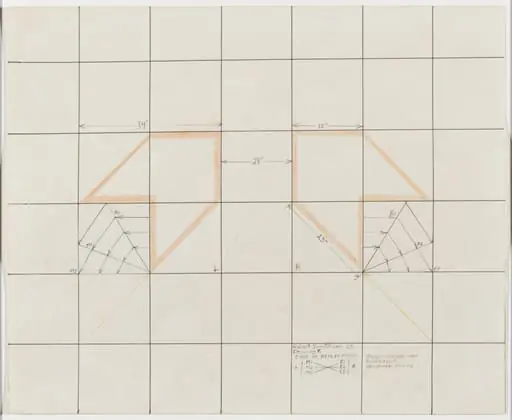
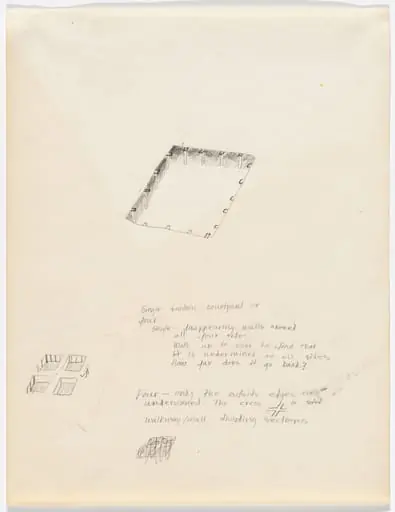
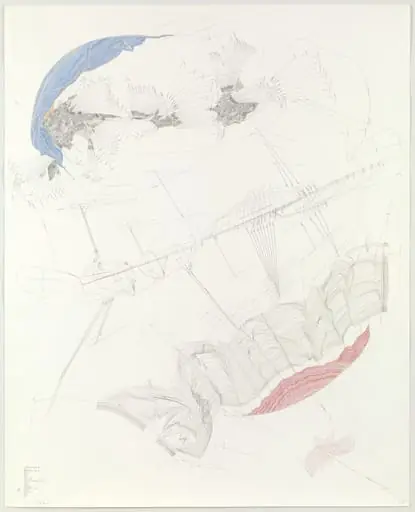
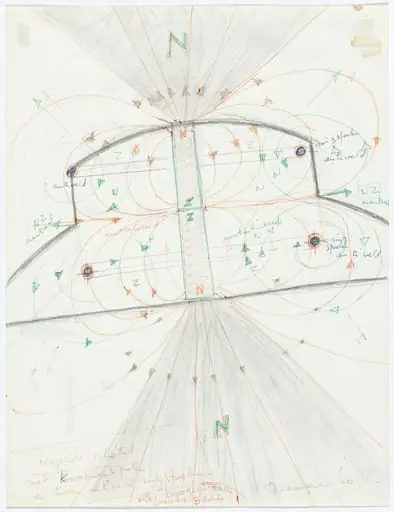
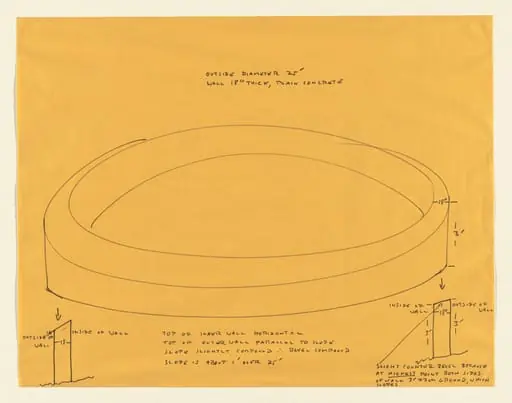
The drawing depicts an abstracted landscape plan, centered on a large circle subdivided into labeled zones: 'JETTY', 'POOL', 'LONG PILE OF EARTH', and 'CANAL'. These terms suggest spatial interventions in natural terrain, echoing Smithson’s interest in entropy and human alteration of the environment. The labels function as directives, implying a speculative architecture of earth and water, where form emerges from function and material behavior.
Technique & Style
Rendered entirely in pencil, the drawing combines precise linear divisions with handwritten annotations in a dense, legible script. Lines are unembellished, prioritizing clarity over ornament. The layering of measurements, directional cues, and descriptive phrases creates a visual rhythm akin to technical blueprints. The medium’s ephemerality aligns with Smithson’s rejection of permanent monuments, favoring process over polished outcome.
History & Provenance
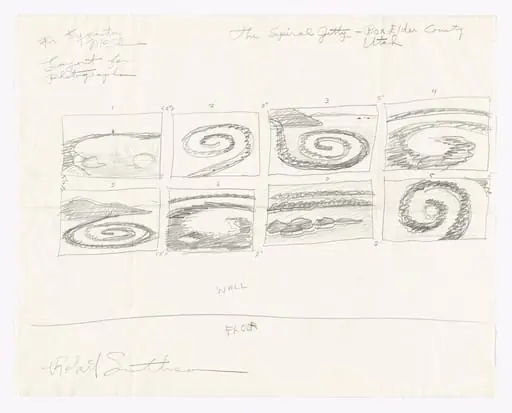
Produced in 1971, the drawing emerged during a period when Smithson was actively developing ideas for earthworks, including his well-known Spiral Jetty. It was acquired by The Museum of Modern Art shortly after its creation, likely as part of the institution’s broader effort to document conceptual and land art practices. Its preservation underscores its value as a record of artistic thinking rather than a standalone visual object.
Context
This work belongs to a series of diagrams Smithson produced alongside his earthworks, situating it within the 1960s–70s shift toward process-based art. It reflects influences from systems theory, geological time, and industrial planning. Unlike traditional landscape drawing, it does not aim to represent nature but to intervene in it—positioning the artist as both observer and designer of altered environments.
Legacy
The drawing remains a key artifact in understanding Smithson’s methodology, illustrating how ideas for large-scale land projects were conceived on paper before realization. It has informed subsequent generations of artists working at the intersection of art, ecology, and cartography. Its archival status highlights the importance of preparatory work in conceptual art, shifting focus from final form to intellectual trajectory.
Artist & collection

Artist
Robert Smithson was an American artist known for sculpture and land art who often used drawing and photography in relation to the spatial arts.