Artwork
Untitled
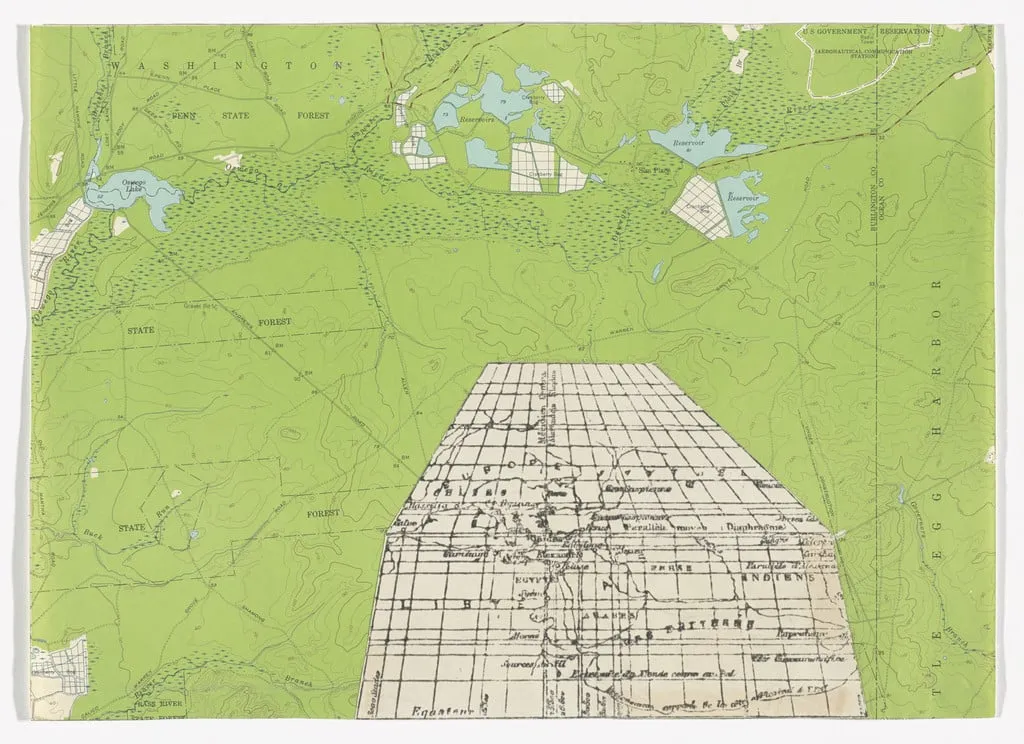
Untitled is a drawing by Robert Smithson. It dates from 1967 and is held in the collection of the Museum of Modern Art.
About this work
Overview
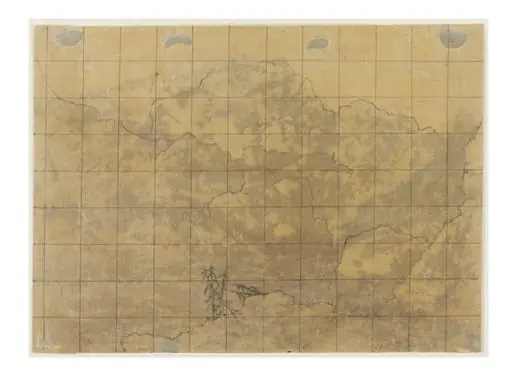
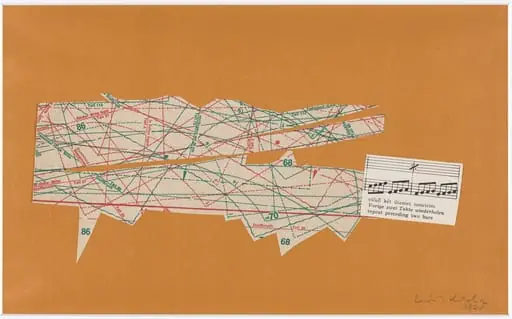
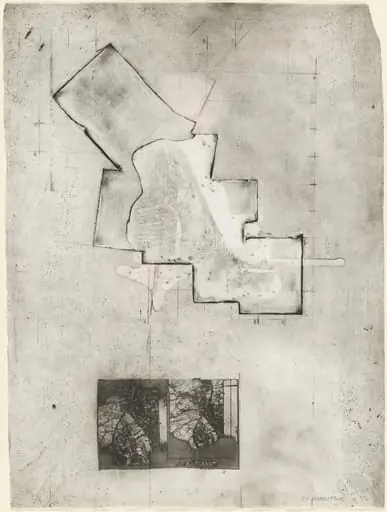
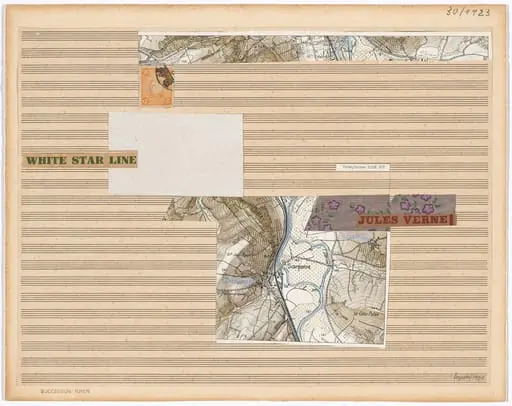
Created in 1967, this work by Robert Smithson is a drawing composed of cut and reassembled fragments of a printed topographic map. The pieces are arranged to form a geometric pyramid, transforming a functional cartographic image into an abstract sculptural form. The material remains unchanged in origin but is reconfigured to challenge conventional perceptions of landscape representation.
Subject & Meaning
The work juxtaposes the natural features of a rural landscape—forests, lakes, roads—with a grid of handwritten personal names at its base. This contrast suggests a tension between mapped geography and individual identity. The pyramid shape, neither natural nor functional, implies a monumentality imposed on the land, questioning how places are named, claimed, and remembered.
Technique & Style
The top half retains the original cartographic details, while the lower section introduces handwritten text, disrupting the map’s legibility.
Smithson physically altered an existing printed map by cutting it into sections and reassembling them into a precise pyramidal composition. The top half retains the original cartographic details, while the lower section introduces handwritten text, disrupting the map’s legibility. This method of collage reflects a process-oriented approach, emphasizing material transformation over traditional drawing techniques.
History & Provenance
The work was produced in 1967 and entered the collection of The Museum of Modern Art shortly thereafter. It belongs to a series of early works in which Smithson explored cartography as a medium, using found printed materials to investigate spatial perception and entropy. Its preservation in a major institution underscores its significance in the development of land art and conceptual drawing.
Context
Created during a period when Smithson was shifting from painting to earthworks, this piece reflects his interest in systems of order and decay. It responds to contemporary movements in conceptual art and minimalism, where the artist’s intervention on pre-existing materials became as important as the final form. The use of maps aligns with broader 1960s inquiries into representation, authority, and the politics of space.
Legacy
This work contributed to redefining drawing as an act of spatial reconfiguration rather than depiction. It influenced later artists who used cartographic materials to interrogate land use, ownership, and memory. Smithson’s method of deconstructing maps became a touchstone in conceptual art, demonstrating how everyday printed media could be repurposed to question cultural assumptions about geography and meaning.
Artist & collection

Artist
Robert Smithson was an American artist known for sculpture and land art who often used drawing and photography in relation to the spatial arts.