Artwork
Untitled
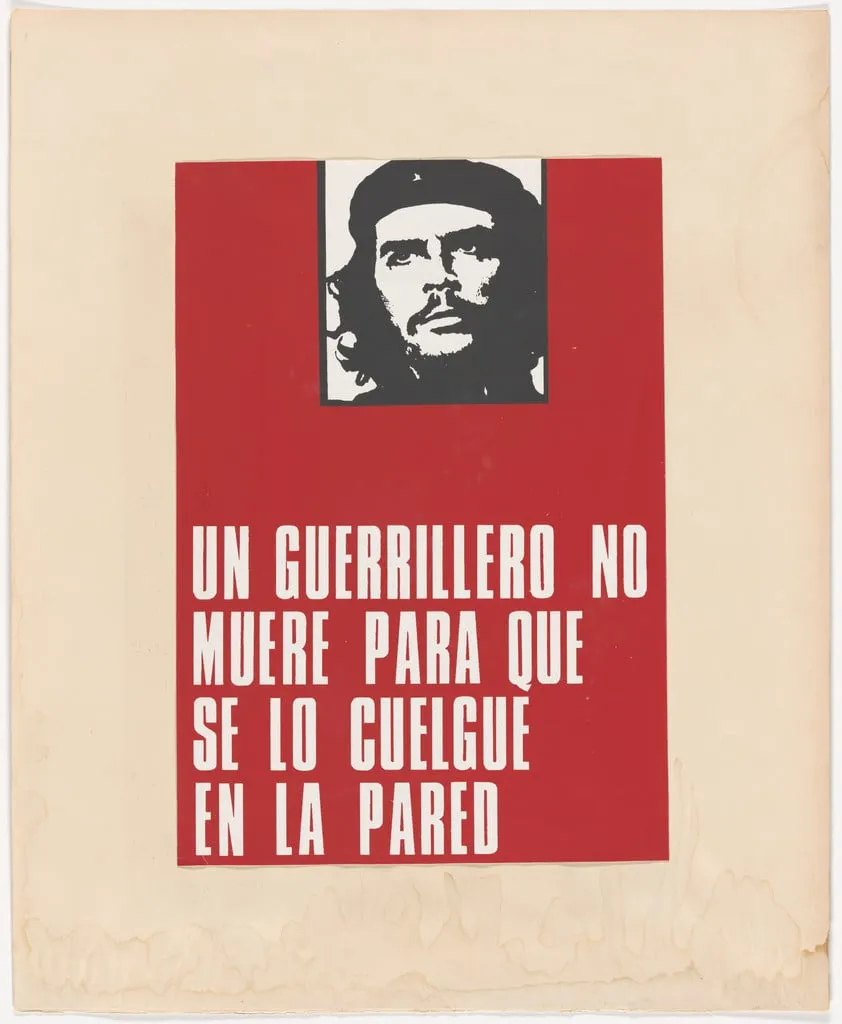
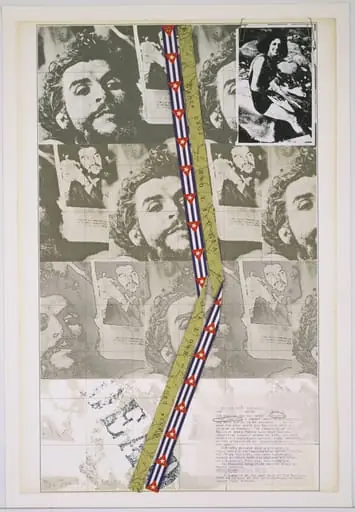
Untitled is an ink print by Roberto Jacoby. It dates from 1969 and is held in the collection of the Museum of Modern Art.
About this work
Overview
Created in 1969, this screenprint by Argentine artist Roberto Jacoby measures a vivid red field punctuated by a stark black‑and‑white portrait of a bearded man wearing a beret. Below the image, white block letters in Spanish state, “Un guerrillero no muere para que se lo cuelgue en la pared.” The work’s torn‑edge finish suggests it was ripped from a wall, reinforcing its confrontational tone.
Subject & Meaning
The central figure evokes the archetype of a guerrilla combatant, while the accompanying slogan critiques the posthumous glorification of revolutionaries as decorative objects. By declaring that a fighter does not die merely to become a wall‑mounted symbol, the piece interrogates the commodification of political sacrifice and challenges viewers to consider the lived realities behind militant rhetoric.
Technique & Style
Executed as a screenprint, the image relies on bold color contrasts: a saturated red background, monochrome photographic imagery, and stark white typography.
Executed as a screenprint, the image relies on bold color contrasts: a saturated red background, monochrome photographic imagery, and stark white typography. The rough, torn margins mimic street‑level poster culture, aligning the work with the visual language of protest ephemera. Jacoby’s use of reproducible media underscores the democratic intent of disseminating political messages beyond elite art spaces.
History & Provenance
Roberto Jacoby, born in 1944, emerged as a leading figure in Argentina’s late‑1960s conceptual movement, where artistic practice often intersected with sociopolitical activism. The print was produced during a period marked by collaborative interventions such as Experiencias and Tucumán Arde. It entered the collection of the Museum of Modern Art, where it remains part of the institution’s holdings of politically engaged print media.
Context
The work reflects the turbulent climate of Argentina in the late 1960s, a time of military repression and rising left‑wing militancy. Within this environment, artists like Jacova leveraged mass‑produced formats to circulate dissenting ideas, blurring the line between art and activism. The piece thus functions both as a visual document of its era and as a continued reminder of the complexities surrounding revolutionary iconography.
Artist & collection
Artist
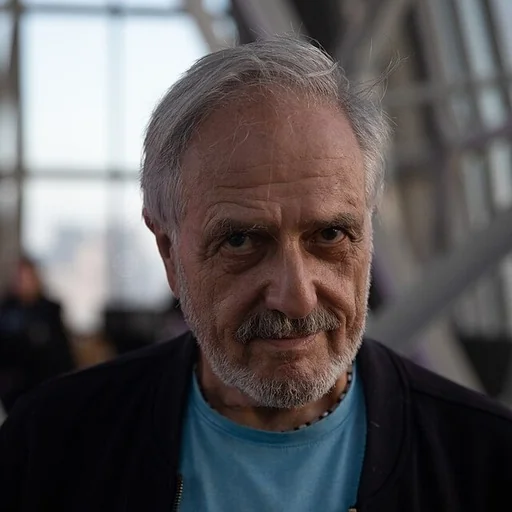
Roberto Jacoby (born 1944) is an Argentine artist and sociologist. Known for his conceptual art and social activism in Argentine politics, most of his work is collaborative such as his displays in Experiencias and…