Artwork
Georgian Houses, Castle Street, Bridgwater
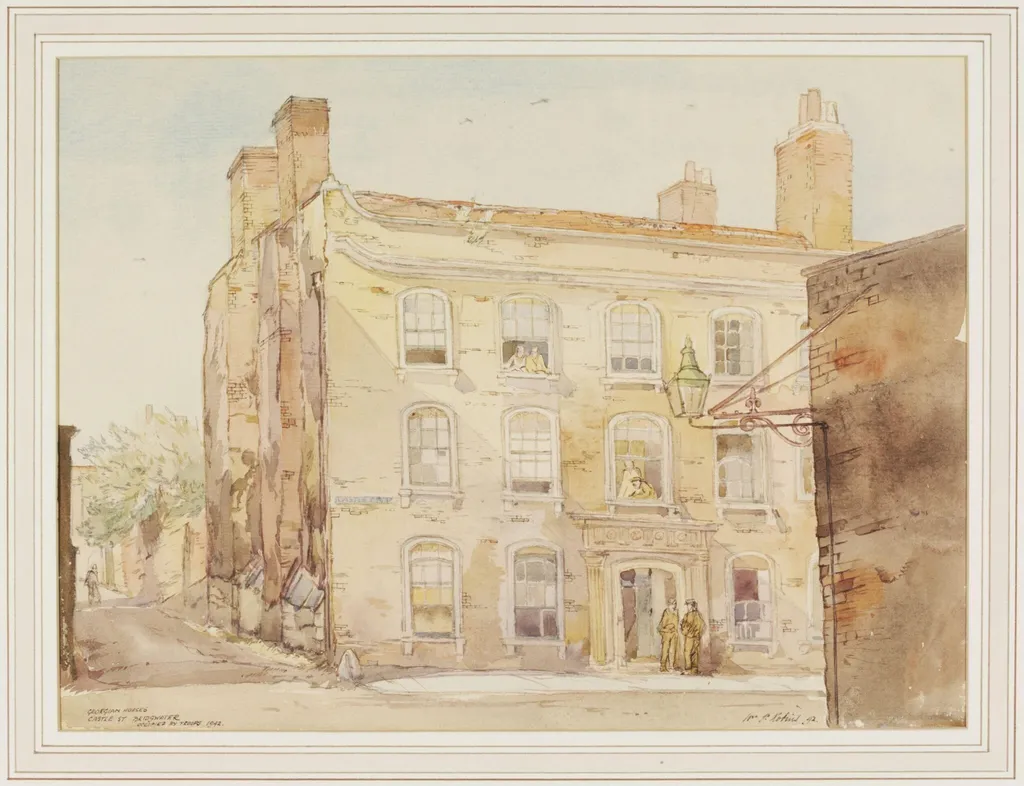
Georgian Houses, Castle Street, Bridgwater is a watercolor work on paper by William Palmer Robins. It dates from 1942 and is held in the collection of the Victoria and Albert Museum.
About this work
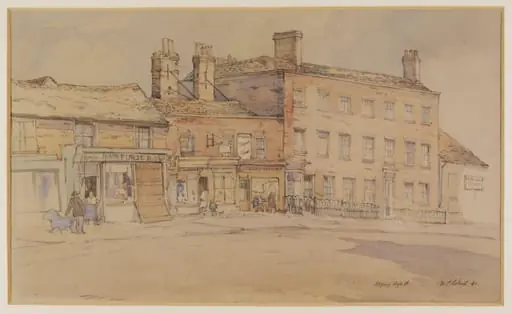
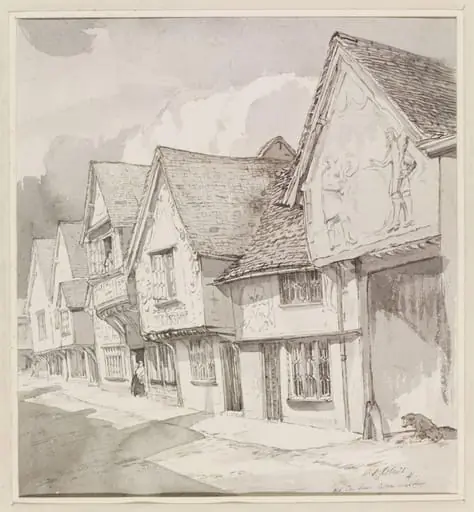
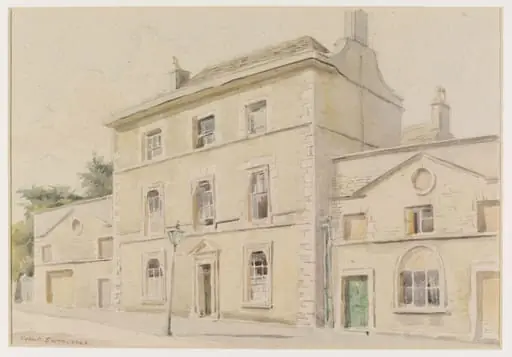
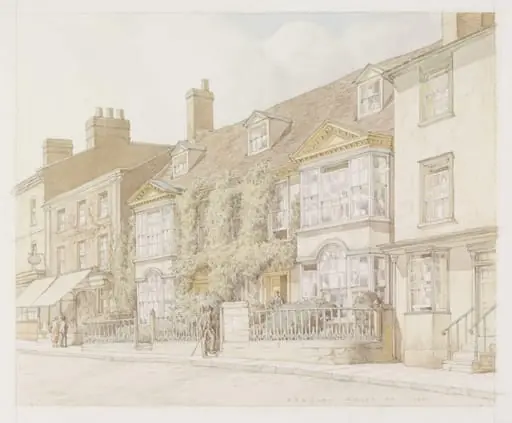
This sketch shows a tall, worn brick house with three floors of arched windows.
This sketch shows a tall, worn brick house with three floors of arched windows. Two small figures stand at the front door, talking. The building looks old, with peeling paint and a sagging roof. A tree leans in from the left side, and a streetlamp hangs near the entrance.
The artist signed it in the corner with the year 1942. The label says it’s in Bridgwater, but the scene feels quiet and forgotten.
Check out the Victoria and Albert Museum to see this watercolor in person.
Overview
Georgian Houses, Castle Street, Bridgwater is a watercolour painting created by William Palmer Robins in 1942. It depicts a scene in Bridgwater, showing a Georgian house on Castle Street.
Subject & Meaning
The painting shows a worn, three-storey brick house with arched windows, featuring servicemen and civilians outside and at the windows. The scene captures a moment during wartime, conveying a sense of quiet, everyday life amidst the conflict.
History & Provenance
The work was produced as part of the Recording Britain project, a wartime initiative led by Sir Kenneth Clark to document Britain's changing landscape during World War II. The project was funded by the Pilgrim Trust and administered by the Committee for the Employment of Artists in Wartime.
Technique & Style
The painting is executed in watercolour, showcasing Robins' skill in capturing the textures and tones of the scene. The sketchy style conveys a sense of immediacy and informality, with loose brushstrokes and subtle colouring.
Artist & collection
Artist
William Palmer Robins painted quiet English streets and buildings in watercolor during the 1940s.