Artwork
Mansion House Lane, Bridgwater
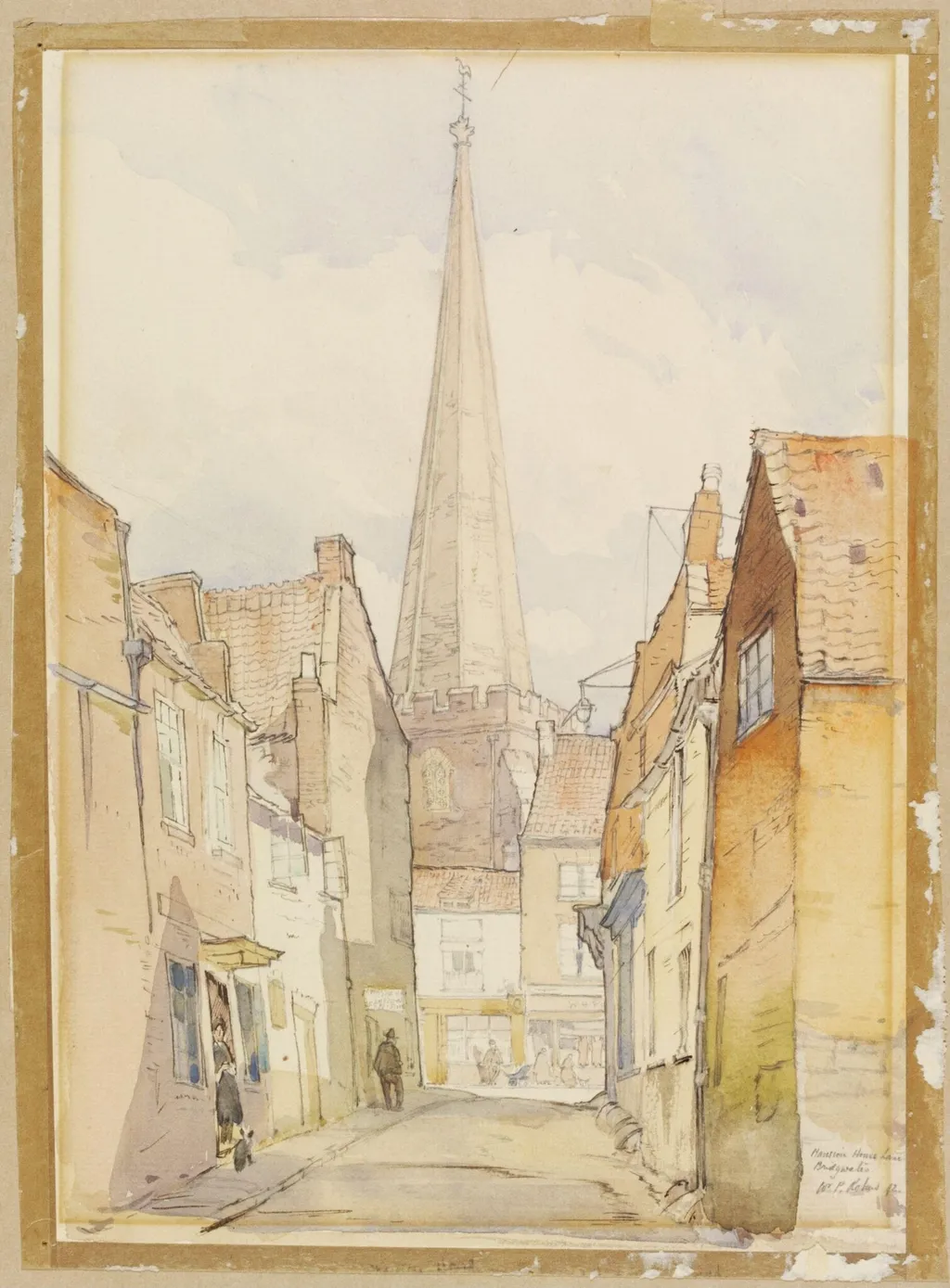
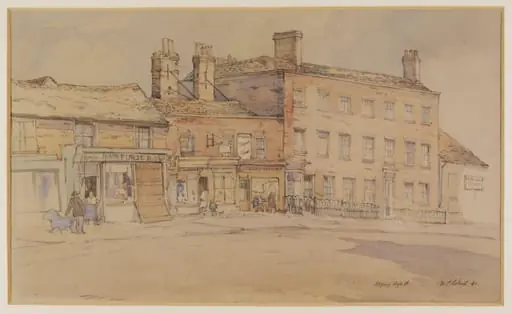
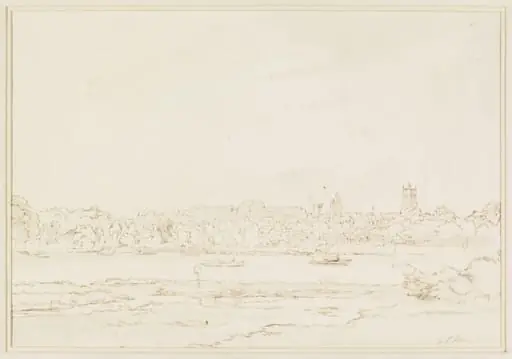
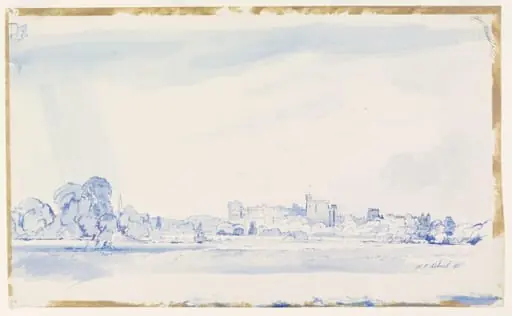
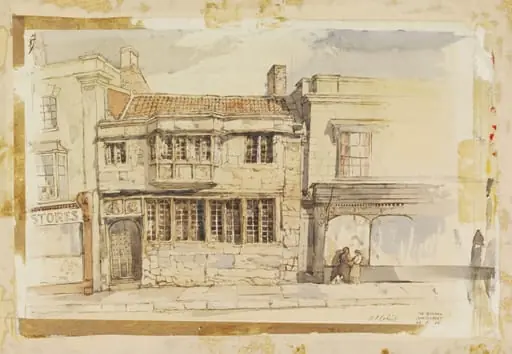
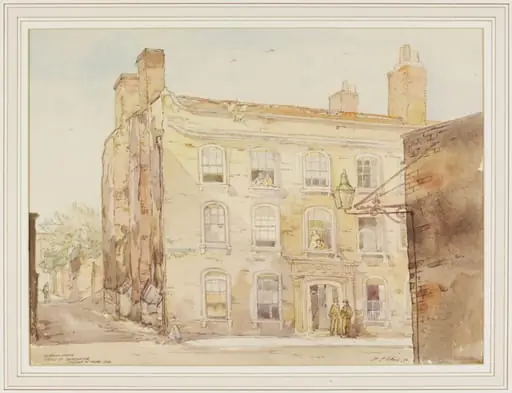
Mansion House Lane, Bridgwater is a watercolor work on paper by William Palmer Robins. It dates from 1942 and is held in the collection of the Victoria and Albert Museum.
About this work
Overview
It was produced under the 'Recording Britain' initiative, a government-backed effort to visually archive ordinary English landscapes during wartime.
Created in 1942, this watercolour by William Palmer Robins captures a quiet residential street in Bridgwater, Somerset. It was produced under the 'Recording Britain' initiative, a government-backed effort to visually archive ordinary English landscapes during wartime. The work belongs to a broader project seeking to preserve the visual character of places deemed vulnerable to destruction or transformation, emphasizing the quiet dignity of everyday environments over monumental subjects.
Subject & Meaning
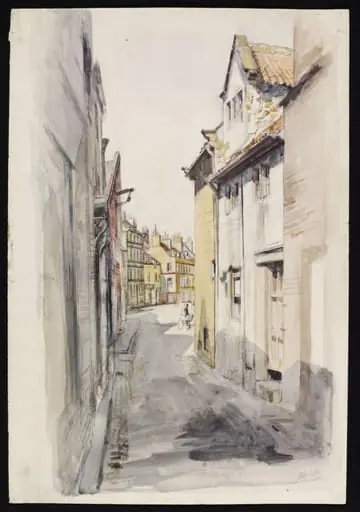
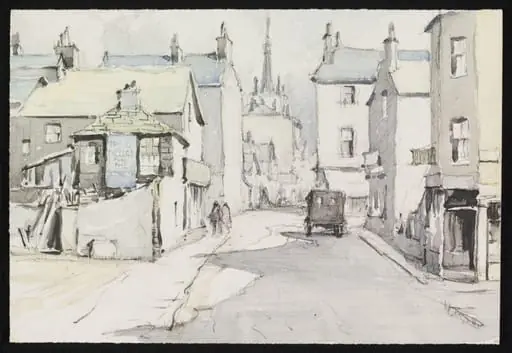
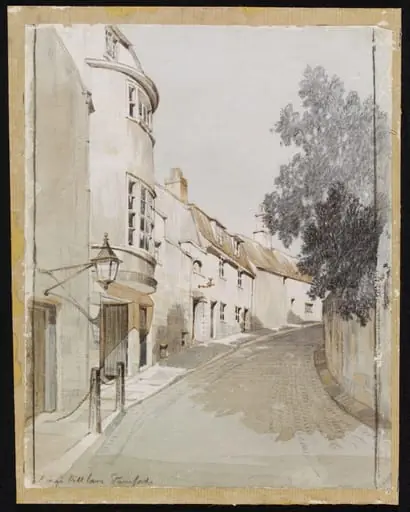
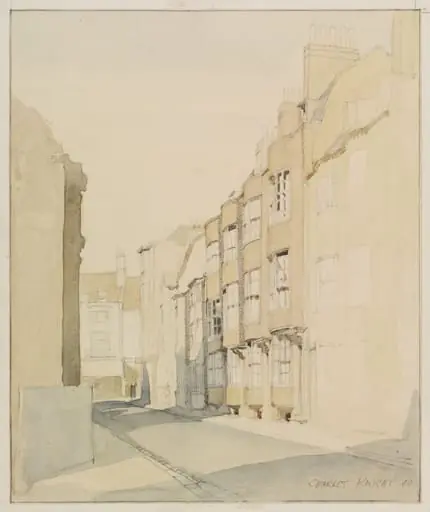
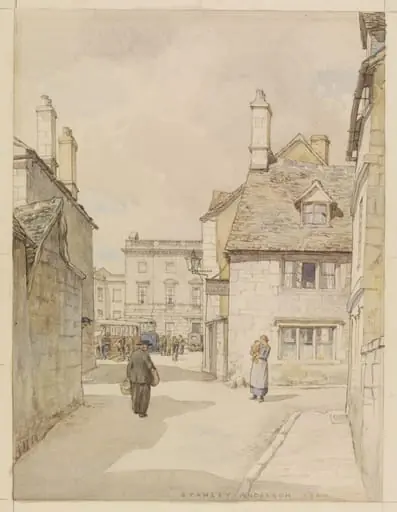
The scene portrays a narrow lane lined with modest brick terraces, their sloping roofs and small shuttered windows suggesting long-standing domestic life. At the street’s end, a church spire rises as the only vertical anchor, subtly grounding the composition in community and continuity. The presence of a few pedestrians reinforces the ordinary rhythm of daily existence, framing the image not as a landmark but as a lived-in space, quietly resisting the erasure of local character during wartime upheaval.
Technique & Style
Robins employed loose, fluid watercolour brushwork to convey immediacy and atmosphere. The palette is restrained—soft browns, greys, and muted yellows—enhancing the sense of age and quietude. Washes suggest weathered brick and overcast skies, while minimal detail in figures and windows avoids sentimentality. The technique feels spontaneous, like a direct observation, capturing the scene’s stillness without idealization or embellishment.
History & Provenance
The painting was made as part of the 'Recording Britain' project, initiated in 1939 by Sir Kenneth Clark and administered by the Victoria and Albert Museum. It was acquired by the museum during the war and remains in its collection. The project’s records indicate Robins was commissioned to document sites in Somerset, reflecting a deliberate effort to map the nation’s vernacular architecture before potential loss from conflict or modernization.
Context
During the Second World War, Britain faced widespread disruption, and cultural institutions sought to safeguard visual records of heritage under threat. 'Recording Britain' enlisted artists to depict rural villages, urban alleys, and historic buildings—places often overlooked by traditional art. Robins’s work aligns with this ethos, offering a quiet counterpoint to wartime propaganda by honoring the unremarkable yet enduring fabric of English towns.
Legacy
The painting endures as part of a significant archive of British topographical art from the 1940s. Its inclusion in the Victoria and Albert Museum’s collection ensures ongoing access for scholars and the public. While not widely exhibited, it contributes to a broader understanding of how art was mobilized during wartime to document cultural identity—not through grandeur, but through attentive observation of the commonplace.
Artist & collection
Artist
William Palmer Robins painted quiet English streets and buildings in watercolor during the 1940s.