Artwork
‘Who are you?’ he said at last. ‘Are you a ghost?’
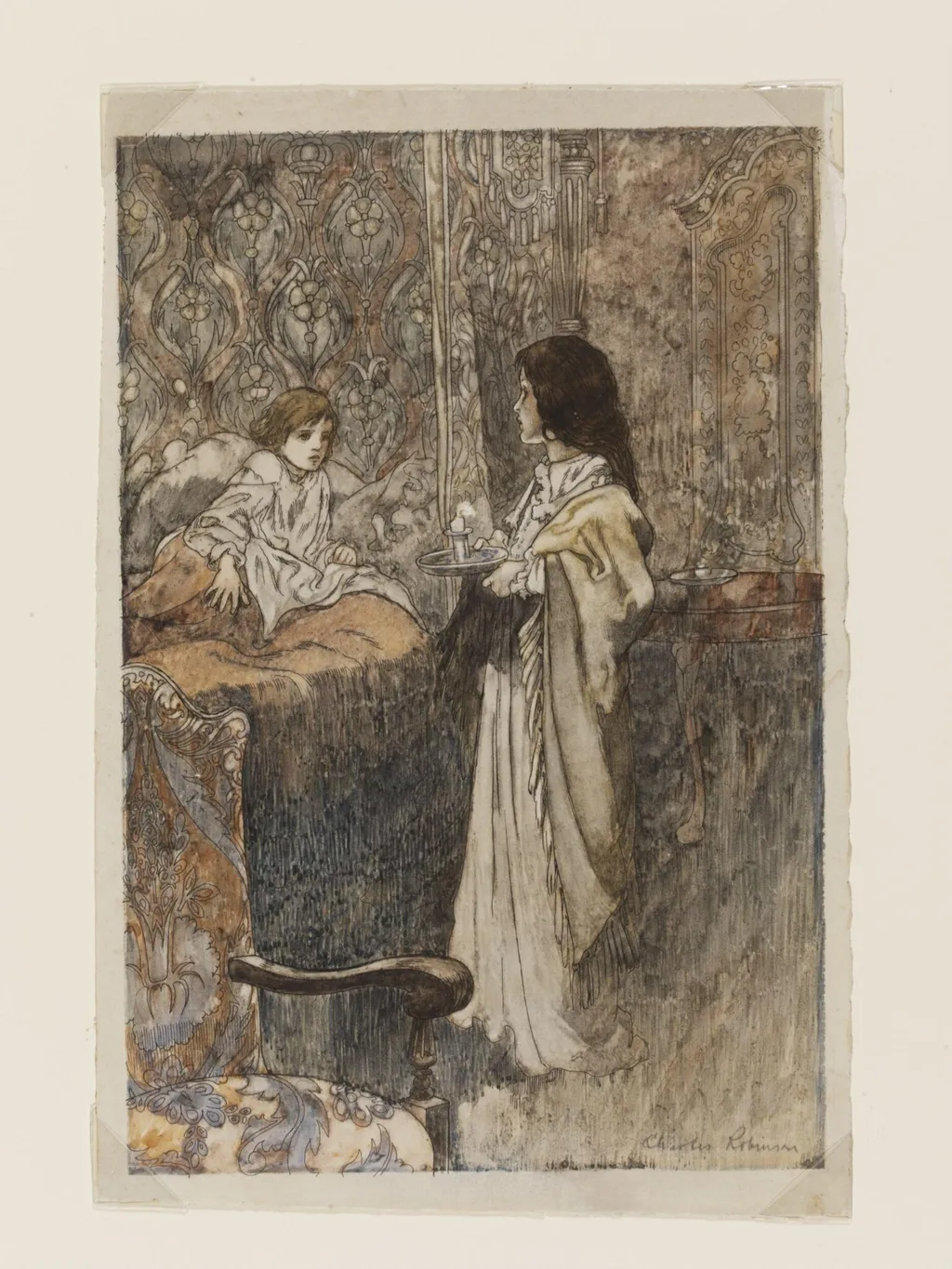
‘Who are you?’ he said at last. ‘Are you a ghost?’ is a drawing by Charles Robinson. It dates from 1911 and is held in the collection of the Victoria and Albert Museum. This watercolour drawing captures a nocturnal encounter between two figures in a dimly lit interior.
About this work
Overview
This watercolour drawing captures a nocturnal encounter between two figures in a dimly lit interior. A seated child gazes upward at a standing woman, who holds a candle on a tray, casting subtle light across the scene. The composition emphasizes quiet intimacy and unspoken curiosity, framed within a modest domestic setting.
Subject & Meaning
The woman’s candlelit presence and the girl’s attentive expression suggest a narrative of uncertainty or revelation.
The image portrays a moment of inquiry, as a young girl in bed confronts an unexpected visitor. The woman’s candlelit presence and the girl’s attentive expression suggest a narrative of uncertainty or revelation. The nocturnal setting and the figures’ attire—nightdress and shawl—imply a private, possibly unsettling exchange, though the exact nature of their interaction remains open to interpretation.
Technique & Style
Executed in watercolour, the work employs delicate washes of pigment to convey light and shadow, particularly in the glow of the candle. The artist renders textures—floral wallpaper, fabric folds, and bedding—with controlled precision, while the figures’ expressions are conveyed through minimal, suggestive lines. The muted palette reinforces the scene’s subdued, introspective mood.
History & Provenance
The drawing entered public collections through a bequest from Edith Mary Robinson, the artist’s daughter. Its origins lie within the artist’s personal or professional output, though specific details of its creation and early ownership remain unrecorded. The work reflects the domestic and narrative themes prevalent in the artist’s broader oeuvre.
Context
The scene aligns with late 19th- and early 20th-century artistic interest in domestic interiors and moments of psychological tension. Such works often explored childhood, memory, or the uncanny, using subdued lighting and intimate compositions to evoke emotion. The candle’s symbolic role—suggesting illumination or revelation—further anchors the drawing within this thematic tradition.
Artist & collection
Artist
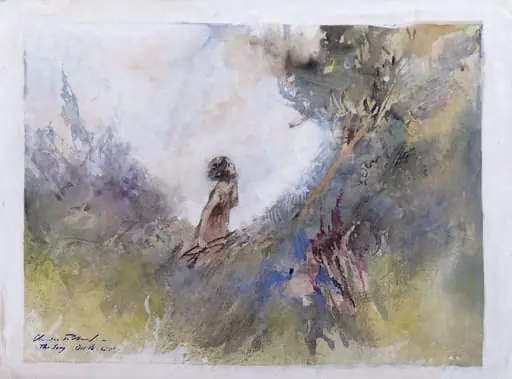
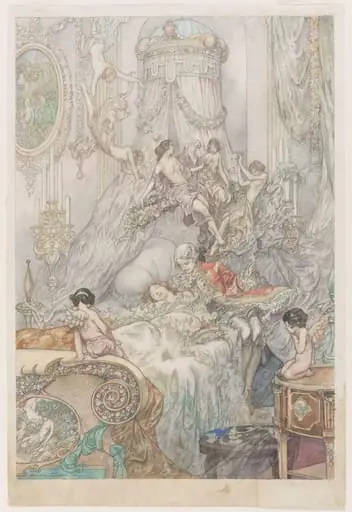
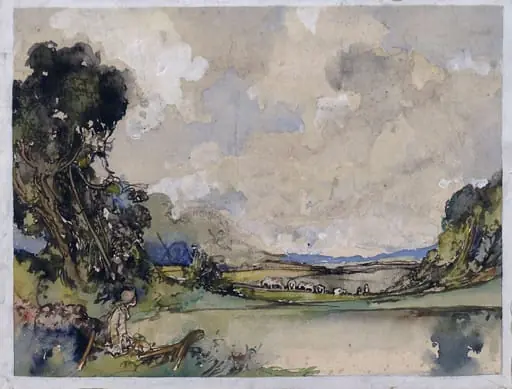
Charles Robinson painted dreamy watercolors in the 1930s—soft hills, medieval villages, and gentle nudes all in delicate washes.

 An Aged Knight, and a Child Playing with the Order of the Garter
 Hasan rejoins his wife
 The Eve of St. Agnes
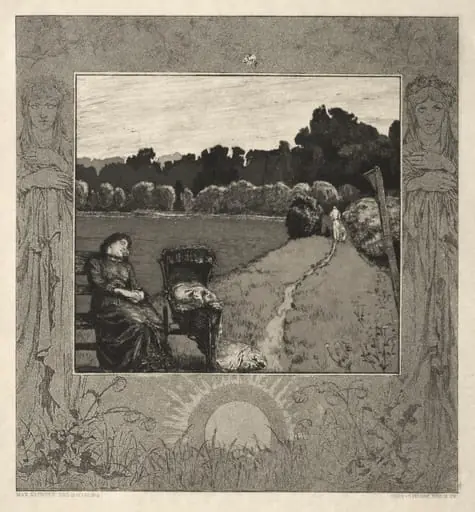 Child, from On Death, Part I, Opus XI (Kind, Vom Tode, Erster Teil, Opus XI)
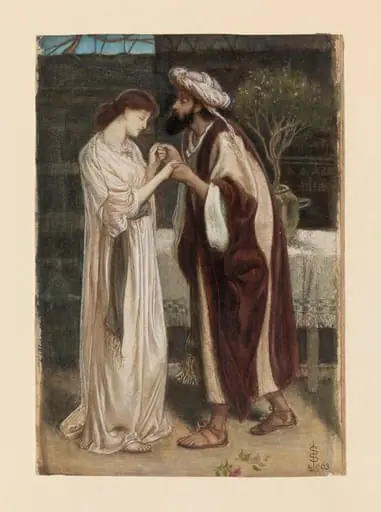 Isaac and Rebekah
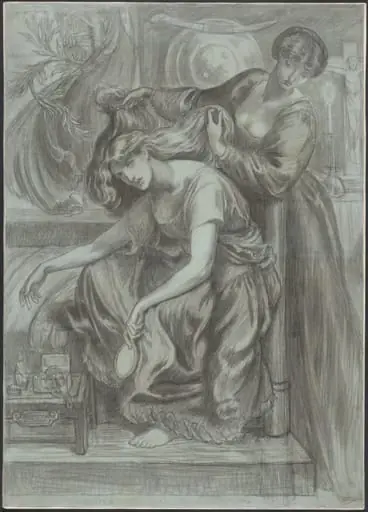 Desdemona's Death-Song
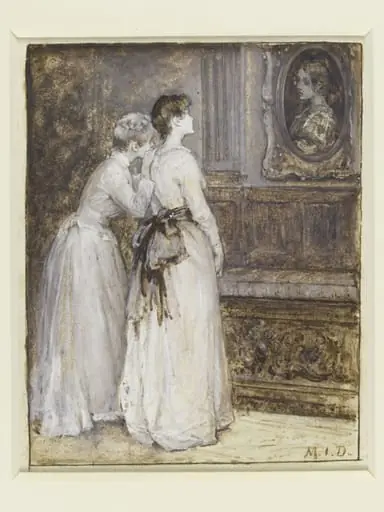 My Jealousy
 Infantry in Arms
 Withered Spring
 Spinner's Interior
 Venäläisiä kansallispukuja, (Kaksi naista), luonnos