Artwork
Etude
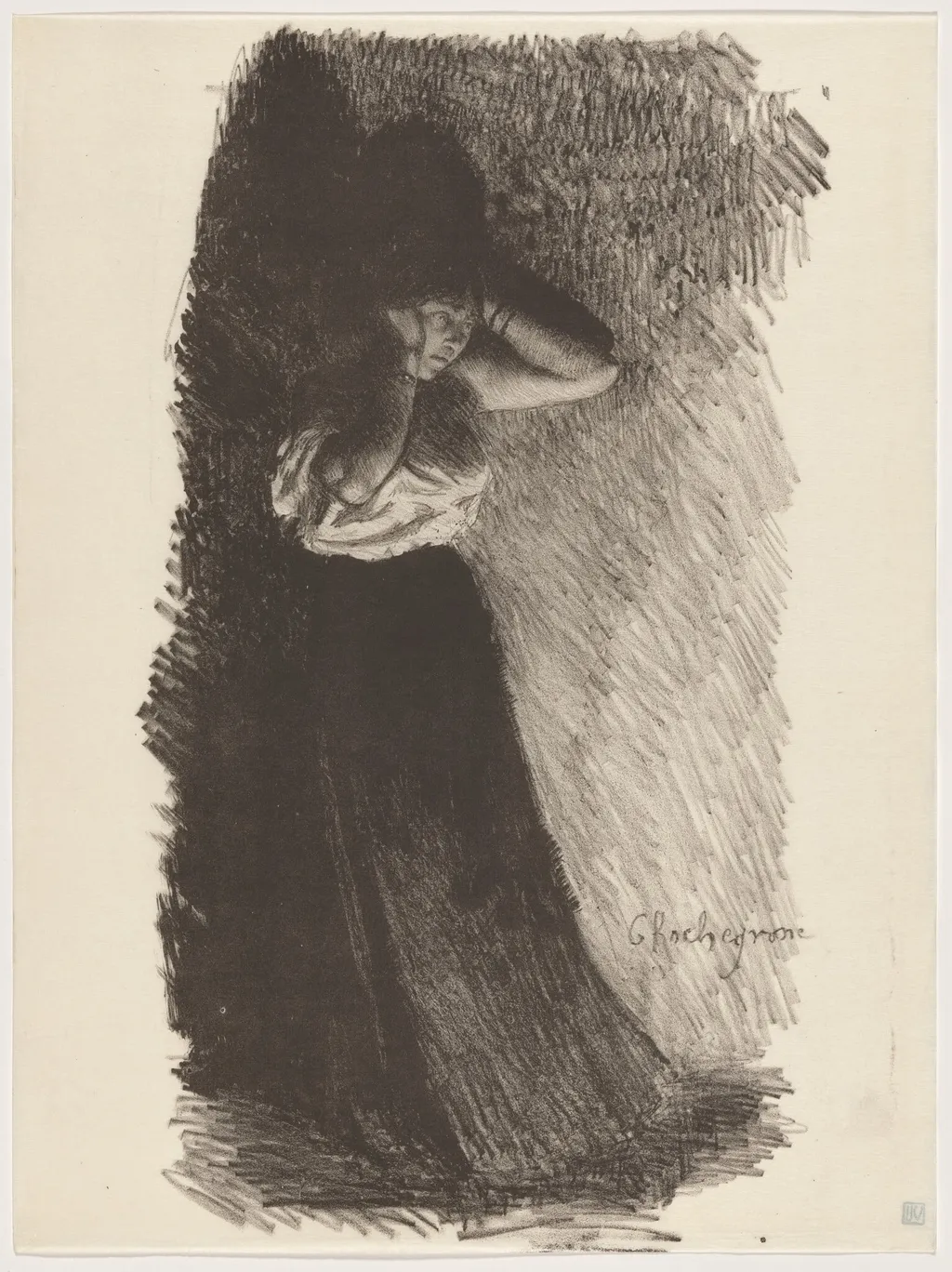
Etude is an ink print by the Impressionist artist Georges Rochegrosse. It dates from 1895 and is held in the collection of the National Gallery of Art.
About this work
Overview
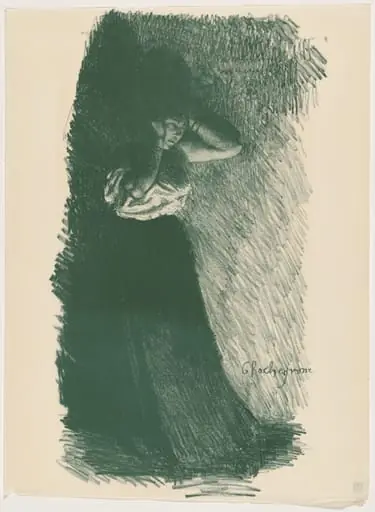
Created in 1895, Etude is a black lithograph on thin Japan paper by French artist Georges Rochegrosse. The work presents a solitary female figure positioned within a dimly lit interior, her arms lifted toward her head and her gaze directed upward. The composition is rendered in stark monochrome, emphasizing the contrast between the illuminated figure and the surrounding shadowy space.
Subject & Meaning
The central figure—a woman in a dark skirt and white blouse—stands with her arms raised, suggesting a moment of inner reflection or emotional tension. Her upward‑tilted head and the dramatic pose convey a sense of contemplation, as if she is responding to an unseen presence or thought beyond the immediate environment.
Technique & Style
Rochegrosse employed the lithographic process, drawing directly onto a smooth stone surface before transferring the image onto Japan paper, a material known for its delicate texture. The exclusive use of black ink creates a tonal range that models form through subtle gradations, while the sparse background reinforces the figure’s isolation, echoing the atmospheric qualities associated with late‑19th‑century French printmaking.
Context
Although Rochegrosse is primarily recognized for his large‑scale historical paintings, Etude reflects his engagement with the broader artistic currents of the 1890s, a period when French artists were exploring impressionistic approaches to light and mood. The work’s focus on a solitary, introspective subject aligns with contemporary interests in psychological depth and the fleeting moments captured by Impressionist and post‑Impressionist practitioners.
Artist & collection

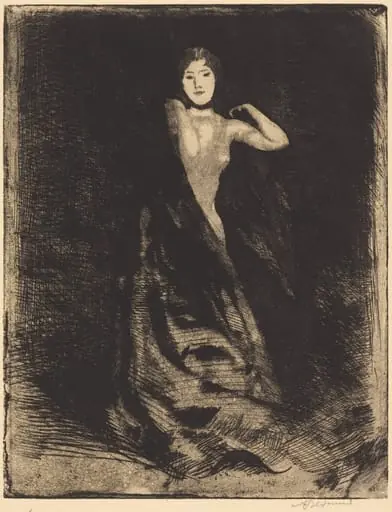 La Femme (frontispiece)
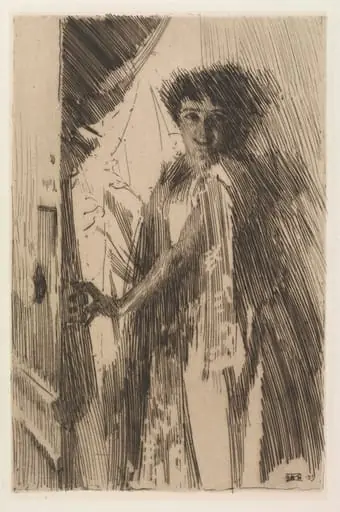 Rosita Mauri
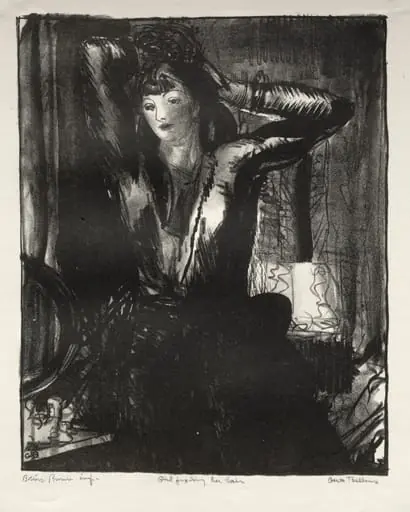 Girl Fixing Her Hair
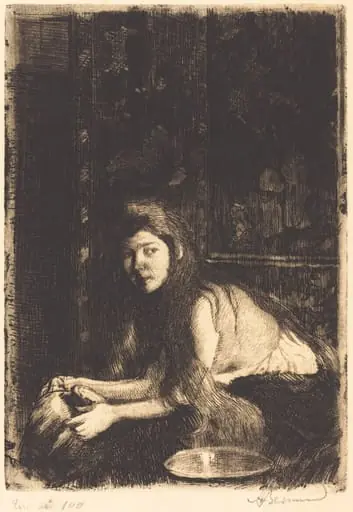 Woman with a Vase (La femme au vase)
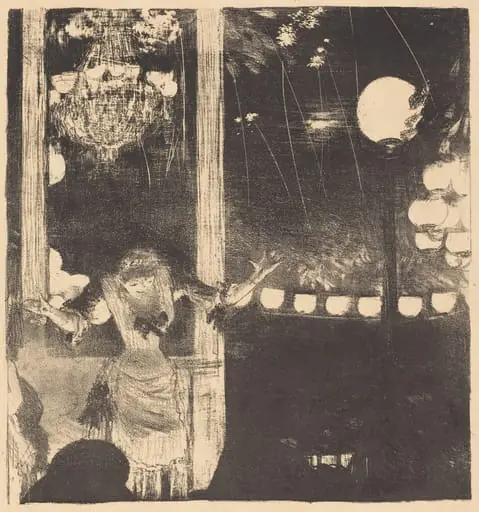 Mademoiselle Bécat at the Cafe des Ambassadeurs (Aux Ambassadeurs: Mlle Bécat)
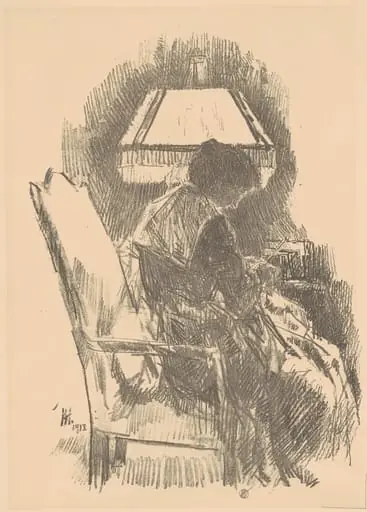 Mrs. Hassam Knitting (large)
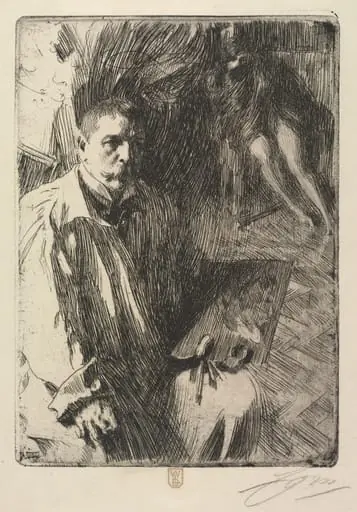 Portrait of the Artist and His Model
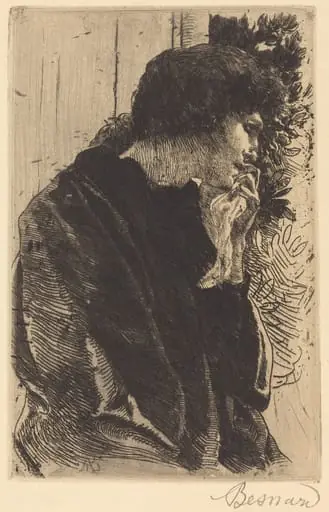 Sadness (Tristesse)
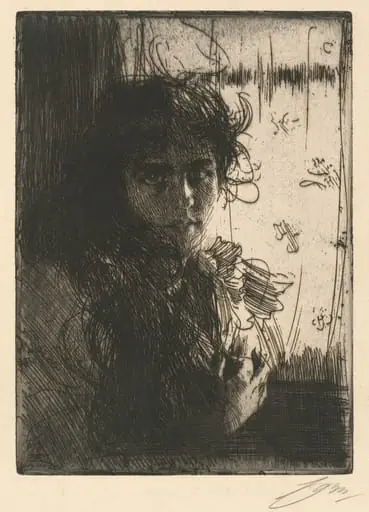 An Irish Girl or Annie
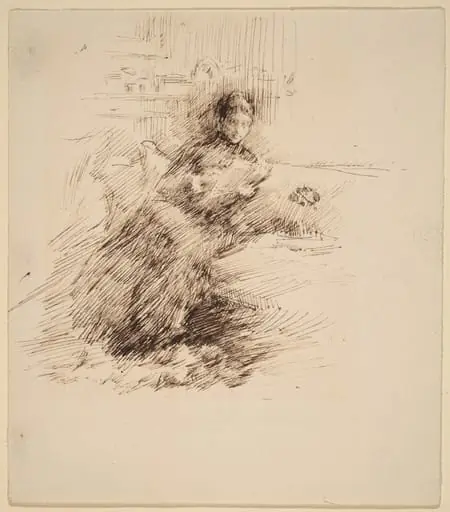 Miss Cumberlege
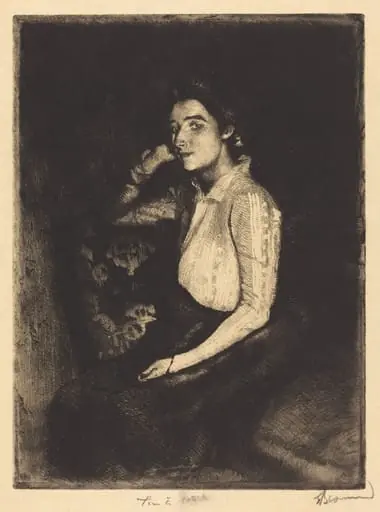 La Biarrote