Artwork
La Biarrote
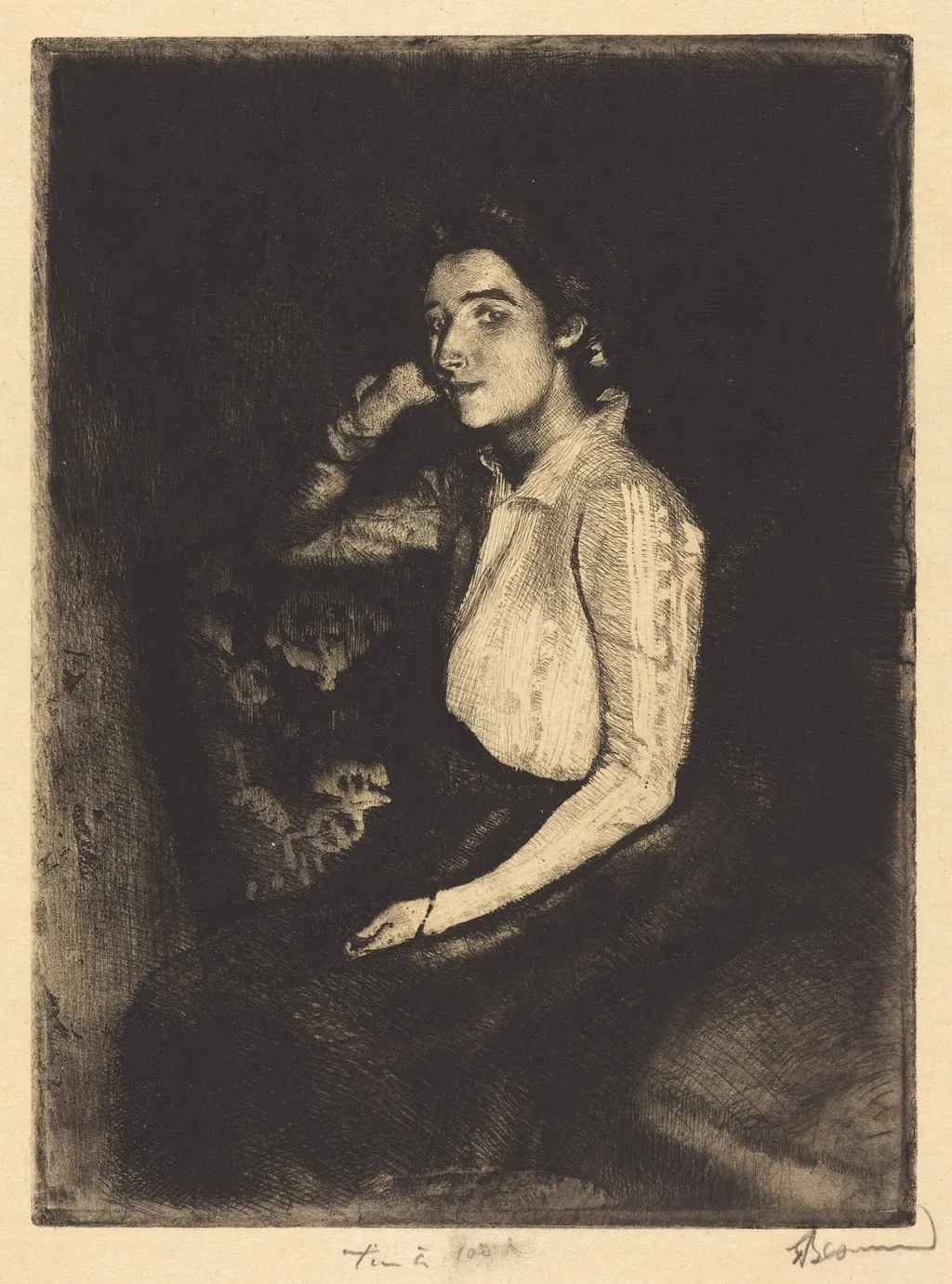
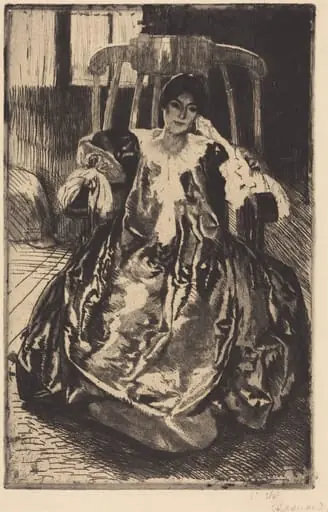
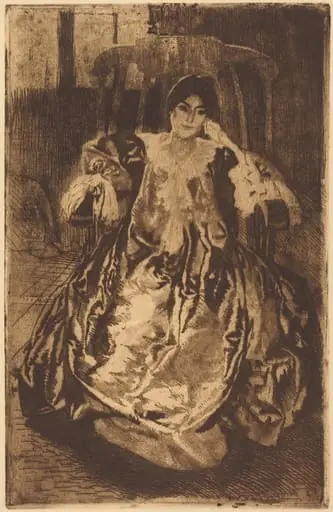
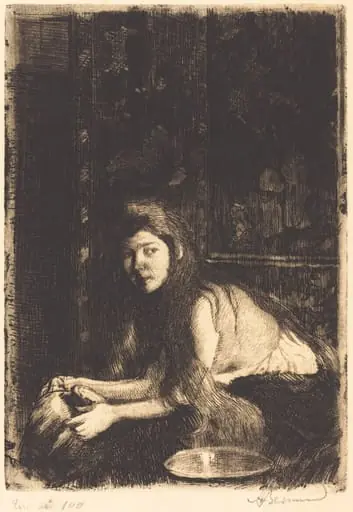
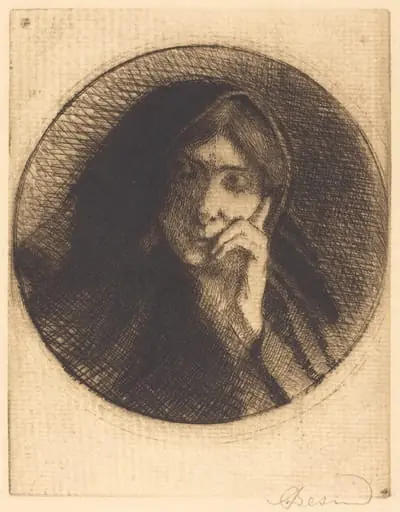
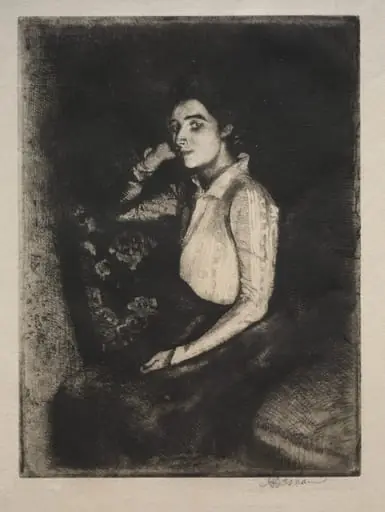
La Biarrote is an ink print by Paul-Albert Besnard. It dates from 1901 and is held in the collection of the National Gallery of Art.
About this work
Overview
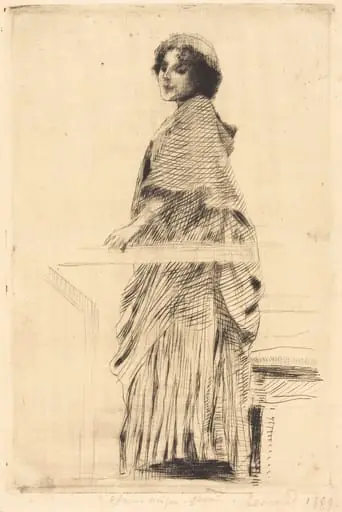
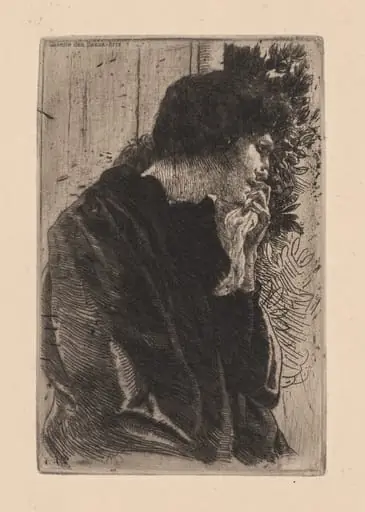
La Biarrote, executed in 1901 by French artist Albert Besnard, is a print that combines etching, drypoint, and printed tone on laid paper. The work presents a solitary female figure rendered in profile, her chin supported by a hand, set against a dim, indistinct backdrop that suggests a distant landscape.
Subject & Meaning
The composition centers on a woman in a relaxed pose, her loose, light‑colored blouse with rolled sleeves emphasizing a casual intimacy. Her hair is gathered back, and the contemplative tilt of her head invites reflection on inner thought or quiet observation, while the vague surroundings keep the focus on her personal presence.
Technique & Style
Besnard employed a layered approach: traditional etching to define lines, drypoint to introduce soft, burr‑rich edges, and a printed tone (aquatint) to achieve subtle gradations of shadow. The interplay of crisp incised lines and velvety tonal washes creates depth, allowing the figure to emerge from the dark, blurred background with a nuanced three‑dimensionality.
History & Provenance
Created at the turn of the twentieth century, La Biarrote reflects Besnard’s exploration of printmaking methods during a period of artistic experimentation in France. While specific ownership records are limited, the work is documented in catalogues of Besnard’s prints and has appeared in exhibitions highlighting early modern French graphic art.
Artist & collection
Artist
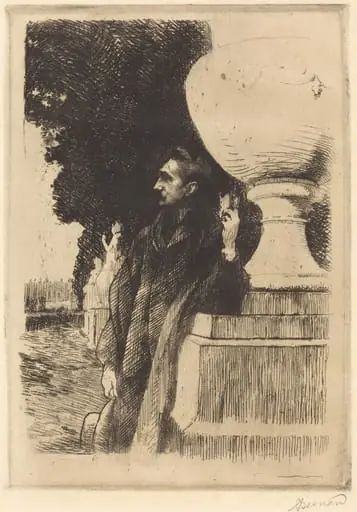
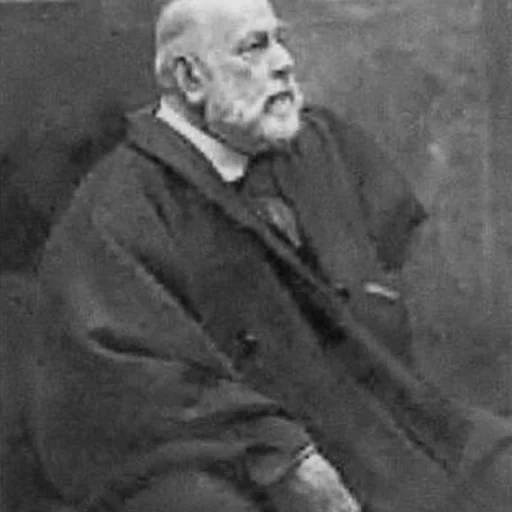
Paul-Albert Besnard (1849–1934) was a French artist, born in 7th arrondissement of Paris.