Artwork
Rosita Mauri
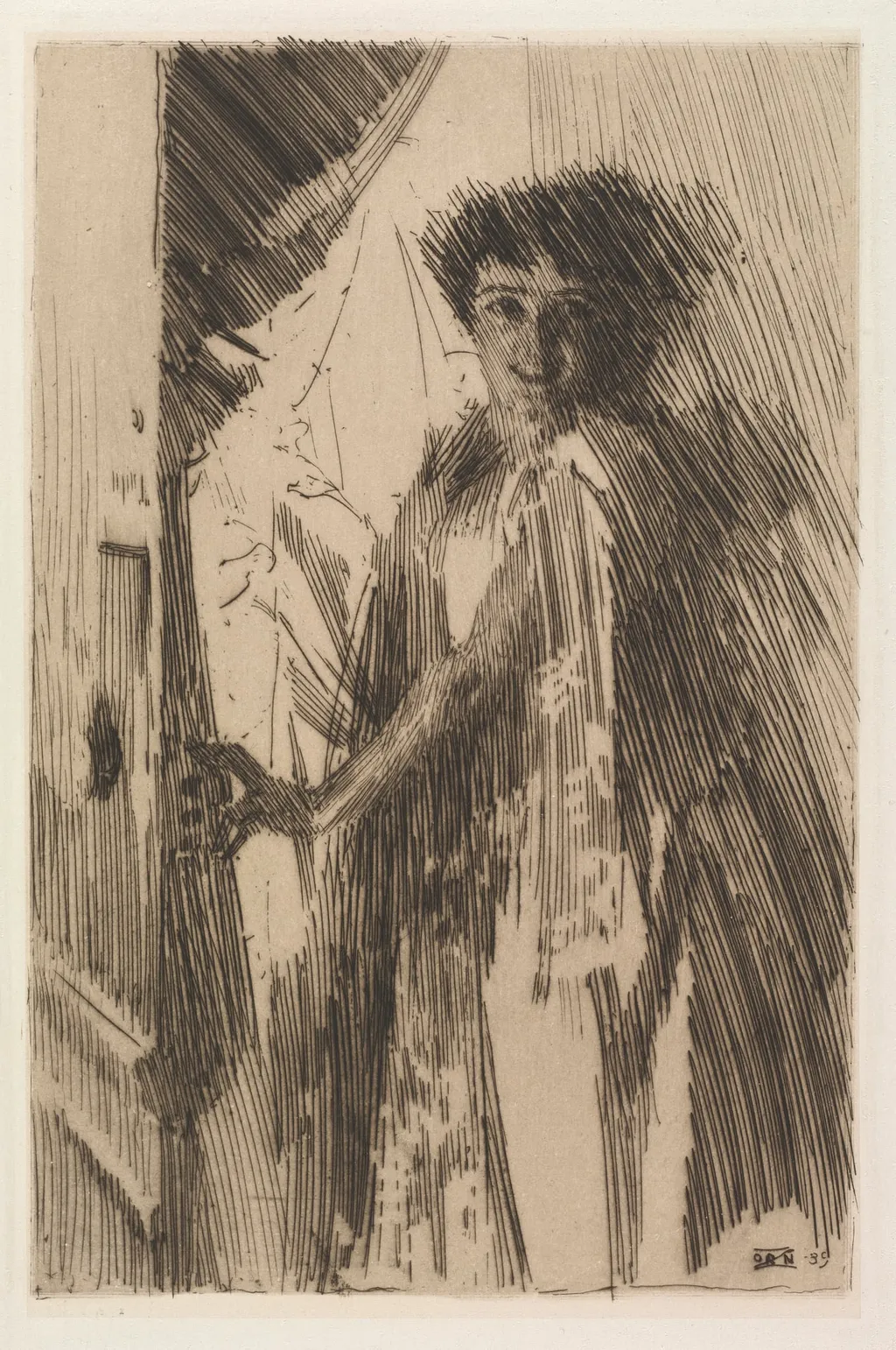
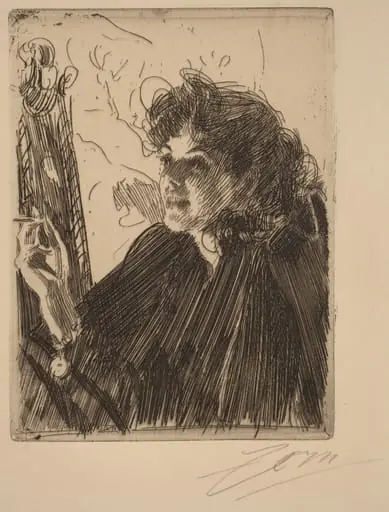
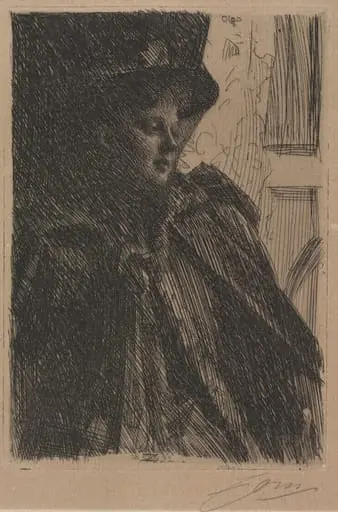
Rosita Mauri is a print by the Impressionist artist Anders Zorn. It dates from 1889 and is held in the collection of the Cleveland Museum of Art.
About this work
Overview
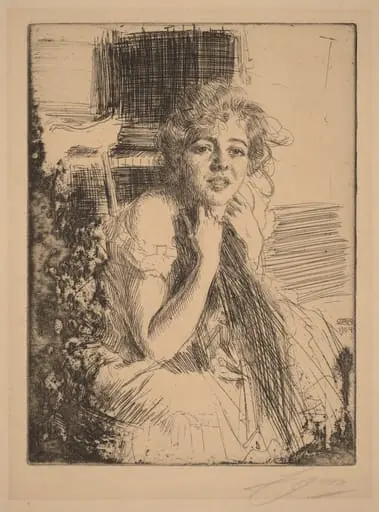
Created in 1889 by Swedish artist Anders Zorn, this print depicts Rosita Mauri, a Spanish dancer known for her performances in Europe. Rendered in drypoint and etching, the work captures a quiet, intimate moment rather than a staged performance. The Cleveland Museum of Art holds the print, which exemplifies Zorn’s interest in fleeting, unposed figures and the interplay of light and texture.
Subject & Meaning
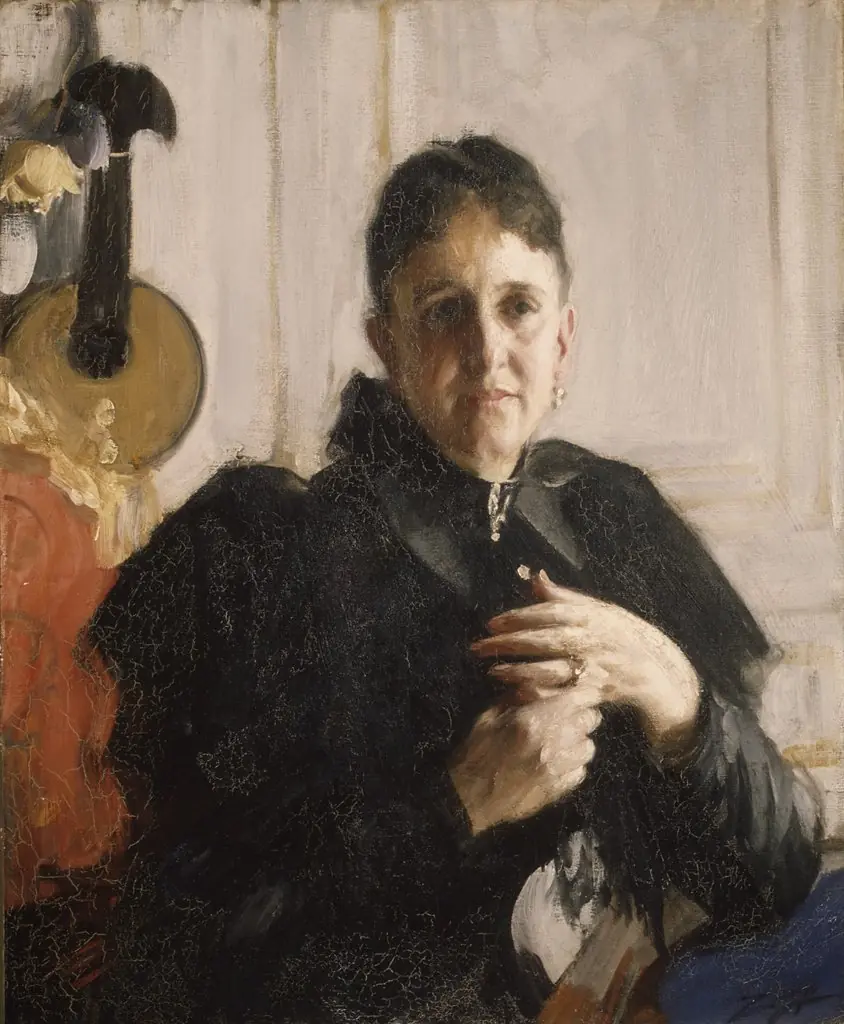
Rosita Mauri stands alone in a modest interior, hands gently clasped near her chest, suggesting a pause between movements or a moment of reflection. Dressed plainly, she is not portrayed as a spectacle but as a person in repose. The absence of theatrical elements shifts focus from performance to presence, emphasizing dignity in stillness and the quiet humanity of a working artist.
Technique & Style
Sharp tonal shifts create a sense of atmosphere, while the figure emerges with clarity against the blurred surroundings, evoking immediacy and spontaneity.
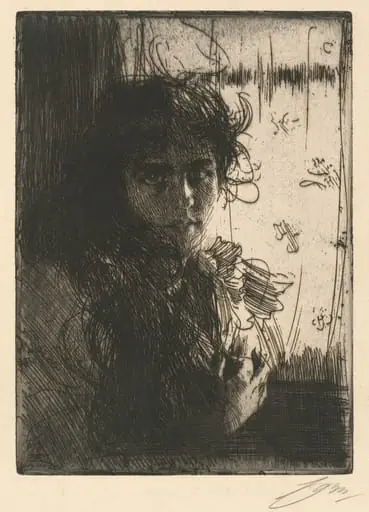
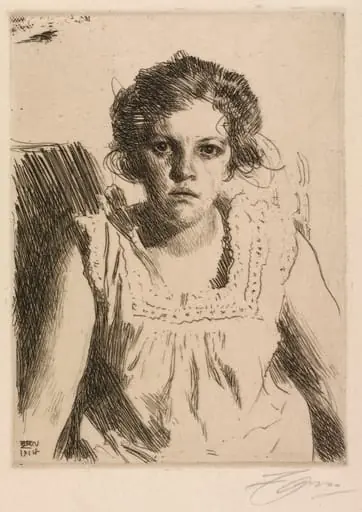
Zorn employed drypoint and etching to build the image with rapid, angular lines that define form through contrast rather than detail. The background dissolves into energetic, slanted strokes, suggesting depth and movement without literal representation. Sharp tonal shifts create a sense of atmosphere, while the figure emerges with clarity against the blurred surroundings, evoking immediacy and spontaneity.
History & Provenance
Zorn made this print during a period of intense experimentation with printmaking, shortly after gaining recognition for his portraits and genre scenes. Rosita Mauri was one of several studies of performers he encountered in Paris and Madrid. The print entered The Cleveland Museum of Art’s collection in the early 20th century, acquired as part of a broader interest in European graphic art of the period.
Context
In the late 19th century, artists across Europe turned to everyday subjects and transient moments, moving away from idealized narratives. Zorn’s depiction of Mauri aligns with this Realist current, capturing a dancer not in motion but in repose. His focus on ordinary interiors and unadorned figures reflects a broader cultural shift toward authenticity and observation over spectacle.
Legacy
This print illustrates Zorn’s mastery of printmaking as a medium for psychological nuance rather than mere reproduction. His use of line to suggest light, space, and emotion influenced later generations of graphic artists. Though not widely exhibited, the work remains a quiet testament to his ability to convey presence through minimal means.
Artist & collection

Artist
Anders Leonard Zorn was born in February 1860 in Mora, Dalarna, the illegitimate son of a Bavarian brewer and a Swedish farmer's daughter; his mother died shortly after his birth, and his grandparents raised him.